 Popular
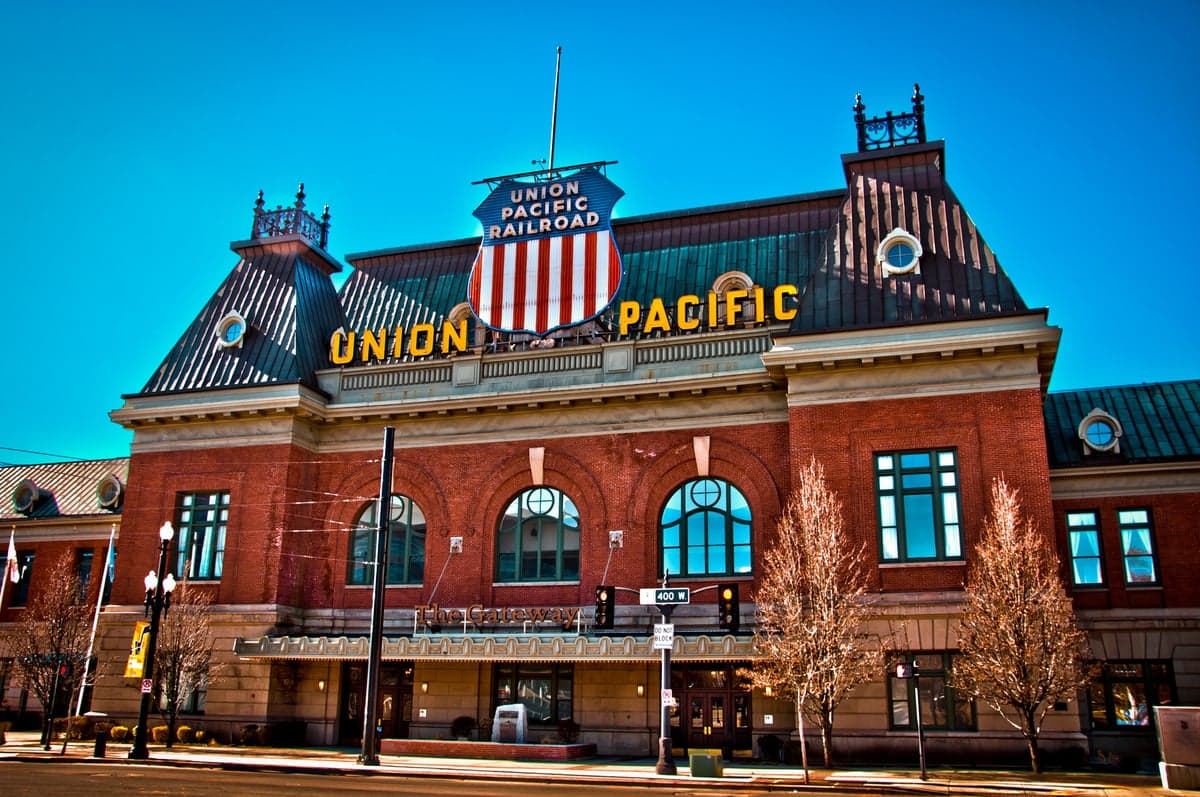
Photo: Wikipedia
Personal Sovereignty in Salt Lake City, UT
Viable for self-reliance. Generally workable, though some barriers may limit total independence.
What does Personal Sovereignty tell us?
Personal Sovereignty measures your capacity for self-reliance and independence with minimal government friction. Higher scores mean fewer barriers between you and the way you want to live... but it assumes you have the space you need and good neighbors.
What does this tell us?
Personal Sovereignty measures your capacity for self-reliance and independence with minimal government friction. Higher scores mean fewer barriers between you and the way you want to live... but it assumes you have the space you need and good neighbors.
State Policy
Energy independence: Self-sufficient (80% of energy produced in-state)
Personal Liberty
Homesteading

Personal Liberty Analysis
Salt Lake City offers a mixed but increasingly favorable environment for personal sovereignty, particularly when measured against the coastal and urban strongholds of government overreach that define much of modern America. While Utah’s capital is not a libertarian utopia—it carries the regulatory weight of a growing metro area—the state’s deeply ingrained culture of self-reliance, constitutional awareness, and resistance to federal overreach provides a meaningful buffer. For the survivalist or prepper weighing relocation, Salt Lake City sits in a state that consistently ranks among the top for economic freedom and individual rights, though the city itself demands more vigilance than its rural neighbors.
Tax burden and regulatory posture in Salt Lake City
Utah’s tax structure is a clear win for those seeking to keep more of their own earnings. The state imposes a flat income tax rate of 4.65%, with no progressive brackets to penalize higher earners or small business owners. Sales tax in Salt Lake City lands around 7.25% (state plus local), which is moderate but not burdensome compared to California or New York. Property taxes are notably low—effective rates hover near 0.6% of assessed value, roughly half the national average. This is critical for anyone looking to buy land or a home as a long-term asset. On the regulatory front, Utah is a right-to-work state, meaning no forced union membership, and it has aggressively pushed back against federal overreach on land use and environmental mandates. The state legislature has passed laws preempting local ordinances that would restrict firearm carry, energy development, or agricultural practices. However, Salt Lake City itself leans more progressive on zoning and business licensing than the rest of the state, so expect more red tape for home-based enterprises or alternative housing than you’d find in, say, rural Cache County. Overall, the tax burden is light, and the regulatory climate is business-friendly, but the city’s municipal codes can nibble at your autonomy if you’re not careful.
Self-defense rights and gun law specifics in Utah
Utah is a constitutional carry state—no permit required to carry a concealed firearm for anyone 21 or older who can legally possess a gun. This is a bedrock principle for personal sovereignty. Salt Lake City does not impose its own gun control ordinances, thanks to state preemption laws that prohibit cities from banning firearms in public places or restricting magazine capacities. The state also has a strong “stand your ground” law, with no duty to retreat in any place you have a legal right to be. For preppers, this means your home, vehicle, and person are legally defensible without fear of prosecution for using force. Utah issues concealed carry permits for reciprocity with 37 other states, making it a solid base for those who travel. One nuance: Salt Lake City’s police department has a reputation for being professional but not overly aggressive on gun rights enforcement—they generally follow state law. However, the city’s political climate includes vocal anti-gun groups, so expect occasional local pressure for restrictions, though state law holds firm. For the survivalist, the legal framework here is among the best in the West, second only to states like Idaho or Montana.
Self-reliance and homesteading viability in the Salt Lake Valley
The viability of true self-reliance in Salt Lake City depends heavily on where you land within the metro area. Inside the city limits, lot sizes average 0.15 to 0.25 acres, and zoning is restrictive—chickens are allowed in most residential zones, but goats, bees, and larger livestock require special permits or are outright banned in dense neighborhoods. Off-grid living is effectively impossible within city limits due to building codes requiring grid-tied utilities. However, the surrounding unincorporated areas of Salt Lake County (like Millcreek or Kearns) and nearby towns such as West Jordan or Herriman offer larger lots—up to 1 acre or more—where you can keep animals, install solar panels, and even drill a well with proper permitting. The state’s water rights laws are complex but favorable to landowners who secure a water share. For serious homesteading, look to the Tooele Valley (30 minutes west) or Utah County (south of the city), where 5- to 40-acre parcels are still affordable and zoning is minimal. The growing season is short (about 150 days) and the climate is arid, so rain barrels and drip irrigation are essential. Overall, Salt Lake City itself is not a homesteading hub, but its metro area provides a launchpad for those willing to drive 20-40 minutes to achieve meaningful self-reliance.
Personal liberties: parental rights, medical autonomy, speech, and property
Utah has become a national leader in protecting parental rights. The state’s Parental Rights in Education law (HB 331, 2023) requires schools to notify parents of any curriculum involving sexuality or gender identity and prohibits instruction on these topics in K-3 classrooms. This is a direct counter to federal overreach and school board activism seen in other states. Medical autonomy is strong: Utah does not mandate COVID-19 or childhood vaccines for school attendance (only the standard MMR, DTaP, and polio are required, with easy exemption options). The state also passed a law in 2023 banning gender-affirming surgeries for minors, aligning with conservative medical ethics. Free speech is robust—Utah has no hate speech laws that criminalize political or religious expression, and the state’s constitution explicitly protects the right to keep and bear arms as an individual right. Property rights are reinforced by the state’s Private Property Protection Act, which limits eminent domain to public uses like roads and utilities, not private development. The one area of concern is the city’s noise and nuisance ordinances, which can be used to target prepper activities like generator use or shooting on private land (though shooting is generally prohibited within city limits anyway). For the conservative individualist, Salt Lake City’s legal environment is a stronghold compared to the Pacific Coast or Northeast.
Overall, Salt Lake City offers a high degree of personal sovereignty relative to most major U.S. cities, but it is not a free-for-all. The state’s constitutional carry, low taxes, parental rights laws, and resistance to federal mandates create a solid foundation for the survivalist or prepper. The city itself requires more compromise—smaller lots, stricter zoning, and a progressive municipal government—but the surrounding valley and nearby counties provide ample room for those who want to live off-grid, homestead, or simply keep their options open. When stacked against Denver, Portland, or Seattle, Salt Lake City is a clear winner for autonomy. Compared to Boise or Billings, it offers more urban infrastructure but less raw freedom. For the strategic relocator, it’s a balanced choice: enough liberty to breathe, enough city to work, and a state government that still remembers the Constitution.

* Values derived from national, state, county, city and local statistics and may differ in a specific area. Last updated: 2026-04-15T23:30:00.000Z
Narrative content on this page is AI-generated and may contain mistakes. Verify any details that matter before acting on them.
ReloMaps may earn a commission from affiliate links at no extra cost to you.

