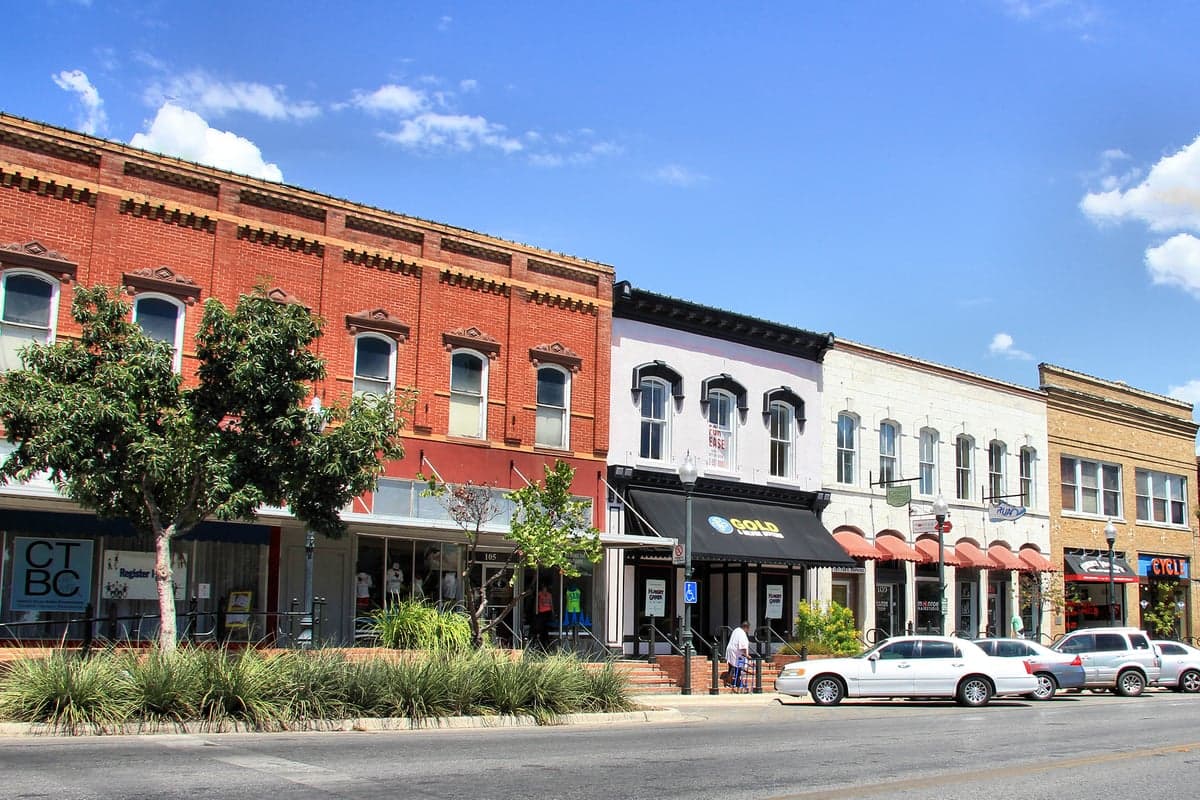
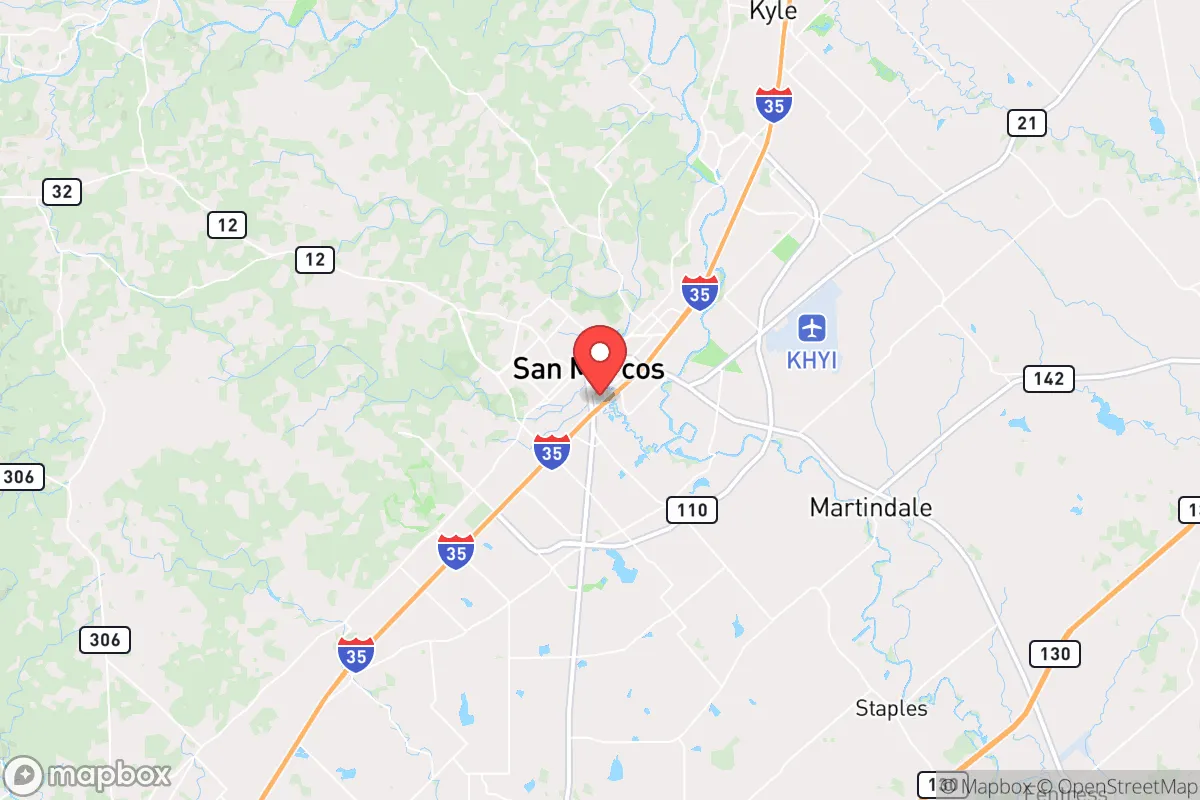
Photo: Wikipedia
Quality of Life in San Marcos, TX
A high quality of life with strong walkability, manageable living costs, healthy neighborhood signals, and solid amenity access.
What does Quality of Life tell us?
Quality of Life blends cost of living, nearby amenities, socioeconomic signals, and neighborhood character. City-level scores represent the whole municipality; individual neighborhoods can differ.
What does this tell us?
Quality of Life blends cost of living, nearby amenities, socioeconomic signals, and neighborhood character. City-level scores represent the whole municipality; individual neighborhoods can differ.
Cost of Living
5% above national average
The Real Cost of Living in San Marcos, TX for 2026
| Tier | Individual | Family (4) |
|---|---|---|
| Survival | $21k | $39k |
| Comfortable | $52k | $77k |
| Luxury | $85k+ | $132k+ |
| Elite (Top 5%) | $100k+ | $155k+ |
66%
The Area Signal
A metric tracking the socioeconomic signals of the area.
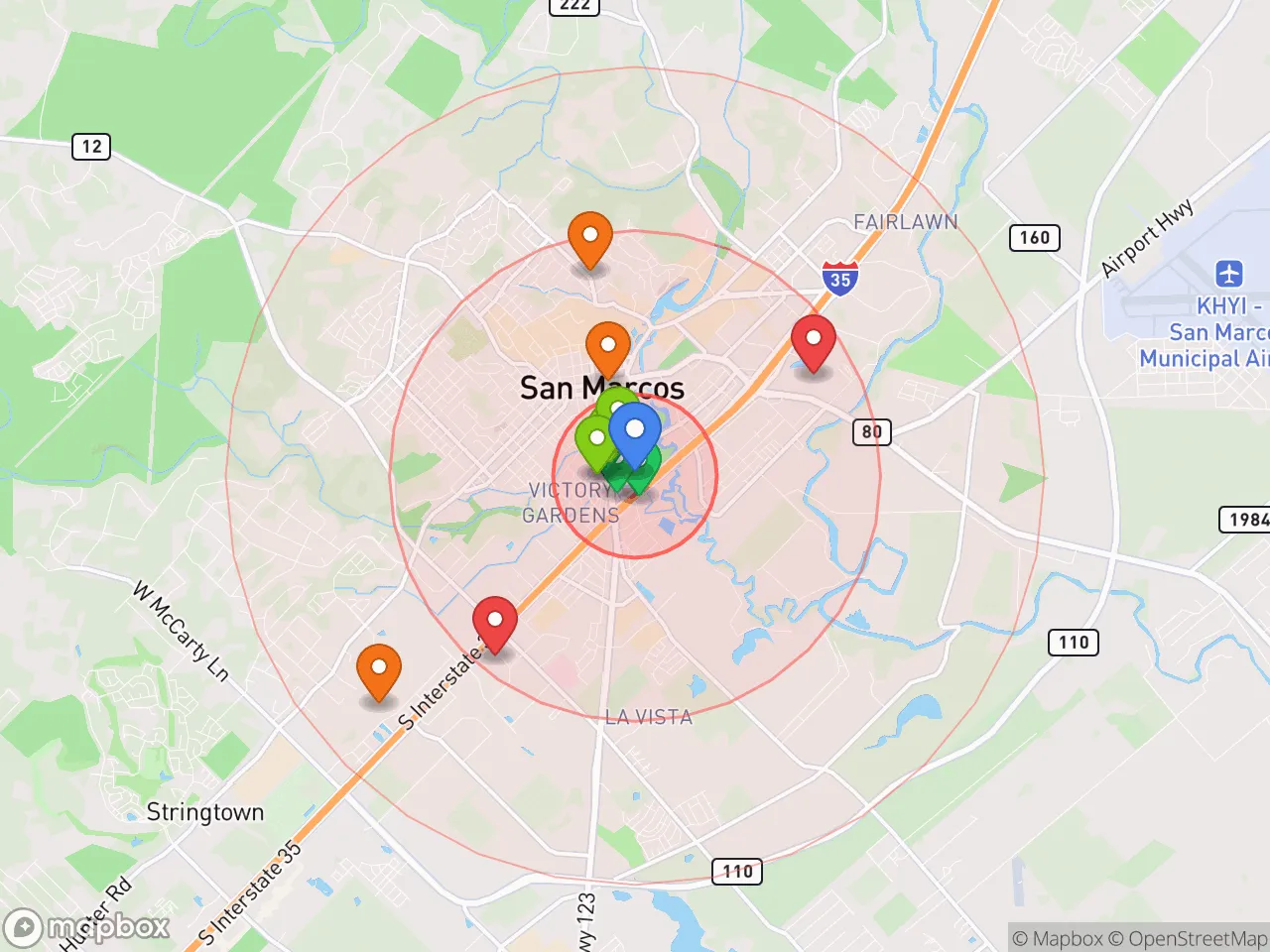
Hobbies
Explore the areaGroceries
4 within 10 miles
Gas
20 within 10 miles
Hospital
8 within 20 miles
Airport
AUS — Austin-Bergstrom International
Post Office
USPS — San Marcos, TX
Critical Amenities
Quality-of-Life Analysis
San Marcos, Texas, occupies a distinctive middle ground in the Central Texas corridor, blending a college-town energy with a cost of living that remains below the national average despite its proximity to pricier Austin and San Antonio. With a cost-of-living index of 105 (where 100 equals the U.S. average), the city is slightly more expensive than the national norm but significantly cheaper than Austin’s index of 120 or San Antonio’s 93. The population skews young and transient due to Texas State University, but a growing base of families and remote workers is reshaping the community’s character, drawn by affordability and a slower pace than the I-35 boomtowns to the north.
Cost of living, housing, and affordability compared to Austin and San Antonio
Housing in San Marcos remains the primary affordability driver. The median home value sits at $269,700, roughly $130,000 less than the Austin metro median and about $40,000 above San Antonio’s median. Median rent is $1,299, which undercuts Austin’s average by over $400 and is comparable to San Antonio’s rental market. This pricing makes San Marcos a practical compromise for workers commuting to either major city—the average commute is 24.1 minutes, shorter than the national average of 26 minutes and far less than the 30+ minute commutes common in Austin’s suburbs. However, property taxes in Hays County are among the highest in Texas, with effective rates near 2.1%, meaning the lower purchase price is partially offset by ongoing tax burdens. Renters face less of this pressure, but the rental market tightens each August when Texas State’s 38,000 students return, pushing prices up seasonally.
What daily life is like for families, students, and remote workers
Daily life in San Marcos revolves around the San Marcos River, which runs through the city and provides free recreation at Sewell Park and Rio Vista Park. The river’s constant 72-degree temperature makes it a year-round draw for tubing, kayaking, and swimming. The public school system, San Marcos CISD, serves roughly 8,000 students but has faced mixed reviews—the district’s overall rating on niche.com is B-minus, with test scores below state averages in math and reading. Families often supplement with charter options like the San Marcos Academy or commute to private schools in Kyle or Buda. For remote workers, the city’s fiber-optic internet coverage is solid in newer subdivisions but spotty in older neighborhoods near the square. The downtown square, anchored by the Hays County Courthouse, hosts a weekly farmers market and a growing number of breweries and coffee shops, but the retail scene is limited compared to the outlet malls along I-35. Nightlife centers on Texas State’s student bars along The Square, which can feel overwhelming for non-students on weekends.
The type of person who thrives in San Marcos is someone who values outdoor recreation and a lower housing cost over urban polish. Students and recent graduates benefit from the walkable campus and river access, while families willing to navigate the school district’s challenges find a more affordable entry point to the Austin-San Antonio corridor than anywhere else. Remote workers who prioritize a short commute to nature over a vibrant restaurant scene will feel at home, especially if they live near the river or in the newer master-planned communities like Kissing Tree (55+). Those seeking top-tier schools, a robust job market, or a sophisticated cultural scene will likely find San Marcos a compromise rather than a destination—but for the right buyer, it offers a rare combination of price, water access, and central location that few Texas towns can match.

Crime in San Marcos, TX
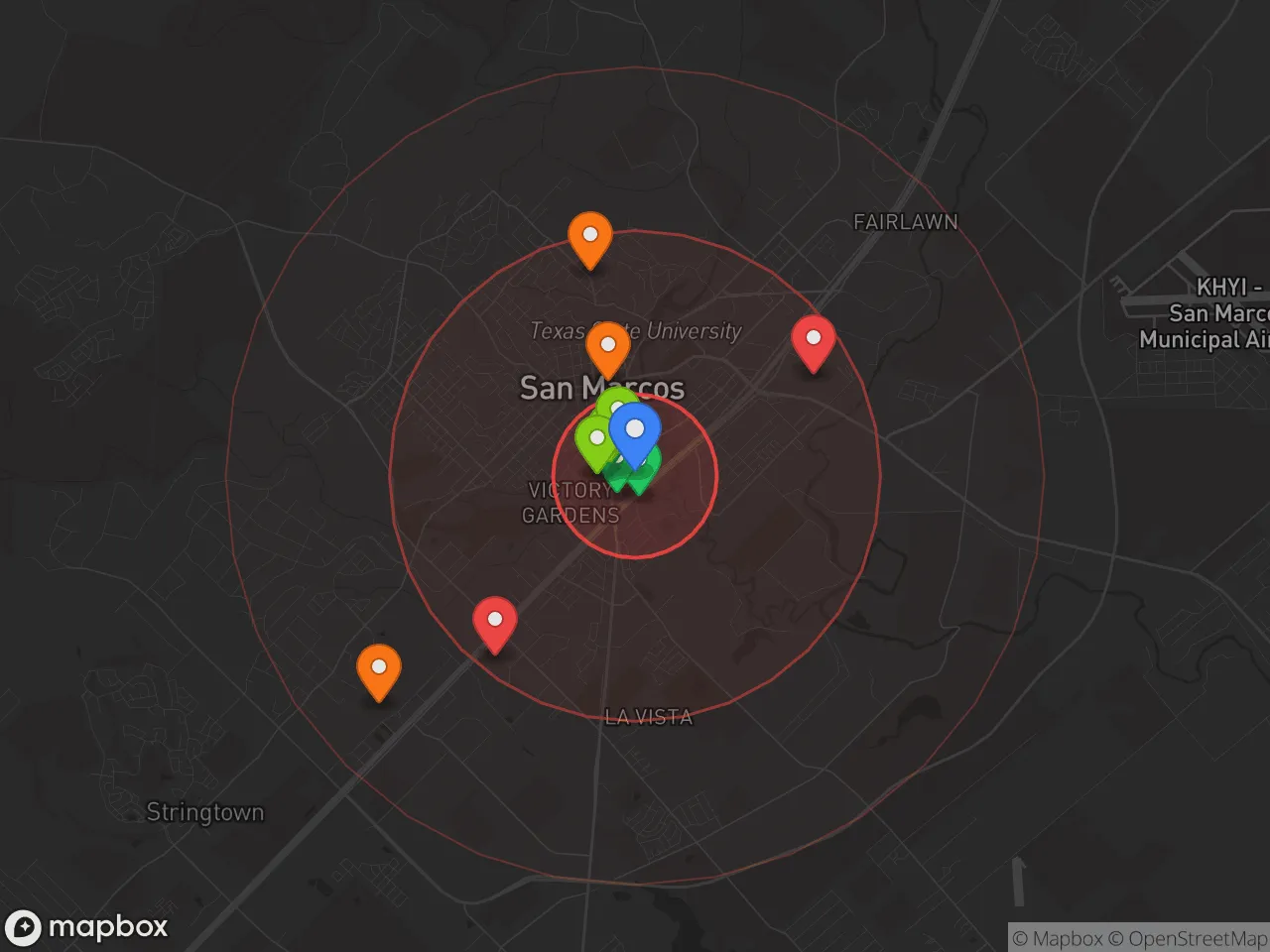
Crime rates similar to the national median for U.S. locations.
Violent CrimeViolent Crime Analysis
Property CrimeProperty Crime Analysis
Crime Analysis
San Marcos reports a violent crime rate of 412.3 incidents per 100,000 residents and a property crime rate of 1,930.9 per 100,000, placing it above both the Texas state average and national benchmarks for cities of its size. These figures reflect a community that, while not among the most dangerous in the state, faces safety challenges that prospective residents should weigh carefully, particularly given the city’s location within the fast-growing I-35 corridor between Austin and San Antonio. The overall safety picture is complicated by the city’s dual identity as a college town (home to Texas State University) and a regional retail hub, which introduces transient populations and property crime pressures that differ from quieter suburban enclaves.
Crime in context
San Marcos’s violent crime rate of 412.3 per 100,000 is roughly 15% higher than the national average of approximately 380 per 100,000 and notably above the Texas average of around 440 per 100,000. Property crime at 1,930.9 per 100,000 exceeds the national average of about 1,950 per 100,000 by a slim margin but falls below the Texas average of roughly 2,200 per 100,000. However, these aggregate numbers mask a concerning trend: Hays County, where San Marcos is the county seat, has seen progressive district attorneys and judges elected in recent cycles. This ideological shift in the local justice system—prioritizing rehabilitation and reduced incarceration over strict enforcement—has been linked by critics to higher recidivism and a perception that property crimes, in particular, face insufficient consequences. Readers should be aware that such prosecutorial philosophies can result in more offenders cycling back onto the streets, directly impacting public safety and victim satisfaction.
What residents experience
Daily life in San Marcos involves navigating a city where property crime—especially theft from vehicles, bicycle theft, and package theft—is the most common safety concern. The university area and the busy outlet mall district near I-35 are hotspots for these incidents. Violent crime, while less frequent, includes aggravated assault and robbery, often concentrated late at night near entertainment venues and apartment complexes near campus. Residents frequently report that police response times are adequate for emergencies but that follow-up on property crimes is limited, a pattern consistent with understaffed departments in fast-growing Texas cities. The presence of a large student population also means seasonal spikes in crime during fall and spring semesters, with quieter summers.
Neighborhood-level variation
Safety varies significantly across San Marcos. Neighborhoods west of I-35, such as the historic district near the square and the newer subdivisions near the Blanco River, generally report lower crime rates and a stronger sense of security. In contrast, areas east of I-35—including the apartment-heavy zones along Aquarena Springs Drive and the commercial corridors near the outlet malls—experience higher property crime and occasional violent incidents. The university campus itself maintains a relatively low crime rate due to dedicated campus police and controlled access, but the immediate off-campus rental market is a high-risk zone for theft and burglary. Prospective renters and buyers should prioritize properties west of the interstate and verify local crime maps before committing to a lease or purchase.
* Values derived from national, state, county, city and local statistics and may differ in a specific area. Last updated: 2026-05-11T20:36:25.000Z
Narrative content on this page is AI-generated and may contain mistakes. Verify any details that matter before acting on them.
ReloMaps may earn a commission from affiliate links at no extra cost to you.

