Photo: Wikipedia
Political ClimatePolitical Climate in Sandy, UT
District shown is the primary district for this city’s centroid. Cities may span multiple districts.
Local Political AnalysisPolitical Analysis of Sandy, UT
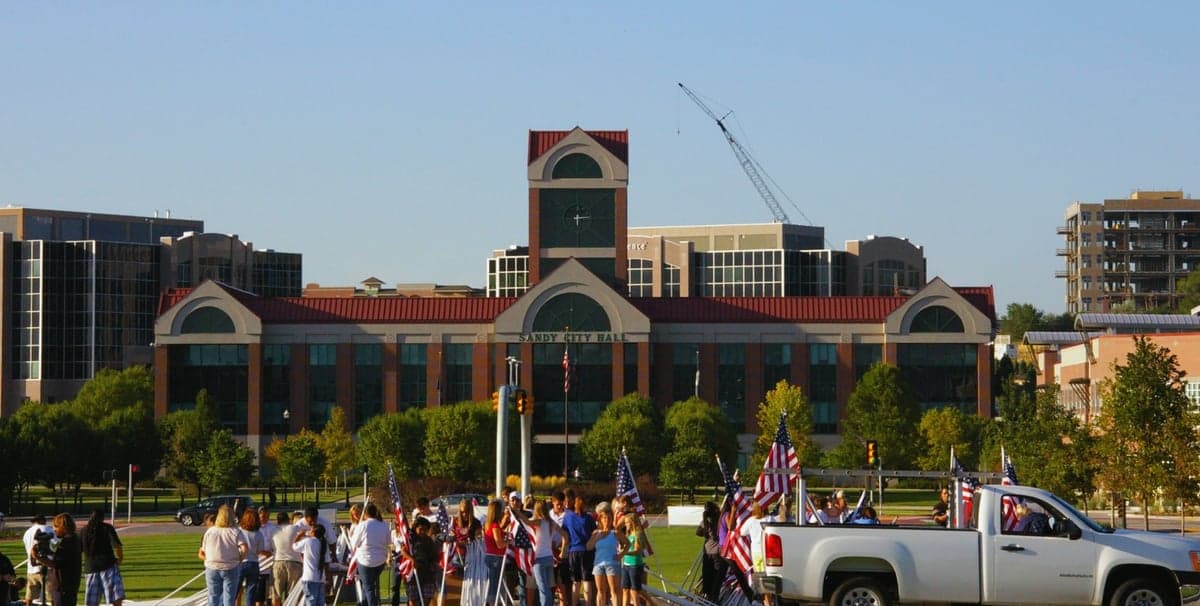
Sandy, Utah, has long been a solidly conservative stronghold, and by the numbers, it still leans that way with a Cook PVI of R+10. But if you’ve lived here as long as I have, you know the political climate isn’t quite what it used to be. The city’s core remains reliably Republican, but the edges are fraying—especially as younger families and out-of-state transplants bring in more progressive ideas. It’s not a blue wave, but it’s a noticeable shift in a place where conservative values used to be as common as the Wasatch Front views.
How it compares
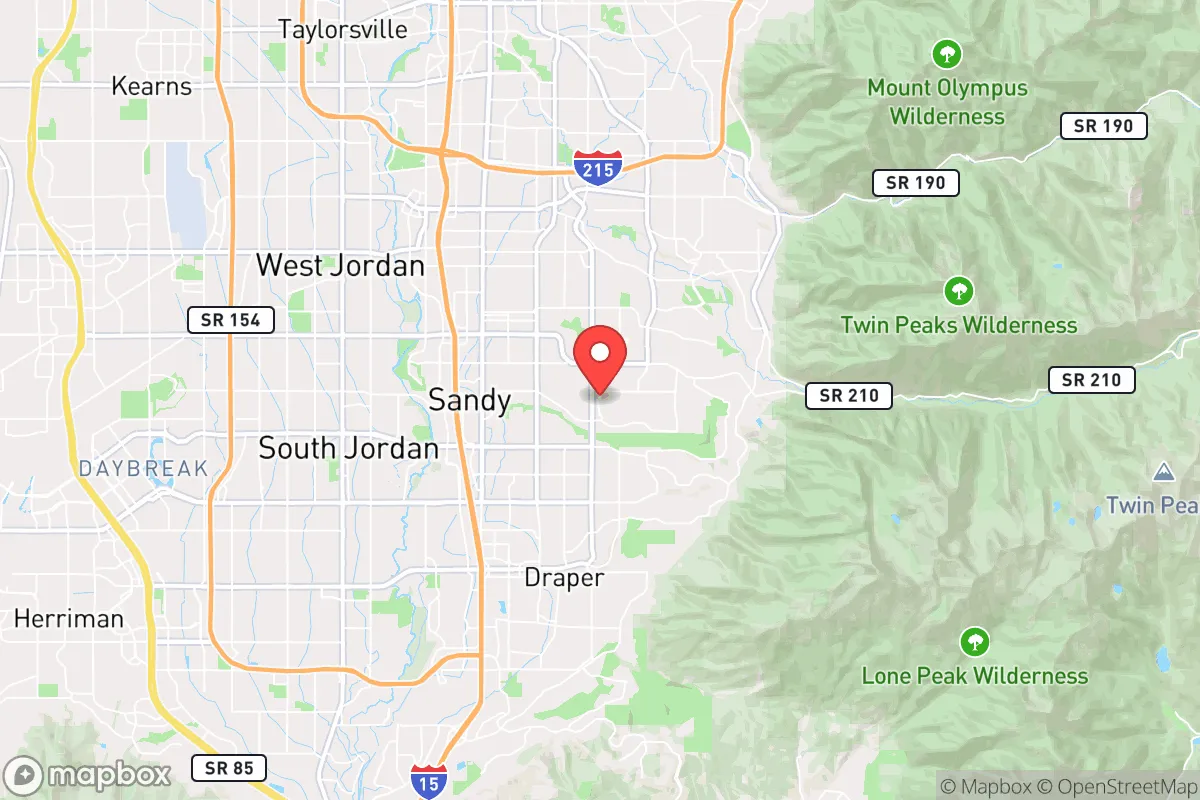
Compared to its neighbors, Sandy still looks like a conservative bulwark. Drive a few miles north to Salt Lake City proper, and you’re in a deep-blue urban hub where progressive policies on housing, taxes, and social issues are the norm. Head south to Draper or Lehi, and you’ll find communities that are even more reliably red than Sandy—places where the local government is less likely to entertain the kind of zoning changes or “equity” initiatives that raise eyebrows here. The contrast is stark: Sandy sits right in the middle, a kind of political buffer zone where the old guard is still holding the line, but the pressure from the north is real. If you’re looking for a place where your vote for limited government and personal freedom still counts, Sandy is a better bet than Salt Lake, but you’ll want to keep an eye on city council elections.
What this means for residents
For the average resident, this political climate means a few things in daily life. First, you’re still going to see lower taxes and fewer regulations than in more progressive cities—no surprise there. But there’s a growing tension around issues like land use and school policies. The local school board, for instance, has seen more debates about curriculum transparency and parental rights than it did a decade ago. That’s a good sign that the community is pushing back against top-down mandates, but it also means you can’t take those freedoms for granted. If you value the right to make your own choices about your kids’ education or your property without government overreach, Sandy is still a decent place to be—but you’ll need to stay involved. The long-time residents I know are watching the city’s planning commission meetings more closely than ever, worried that a few new faces on the council could tip the balance toward more intrusive policies.
Culturally, Sandy has a few distinctions that set it apart. The city has a strong tradition of civic engagement through local churches and neighborhood associations, which tends to keep the political conversation grounded in community values rather than abstract ideology. You won’t see the kind of aggressive progressive activism you’d find in the city center, but you also won’t see the same level of libertarian pushback you might in more rural parts of the state. The real concern among folks I talk to is the slow creep of government overreach—things like stricter building codes, noise ordinances that feel like they’re aimed at families, or school policies that prioritize “equity” over merit. It’s not a crisis yet, but the trajectory is worth watching. If you’re thinking of moving here, know that Sandy still offers a conservative foundation, but the political weather is changing, and it’s up to residents to keep the wind from blowing too far left.

State Political ClimatePolitical Climate in Utah
State Political AnalysisPolitical Environment in the State
Utah has long been one of the most reliably conservative states in the Union, with a Republican trifecta controlling the governorship and both legislative chambers for decades. The state’s dominant political coalition is a blend of The Church of Jesus Christ of Latter-day Saints (LDS) cultural influence, a strong free-market ethos, and a deeply ingrained skepticism of federal overreach. Over the past 10-20 years, the trajectory has been one of increasingly assertive conservative governance, with the legislature passing some of the nation’s most aggressive laws on religious liberty, school choice, and gun rights. However, the Wasatch Front—particularly Salt Lake County—has seen a slow but steady demographic shift, with in-migration from blue states and a growing non-LDS population beginning to nudge the state’s political center of gravity.
Urban vs. rural divide
The political map of Utah is starkly divided between the urban Wasatch Front and the rest of the state. Salt Lake County, home to over 1.1 million people, is the state’s only competitive county, regularly flipping between Republican and Democratic control in presidential years. In 2020, Joe Biden won Salt Lake County by about 6 points, while Donald Trump carried the rest of the state by a 30-point margin. The city of Salt Lake City itself is a deep-blue enclave, with a progressive city council and a mayor who has pushed for sanctuary city policies and expanded public transit. Just 20 minutes south, Provo and Utah County are the opposite—among the most conservative metros in the nation, driven by Brigham Young University and a heavily LDS population that votes Republican by margins of 70% or more. St. George in the southwest has exploded in population, drawing retirees and families from California and Nevada, and it votes even more Republican than the state average. Meanwhile, rural counties like Duchesne, Daggett, and Piute routinely deliver 85-90% of their votes to the GOP, driven by ranching, mining, and a fierce independence from government mandates. The divide isn’t just about party—it’s about lifestyle: urban Utahns tend to prioritize environmentalism and public transit, while rural Utahns see land use, water rights, and gun ownership as non-negotiable.
Policy environment
Utah’s policy environment is a model of conservative governance with a few unique wrinkles. The state has a flat income tax rate of 4.65%, no inheritance tax, and a relatively low sales tax (around 6.1% state rate, with local add-ons). Property taxes are among the lowest in the West. The regulatory posture is business-friendly, with right-to-work laws and minimal red tape for small businesses. On education, Utah was an early adopter of universal school choice, passing the Utah Fits All Scholarship program in 2023, which gives families up to $8,000 per child for private school or homeschooling expenses. The state also has some of the nation’s strongest parental rights laws, including a 2023 law requiring schools to notify parents of any changes to a student’s health or emotional well-being. Healthcare policy is mixed: Utah expanded Medicaid under the Affordable Care Act in 2019, but the legislature has resisted further federal encroachment. Election laws are solidly conservative—voter ID is required, same-day registration is limited, and the state has a strict ban on ballot harvesting. The legislature also passed a law in 2024 requiring all ballots to be returned by Election Day, eliminating the postmark grace period. For a conservative family, Utah’s policy environment is a clear green light: low taxes, school choice, and a government that respects parental authority.
Trajectory & freedom
Utah is moving in a direction that many conservatives would call more free, but with some concerning countercurrents. On the positive side, the state has been a national leader in expanding gun rights: in 2021, it passed constitutional carry (permitless carry for anyone 21 or older), and in 2023 it preempted local governments from enacting their own gun restrictions. The legislature also passed a religious freedom restoration act in 2021, which gives strong protections to individuals and businesses acting on religious beliefs. On parental rights, the 2023 “Parental Rights in Education” law (similar to Florida’s) prohibits classroom instruction on sexual orientation and gender identity in K-3. However, there are red flags. The state’s influx of out-of-state transplants—especially from California and Washington—is slowly diluting the conservative base. Salt Lake City’s mayor has pushed for sanctuary policies, and the city council has passed a non-discrimination ordinance that some conservatives see as infringing on religious liberty. The legislature has fought back, passing a law in 2024 that bans cities from enacting sanctuary policies, but the cultural tension is real. On medical freedom, Utah has not gone as far as some states—it still has vaccine mandates for certain healthcare workers, and the legislature has not passed a broad medical freedom bill. For a conservative moving in, the trajectory is positive overall, but the urban corridor is a battleground.
Civil unrest & political movements
Utah has historically been a low-conflict state, but recent years have seen a rise in organized activism on both sides. The most visible flashpoint has been immigration politics. In 2023, the legislature passed a law requiring local law enforcement to cooperate with federal immigration authorities, and the state has sued the Biden administration over border policies. However, Salt Lake City has resisted, with the mayor declaring the city a “welcoming city” and refusing to enforce some provisions. This has led to public protests and counter-protests outside city hall. On the left, groups like the Utah Progressive Caucus and the Salt Lake City chapter of the Democratic Socialists of America have organized rallies for abortion access and transgender rights, particularly after the state passed a 2023 law banning gender-affirming care for minors. On the right, the Utah Eagle Forum and the Utah Parents United movement have been highly active, organizing school board takeovers and pushing for stricter library book policies. There have been no major election integrity controversies in Utah—the state uses paper ballots and has a strong track record of clean elections—but the 2020 election did see a small but vocal group of activists calling for an audit. For a new resident, the political climate is generally civil but increasingly polarized, especially in the Salt Lake Valley.
Projection
Over the next 5-10 years, Utah will likely remain a reliably red state, but the margins will narrow. The Wasatch Front is the key battleground: as Salt Lake County continues to grow and diversify, it could become a swing county in statewide races. The 2024 election saw Trump win Utah by about 12 points, down from 20 in 2020, and the state’s U.S. Senate seat is now held by a moderate Republican (Mitt Romney) who has drawn primary challenges from the right. The in-migration from California and the Pacific Northwest is accelerating—Utah added over 100,000 new residents between 2020 and 2024—and many of these transplants bring more moderate or even liberal views on social issues. However, the legislature is likely to continue pushing conservative policies, especially on school choice, gun rights, and religious liberty, to counteract the urban drift. The rural-urban divide will deepen, with rural counties feeling increasingly alienated from the state’s power centers. A new resident moving in now should expect to find a state that is still very conservative, but with a growing progressive minority in the capital city. The practical takeaway: if you’re a conservative looking for a state that respects your values, Utah is still a top choice, but you’ll want to settle in Utah County or a rural area to avoid the cultural friction of Salt Lake City.
Bottom line for a new resident: Utah offers a low-tax, high-freedom environment with strong protections for gun owners, parents, and religious believers. The state is not immune to the cultural battles sweeping the nation, but the legislature is actively fighting back. If you’re moving here, choose your community carefully—Provo, St. George, or Cedar City will feel like a conservative stronghold, while Salt Lake City will feel like a blue island. The state’s trajectory is positive for those who value limited government, but the next decade will test whether Utah can maintain its character amid rapid growth.
* Values derived from national, state, county, city and local statistics and may differ in a specific area. Last updated: 2026-04-21T12:15:38.000Z
Narrative content on this page is AI-generated and may contain mistakes. Verify any details that matter before acting on them.
ReloMaps may earn a commission from affiliate links at no extra cost to you.

