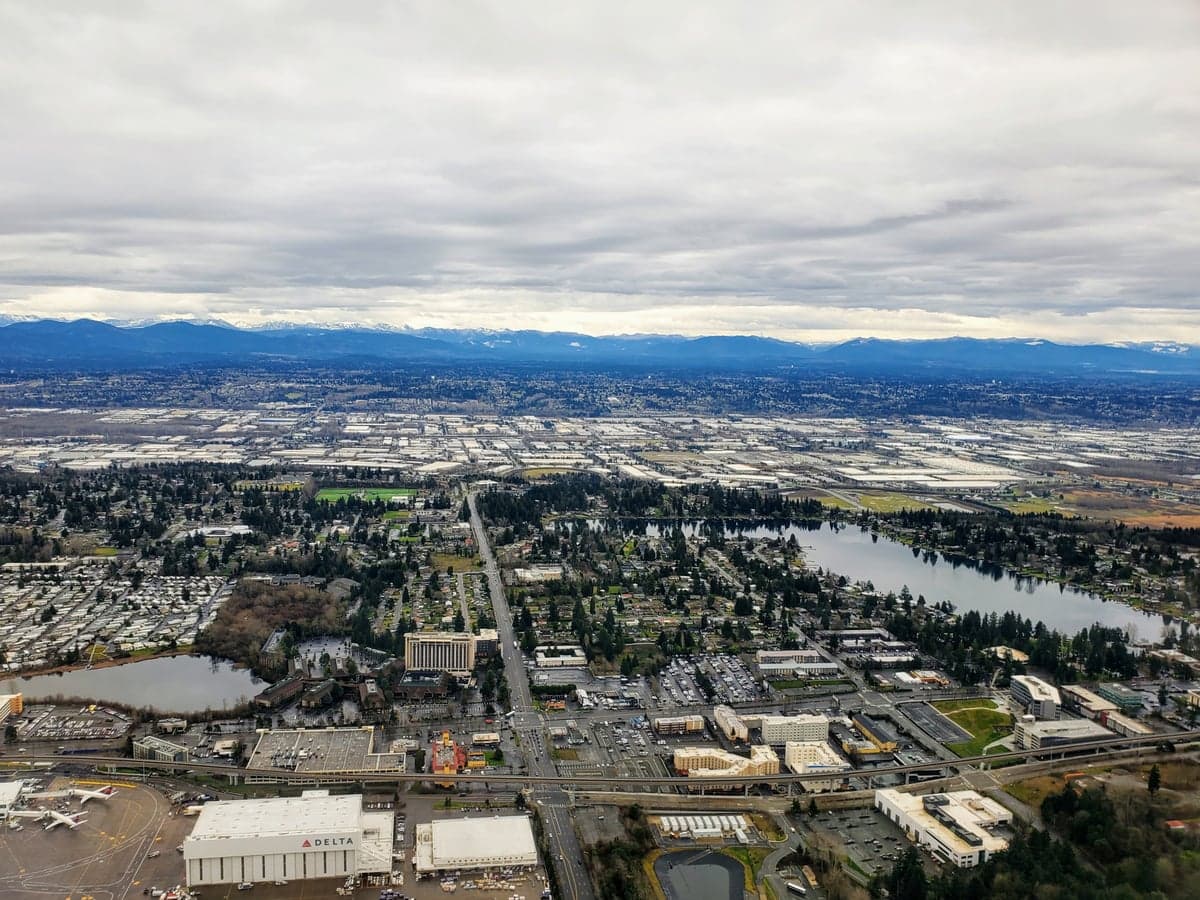
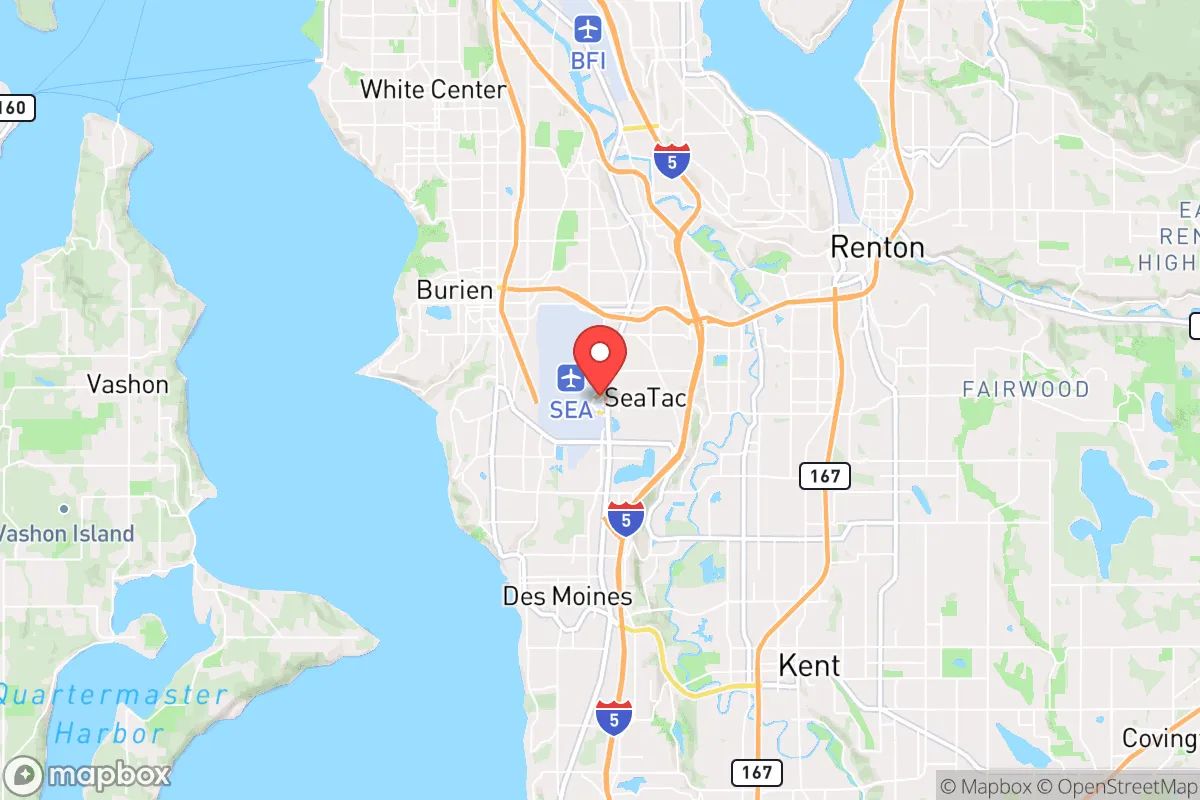
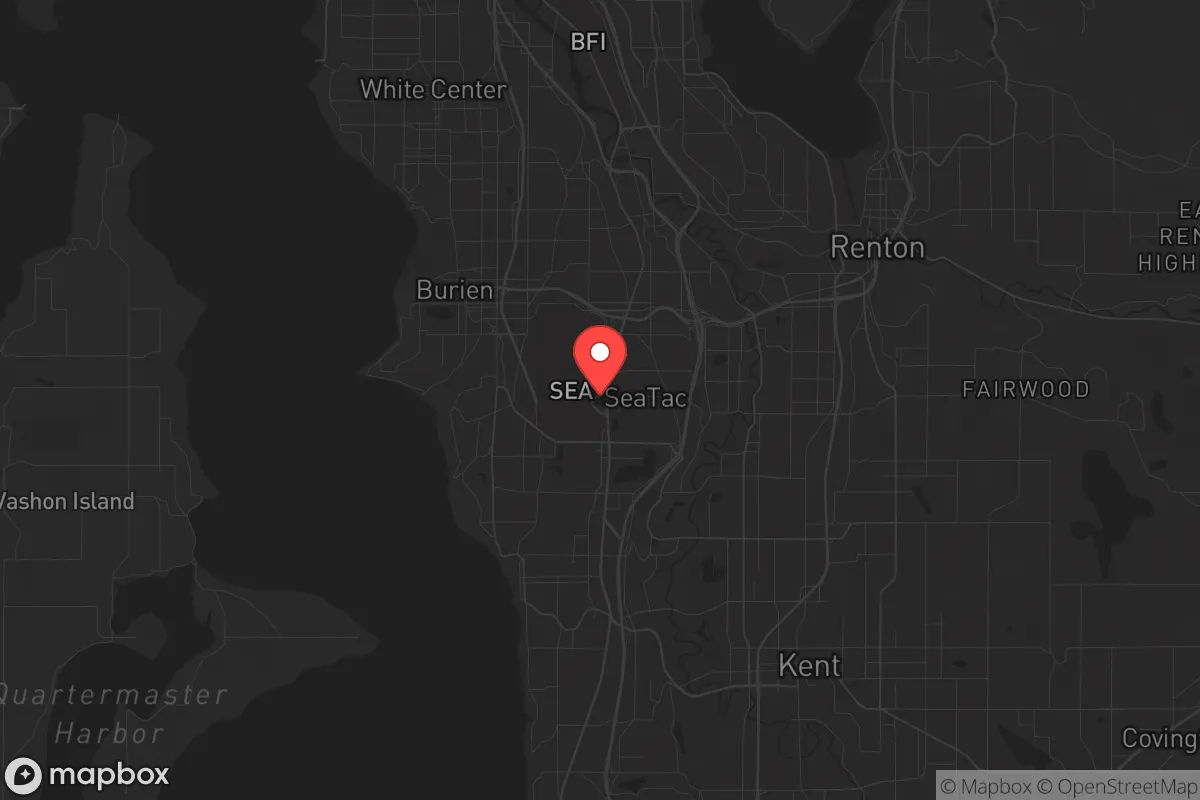
Photo: Wikipedia
Strategic Assessment of Seatac, WA
High tactical risk. This location is likely close to major population centers, strategic targets, or sits in a high-disaster corridor. A retreat property and careful exit planning is required.
What does the Strategic Assessment tell us?
Our Strategic Assessment grades tactical survivability of an area. Major population centers, military targets, fallout zones, natural disasters, and border exposure all drive risk — lower exposure means a more defensible position in a crisis.
This is heavily inspired by Joel Skousen's Strategic Relocation book. Highly recommended you checkout the book ($)What does this tell us?
Our Strategic Assessment grades tactical survivability of an area. Major population centers, military targets, fallout zones, natural disasters, and border exposure all drive risk — lower exposure means a more defensible position in a crisis.
This is heavily inspired by Joel Skousen's Strategic Relocation book. Highly recommended you checkout the book ($)Strategic Pillars

Key Distances
Regional Safe Places
Below is our recommended "safe zones" in Washington and the surrounding area based on our strategic heuristics. For most people, it's unrealistic to live in a “safe zone” full-time due to work, family or other personal reasons. They tend to be more rural. However, many of these areas are perfect for second homes and retreat properties that double as a vacation home or even a short-term rental.
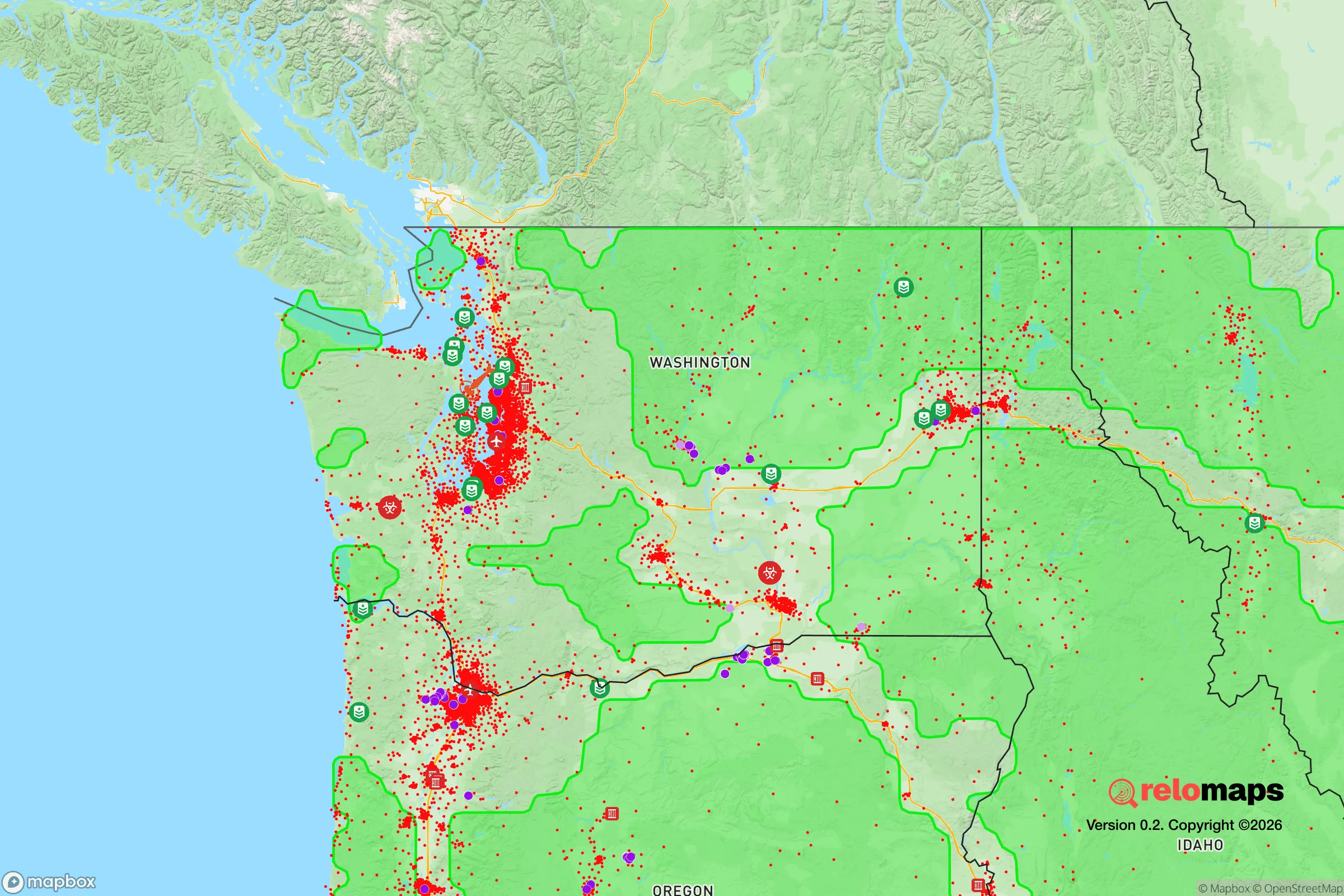
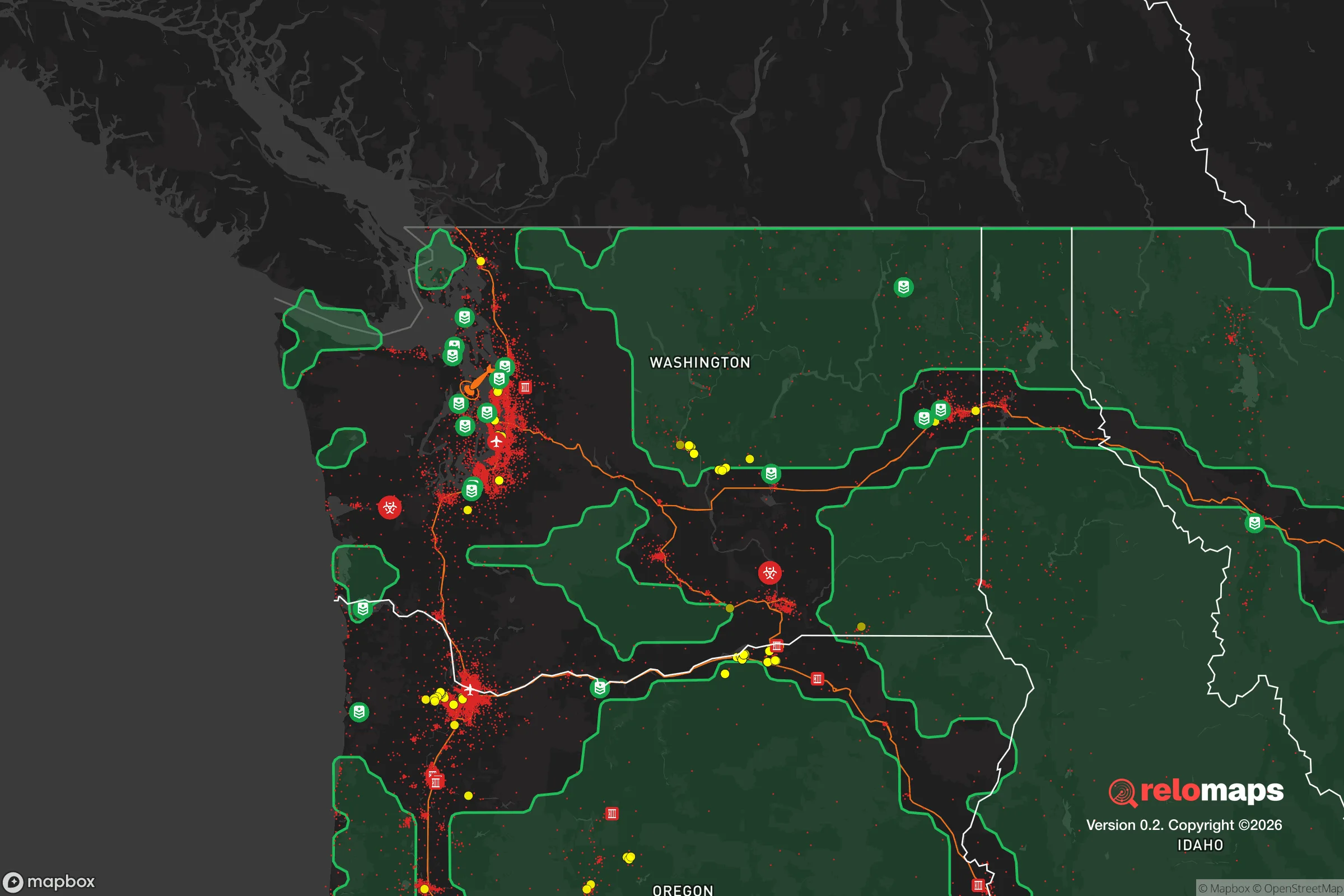


Important Note: For informational purposes only. This does not mean nothing bad ever happens in the green zones. Please use common sense. This is based on public data and modeled with AI. We tried to take a conservative approach but mistakes happen. We update this regularly as new information becomes available.
Solar Generator Recommendations
Backup power matters more here than in safer locations. We've picked three solar generators across budgets and capacity tiers — start with the budget unit if you only need a few essentials, or step up if you want to run a fridge and HVAC for days at a time.

Jackery Portable Power Station Explorer 300
Budget OptionPower on the Go: Weighing only 11 lbs, it's convenient to set up and store with book-sized foldable solar panels

BLUETTI Portable Power Station AC180
Designed for both indoor and outdoor scenarios, AC180 is highly capable as it has a robost capacity and continuous output power.

EF ECOFLOW DELTA Pro Ultra Power Station
Upgraded PickEcoFlow DELTA Pro Ultra is a whole-home energy system designed to grow with your family. Integrated with the Smart Home Panel 2, it scales to meet your evolving energy needs — keeping your home powered, intelligent, and secure through every stage of life.
We earn a commission, at no additional cost to you.
Strategic Assessment Analysis
SeaTac, Washington, presents a mixed strategic picture for the relocation-minded reader focused on resilience and self-sufficiency. Its primary advantage is its namesake—the Seattle-Tacoma International Airport—which offers unmatched logistical connectivity for evacuation or supply movement, but this same asset makes it a high-value target in any major disruption scenario. The city sits on a narrow isthmus between Puget Sound and Lake Washington, a position that provides natural water resources but also creates severe chokepoints for ground movement. For a conservative-leaning individual or family weighing disaster readiness, SeaTac offers convenience at the cost of significant exposure, demanding a clear-eyed assessment of its trade-offs before committing to the area.
Geographic position and natural advantages for long-term stability
SeaTac’s location in the central Puget Sound region gives it a temperate maritime climate that is a genuine asset for long-term resilience. The area averages roughly 37 inches of rain per year, spread evenly across months, which supports reliable local water tables and reduces the risk of prolonged drought compared to inland Western states. The presence of Puget Sound to the west and Lake Washington to the east provides abundant surface water for filtration and non-potable uses, a critical factor for self-sufficiency planning. The surrounding terrain is relatively flat coastal lowland, which simplifies gardening and small-scale agriculture compared to the steep hills of Seattle proper. However, the region’s volcanic soil, while fertile, is a double-edged sword—it originates from the Cascade Range’s active volcanoes, meaning any major eruption could deposit ash that disrupts water and air quality for weeks. The city’s elevation at roughly 300 feet above sea level keeps it above most tsunami risks from a Cascadia subduction zone earthquake, but the flat terrain offers no natural defensibility against ground-based threats. For a relocator, the climate and water access are genuine pluses, but the lack of topographic cover and the proximity to a major transportation hub reduce the area’s strategic depth.
Risks, exposures, and proximity to fallout-relevant landmarks
SeaTac’s most significant vulnerability is its direct adjacency to Seattle-Tacoma International Airport (Sea-Tac), one of the busiest airports on the West Coast. In any major conflict or terrorist scenario involving air travel, this facility becomes a primary target for disruption or attack. The airport’s runways and fuel storage are less than a mile from residential neighborhoods, meaning any incident—whether accidental or intentional—could produce immediate blast, fire, or contamination risks for nearby homes. Beyond the airport, SeaTac sits within 10 miles of Joint Base Lewis-McChord (JBLM), a major military installation that houses the I Corps headquarters and significant combat forces. JBLM is a high-probability target in any conventional war scenario, and its proximity means fallout patterns from a strike could easily reach SeaTac depending on prevailing winds. The city is also within 15 miles of the Puget Sound Naval Shipyard in Bremerton, which maintains nuclear-powered vessels, adding another layer of strategic risk. On the natural hazard side, SeaTac lies in a moderate seismic zone; a major Cascadia subduction zone earthquake (estimated at magnitude 9.0) would likely cause liquefaction in the low-lying areas near the airport and along the Duwamish River corridor. Tsunami risk is minimal due to elevation, but the shaking could collapse older infrastructure, including the elevated roadways that serve as the only evacuation routes north and south. For the disaster-conscious relocator, these overlapping man-made and natural exposures make SeaTac a location that requires robust contingency planning rather than a place to ride out events in place.
Practical resilience for a relocator: food, water, energy, and defensibility
For a family or individual aiming for self-sufficiency, SeaTac’s practical resilience is limited by its urban density and infrastructure dependencies. Water access is the strongest point: the city draws from the Cedar River and Green River watersheds, which are gravity-fed and less reliant on pumping than many municipal systems. In a prolonged power outage, residents near these sources could theoretically collect and treat water, but the city’s distribution system would fail without electricity to run booster pumps. Rainwater collection is viable given the climate, but local regulations may restrict cistern installation in some neighborhoods. Food production is challenging due to small lot sizes—typical single-family homes sit on 5,000 to 7,000 square foot parcels, leaving limited space for gardens. Community gardens exist but are few and often have waiting lists. The area’s mild growing season (roughly March to October) supports cool-weather crops like kale, potatoes, and berries, but protein production (livestock, poultry) is restricted by urban zoning in most of SeaTac. Energy resilience is poor: the grid is managed by Puget Sound Energy, which relies on a mix of hydro, natural gas, and coal. In a Cascadia earthquake scenario, hydroelectric dams on the Skagit and Columbia rivers could be damaged, leading to extended blackouts. Solar generation is viable but limited by frequent cloud cover—average insolation is about 3.5 kWh/m²/day, roughly half that of Arizona. Backup generators are common among prepared residents, but fuel supply chains would be disrupted quickly. Defensibility is the weakest category. SeaTac is a flat, grid-patterned suburb with multiple arterial roads (International Boulevard, State Route 518, and State Route 99) that offer easy access for any outside group. The city has no natural barriers—no rivers wide enough to block movement, no hills to provide observation points, and no dense forests for concealment. The airport itself would become a contested zone in any breakdown, drawing looters and desperate travelers. For a relocator, SeaTac is a location where you must bring your own resilience—stockpiles, water filtration, and security plans—rather than relying on the environment to provide it.
The overall strategic picture for SeaTac is one of convenience traded for exposure. Its geographic assets—temperate climate, abundant water, and flat land—are real but overshadowed by the liabilities of being a transportation and military hub. The city offers no natural defensibility, its food production capacity is minimal, and its energy grid is vulnerable to both seismic and man-made disruption. For a relocator who values self-sufficiency and disaster readiness, SeaTac works best as a temporary base with strong evacuation options (the airport itself) rather than a long-term homestead. If you are willing to invest heavily in off-grid systems and accept the risks of proximity to high-value targets, the area can be made workable. But for most conservative-leaning families seeking a resilient location, the suburbs farther east (like North Bend or Enumclaw) or south (toward Olympia) offer better balance between access and security. SeaTac is a strategic compromise—useful for those who need to stay connected, but not a place to bet your family’s safety on in a serious crisis.

* Values derived from national, state, county, city and local statistics and may differ in a specific area. Last updated: 2026-09-03T05:18:21.000Z
Narrative content on this page is AI-generated and may contain mistakes. Verify any details that matter before acting on them.
ReloMaps may earn a commission from affiliate links at no extra cost to you.

