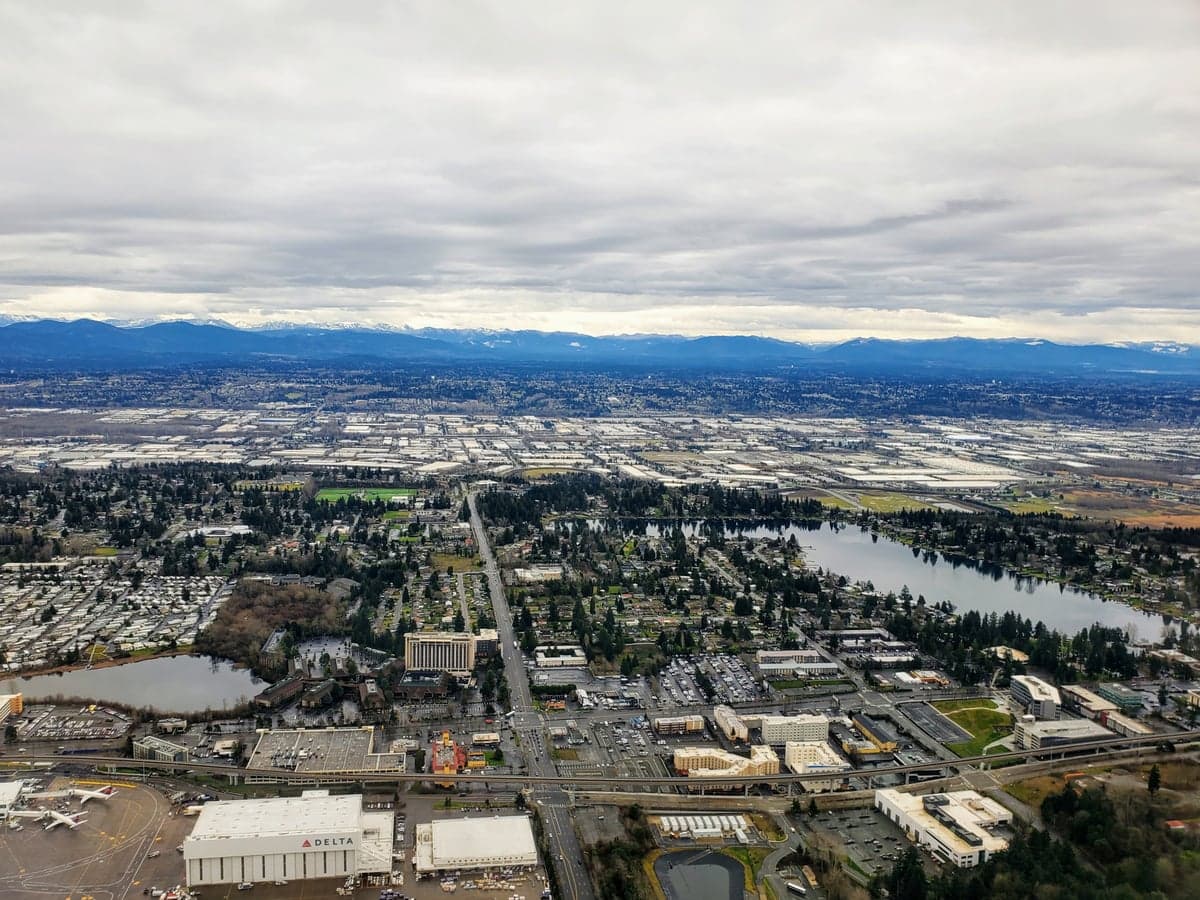
Photo: Wikipedia
Quality of Life in Seatac, WA
A high quality of life with strong walkability, manageable living costs, healthy neighborhood signals, and solid amenity access.
What does Quality of Life tell us?
Quality of Life blends cost of living, nearby amenities, socioeconomic signals, and neighborhood character. City-level scores represent the whole municipality; individual neighborhoods can differ.
What does this tell us?
Quality of Life blends cost of living, nearby amenities, socioeconomic signals, and neighborhood character. City-level scores represent the whole municipality; individual neighborhoods can differ.
Cost of Living
53% above national average
The Real Cost of Living in Seatac, WA for 2026
| Tier | Individual | Family (4) |
|---|---|---|
| Survival | $26k | $49k |
| Comfortable | $79k | $117k |
| Luxury | $116k+ | $180k+ |
| Elite (Top 5%) | $137k+ | $212k+ |
66%
The Area Signal
A metric tracking the socioeconomic signals of the area.
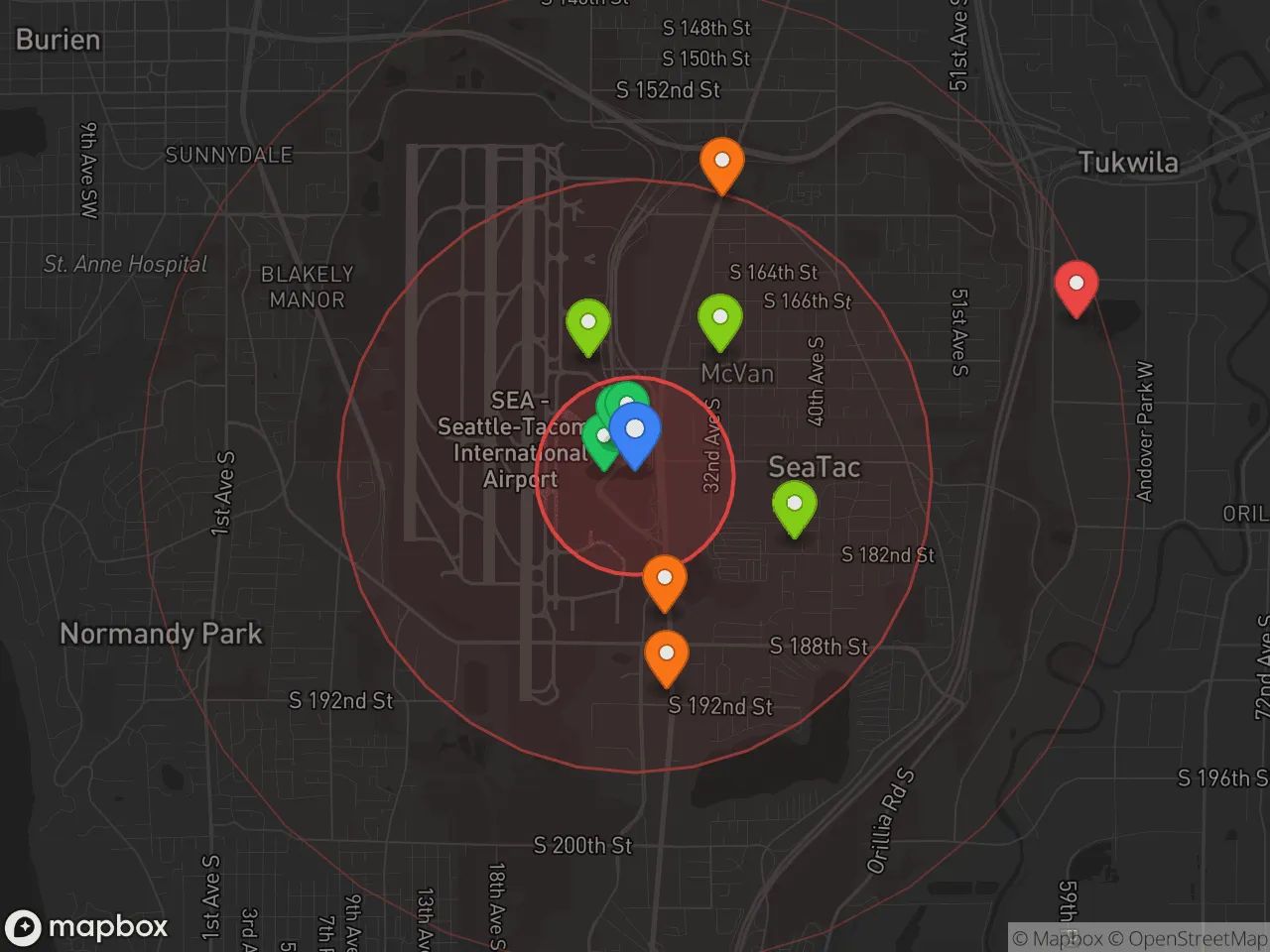
Hobbies
Explore the areaGroceries
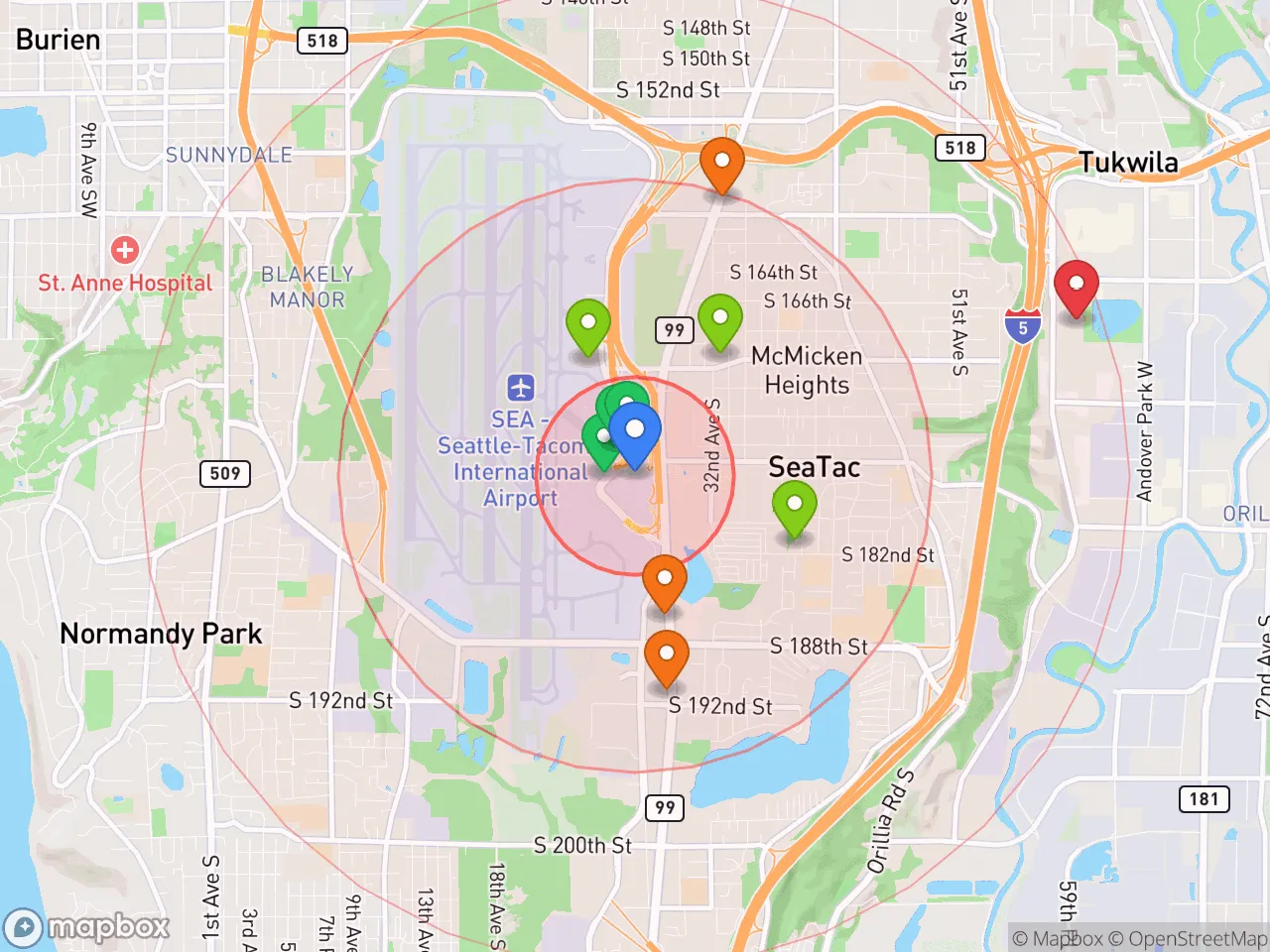
7 within 10 miles
Gas
20 within 10 miles
Hospital
20 within 20 miles
Airport
SEA — Seattle–Tacoma International
Post Office
USPS — Seatac, WA
Critical Amenities
Quality-of-Life Analysis
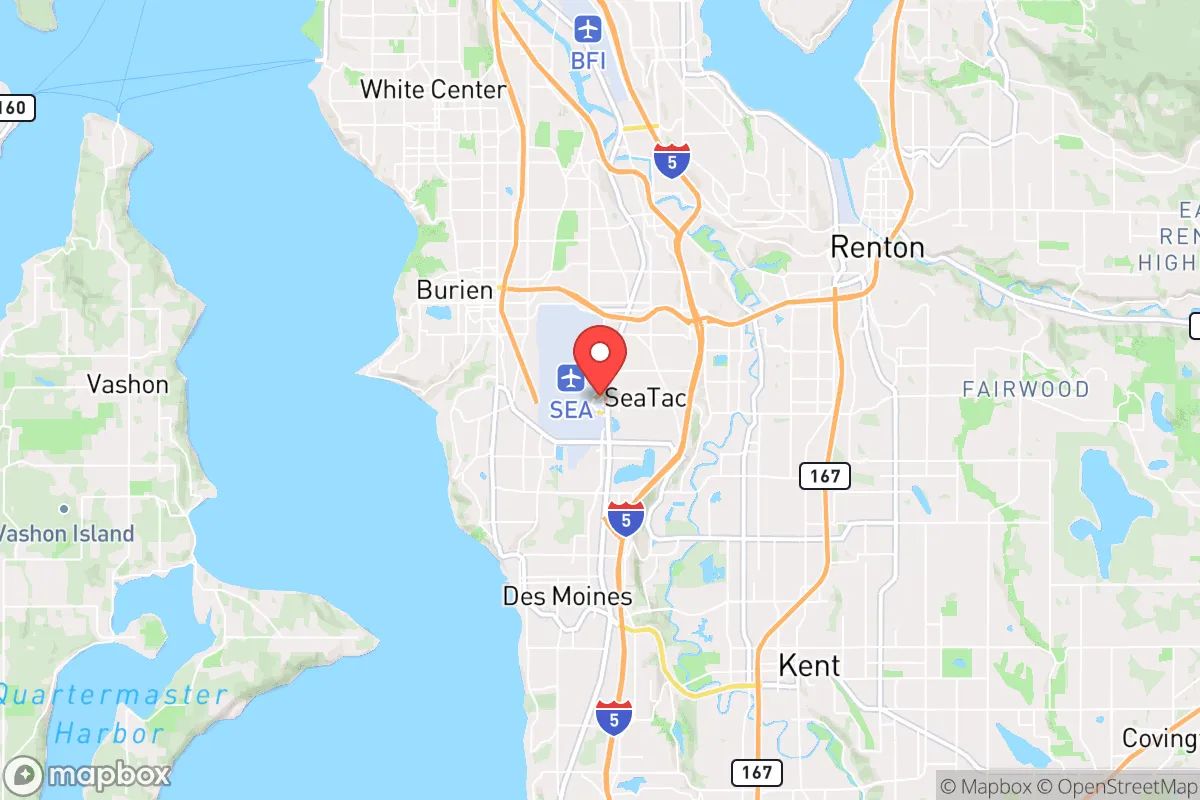
Seatac, Washington, presents a quality-of-life profile that is distinctly middle-market within the high-cost Puget Sound region, with a cost of living index of 153 (100 = US average) that places it well above the national norm but below the stratospheric levels of nearby Seattle or Bellevue. The city’s population is notably diverse, with a large immigrant community and a mix of airport workers, service-industry employees, and professionals who commute to Seattle and other Eastside tech hubs. This is not an affluent enclave of executives; rather, Seatac is a working- and middle-class city where residents prioritize affordability and airport proximity over prestige or scenic waterfront living.
How housing costs compare to Seattle and nearby suburbs
Housing in Seatac is a relative bargain by regional standards, though still expensive for most of the country. The median home value sits at $483,200, which is roughly $200,000 less than the Seattle median and about $100,000 below the King County average. Median rent is $1,637, a figure that undercuts Seattle’s typical $2,100+ by a wide margin and makes Seatac one of the more affordable options within a 20-minute drive of downtown Seattle. However, the cost of living index of 153 means everyday expenses—groceries, utilities, transportation—are about 50% higher than the national average. For a family earning the King County median household income of roughly $110,000, housing is manageable; for a single earner making $50,000, it is tight. Compared to nearby Burien or Des Moines, Seatac’s home values are similar, but its proximity to Sea-Tac Airport keeps prices slightly lower due to noise and traffic concerns.
What daily life is like for families and commuters
Daily life in Seatac is shaped heavily by the airport and the region’s transportation infrastructure. The average commute time is 25.6 minutes, which is shorter than the Seattle metro average of 30+ minutes, thanks to direct access to I-5, SR 518, and the Link Light Rail station at the airport. For families, the Highline School District serves the city, with schools like Seatac Middle School and Tyee High School offering bilingual programs and career-technical tracks. Amenities are practical rather than luxurious: the city has several large parks, including Angle Lake Park with its swimming beach and fishing pier, and the Seatac Community Center offers a pool, gym, and senior programs. Retail is concentrated along International Boulevard, with a mix of ethnic grocery stores, fast-food chains, and small restaurants reflecting the city’s Vietnamese, Ethiopian, and Latino communities. The airport noise is a constant factor—homes under the flight path experience frequent overflights, though many residents adapt or use soundproofing. Nightlife is minimal; most entertainment options require a short drive to Seattle or Tukwila’s Westfield Southcenter mall.
Seatac is best suited for people who need quick airport access, value ethnic diversity and affordability over prestige, and can tolerate aircraft noise as a trade-off for lower housing costs. It works well for airport employees, service workers, and commuters who want a shorter drive to downtown Seattle than suburbs farther south like Federal Way or Kent. Families with school-age children will find adequate but not top-tier schools, and those seeking a quiet, leafy suburb should look to Normandy Park or Burien instead. For budget-conscious renters and first-time homebuyers who prioritize location and transit connectivity, Seatac offers a pragmatic, no-frills quality of life that is hard to beat in King County.

Crime in Seatac, WA
Crime rates similar to the national median for U.S. locations.
Violent CrimeViolent Crime Analysis
Property CrimeProperty Crime Analysis
Crime Analysis
SeaTac, Washington, presents a challenging safety profile for potential residents. The city’s violent crime rate of 296.7 incidents per 100,000 residents and property crime rate of 1,929.8 per 100,000 are both significantly elevated compared to national averages, placing it among the higher-risk suburbs in the Seattle metropolitan area. These figures reflect the broader public safety concerns that have intensified in King County, where progressive prosecutorial policies have been linked to reduced accountability for repeat offenders.
Crime in context
SeaTac’s violent crime rate is roughly 20% higher than the U.S. national average, while its property crime rate is nearly double the national figure. When compared to the state of Washington’s overall rates—which themselves are above the national median—SeaTac stands out as a hotspot. The city’s proximity to Seattle-Tacoma International Airport contributes to transient populations and opportunistic theft, but the deeper driver is the local justice system. King County’s elected prosecutor and many district court judges have adopted progressive stances, including reduced bail requirements, diversion programs for property crimes, and lenient sentencing guidelines. Critics argue these policies have created a revolving door for offenders, directly undermining deterrence and public safety.
What residents experience
For those living in SeaTac, property crime is the most tangible threat. Vehicle break-ins, package theft, and residential burglaries are common complaints, particularly in neighborhoods near the airport and along major corridors like International Boulevard. Violent crime, while less frequent, includes aggravated assaults and robberies that often occur in commercial areas and transit hubs. Residents report that police response times have lengthened as the department grapples with staffing shortages, a challenge compounded by a legal environment that some officers say disincentivizes proactive enforcement. The combination of high crime volume and a justice system perceived as soft on offenders leaves many feeling that their safety is deprioritized.
Neighborhood-level variation does exist, but the differences are modest. Areas east of State Route 99, including the North SeaTac Park vicinity, tend to see slightly lower property crime rates than the western side, which is denser with hotels and apartment complexes. However, no part of SeaTac is insulated from the city’s overall crime climate. Prospective residents should weigh these realities carefully, particularly families and those who value predictable, low-crime environments. The city’s affordability relative to Seattle comes with a tangible trade-off in personal and property security.
* Values derived from national, state, county, city and local statistics and may differ in a specific area. Last updated: 2026-09-03T05:18:21.000Z
Narrative content on this page is AI-generated and may contain mistakes. Verify any details that matter before acting on them.
ReloMaps may earn a commission from affiliate links at no extra cost to you.

