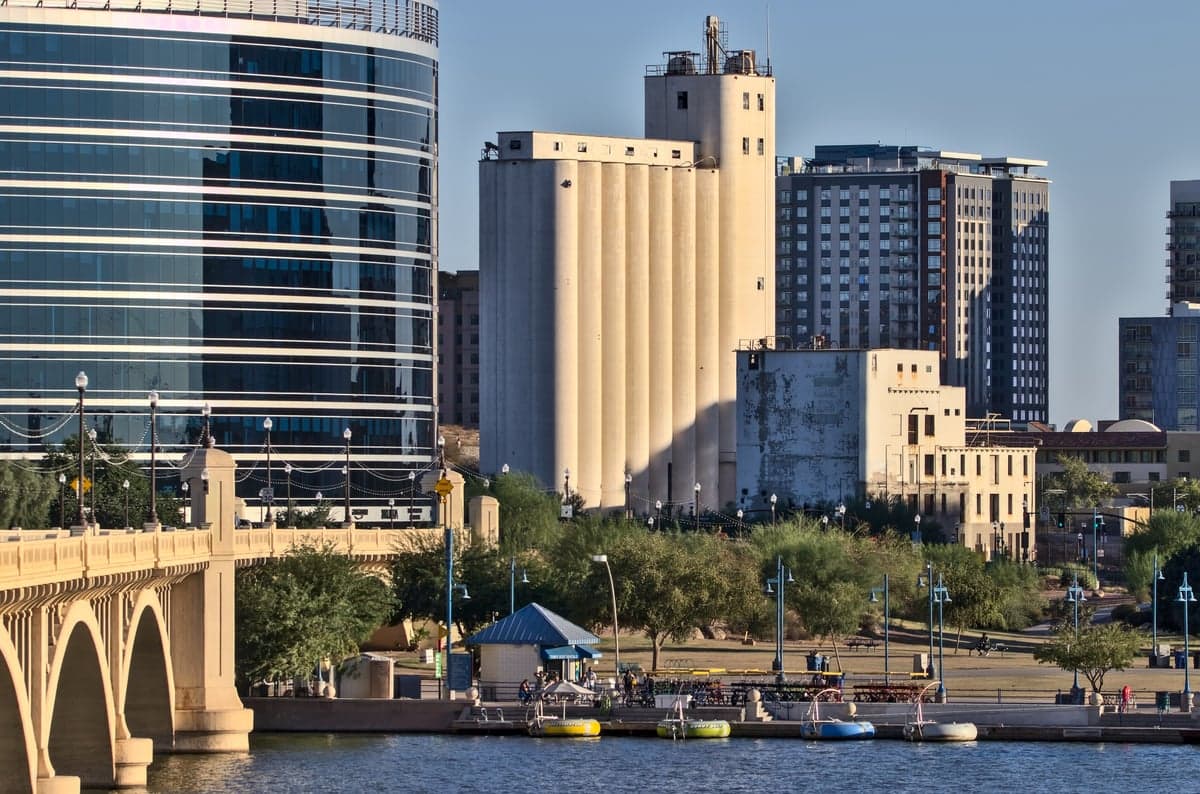
Photo: Wikipedia
Quality of Life in Tempe, AZ
A high quality of life with strong walkability, manageable living costs, healthy neighborhood signals, and solid amenity access.
What does Quality of Life tell us?
Quality of Life blends cost of living, nearby amenities, socioeconomic signals, and neighborhood character. City-level scores represent the whole municipality; individual neighborhoods can differ.
What does this tell us?
Quality of Life blends cost of living, nearby amenities, socioeconomic signals, and neighborhood character. City-level scores represent the whole municipality; individual neighborhoods can differ.
Cost of Living
44% above national average
The Real Cost of Living in Tempe, AZ for 2026
| Tier | Individual | Family (4) |
|---|---|---|
| Survival | $26k | $49k |
| Comfortable | $82k | $120k |
| Luxury | $131k+ | $202k+ |
| Elite (Top 5%) | $154k+ | $238k+ |
64%
The Area Signal
A metric tracking the socioeconomic signals of the area.
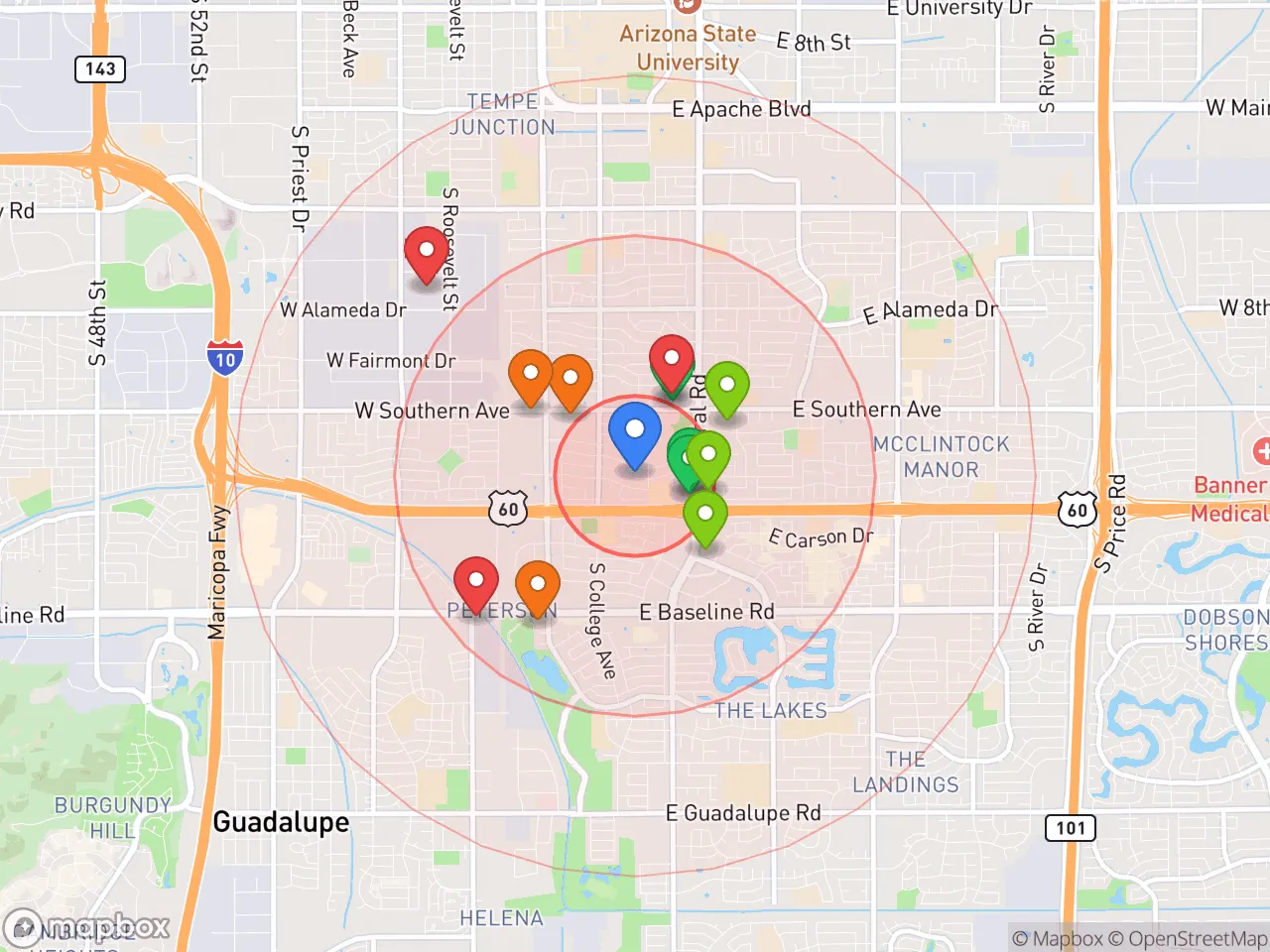
Hobbies
Explore the areaGroceries
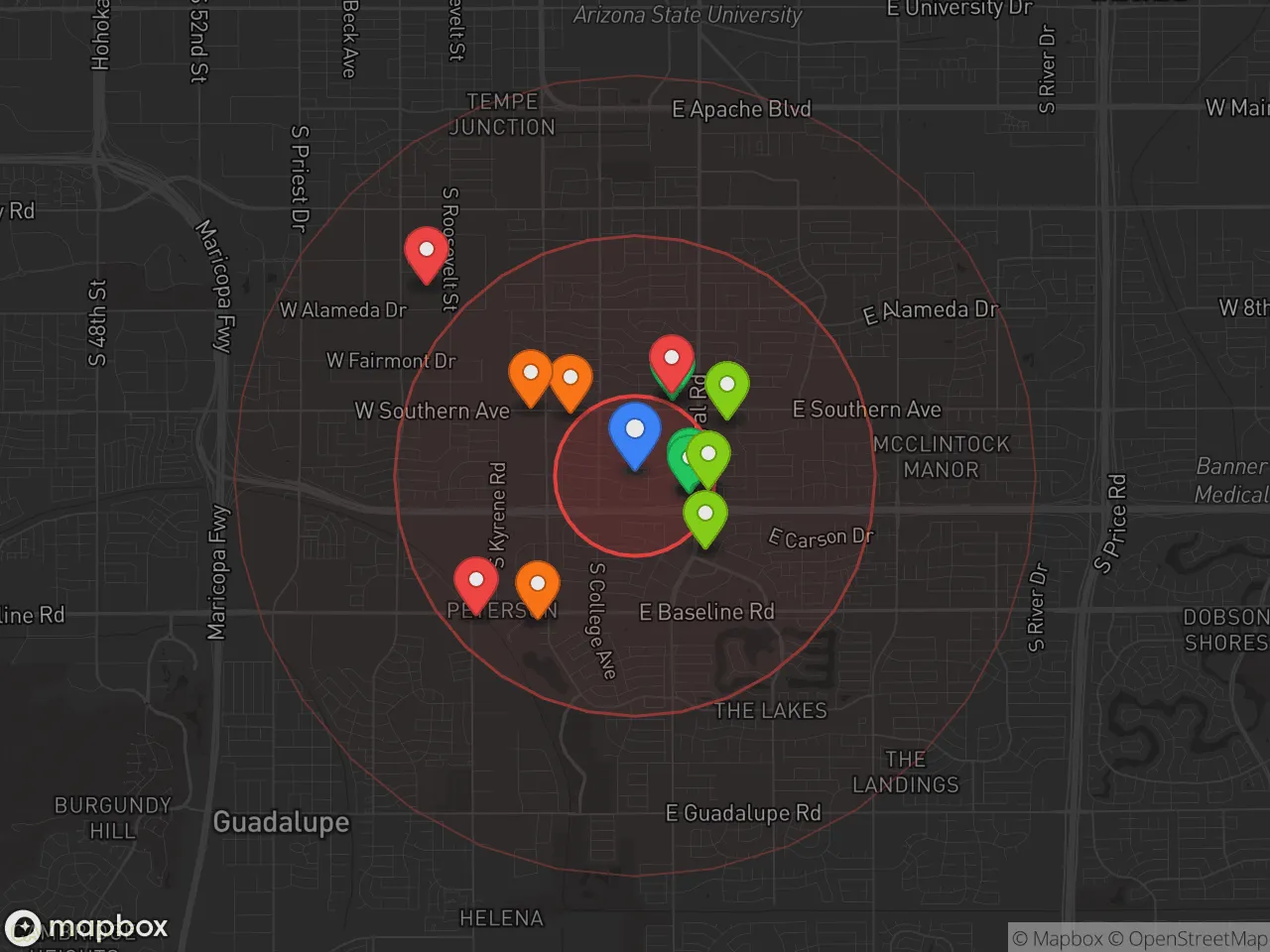
7 within 10 miles
Gas
20 within 10 miles
Hospital
20 within 20 miles
Airport
PHX — Phoenix Sky Harbor International
Post Office
USPS — Tempe, AZ
Critical Amenities
Quality-of-Life Analysis
Tempe, Arizona, presents a quality of life defined by its role as a dense, youthful urban hub anchored by Arizona State University, attracting a mix of students, tech professionals, and young families. With a cost of living index of 144 (100 being the U.S. average), the city is notably more expensive than the national norm but remains a competitive alternative to pricier Phoenix suburbs like Scottsdale or Paradise Valley. The median household income of roughly $62,000 reflects a population that skews younger and more transient, with a significant portion of residents renting rather than owning.
Cost of living, housing affordability, and how Tempe compares to nearby cities
Tempe’s housing market is the primary driver of its elevated cost of living. The median home value sits at $421,900, which is about 20% higher than the Phoenix metro average but significantly lower than Scottsdale’s median of roughly $650,000. Renters face a median monthly rent of $1,623, a figure that has climbed steadily since 2020 but remains below the $1,800+ averages seen in Chandler and Gilbert. For context, a household earning the median income would need to spend nearly 31% of gross pay on a mortgage at current rates, pushing many residents toward renting or commuting. The average commute time of 21.4 minutes is shorter than the Phoenix metro average of 26 minutes, thanks to Tempe’s compact layout and access to light rail and freeways. However, utility costs and grocery prices are roughly 10% above national averages, meaning everyday expenses add up quickly for families.
What daily life is like for families, amenities, and school quality
Daily life in Tempe revolves around its walkable downtown core, extensive canal paths, and proximity to outdoor recreation like Tempe Town Lake and Papago Park. The Tempe Elementary School District and Tempe Union High School District serve most families, with schools like Corona del Sol High School and McClintock High School earning B+ ratings on GreatSchools—solid but not top-tier compared to Chandler or Scottsdale districts. For higher education, Arizona State University’s main campus is a dominant presence, offering cultural events, libraries, and sports that are open to the public. Amenities include the Tempe Marketplace shopping center, Mill Avenue’s restaurant row, and the 24/7 energy of a college town. The city’s crime rate is about 15% higher than the national average, with property crime being the primary concern, though violent crime is concentrated near the university and transit hubs. Families with children often gravitate toward neighborhoods like Maple-Ash or the Warner-Rural area for quieter streets and better school access.
Tempe is best suited for young professionals, graduate students, and empty nesters who value walkability, nightlife, and a fast-paced urban environment over suburban sprawl. Families seeking top-tier public schools and larger yards will find better value in Chandler or Gilbert, while those prioritizing a short commute and cultural density will thrive here. The city’s affordability relative to Scottsdale and its central location make it a pragmatic choice for anyone working in the Phoenix metro’s tech corridor, particularly near the ASU Research Park or the 101 freeway corridor.

Crime in Tempe, AZ
Higher crime rates than 59% of comparable U.S. locations.
Violent CrimeViolent Crime Analysis
Property CrimeProperty Crime Analysis
Crime Analysis
Tempe, Arizona, presents a mixed safety profile that warrants careful consideration for potential residents. While the city benefits from the economic vitality of Arizona State University and a robust downtown, its crime rates are notably higher than both state and national averages, a situation that many attribute to the progressive criminal justice policies prevalent in Maricopa County. With a violent crime rate of 419.1 incidents per 100,000 residents and a property crime rate of 2,694 per 100,000, Tempe demands a thorough evaluation of its public safety landscape.
Crime in context
Tempe’s crime statistics significantly exceed national benchmarks. The city’s violent crime rate is roughly 20% higher than the U.S. average, while its property crime rate is nearly double the national figure. Compared to the state of Arizona, Tempe’s violent crime rate is about 10% above the state average, and its property crime rate is approximately 30% higher. These elevated numbers are consistent with trends seen in many large metro-area suburbs where progressive district attorneys and judges have implemented policies such as cash bail reform, reduced prosecution of non-violent offenses, and early release programs. Critics argue these approaches, while well-intentioned, have led to a revolving-door justice system that emboldens repeat offenders and undermines deterrence, directly contributing to the higher crime volumes seen in Tempe.
What residents experience
For those living in Tempe, the impact of these crime rates is tangible. Property crime is the most common concern, with theft, vehicle break-ins, and package theft being frequent occurrences, particularly in neighborhoods near the university and along major transit corridors like Mill Avenue and Apache Boulevard. Violent crime, while less common, is not isolated; incidents of aggravated assault and robbery occur, often concentrated around nightlife districts and late-night hours. Residents report a heightened sense of vigilance, with many investing in home security systems, steering wheel locks, and neighborhood watch participation. The presence of a large student population also means a transient community that can be more vulnerable to crime. The perception among many long-term residents is that the local justice system’s focus on rehabilitation over accountability has created an environment where property criminals face minimal consequences, eroding the sense of safety in daily life.
Neighborhood-level variation
Safety in Tempe is not uniform. The city’s safest areas are generally the established, family-oriented neighborhoods in the southern and western parts of town, such as the areas around Kiwanis Park and the neighborhoods near McClintock Drive and Guadalupe Road. These areas see significantly lower crime rates. Conversely, the highest concentrations of crime are found in the dense, student-heavy areas surrounding Arizona State University’s main campus, particularly the "Apache Boulevard corridor" and the neighborhoods just north of the university. The downtown Tempe entertainment district also experiences elevated crime, especially late at night. Prospective renters and buyers should research specific block-level crime maps and consider that proximity to the university and major nightlife hubs generally correlates with higher property crime and occasional violent incidents.
* Values derived from national, state, county, city and local statistics and may differ in a specific area. Last updated: 2026-05-01T20:30:26.000Z
Narrative content on this page is AI-generated and may contain mistakes. Verify any details that matter before acting on them.
ReloMaps may earn a commission from affiliate links at no extra cost to you.

