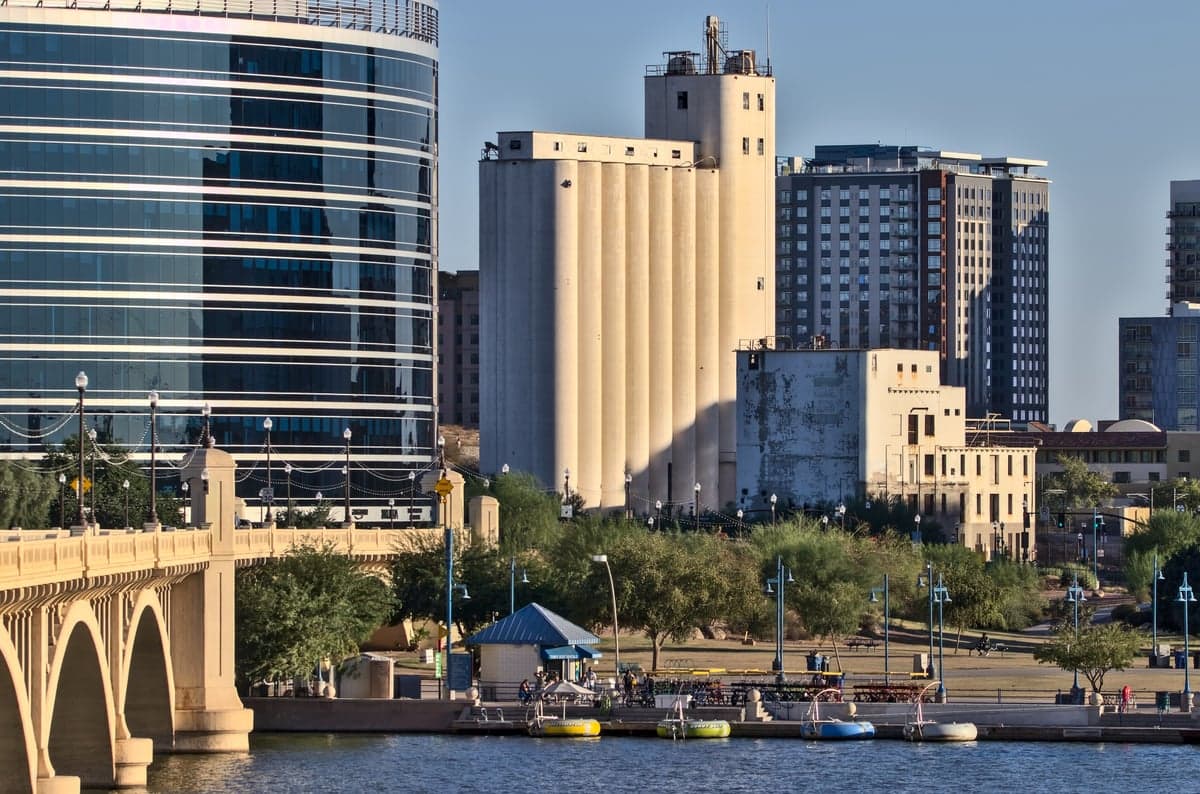
Photo: Wikipedia
Political ClimatePolitical Climate in Tempe, AZ
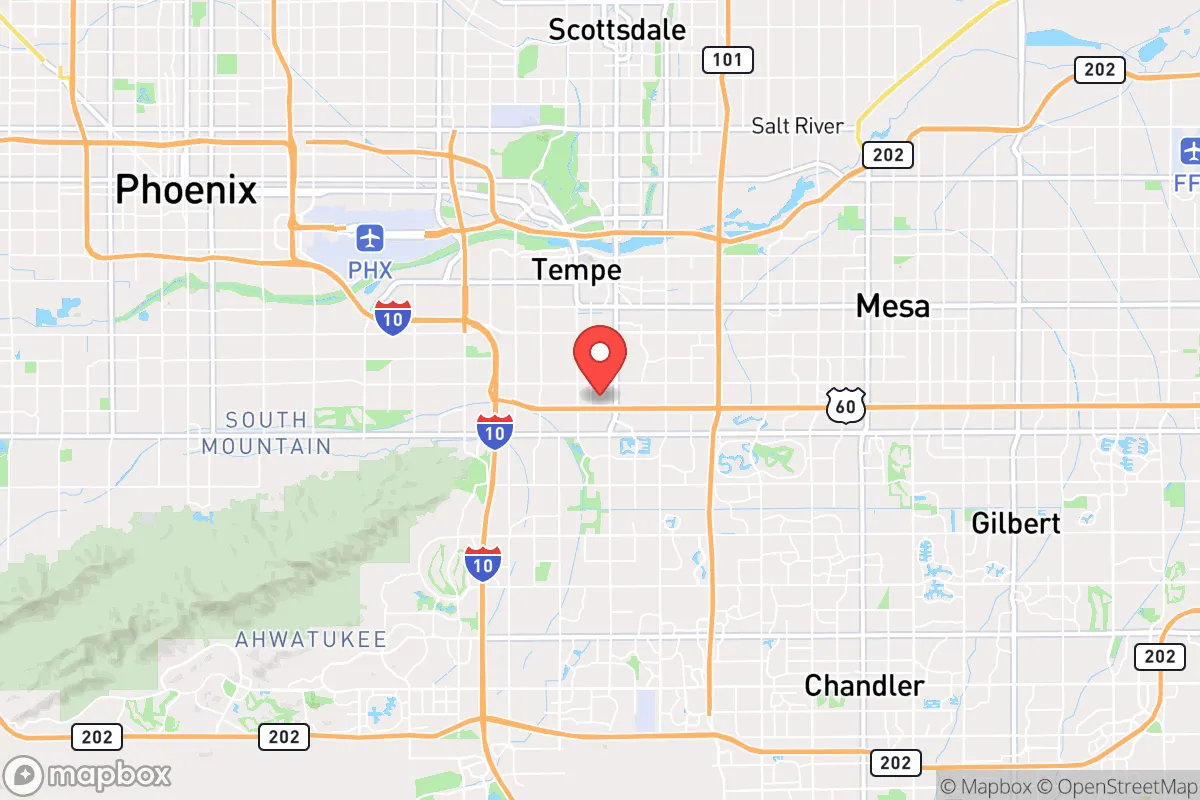
District shown is the primary district for this city’s centroid. Cities may span multiple districts.
Local Political AnalysisPolitical Analysis of Tempe, AZ
Tempe, Arizona, has shifted noticeably to the left over the past decade, and if you’ve lived here as long as I have, you’ve felt it. The city now carries a Cook PVI of D+4, meaning it votes about four points more Democratic than the national average—a far cry from the purple-leaning swing town it used to be. While the city council and local ballot measures have increasingly embraced progressive policies, the surrounding suburbs like Chandler and Gilbert remain reliably conservative, creating a stark political contrast just a few miles down the road.
How it compares
Drive ten minutes south to Chandler or east to Gilbert, and you’re in a different world politically. Those communities have held steady with Republican majorities, even as Tempe has trended blue. In the 2024 election, Tempe’s precincts around Arizona State University’s campus voted heavily Democratic, while precincts near South Tempe and the border with Chandler leaned more conservative. The result is a city that feels increasingly divided internally, with policy decisions—like zoning changes and public spending priorities—often reflecting the louder, more progressive voices from the university area. If you value local control and limited government, you’ll notice that Tempe’s leadership has been more willing to experiment with new regulations, from housing mandates to environmental ordinances, that can feel like overreach to longtime residents.
What this means for residents
For families and small business owners, the shift has practical consequences. Property taxes have crept up as the city funds new transit projects and sustainability initiatives, and some residents feel their voices are drowned out by transient student populations who don’t stick around to see the long-term effects. The city council’s recent push for higher density housing near light rail stations, for example, has sparked debates about neighborhood character and traffic congestion. If you’re a conservative-leaning resident, you might find yourself voting more often against ballot measures than for them—a defensive posture that can be exhausting. On the flip side, the conservative strongholds in Chandler and Gilbert offer a nearby escape for shopping, dining, and community events where the political vibe is more aligned with traditional values.
What daily life is like for families
Day-to-day, Tempe still has plenty to offer—great parks, a solid school system, and a lively downtown—but the political climate can seep into unexpected places. School board meetings have become more contentious, with debates over curriculum and library books mirroring national trends. The city’s emphasis on “equity” initiatives in public programs has raised eyebrows among those who prefer a colorblind approach to governance. If you’re raising kids here, you’ll want to stay engaged and vote in local elections, because the direction of the city is still being shaped by a relatively small number of active voters. The good news is that the conservative suburbs are close enough to provide a counterbalance, and many Tempe residents simply cross city lines for services or community groups that better reflect their values.
Culturally, Tempe has always been a bit of an outlier in the East Valley—home to ASU, a vibrant arts scene, and a younger demographic. That’s not necessarily a bad thing, but the policy distinctions are real. The city has embraced bike lanes, light rail expansion, and renewable energy mandates faster than its neighbors, which can feel like government overreach if you prefer market-driven solutions. Looking ahead, I expect Tempe to continue its leftward drift as the university grows and new housing attracts more progressive transplants. For conservatives, the best strategy is to stay involved, support local candidates who prioritize fiscal responsibility and individual freedoms, and remember that the rest of the East Valley still offers a more traditional Arizona lifestyle just a short drive away.

State Political ClimatePolitical Climate in Arizona
State Political AnalysisPolitical Environment in the State
Arizona has transformed from a reliably conservative stronghold into a true battleground state over the past two decades, with its partisan lean shifting from solid Republican to a narrow +2.5-point margin for Joe Biden in 2020 and a razor-thin 0.3-point win for Donald Trump in 2024. The state’s political coalition is now a three-way tug-of-war between Maricopa County’s sprawling suburban moderates, the deep-red rural and exurban counties, and the fast-growing, left-leaning Pima County anchored by Tucson. The 10-20 year trajectory shows a state that was once safely red, then purple, and now teeters on a knife’s edge—with in-migration from California and the Midwest reshaping the electorate faster than almost anywhere else in the country.
Urban vs. rural divide
The political map of Arizona is brutally simple: Maricopa County, home to Phoenix and its suburbs, decides everything. In 2020, Maricopa went for Biden by about 45,000 votes out of 2 million cast—a margin that flipped the state blue for the first time since 1996. But that’s not the whole story. The county itself is a patchwork: Scottsdale and Paradise Valley remain reliably Republican, while Mesa and Chandler have shifted from red to purple as tech workers and Californians moved in. Tucson (Pima County) is a Democratic stronghold, delivering 60%+ margins for Democrats, while Flagstaff (Coconino County) is even bluer. The rural counties—Yavapai (Prescott), Mohave (Kingman), Gila (Globe), and Apache—vote 70-80% Republican, but their populations are too small to offset the urban growth. The real story is the exurbs: places like Queen Creek and Buckeye are growing fast and leaning conservative, but they’re being outpaced by the blue-leaning suburbs closer to Phoenix’s core. The divide isn’t just urban vs. rural—it’s old Arizona vs. new Arizona, with the new arrivals tilting the balance.
Policy environment
Arizona’s policy environment is a mixed bag that still leans conservative on most fronts, but with worrying cracks. The state has a flat income tax rate of 2.5% (down from 4.5% in 2021), thanks to a 2022 law that made it one of the lowest in the nation—a clear win for personal freedom. Property taxes are low, and there’s no estate tax. On education, the state passed universal school choice in 2022 through the Empowerment Scholarship Account program, allowing any family to use public funds for private or homeschool expenses. That’s a huge plus for parents. But healthcare policy is a concern: the state expanded Medicaid under Obamacare in 2013, and the program now covers about 2 million people, creating a long-term fiscal drag. Election laws have been a flashpoint: in 2021, the legislature passed a law requiring voter ID for mail-in ballots and limiting ballot drop boxes, but a 2024 law expanded early voting access again. The state also has a “dark money” disclosure law that conservatives see as a free speech infringement. Overall, the policy environment is still more free than most states, but the trend is toward more regulation, not less.
Trajectory & freedom
The trajectory on personal freedom is genuinely concerning. On the positive side, Arizona passed a constitutional carry law in 2010, allowing permitless concealed carry—a bedrock freedom that remains intact. The state also has strong parental rights in education, with a 2022 law requiring schools to post curriculum online and allowing parents to opt their kids out of sex education. But the bad news is mounting. In 2023, the legislature passed a near-total abortion ban (the 1864 law), but it was quickly repealed after public backlash—showing how quickly the political winds can shift. More troubling: in 2024, the state supreme court upheld a law allowing cities to impose rent control, a direct assault on property rights. The governor, Katie Hobbs (a Democrat), has used executive orders to expand voting access and block school choice implementation. The biggest freedom threat is the Secure the Border Act (Proposition 314), passed by voters in 2024, which makes illegal border crossing a state crime—a strong move for sovereignty, but it’s being challenged in court. The trajectory is mixed: gun rights are secure, but property rights, education freedom, and election integrity are under constant pressure from the growing progressive coalition.
Civil unrest & political movements
Arizona has seen its share of political flashpoints. The most visible is the border crisis: in Yuma and Nogales, the flow of illegal crossings has overwhelmed local resources, leading to frequent protests from both sides. The “Build the Wall” movement remains strong in rural areas, with groups like the Arizona Border Patrol holding regular rallies. On the left, the #RedForEd teacher strikes in 2018 shut down schools across the state and led to a wave of progressive activism that still influences local elections. The 2020 election integrity controversy was huge here: the “Arizona Audit” in Maricopa County (led by the state senate) became a national spectacle, with claims of irregularities that were never proven but still fuel distrust. In Phoenix, Black Lives Matter protests in 2020 turned violent, with property damage and clashes with police. More recently, the Save Our Schools movement has fought school choice expansion, while the Moms for Liberty chapter in Gilbert has been active on parental rights. The political temperature is high, and a new resident will notice the constant tension—especially around immigration and education.
Projection
Over the next 5-10 years, Arizona is likely to become more purple, with a slight leftward tilt. The demographic trends are clear: the state is growing by about 1.5% annually, with most new arrivals coming from California and other blue states. These transplants tend to be moderate-to-liberal on social issues but fiscally conservative—a mix that could push the state toward a “Colorado-style” politics: socially liberal, economically moderate. The rural counties will remain deeply red, but their share of the vote will shrink as Maricopa and Pima counties grow. The 2024 election showed that Trump can still win Arizona, but only by a hair—and the GOP’s internal divisions (MAGA vs. establishment) are hurting their ability to hold the state. Expect more ballot initiatives on abortion, school choice, and taxes, as the legislature and governor remain gridlocked. A new resident moving in now should expect a state that is still freer than most, but where the political battles are constant and the outcome uncertain. The freedom you enjoy today—low taxes, school choice, gun rights—could be gone in a decade if the leftward trend continues.
For a conservative-leaning individual or family, Arizona still offers a better deal than most blue states, but it’s no longer a safe bet. The low taxes and school choice are real, but you’ll need to be politically active to keep them. If you’re moving here, choose your location carefully: Queen Creek, Prescott, or Yavapai County will give you a conservative community, while Phoenix and Tucson are increasingly progressive. The bottom line: Arizona is a state worth fighting for, but it’s a fight you’ll have to join—or risk losing the freedoms that brought you here.
* Values derived from national, state, county, city and local statistics and may differ in a specific area. Last updated: 2026-05-01T20:30:26.000Z
Narrative content on this page is AI-generated and may contain mistakes. Verify any details that matter before acting on them.
ReloMaps may earn a commission from affiliate links at no extra cost to you.

