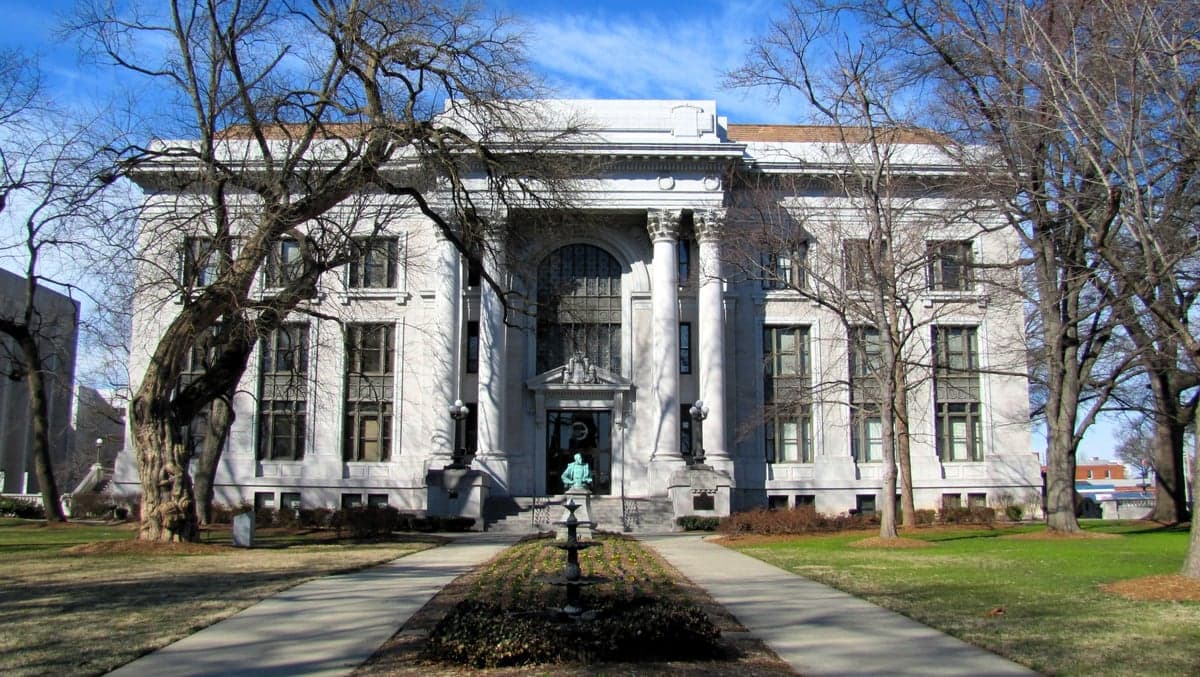
Photo: Wikipedia
Personal Sovereignty in Hamilton County
Viable for self-reliance. Generally workable, though some barriers may limit total independence.
What does Personal Sovereignty tell us?
Personal Sovereignty measures your capacity for self-reliance and independence with minimal government friction. Higher scores mean fewer barriers between you and the way you want to live... but it assumes you have the space you need and good neighbors.
What does this tell us?
Personal Sovereignty measures your capacity for self-reliance and independence with minimal government friction. Higher scores mean fewer barriers between you and the way you want to live... but it assumes you have the space you need and good neighbors.
State Policy
Energy independence: Importer (25% of energy produced in-state)
Personal Liberty
Homesteading

Personal Liberty Analysis
Hamilton County, Tennessee, anchored by Chattanooga, offers a notably strong personal sovereignty environment compared to many urbanized areas in the Southeast, driven by Tennessee’s low-tax, limited-government state framework and a deeply rooted local culture of self-reliance. While the county is not a libertarian free-for-all—zoning and building codes exist, particularly inside the Chattanooga city limits—the overall regulatory touch is light relative to peer metros like Nashville or Atlanta. For a relocation reader prioritizing autonomy, the key trade-off is between the convenience and services of Chattanooga and the greater freedom found in the county’s more rural towns like Signal Mountain, Soddy-Daisy, and Ooltewah, where property rights and self-defense norms are more pronounced.
Tax burden and regulatory posture in Hamilton County
Tennessee has no state income tax on wages, and Hamilton County’s property tax rate is moderate—around $2.37 per $100 of assessed value for the county portion, with Chattanooga adding a city rate of about $1.80, bringing the combined rate to roughly $4.17 for urban properties. This is competitive with most of the South and far lower than high-tax states like New York or California. Sales tax is high at 9.25% (state + county + city), but food and prescription drugs are exempt. The regulatory posture is business-friendly: Tennessee is a right-to-work state, and Hamilton County has no county-level business licensing beyond basic occupational licenses for specific trades. Zoning is most restrictive inside Chattanooga, where historic districts and overlay zones (e.g., the North Shore, St. Elmo) impose design review and setback rules. Outside the city, in unincorporated areas like Harrison and Birchwood, zoning is minimal—mostly agricultural or low-density residential—allowing for home-based businesses, workshops, and livestock with fewer hurdles. The county’s building code enforcement is standard but not aggressive; permits are required for structural work but often waived for minor repairs or outbuildings in rural zones.
Self-defense and gun law specifics in Hamilton County
Tennessee is a constitutional carry state as of 2021, meaning any law-abiding adult 21 or older can carry a handgun openly or concealed without a permit. Hamilton County fully respects this: there are no county-specific gun bans or magazine restrictions, and the Chattanooga city council has not passed any local firearms ordinances that exceed state law. The sheriff’s office issues enhanced carry permits for reciprocity with other states, but they are optional. Stand-your-ground laws are on the books, with no duty to retreat in any place where the person is lawfully present. For a relocation reader, the practical reality is that gun ownership is common and socially accepted across the county, from the rural outskirts of Sale Creek to the suburban neighborhoods of East Brainerd. The only notable restriction is that carrying firearms is prohibited in posted government buildings, schools, and private property where the owner bans them—a standard limitation. The county’s gun culture is robust: multiple indoor and outdoor ranges exist, including the Chattanooga Rifle Club and the Prentice Cooper State Forest range, and gun shows are held regularly at the Chattanooga Convention Center. For self-defense, the legal environment is among the most favorable in the Southeast, comparable to Texas or Florida.
Self-reliance and homesteading viability in Hamilton County
Homesteading and off-grid living are viable in Hamilton County, but feasibility varies sharply by location. Inside Chattanooga city limits, lot sizes are small (typically 0.1–0.25 acres), and city codes require connection to municipal water and sewer, making true off-grid living impractical. However, in unincorporated areas and smaller towns, the picture changes dramatically. Soddy-Daisy and Ooltewah offer many residential lots of 1–5 acres, often zoned for agricultural use, allowing chickens, goats, and even small-scale livestock. Birchwood, in the county’s far north, has large tracts of 5–20 acres with no municipal utilities, where residents commonly use well water, septic systems, and solar panels. The county does not prohibit rainwater collection, and Tennessee law explicitly protects the right to harvest rainwater. Off-grid solar is legal and common, though net metering with the Tennessee Valley Authority (TVA) is available for grid-tied systems. The main regulatory hurdle is that any permanent dwelling must meet state building codes for health and safety, but there are no county-level bans on tiny houses, yurts, or earthships in rural zones. For a family seeking self-reliance, the best bet is to buy land in the county’s northern or eastern rural pockets—Sale Creek and Harrison are particularly homestead-friendly—where zoning is light, neighbors are spaced out, and the county’s planning department is known for a hands-off approach.
Personal liberties in Hamilton County: parental rights, medical autonomy, speech, and property
Tennessee has strong parental rights protections: state law requires parental consent for minors’ medical procedures, and the state’s “Parental Bill of Rights” (enacted 2022) gives parents the right to direct their child’s education, access school records, and opt out of any curriculum they find objectionable. Hamilton County Schools, the 10th-largest district in Tennessee, generally respects these rights, though some parents have reported friction over library book content and sex education materials—a common tension in conservative-leaning districts. Medical autonomy is mixed: Tennessee has no state-level vaccine mandate for adults, and COVID-era restrictions were minimal in Hamilton County compared to blue states, but the state does have strict abortion laws (ban at conception with narrow exceptions). For speech and assembly, the county is a First Amendment stronghold; protests and political gatherings are routine on the Chattanooga Market Square and at the Hamilton County Courthouse, with no notable local censorship. Property rights are well-protected: Tennessee’s eminent domain laws are limited to public use (not economic development), and Hamilton County has not engaged in controversial takings. The county does enforce nuisance ordinances (e.g., noise, junk vehicles) in residential zones, but these are typically complaint-driven and not proactively enforced in rural areas. For a reader who values low government intrusion into daily life, Hamilton County scores high on parental rights and property rights, moderate on medical autonomy, and very high on speech and assembly.
Overall, Hamilton County offers a personal sovereignty profile that is stronger than most urban counties in the South, particularly when compared to Atlanta’s Fulton County or Nashville’s Davidson County, where taxes and regulations are heavier. The county’s combination of no income tax, constitutional carry, light rural zoning, and strong parental rights makes it a compelling choice for families and individuals who prioritize independence. The primary limitation is the urban-rural split: inside Chattanooga, autonomy is somewhat constrained by city codes and higher taxes, while towns like Soddy-Daisy, Ooltewah, and Birchwood deliver a much freer environment. For a relocation reader seeking a place where personal sovereignty is respected rather than managed, Hamilton County ranks among the top tier in Tennessee, behind only the most rural counties like Van Buren or Pickett, but far ahead of any major metro area in the Northeast or West Coast.

* Values derived from national, state, county, city and local statistics and may differ in a specific area. Last updated: 2026-10-04T23:33:32.000Z
Narrative content on this page is AI-generated and may contain mistakes. Verify any details that matter before acting on them.
ReloMaps may earn a commission from affiliate links at no extra cost to you.

