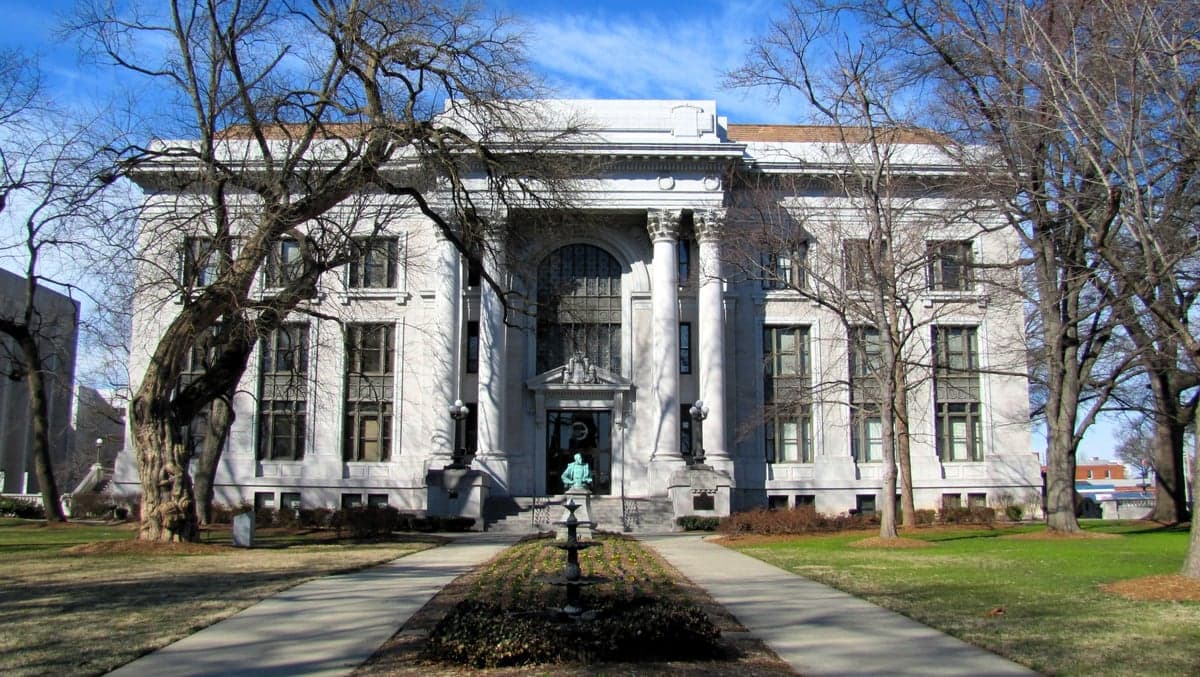
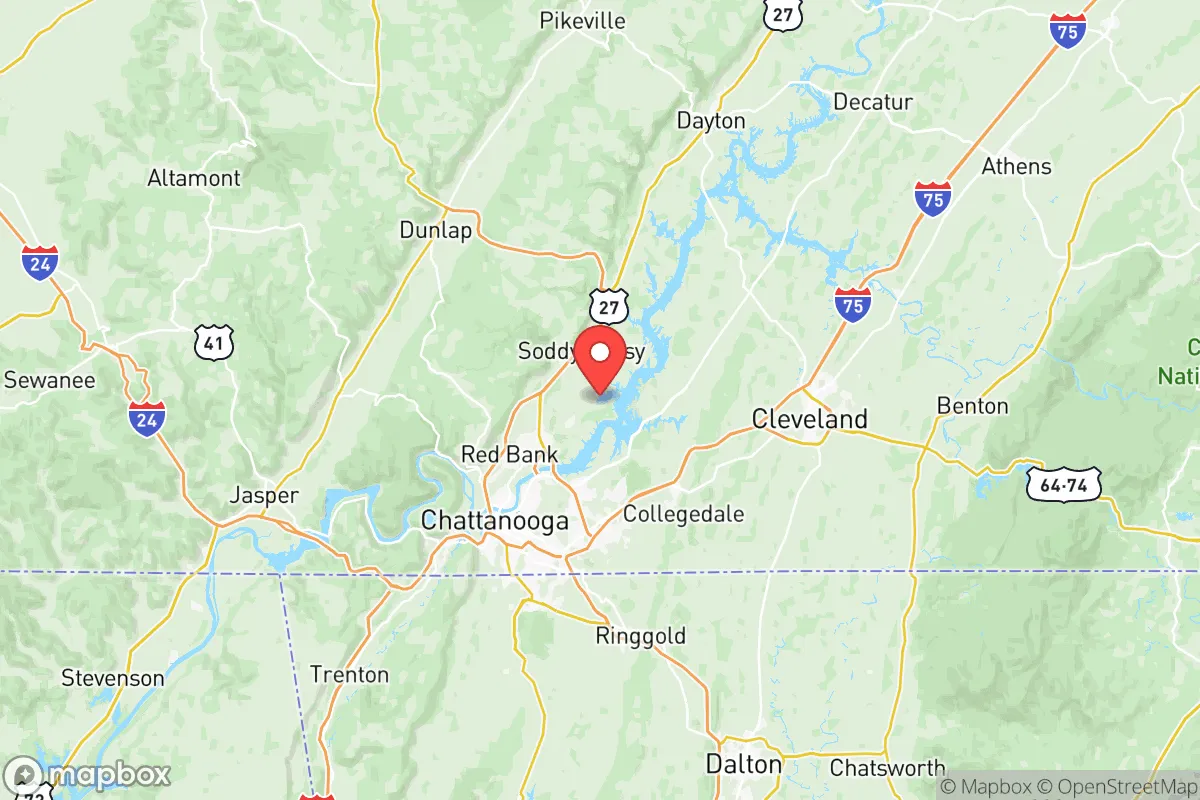
Photo: Wikipedia
Political ClimatePolitical Climate in Hamilton County
Showing district-level results — no local-only data available.
Local Political AnalysisPolitical Analysis of Hamilton County
Hamilton County, anchored by Chattanooga, is a classic Tennessee bellwether that has shifted decisively red over the past decade, now carrying a Cook PVI of R+18 — a full five points more Republican than the state’s already solid R+13. That gap is wider than it looks: while Tennessee as a whole has been reliably red for years, Hamilton County’s move rightward has been sharper and more recent, driven by a combination of suburban sprawl, an influx of retirees and conservative-leaning remote workers, and a local Democratic party that has struggled to maintain its foothold outside the urban core. The county still elects Democrats to some local offices, but the presidential and statewide margins tell the real story — in 2024, Donald Trump carried Hamilton County by roughly 18 points, a far cry from the competitive races of the 1990s and early 2000s.
How it compares
Compared to Tennessee’s R+13 average, Hamilton County’s R+18 makes it one of the more conservative urban counties in the state, but the variation within the county is dramatic. The city of Chattanooga itself is a blue island: precincts in the downtown core, North Chattanooga, and St. Elmo consistently vote 60-70% Democratic, powered by young professionals, artists, and a growing minority population. Drive just 15 minutes east to Ooltewah or Apison, and you’re in deep-red territory where Republican margins hit 70-80%. The swing precincts — the ones that decide local races — are in the suburban ring: Hixson, Red Bank, and East Brainerd. These areas used to be reliably Republican but have become more volatile, with younger families and transplants from blue states nudging them toward the center. In 2020, Joe Biden actually won Red Bank by a few hundred votes, a sign that the county’s rightward trend may be leveling off in the most densely populated suburbs.
What this means for residents
For conservative residents, Hamilton County is a comfortable place to live. The county commission and school board are solidly Republican, and the local tax structure — no county property tax on vehicles, low overall rates — reflects that majority. You’ll find conservative-friendly policies on everything from gun rights (constitutional carry is the norm) to development (minimal zoning in unincorporated areas). For liberal residents, the picture is more nuanced. Chattanooga itself is a progressive bubble with a thriving arts scene, a bike-friendly downtown, and a city council that has passed non-discrimination ordinances and a $15 minimum wage for city employees. But outside city limits, those policies don’t apply, and the cultural divide is real. A progressive resident living in Signal Mountain or Lookout Mountain might feel politically isolated, while someone in St. Elmo or Highland Park will find plenty of like-minded neighbors.
The biggest cultural distinction in Hamilton County is the tension between Chattanooga’s urban revitalization and the surrounding rural and suburban conservatism. The city has poured money into public parks, riverfront development, and a free electric shuttle — all popular across the political spectrum — but debates over growth, traffic, and school funding often split along geographic lines. The county’s trajectory suggests it will remain R+15 to R+20 for the foreseeable future, but the growing blue pockets in the inner suburbs could make local races more competitive. For now, the rule of thumb is simple: the closer you are to the Tennessee River in downtown Chattanooga, the bluer it gets; the farther you go toward the county line, the redder it becomes.

State Political ClimatePolitical Climate in Tennessee
State Political AnalysisPolitical Environment in the State
Tennessee is a solidly Republican state with a Cook PVI of R+13, meaning it votes about 13 points more Republican than the national average in presidential elections. The state has shifted rightward over the past 20 years, driven by a combination of rural realignment, suburban growth in conservative-leaning exurbs, and a steady influx of migrants from bluer states. While Democrats once held competitive statewide races as recently as the early 2000s, the GOP now controls every statewide office, both chambers of the legislature, and both U.S. Senate seats, with no serious Democratic statewide challenge on the horizon.
Urban vs. rural divide
Tennessee’s political geography is a textbook case of the urban-rural split. The state’s three major metros — Nashville (Davidson County), Memphis (Shelby County), and Chattanooga (Hamilton County) — are Democratic-leaning islands surrounded by deep-red rural and suburban territory. Nashville and Memphis are the Democratic strongholds, routinely delivering 60-70% of their votes to Democratic presidential candidates. Chattanooga is more competitive but has trended left in recent cycles, with Hamilton County flipping to Biden in 2020 by a narrow margin. The suburbs around these cities tell a more nuanced story: Williamson County (south of Nashville) is one of the wealthiest and most Republican counties in the nation, while Rutherford County (east of Nashville) has shifted from solid red to lean-Republican as it grows more diverse. Knoxville (Knox County) remains reliably Republican but has a small, vocal progressive core around the University of Tennessee. The rural counties of West and Middle Tennessee — places like Weakley County, Dyer County, and Giles County — vote 75-80% Republican, while East Tennessee’s mountain counties, historically Unionist and anti-Confederate, are even more conservative, with Sevier County and Greene County routinely hitting 80%+ GOP margins.
Policy environment
Tennessee’s policy environment is among the most conservative in the country. The state has no personal income tax — only a flat 6.5% corporate tax and a 7% sales tax on most goods (9.55% in some counties with local add-ons). Property taxes are low, with a median effective rate of about 0.67%. The state is a right-to-work state with weak unions, and it has some of the nation’s loosest gun laws: permitless carry for adults 21 and over, no waiting periods, and no red-flag law. Education policy is dominated by school choice: Tennessee has a robust charter school sector, a voucher program (the Education Savings Account pilot, currently limited to Nashville and Memphis but expanding), and a strong parental rights law (the 2021 "Parental Bill of Rights"). Healthcare is a mixed bag: the state did not expand Medicaid under the Affordable Care Act, leaving about 300,000 low-income adults in the coverage gap, but it has a relatively competitive private insurance market. Election laws are moderately restrictive: voter ID is required, early voting is available for two weeks, and absentee voting is limited to those who meet specific criteria (age 60+, disabled, or out of county on Election Day). The state has no straight-ticket voting and no automatic voter registration.
Recent policy direction
Over the past five years, Tennessee has moved aggressively to the right on multiple fronts. In 2021, the legislature passed a near-total abortion ban (trigger law) that took effect after Dobbs, with no exceptions for rape or incest — only to save the mother’s life. In 2023, the state enacted a permitless carry law for handguns, making Tennessee one of 25 states with constitutional carry. On education, the 2022 "Moms for Liberty"-backed law prohibits teaching "divisive concepts" about race and gender in K-12 classrooms, and a 2023 law bans gender-affirming care for minors, including puberty blockers and hormone therapy. On speech and privacy, the state passed a law in 2023 requiring social media platforms to verify the ages of users and restrict minors’ access to "harmful" content, though it is currently blocked by a federal court. Property rights were strengthened in 2022 with a law limiting the use of eminent domain for private economic development. On voting, the 2023 Election Integrity Act tightened absentee ballot rules, banned private funding of election administration, and made it a felony for election officials to send unsolicited absentee ballot applications. The overall direction is toward a more libertarian-leaning conservatism on guns and taxes, combined with a socially conservative posture on abortion, LGBTQ rights, and education.
Civil unrest & political movements
Tennessee has seen its share of political flashpoints. The 2020 protests in Nashville over George Floyd’s death were large and occasionally violent, leading to property damage and a heavy police response. The state’s most visible activist movement in recent years has been the "Tennessee Three" controversy: in 2023, the Republican supermajority expelled two Democratic state representatives (Justin Jones and Justin Pearson) for participating in a gun-control protest on the House floor after the Covenant School shooting in Nashville. Both were quickly reappointed by their local councils, and the episode became a national symbol of partisan polarization. Immigration politics are less heated than in border states, but the legislature passed a 2024 law requiring local law enforcement to cooperate with ICE, with penalties for "sanctuary" policies — though no Tennessee city has formally adopted sanctuary status. Secession or nullification rhetoric is rare but not absent: a 2021 resolution calling for a "Second Amendment Sanctuary" status passed in several rural counties, and a 2023 bill (which failed) would have allowed the state to ignore federal gun laws. Election integrity controversies have been minimal compared to states like Georgia or Arizona, but the 2020 election did see a small number of local GOP officials questioning results in heavily Democratic Shelby County. A new resident would notice the strong presence of conservative Christian activism, especially around school board meetings and library boards, where debates over book bans and curriculum are common.
Projection
Over the next 5-10 years, Tennessee is likely to remain solidly Republican but with subtle shifts. In-migration from California, Illinois, and New York is concentrated in the Nashville and Chattanooga metros, bringing a mix of fiscally conservative but socially moderate voters. This could make the Nashville suburbs — places like Franklin and Brentwood — slightly more competitive in state legislative races, but the rural and exurban vote is so lopsided that the overall partisan balance is unlikely to change. The state’s population is projected to grow by about 10% by 2030, with most growth in the I-24/I-65 corridor. This demographic shift may push the GOP to moderate slightly on economic issues (e.g., expanding Medicaid or raising teacher pay) to retain suburban voters, while doubling down on cultural issues to keep the rural base energized. The biggest wild card is the state’s abortion ban: if public opinion continues to shift toward supporting some exceptions, a future legislature could add rape and incest exceptions, but a full repeal is politically impossible in the current environment. A relocator moving in now should expect a state that is reliably conservative on most issues, with a growing but still marginalized Democratic presence in the three big cities, and a political culture that values low taxes, gun rights, and local control over schools.
For a new resident, the bottom line is straightforward: if you are fiscally conservative and socially moderate to conservative, Tennessee will feel like home. If you are liberal, you will find your community in Nashville, Memphis, or Chattanooga, but you will have little influence on state-level policy. The state’s political trajectory is stable — no dramatic flips are on the horizon — but the cultural battles over education, abortion, and LGBTQ rights will continue to dominate the news. The practical takeaway: your vote in state legislative and local races matters far more than your presidential vote, because the state’s R+13 lean means the national outcome is predetermined, but local school boards, county commissions, and city councils are where the real fights over your daily life happen.
* Values derived from national, state, county, city and local statistics and may differ in a specific area. Last updated: 2026-10-04T23:33:32.000Z
Narrative content on this page is AI-generated and may contain mistakes. Verify any details that matter before acting on them.
ReloMaps may earn a commission from affiliate links at no extra cost to you.

