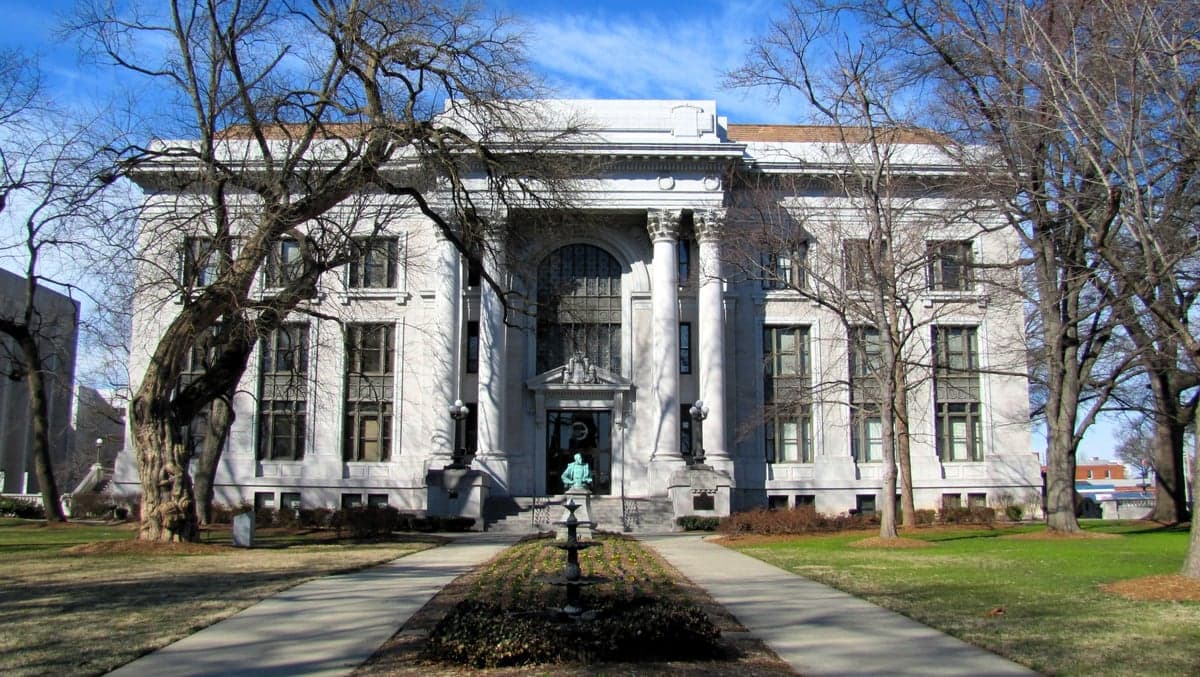
Photo: Wikipedia
Strategic Assessment of Hamilton County
Meaningful friction. Expect exposure to either population pressure, blast zones, or natural disaster risk. Consider buying a retreat property.
What does the Strategic Assessment tell us?
Our Strategic Assessment grades tactical survivability of an area. Major population centers, military targets, fallout zones, natural disasters, and border exposure all drive risk — lower exposure means a more defensible position in a crisis.
This is heavily inspired by Joel Skousen's Strategic Relocation book. Highly recommended you checkout the book ($)What does this tell us?
Our Strategic Assessment grades tactical survivability of an area. Major population centers, military targets, fallout zones, natural disasters, and border exposure all drive risk — lower exposure means a more defensible position in a crisis.
This is heavily inspired by Joel Skousen's Strategic Relocation book. Highly recommended you checkout the book ($)Strategic Pillars
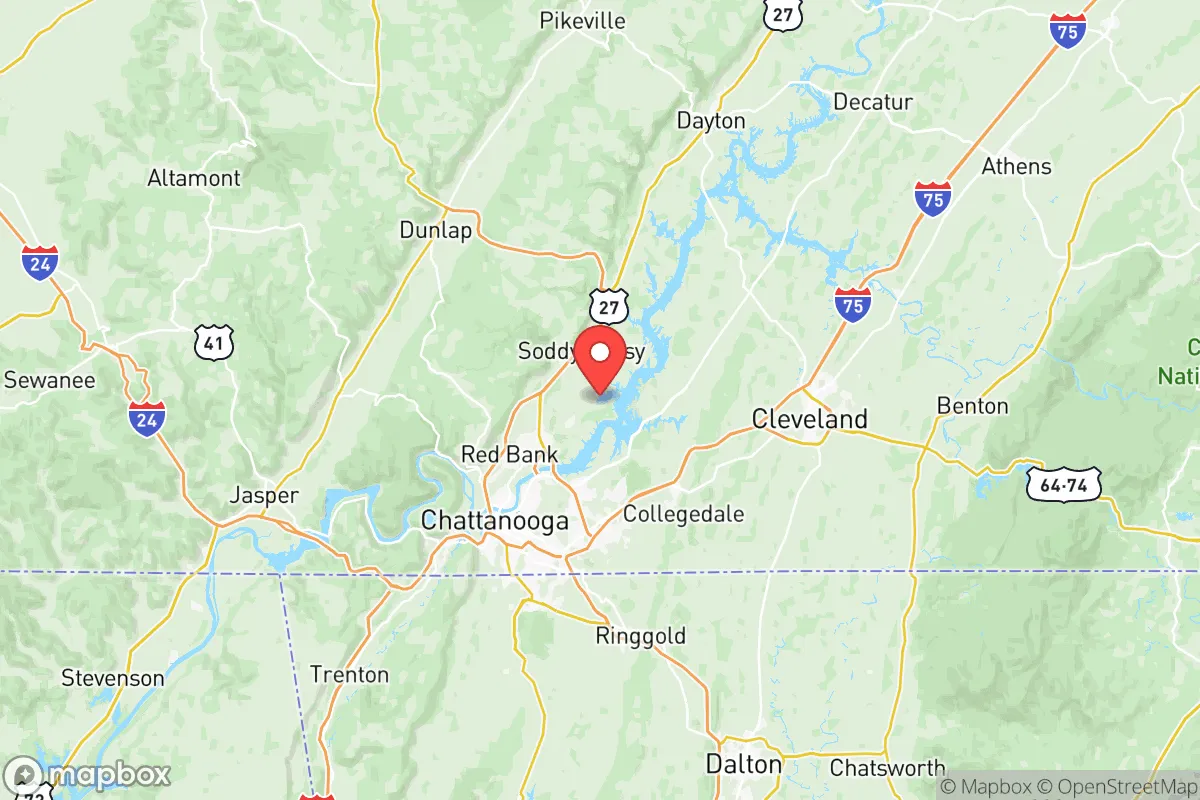
Key Distances
Strategic Assessment Analysis
Hamilton County, Tennessee, anchored by Chattanooga, presents a mixed strategic picture for relocation-minded readers focused on resilience and self-sufficiency. Its position in the southern Appalachian foothills offers genuine geographic advantages—mountain barriers, abundant water, and distance from major coastal threats—but its status as a mid-sized metropolitan hub and transportation corridor introduces risks that a serious preparedness-minded relocator must weigh. The county's resilience profile is stronger than most urban centers in the Southeast, yet weaker than truly remote rural areas, making it a calculated compromise rather than a fortress.
Geographic position and natural advantages for long-term stability
Hamilton County sits at the intersection of the Tennessee River Valley and the Cumberland Plateau, a location that provides several structural advantages. The surrounding mountains—Signal Mountain, Lookout Mountain, and the Cumberland escarpment—create natural barriers that would disrupt blast waves, limit fallout dispersion, and complicate ground access for any external threat. The Tennessee River, which flows through the heart of Chattanooga, is a reliable water source that runs year-round and is fed by the Tennessee Valley Authority's reservoir system, including Chickamauga Lake and Nickajack Lake. These reservoirs provide both drinking water and a buffer against drought that many inland areas lack. The county's elevation, ranging from roughly 650 feet along the river to over 2,000 feet on the plateau, means it avoids the floodplain risks of coastal Georgia or the Mississippi Delta while still having fertile valley soils for small-scale agriculture. Chattanooga itself is roughly 120 miles from Atlanta and 150 miles from Nashville, placing it outside the immediate blast and fallout zones of those major population centers, though still within the range of secondary effects like refugee movement or supply chain disruption.
Risks, exposures, and proximity to fallout-relevant landmarks
The most significant risk for Hamilton County is its role as a transportation and industrial hub. Chattanooga is a major rail and interstate junction—I-24, I-75, and I-59 converge here—and the city hosts a busy airport (CHA) and the Port of Chattanooga, a barge terminal on the Tennessee River. In a national emergency, these choke points would become liabilities: the city would likely see heavy military or FEMA traffic, potential evacuation bottlenecks, and increased risk of targeted disruption. The county also contains several industrial sites that could become secondary hazards. The TVA's Sequoyah Nuclear Plant, located just north of the county line in Soddy-Daisy, is a pressurized water reactor facility that, while well-regulated, represents a potential radiological release point. Within Hamilton County itself, the Volkswagen Chattanooga assembly plant and numerous chemical and manufacturing facilities along the river corridor (including the GAF roofing materials plant and the McKee Foods bakery in Collegedale) are industrial targets that could release hazardous materials if struck. The nearby Oak Ridge National Laboratory, roughly 80 miles northeast, is a major nuclear research facility that would be a high-priority target in any conflict, and Hamilton County lies within the general fallout dispersion pattern for prevailing winds from that direction. For a relocator, the key takeaway is that while Chattanooga is not a primary target like Washington or New York, it is a secondary target due to its transportation infrastructure and industrial base—a risk that must be acknowledged but not overstated.
Practical resilience for a relocator: food, water, energy, and defensibility
On the practical side, Hamilton County offers several genuine resilience advantages. Water access is excellent: the Tennessee River and its tributaries provide surface water that can be treated with basic filtration, and the county's karst geology means numerous springs and wells exist in the rural areas, particularly around Signal Mountain and Walden Ridge. The TVA power grid is reliable and hydroelectric-heavy, meaning that even during a grid-down scenario, the dams at Chickamauga and Nickajack could provide localized power if the transmission infrastructure remains intact. However, the county's population density—roughly 370,000 people in 2025—means that suburban and exurban areas like Ooltewah, Hixson, and East Brainerd would see significant competition for resources in a crisis. Food resilience is moderate: the valley has productive farmland, but most of it is dedicated to row crops like corn and soybeans rather than diversified small-scale agriculture. The Chattanooga Market and local CSAs exist, but a relocator would need to establish their own garden or secure a rural property with acreage to achieve true food independence. Defensibility varies sharply by location. The mountain communities—Signal Mountain, Lookout Mountain, and the rural areas of northern Hamilton County near Sale Creek—offer natural chokepoints and limited road access, making them more defensible than the flat, open valley where most of the population lives. The county's law enforcement presence is concentrated in Chattanooga proper, so rural relocators should plan for self-defense and community mutual aid rather than relying on rapid response. Overall, Hamilton County scores well on water and energy resilience but requires deliberate effort on food production and property selection to achieve the self-sufficiency a preparedness-minded reader would want.
The strategic picture for Hamilton County is one of moderate resilience with clear trade-offs. It is not a remote survivalist retreat—the presence of a mid-sized city, industrial targets, and transportation corridors means it would face pressures that a more isolated location would not. But its geographic position, water abundance, and mountain barriers give it a baseline of security that many flatland or coastal areas lack. For a relocator who wants access to medical infrastructure, supply chains, and community networks while still being able to retreat to a defensible rural property within the same county, Hamilton County offers a viable middle ground. The key is to choose a location wisely—avoid the valley floor and the industrial river corridor, and instead look to the mountain communities or the northern rural stretches near the Tennessee River. With proper planning, a relocator can leverage the county's natural advantages while mitigating its exposure to man-made risks.

* Values derived from national, state, county, city and local statistics and may differ in a specific area. Last updated: 2026-10-04T23:33:32.000Z
Narrative content on this page is AI-generated and may contain mistakes. Verify any details that matter before acting on them.
ReloMaps may earn a commission from affiliate links at no extra cost to you.

