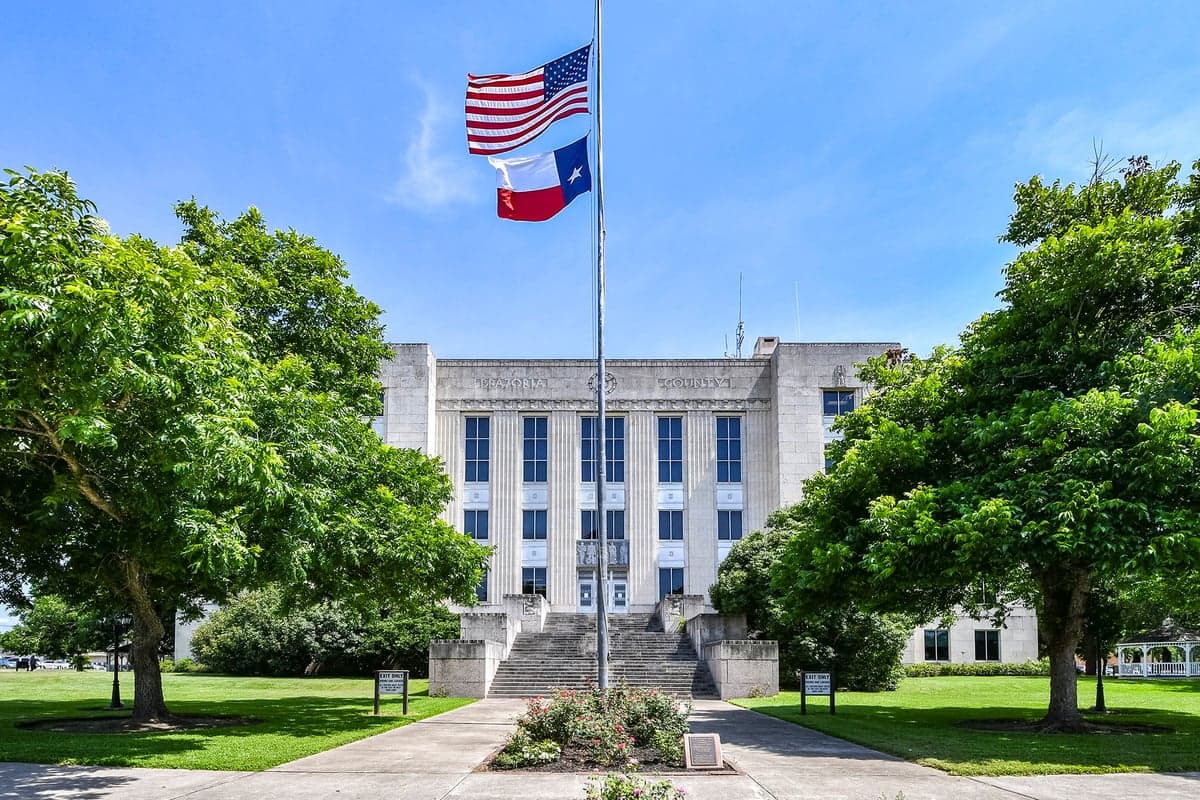
Photo: Wikipedia
Political ClimatePolitical Climate in Brazoria County
Showing district-level results — no local-only data available.
Local Political AnalysisPolitical Analysis of Brazoria County
Brazoria County has long been a solid conservative stronghold, and it still is, but you can feel the ground shifting under your feet if you’ve lived here long enough. The Cook PVI sits at R+17, which is a full 13 points more Republican than the state of Texas as a whole (R+4), so we’re still deep red by any measure. But the trajectory is what’s got folks talking—those margins have been shrinking in recent cycles, especially in the more populated eastern half of the county, and it’s worth keeping an eye on if you value limited government and personal freedoms.
How it compares
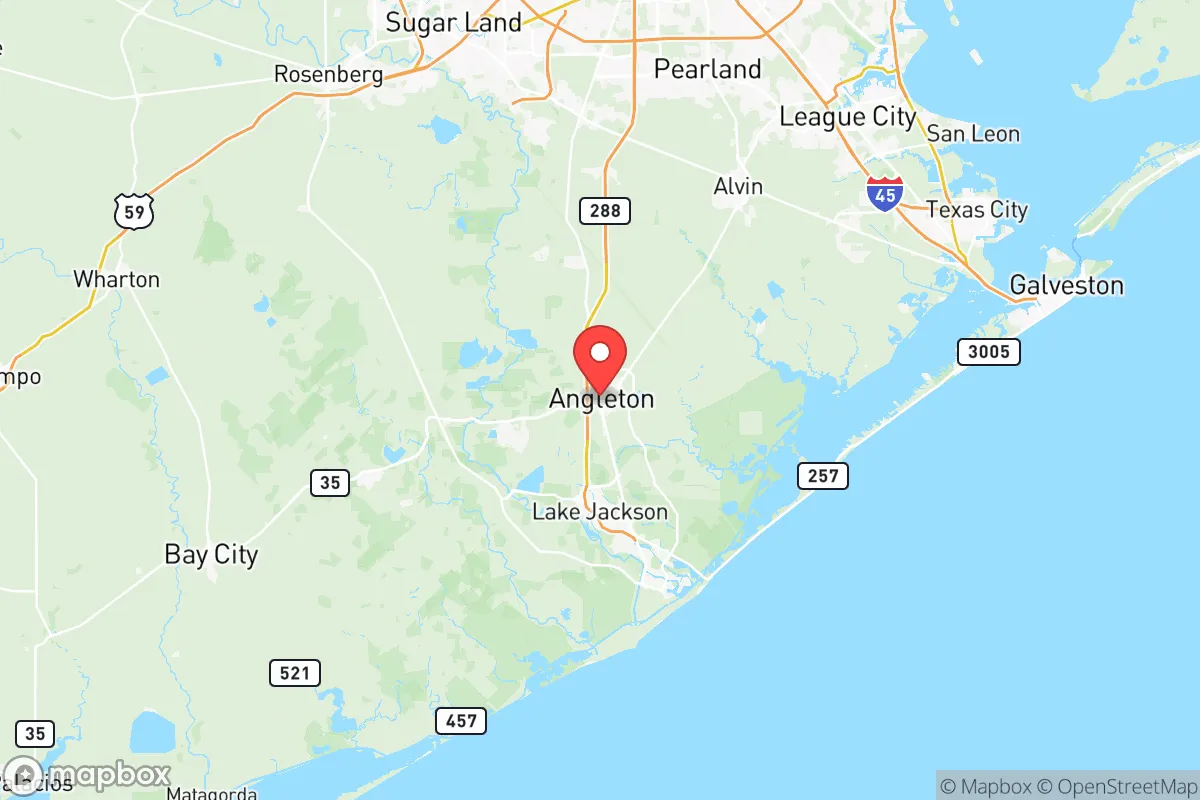
Compared to Texas overall, Brazoria County is a Republican fortress, but the comparison reveals some interesting cracks. The state’s R+4 PVI means it’s a lean-red battleground where Democrats can win statewide races in a good year (think Beto O’Rourke’s close Senate race in 2018). Here in Brazoria, R+17 means Republicans usually win by double digits without breaking a sweat—Trump carried the county by 19 points in 2020, for instance. But the devil’s in the details: the city of Pearland, especially its newer subdivisions near the Harris County line, has been trending blue as more Houston commuters move in. Meanwhile, Angleton and Lake Jackson remain reliably red, and Alvin is still solidly conservative. The swing precincts are mostly in the unincorporated areas around Manvel and Iowa Colony, where explosive growth is bringing in a mix of voters from all over. If you’re worried about government overreach, the contrast with Harris County next door is stark—they’ve got progressive district attorneys and county commissioners pushing policies that feel like a blueprint for what we don’t want here.
What this means for residents
For the average resident, this political climate means a lighter touch from local government—lower taxes, fewer regulations, and a general attitude of “live your life as long as you’re not hurting anyone.” The county commissioners court has consistently pushed back against state-level mandates that feel like overreach, and the sheriff’s office is known for being pro-Second Amendment and focused on violent crime rather than nuisance enforcement. But the demographic changes are real: the Hispanic population has grown to about 30% of the county, and while many of those voters are conservative on social issues, they’re not a lock for Republicans on economic ones. If you’re a longtime resident, you’ve seen the local GOP shift from a “keep the government out of my business” party to one that sometimes gets too cozy with corporate interests and development deals. That’s a concern for anyone who values individual liberty over cronyism.
Culturally, Brazoria County still feels like old Texas—rodeos, church potlucks, and a strong sense of community self-reliance. You won’t find the kind of progressive social engineering you see in Austin or Dallas. But the pressure is building: school board meetings in Pearland have gotten heated over curriculum and library books, and there’s a growing push from activist groups to bring “equity” initiatives into local government. So far, the conservative majority has held the line, but it’s a constant fight. If you’re looking for a place where you can raise a family without the government breathing down your neck, Brazoria County is still one of the best bets in Texas—just don’t expect it to stay exactly the same forever. Keep your ear to the ground and your vote in your pocket.

State Political ClimatePolitical Climate in Texas
State Political AnalysisPolitical Environment in the State
Texas has been a reliably Republican state for decades, with a Cook Partisan Voting Index of R+4, but the political landscape is far more complex than a simple red-state label. The dominant coalition has long been a mix of socially conservative voters, fiscal libertarians, and rural populists, but rapid in-migration and demographic shifts have made the state a genuine battleground over the last 10-20 years. While Republicans still control every statewide office and both legislative chambers, the margins have narrowed significantly—Donald Trump won Texas by 9 points in 2016, but that dropped to 5.5 points in 2020, and down-ballot races in 2022 and 2024 have shown suburban districts flipping or becoming competitive.
Urban vs. rural divide
The political map of Texas is a textbook study in urban-rural polarization. The major metros—Austin, Dallas, Houston, San Antonio, and El Paso—are Democratic strongholds, with Travis County (Austin) and El Paso County routinely voting 70%+ for Democratic candidates. The suburbs, however, are where the real action is. Places like Collin County (north of Dallas) and Fort Bend County (southwest of Houston) were once reliably red but have shifted purple or even blue in recent cycles. Collin County went from a 27-point Republican margin in 2012 to just 4 points in 2020. Meanwhile, rural and exurban counties—think Lubbock, Amarillo, and the vast stretch of West Texas—vote 80%+ Republican, driven by oil, agriculture, and traditional values. The divide isn't just about geography; it's about culture, with urban centers embracing progressive policies while rural areas double down on conservative governance.
Policy environment
Texas remains a low-tax, low-regulation state by design. There is no state income tax, and property taxes are high but capped by the 2019 and 2023 property tax reform laws (SB 2 and HB 2) that compressed rates and increased the homestead exemption. The regulatory posture is business-friendly, with minimal zoning in many cities and a right-to-work law that keeps unions weak. On education, the state has pushed school choice hard, with the 2023 passage of a universal Education Savings Account program (HB 1) that lets parents use state funds for private or homeschool expenses—a major win for parental rights. Healthcare policy is more mixed: Texas refused Medicaid expansion under Obamacare, but the state has expanded telemedicine and loosened scope-of-practice laws for nurse practitioners. Election laws tightened after 2020 with SB 1, which banned drive-through voting, added ID requirements for mail ballots, and restricted early voting hours—a move that drew national criticism but was popular with conservatives who wanted election integrity. The state also passed a near-total abortion ban (SB 8) in 2021, enforced by private civil lawsuits, and a 2023 law (HB 12) that banned gender-transition procedures for minors.
Trajectory & freedom
On balance, Texas has been moving toward more personal freedom in several key areas, but with notable exceptions. The 2021 permitless carry law (HB 1927) allows any law-abiding adult to carry a handgun without a license, expanding Second Amendment rights. Parental rights were strengthened with the 2023 "Parental Bill of Rights" (HB 900), which gives parents control over school library materials and medical decisions. Medical autonomy took a hit with the abortion ban, but the state also passed a 2023 law (SB 45) protecting doctors who prescribe ivermectin or hydroxychloroquine from disciplinary action. Property rights are strong, with no state-level rent control and a 2023 law (HB 2017) limiting homeowners' association authority. The biggest red flag for freedom-minded residents is the growing influence of local progressive governments in cities like Austin and Houston, which have imposed mask mandates, vaccine requirements, and zoning restrictions that the state has had to preempt with legislation. The state's preemption laws (like HB 2127, the "Texas Regulatory Consistency Act") have been used to override city ordinances on everything from paid sick leave to plastic bag bans, which is a double-edged sword—it protects statewide uniformity but also limits local self-governance.
Civil unrest & political movements
Texas has seen its share of political flashpoints. The 2020 Black Lives Matter protests in Austin and Dallas were large and occasionally violent, leading to property damage and a lasting tension between police and activists. On the right, the "Texas Nationalist Movement" has gained some traction, pushing for a referendum on secession, though it remains fringe. Immigration politics are a constant flashpoint: Governor Abbott's Operation Lone Star, launched in 2021, deployed state troopers and National Guard to the border, bused migrants to northern cities, and installed razor wire and buoys in the Rio Grande—a direct challenge to federal authority that has sparked lawsuits and a Supreme Court case. The 2023 law SB 4, which allows state and local police to arrest people suspected of illegal entry, is currently tied up in court but represents the most aggressive state-level immigration enforcement in the country. Election integrity remains a hot-button issue, with ongoing audits in Harris County (Houston) and a 2024 law that criminalizes certain voter assistance activities. A new resident will notice the political polarization in everyday life—yard signs, bumper stickers, and heated local Facebook groups are common, especially in the suburbs.
Projection
Over the next 5-10 years, Texas is likely to become more competitive at the statewide level, but not necessarily more liberal. The in-migration from California and the Northeast is often cited as a blue wave, but many of those newcomers are conservatives fleeing high taxes and lockdowns. The real demographic shift is the growth of the Hispanic population, which has historically leaned Democratic but is trending more Republican—in 2022, Governor Abbott won 42% of the Hispanic vote, up from 35% in 2018. The suburbs will continue to be the battleground: places like Katy (west of Houston) and Frisco (north of Dallas) are growing fast and politically divided. The state legislature will likely remain Republican, but the margin could shrink to a single-digit majority in the House by 2030. Expect more preemption battles between Austin and local governments, more school choice expansion, and continued fights over immigration and election laws. The biggest wildcard is the courts—if the federal judiciary strikes down SB 4 or the abortion ban, the legislature will immediately pass new versions.
For a new resident, the bottom line is this: Texas offers a high degree of personal and economic freedom compared to most states, but that freedom is under constant pressure from both local progressive governments and federal overreach. If you value low taxes, gun rights, parental control over education, and a business-friendly environment, you'll feel at home. But be prepared for a politically charged atmosphere, especially in the suburbs and cities, and keep an eye on the legislature—every session brings new battles over the balance between state power and individual liberty. The state is not becoming California, but it's also not staying the same. Pick your county carefully, get involved in local politics, and you'll find Texas still rewards the independent spirit.
* Values derived from national, state, county, city and local statistics and may differ in a specific area. Last updated: 2026-05-28T00:46:39.000Z
Narrative content on this page is AI-generated and may contain mistakes. Verify any details that matter before acting on them.
ReloMaps may earn a commission from affiliate links at no extra cost to you.

