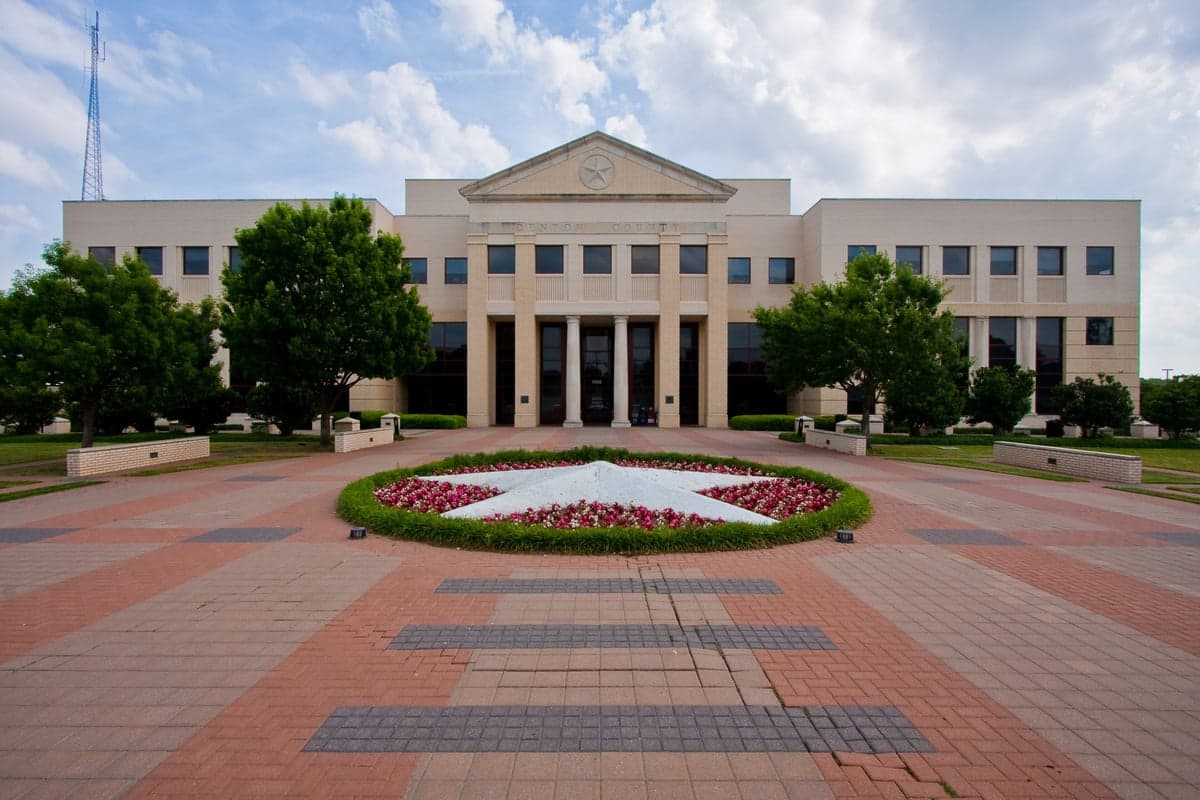
Photo: Wikipedia
Political ClimatePolitical Climate in Denton County
Showing district-level results — no local-only data available.
Local Political AnalysisPolitical Analysis of Denton County
Denton County has long been a reliable conservative stronghold in North Texas, but if you’ve lived here as long as I have, you’ve seen the ground shift under your feet. The Cook PVI sits at R+24, which still makes it one of the reddest large counties in the state—compare that to Texas as a whole at R+4—but the margin is thinning fast as waves of newcomers pour in from blue states. The county voted for Trump by 13 points in 2020, down from 22 points for Romney in 2012, and local races that were once sleepy Republican coronations are now competitive. The trajectory is unmistakable: Denton County is drifting left, and longtime residents are watching closely.
How it compares
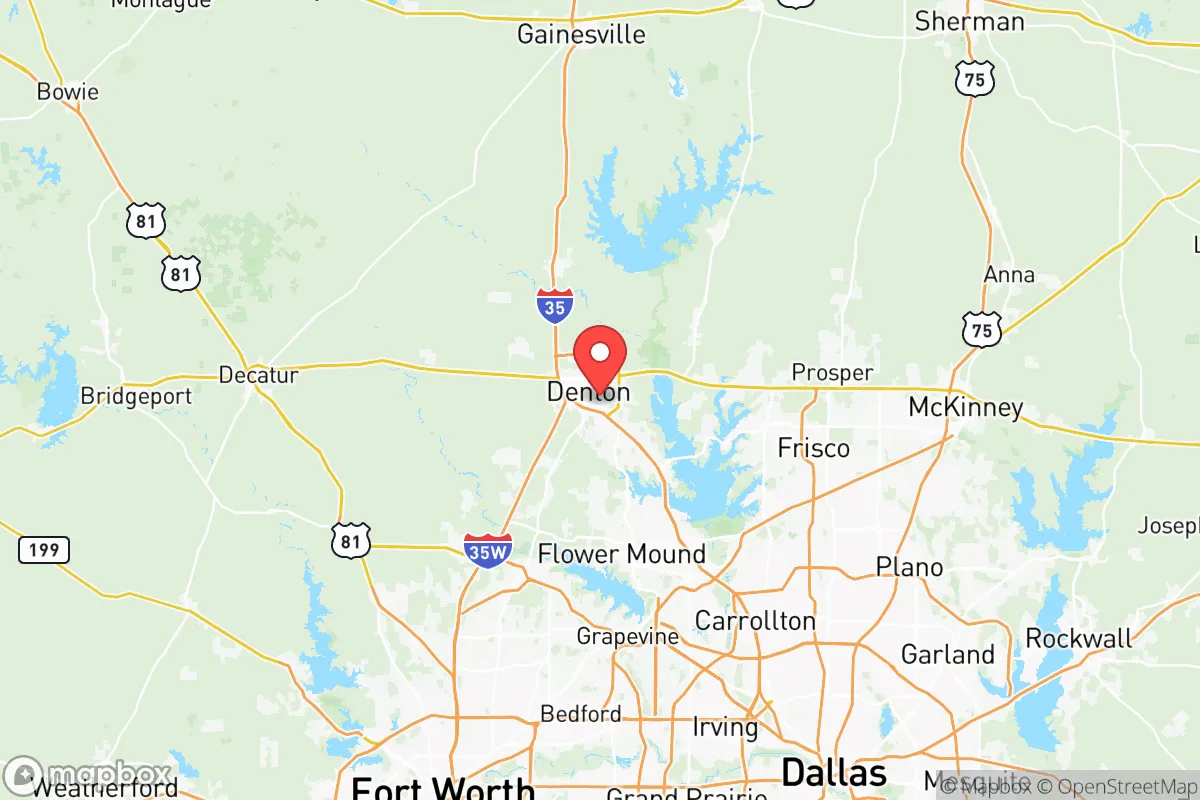
When you stack Denton County against Texas as a whole, the difference is stark—and narrowing. The state’s R+4 PVI means Texas is a lean-red battleground, but Denton’s R+24 still puts it in the deep-red camp. However, that gap is closing faster here than in most of the state. The rural towns like Aubrey, Pilot Point, and Sanger remain rock-ribbed Republican, often voting 70-80% for GOP candidates. Meanwhile, the southern half of the county is a different story. Lewisville, Carrollton, and the city of Denton itself have become reliably blue, with precincts in Denton’s historic square and near the university hitting 60-65% Democratic. The real battleground is the sprawling suburban corridor—Frisco, Little Elm, and The Colony—where swing precincts are splitting 50-50 or tipping blue in presidential years. It’s a tale of two counties under one name, and the blue tide is lapping at the red heartland.
What this means for residents
For those of us who value limited government and personal freedom, the shift is concerning. As the county’s politics move left, you see more talk of zoning overreach, higher property tax proposals to fund progressive social programs, and school board races where critical race theory and gender ideology debates are front and center. In Frisco and Little Elm, where swing voters decide elections, candidates who promise to keep government out of your backyard and your child’s classroom are fighting an uphill battle against well-funded progressive PACs. The county commissioners’ court, once a rubber stamp for conservative fiscal policy, now sees 3-2 votes on everything from mask mandates to library book policies. If you moved here to escape the overreach you saw in California or Illinois, you’re not imagining it—that same energy is following you here.
On the ground, this means paying closer attention to local elections. The days of voting straight-ticket Republican and calling it done are over in Denton County. You need to know your precinct, your school board candidates, and your city council races. In Highland Village and Copper Canyon, where conservative values still hold strong, turnout is key to keeping the county from flipping entirely. The long-term outlook? If the trend holds, Denton County could be a toss-up by 2030. That’s a short window for those of us who want to preserve the freedom and common-sense governance that made this area great.
Culturally, Denton County still feels more like Texas than Dallas or Austin—you’ll see trucks with gun racks at the local feed store in Krum, and the county fair in Ponder is a genuine slice of small-town life. But the policy battles are real. The county’s rapid growth has brought a flood of new voters who don’t share the traditional Texas values of self-reliance and minimal government interference. If you’re considering a move here, know that the political climate is in flux—and the fight to keep Denton County from becoming another progressive suburb is already underway.

State Political ClimatePolitical Climate in Texas
State Political AnalysisPolitical Environment in the State
Texas has been a reliably Republican state for decades, with a Cook PVI of R+4 reflecting a solid but not overwhelming conservative lean. The dominant coalition is a mix of rural conservatives, suburban families, and business-oriented moderates, though the last 10-20 years have seen a slow but steady shift as fast-growing metros like Austin, Dallas, and Houston have become more competitive. While the state hasn't flipped blue in a presidential race since 1976, the margin has tightened from double digits in 2004 to single digits in 2020 and 2024, driven largely by in-migration from blue states and demographic changes in urban centers.
Urban vs. rural divide
The political map of Texas is starkly divided. The major metros—Houston, Dallas-Fort Worth, San Antonio, and especially Austin—are the engines of Democratic growth. Austin's Travis County voted +42 points for Biden in 2020, while Harris County (Houston) and Dallas County have flipped blue in recent cycles. In contrast, the vast rural and exurban areas—places like Lubbock, Midland, and the Rio Grande Valley—remain deeply red. The Valley, once a Democratic stronghold, has shifted right in recent cycles, with counties like Starr and Zapata flipping to Trump in 2020. The suburbs are the real battleground: Collin County (north of Dallas) and Fort Bend County (southwest of Houston) have seen explosive growth and are now purple, with Collin County voting Republican by only 2 points in 2020 after a 20-point margin a decade earlier. This urban-rural split means statewide elections are increasingly decided by which side turns out more in the suburbs.
Policy environment
Texas maintains a low-tax, low-regulation posture that appeals to conservatives. There is no state income tax, and property taxes are high but capped at 10% annual growth under Proposition 2 (2019). The regulatory environment is business-friendly, with no state-level minimum wage above the federal $7.25 and right-to-work laws in place. Education policy has been a flashpoint: the 2021 "critical race theory" law (HB 3979) restricts how race and history are taught in public schools, and the 2023 school choice bill (SB 1) created education savings accounts for private school funding. Healthcare remains a mixed bag—Texas has not expanded Medicaid under the ACA, leaving roughly 1.5 million uninsured, but the state has also banned vaccine mandates for private employers (SB 7, 2023). Election laws tightened in 2021 with SB 1, which added ID requirements for mail-in voting and restricted drive-through voting, a move supporters say protects integrity and critics call suppression. For a conservative, the policy environment is generally favorable, though the lack of income tax is offset by high property taxes that can squeeze homeowners.
Trajectory & freedom
On personal liberty, Texas has moved in both directions over the last five years. On the positive side for conservatives, the state enacted permitless carry (HB 1927, 2021), allowing adults to carry handguns without a license, and passed a near-total abortion ban (SB 8, 2021) that effectively ended abortion access after six weeks. Parental rights were strengthened with the 2023 "Parental Bill of Rights" (HB 900), which requires schools to notify parents about curriculum changes and restricts library materials deemed "sexually explicit." However, there are concerning trends. The state's aggressive use of eminent domain for infrastructure projects, like the I-35 expansion through Austin, has raised property rights alarms. Medical freedom took a hit with the 2023 ban on gender-affirming care for minors (SB 14), which some see as protecting children but others view as government overreach into family medical decisions. The biggest red flag for liberty-minded residents is the growing surveillance state: Texas has expanded its border security operations (Operation Lone Star) with billions in funding, including drone surveillance and state troopers checking vehicles, which some argue infringes on Fourth Amendment rights. Overall, Texas is becoming more free on gun and education issues but less free on medical choice and privacy.
Civil unrest & political movements
Texas has seen its share of political flashpoints. The 2020 Black Lives Matter protests in Austin were among the largest in the country, leading to the city council cutting police funding by $150 million, though much of that was later restored. On the right, the "Texas Nationalist Movement" has gained traction, with a 2022 poll showing 18% of Texans supporting secession, though it remains fringe. Immigration politics dominate daily life in border cities like El Paso and Laredo, where Operation Lone Star has led to state troopers arresting migrants on trespassing charges, creating tension with local officials. The 2021 "sanctuary city" ban (SB 4) remains in effect, requiring local law enforcement to cooperate with federal immigration authorities. Election integrity remains a hot-button issue: the 2020 election saw lawsuits over Harris County's drive-through voting, and the 2022 gubernatorial race featured allegations of voter roll purges. A new resident in a suburb like Frisco or Round Rock will notice political yard signs and local activist groups, but the unrest is mostly concentrated in the big cities and border towns.
Projection
Over the next 5-10 years, Texas will likely remain Republican but with a narrower margin. In-migration from California and New York—about 1,000 people per day—is slowly shifting the electorate, as many newcomers bring moderate or liberal views. The suburbs of Dallas-Fort Worth and Houston will continue to trend purple, while rural areas hold firm. The state's growing Hispanic population, which now makes up 40% of residents, is not voting monolithically—the Valley's rightward shift suggests a realignment is possible. If Democrats can turn out young voters in Austin and Houston while holding the Valley, Texas could be competitive in a presidential race by 2032. For now, expect continued Republican control of the legislature and governor's office, but with more close races and a policy environment that may moderate on issues like marijuana legalization (already decriminalized in some cities) and Medicaid expansion. The biggest wildcard is the border crisis: if federal policy shifts, Texas's state-level response could become a national model or a costly burden.
For a conservative moving to Texas, the bottom line is this: you'll find a state that largely respects your values on taxes, guns, and education, but you'll need to pick your location carefully. Stick to the suburbs and rural areas—places like Katy outside Houston or Celina north of Dallas—where the political culture matches your own. Avoid Austin and central Houston if you want to avoid progressive policies and high costs. The state is still a safe bet for freedom-minded individuals, but the demographic winds are shifting, and the next decade will test whether Texas can stay red or becomes another California.
* Values derived from national, state, county, city and local statistics and may differ in a specific area. Last updated: 2026-05-11T23:54:29.000Z
Narrative content on this page is AI-generated and may contain mistakes. Verify any details that matter before acting on them.
ReloMaps may earn a commission from affiliate links at no extra cost to you.

