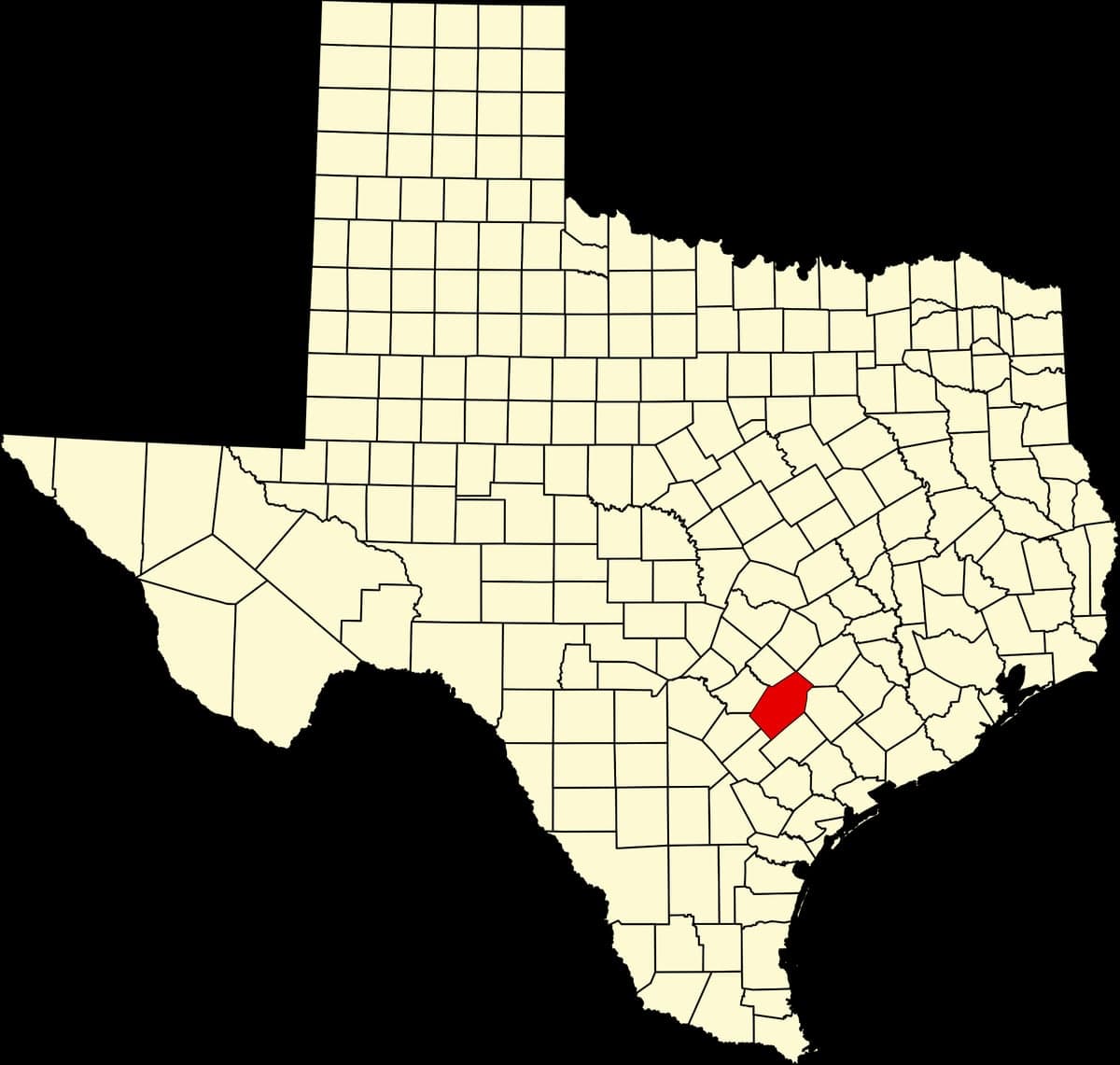
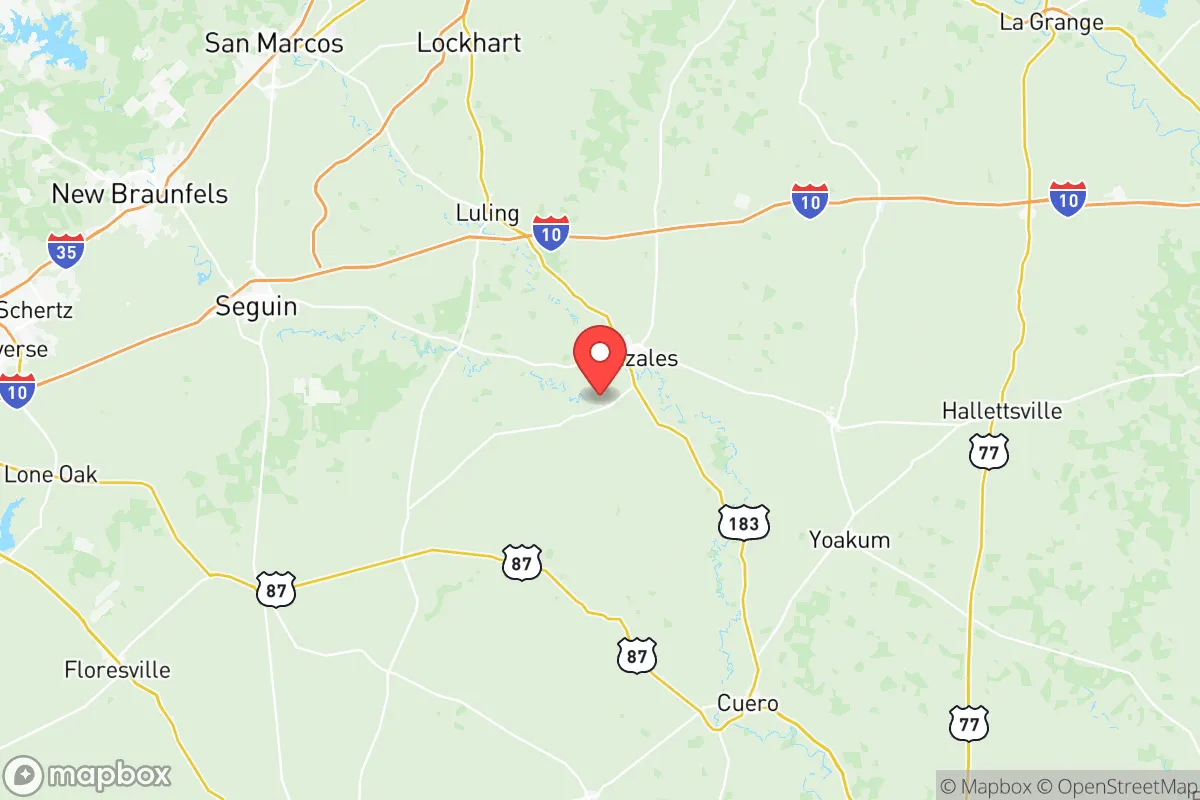
Photo: Wikipedia
Personal Sovereignty in Gonzales County
Strong independent fundamentals that actively favor personal liberty and low regulation.
What does Personal Sovereignty tell us?
Personal Sovereignty measures your capacity for self-reliance and independence with minimal government friction. Higher scores mean fewer barriers between you and the way you want to live... but it assumes you have the space you need and good neighbors.
What does this tell us?
Personal Sovereignty measures your capacity for self-reliance and independence with minimal government friction. Higher scores mean fewer barriers between you and the way you want to live... but it assumes you have the space you need and good neighbors.
State Policy
Energy independence: Net exporter (220% of energy produced in-state)
Personal Liberty
Homesteading

Personal Liberty Analysis
Gonzales County offers one of the most robust personal sovereignty environments in Central Texas, combining low regulatory friction with strong legal protections for self-defense, property rights, and family autonomy. The county’s governing philosophy leans heavily toward minimal interference, making it a distinct alternative to the more restrictive urban corridors of Austin and San Antonio. For individuals and families who prioritize self-reliance, the area provides a legal and cultural framework where personal decisions—from homeschooling to building a workshop on your own land—face fewer bureaucratic hurdles than in many neighboring jurisdictions.
Tax burden and regulatory posture in Gonzales County
Gonzales County operates under Texas’s state-level framework of no personal income tax and relatively low property tax rates, but the county’s own fiscal policies amplify this advantage. The county’s effective property tax rate hovers around 1.2% of assessed value, which is below the Texas average of roughly 1.6% and significantly lower than counties like Travis or Bexar. This is partly because Gonzales County has avoided the aggressive bond issuances and municipal service expansions that drive up rates elsewhere. The cities within the county—Gonzales, Waelder, Nixon, Smiley, and Cost—each maintain their own tax rates, but none exceed the county’s general posture of fiscal restraint. For example, the City of Gonzales levies a municipal property tax of approximately $0.48 per $100 valuation, while Waelder and Nixon are slightly higher but still under $0.60. Regulatory posture is similarly light: there is no county-wide zoning ordinance, meaning land use is governed primarily by deed restrictions and subdivision rules rather than a centralized planning department. Building permits are required for new construction, but the process is streamlined compared to urban counties—permits for a single-family home typically take 2-4 weeks rather than months. The county also does not impose tree ordinances, noise restrictions, or sign regulations that are common in more densely populated areas. For a family looking to operate a small home business or keep livestock on a residential lot, the lack of these rules removes a common source of friction.
Self-defense and gun law specifics in Gonzales County
Texas’s permitless carry law (effective 2021) applies fully in Gonzales County, meaning any legal resident 21 or older can carry a handgun openly or concealed without a license. The county sheriff’s office has publicly stated a policy of not enforcing any local ordinances that would restrict firearm possession beyond state law, and there are no county-level gun registration or storage requirements. The local gun culture is deeply ingrained: Gonzales is historically known as the “Lexington of Texas” due to the 1835 “Come and Take It” cannon incident, and this heritage is reflected in modern attitudes. Shooting ranges are available near Gonzales and Nixon, and private land ownership is common enough that many residents practice on their own property without issue. The county’s courts have a reputation for applying a broad interpretation of self-defense under Texas’s “stand your ground” statute. In practice, this means that a homeowner who uses deadly force to defend against an intruder is unlikely to face prosecution unless the circumstances are clearly outside the law’s protections. For individuals who prioritize the right to self-defense, Gonzales County offers one of the most permissive environments in the state, with no local ordinances that add restrictions beyond the already-liberal state framework.
Self-reliance and homesteading viability across the county
Homesteading and off-grid living are not just tolerated in Gonzales County—they are a normal part of the landscape. The county’s rural character means that minimum lot sizes outside city limits are typically 1 to 5 acres, with no county-wide minimum for agricultural or residential use on larger parcels. In unincorporated areas, residents can install rainwater collection systems, solar panels, and composting toilets without special permits, as long as they meet basic health and safety codes. The City of Gonzales does require connection to municipal water and sewer within its extraterritorial jurisdiction, but this zone is small. In contrast, Waelder and Smiley have no such requirements for properties outside their immediate town limits, making them more attractive for off-grid setups. Zoning in the county is minimal: there are no restrictions on keeping chickens, goats, or even larger livestock on residential lots in unincorporated areas, though deed restrictions on some subdivided land may limit this. The county’s agricultural exemption for property taxes is widely used—land used for wildlife management, grazing, or crop production can qualify for a significant reduction in assessed value. For a family seeking to build a self-sufficient homestead, the combination of low land prices (averaging $4,000–$6,000 per acre in 2025), minimal permitting, and a culture that values self-reliance makes Gonzales County one of the most viable options in Central Texas. The town of Cost, in particular, has a reputation for being a hub for off-grid and alternative living, with several properties already operating on solar and well water.
Personal liberties: parental rights, medical autonomy, speech, and property
Gonzales County’s approach to personal liberties aligns with the broader Texas trend of deference to individual choice in family and medical matters, but with a distinctly local flavor. Parental rights are strongly protected: the county’s school districts—Gonzales ISD, Nixon-Smiley CISD, and Waelder ISD—all have policies that allow parents to opt their children out of specific curriculum components, and homeschooling is common and unregulated beyond a simple notice requirement. The county does not have any local ordinances that restrict medical autonomy, meaning that decisions about vaccination, treatment, and end-of-life care are left to individuals and their doctors, subject to state law. Free speech is protected under the First Amendment, and the county has not enacted any local noise or signage ordinances that would limit expressive activity. Property rights are perhaps the most significant liberty: the county does not have a comprehensive plan or growth management strategy, so landowners have broad discretion over how to use their property. There are no county-level rent control or landlord licensing laws, and short-term rental regulations are minimal—only the City of Gonzales requires a permit for STRs, and enforcement is light. For a family that values the ability to make decisions about their children’s education, their own healthcare, and their property without government interference, Gonzales County provides a legal environment that is among the most permissive in the state.
Compared to other areas of Texas, Gonzales County stands out for its combination of low taxes, minimal regulation, and strong cultural support for personal sovereignty. It is not as libertarian as some West Texas counties like Loving or King, but it offers far more freedom than the suburban counties surrounding Houston, Dallas, or Austin. For a family or individual who wants to live with a high degree of autonomy—whether that means carrying a firearm, building an off-grid home, or simply being left alone by local government—Gonzales County is a strong contender. The key trade-off is that this freedom comes with limited services: fewer parks, slower emergency response times in rural areas, and less access to specialized healthcare. But for those who prioritize sovereignty over convenience, the county delivers on its promise of personal liberty.

* Values derived from national, state, county, city and local statistics and may differ in a specific area. Last updated: 2026-10-17T00:16:39.000Z
Narrative content on this page is AI-generated and may contain mistakes. Verify any details that matter before acting on them.
ReloMaps may earn a commission from affiliate links at no extra cost to you.

