Photo: Wikipedia
Demographics of Gonzales County
Affluence Level in Gonzales County
A below-average socioeconomic profile. Incomes, home values, and educational attainment trail the U.S., with higher poverty and unemployment.
People of Gonzales County
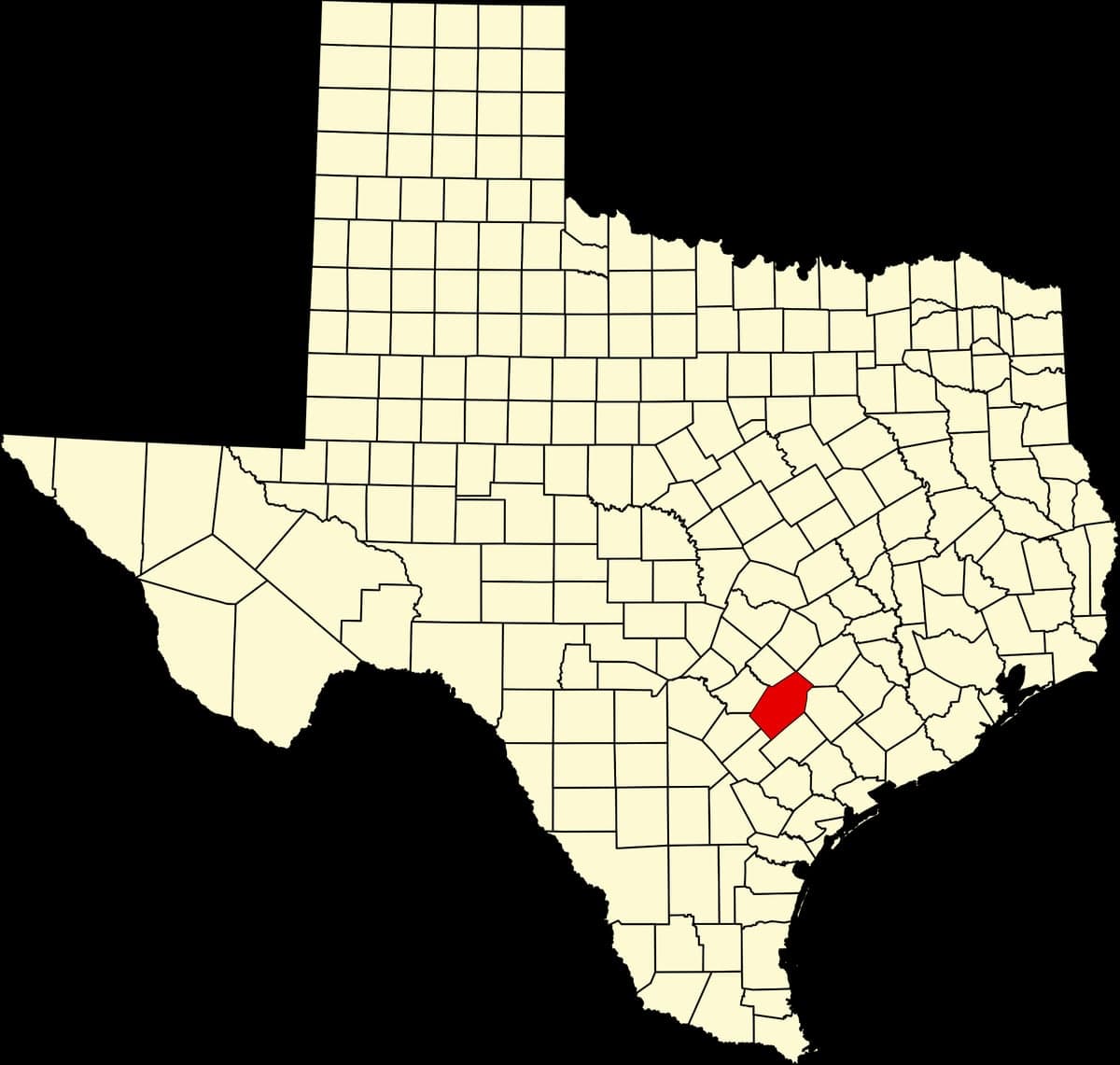
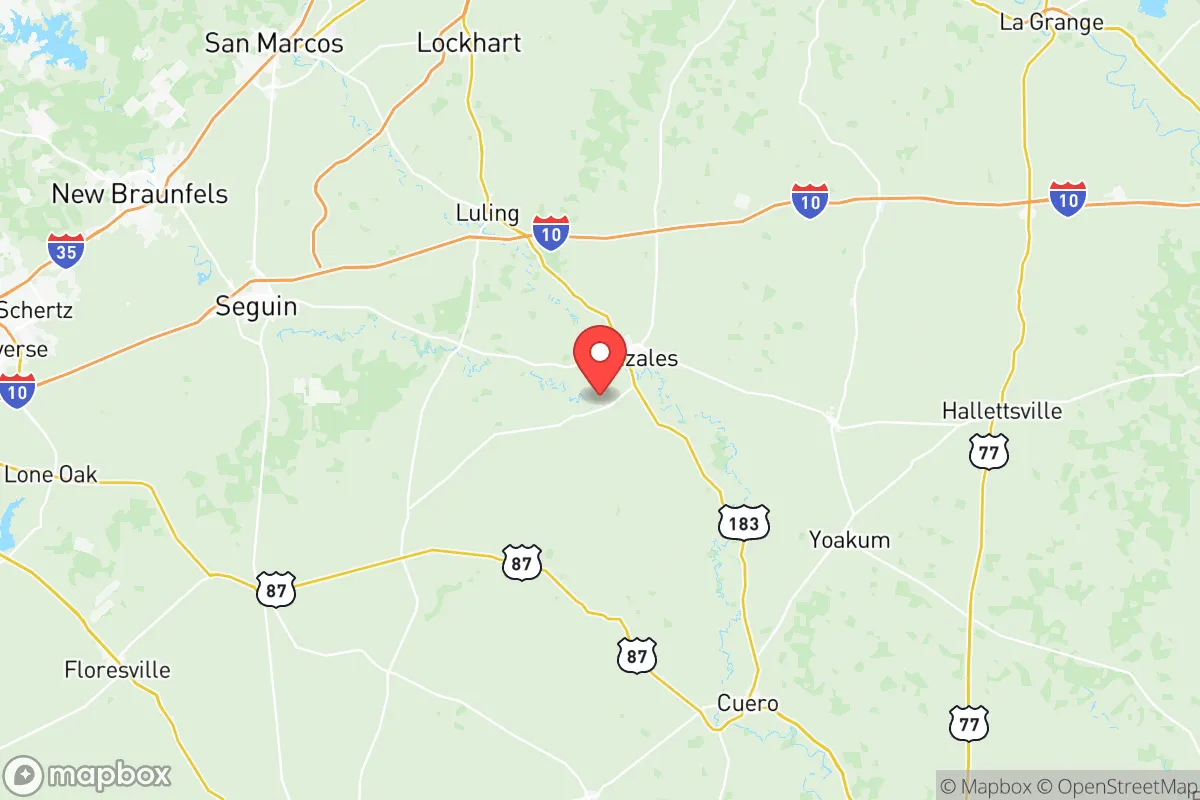
Gonzales County, Texas, is home to 19,764 residents, a population that is now majority Hispanic at 50.8% alongside a 41.0% white, non-Hispanic population and a 6.0% Black community. The county's identity is rooted in its history as the "Lexington of Texas," where the first shot for Texan independence was fired, and its character today is a blend of deep Southern rural traditions and a growing Hispanic cultural influence. With a low college attainment rate of 12.6% and a foreign-born population of 7.3%, Gonzales County remains a working-class, agricultural community where family ties and local heritage run deep.
Settlement & growth (pre-1960)
Before European contact, the area that is now Gonzales County was home to the Coahuiltecan and Tonkawa peoples, nomadic hunter-gatherers who lived along the Guadalupe and San Marcos rivers. Spanish explorers passed through in the 17th and 18th centuries, but no permanent Spanish settlements were established in the county itself. The region remained sparsely populated until the Anglo-American colonization period.
The first major wave of settlers arrived in the 1820s and 1830s as part of Stephen F. Austin's "Old Three Hundred" colony. These were primarily Anglo-American families from the U.S. South—Tennessee, Kentucky, and Louisiana—drawn by cheap land grants under the Mexican government. The town of Gonzales, founded in 1825 as the capital of the Green DeWitt colony, became the epicenter. These settlers were overwhelmingly Protestant, English-speaking, and brought a slave-based cotton plantation economy with them. The famous "Come and Take It" cannon incident of 1835 cemented Gonzales's place in Texas lore as the birthplace of the Texas Revolution.
After Texas statehood in 1845, the population grew steadily with more Southern Anglo settlers. The county's economy centered on cotton, cattle, and later, the arrival of the railroad in the 1870s. Small towns like Waelder (founded 1873) and Nixon (founded 1906) sprang up as railroad stops and agricultural service centers. A notable German immigrant community settled in the Harwood area in the 1850s, though Gonzales County never saw the dense German settlement of neighboring counties like Guadalupe or Comal. By 1900, the county's population peaked at over 36,000, driven by cotton farming.
Following the Civil War, freed African Americans established several rural communities, most notably the settlement of Smiley (founded 1887), which became a predominantly Black farming town. The Black population in Gonzales County reached roughly 30% in the late 19th century, concentrated in the eastern part of the county around Smiley and Waelder. The Great Migration (1910-1970) drew many Black families north to industrial cities, reducing the county's Black share to its current 6.0%.
The Dust Bowl and Great Depression hit the cotton-dependent county hard, causing a population decline that continued through the mid-20th century. Many white and Black families left for urban jobs in Houston and San Antonio. By 1960, the county's population had fallen to around 17,000, a trend that would not reverse for decades.
Modern era (post-1965)
The most significant demographic shift in Gonzales County since 1965 has been the growth of the Hispanic population. Unlike major Texas cities that saw new immigration from Mexico and Central America after the 1965 Hart-Cellar Act, Gonzales County's Hispanic growth has been driven primarily by domestic migration of Mexican-American families from South Texas and the Rio Grande Valley, as well as natural increase among long-established Tejano families. The Hispanic share rose from roughly 15% in 1970 to over 50% today. These families have settled throughout the county, but the town of Gonzales itself has seen the most visible change, with Hispanic-owned businesses now lining St. Joseph Street and Spanish spoken widely in schools and stores.
The county has seen very little international immigration compared to urban Texas. The foreign-born share of 7.3% is modest, and the East/Southeast Asian population (0.5%) and Indian subcontinent population (0.0%) are negligible. The Black population has remained stable at around 6.0%, concentrated in Smiley and Waelder, where historic Black churches and community centers remain active. The white, non-Hispanic population has declined in absolute numbers as younger generations move to cities for education and employment, but the county retains a strong Anglo ranching and farming presence, particularly in the western areas around Leesville and Cost.
Suburbanization has been limited. Gonzales County lacks a major interstate highway and is a 90-minute drive from both San Antonio and Austin, making it less attractive for commuters. However, the town of Nixon has seen some growth as a bedroom community for workers in San Marcos and Seguin, with new subdivisions appearing on its outskirts. The county's economy has diversified slightly from pure agriculture into oil and gas (the Eagle Ford Shale play brought a boom in the 2010s) and light manufacturing, but it remains one of the poorest counties in Texas by median household income.
The future
Gonzales County is projected to become more Hispanic and older over the next 10-20 years. The white, non-Hispanic population will continue to shrink through outmigration and an aging demographic, while the Hispanic population will grow through higher birth rates and continued in-migration from South Texas. The county's population is expected to remain flat or grow slowly, reaching perhaps 22,000 by 2040, as the area lacks the job growth to attract large numbers of new residents.
Diversity will increase primarily along the Hispanic-Anglo axis, with the Black share likely remaining stable. The county is unlikely to see significant Asian or Indian immigration, as it lacks the tech or professional job base that attracts those groups to Texas suburbs. The cultural identity of Gonzales County is evolving from a historically Anglo-Southern identity to a bicultural Tejano-Anglo one, with Spanish-language media, quinceañeras, and Tex-Mex cuisine becoming as common as barbecue and county fairs. Politically, the county has shifted from solidly Democratic (pre-2000) to reliably Republican, reflecting the broader rural Texas trend, though Hispanic voters are slowly diversifying the electorate.
For someone moving in now, Gonzales County offers a low-cost, slow-paced rural lifestyle with strong community ties, but limited economic opportunity and a population that is increasingly Hispanic and working-class. The county's future is one of gradual demographic transition, not explosive growth, making it a stable choice for those seeking affordable land and a quiet life away from Texas's booming metros.

* Values derived from national, state, county, city and local statistics and may differ in a specific area. Last updated: 2026-10-17T00:16:39.000Z
Narrative content on this page is AI-generated and may contain mistakes. Verify any details that matter before acting on them.
ReloMaps may earn a commission from affiliate links at no extra cost to you.

