
Photo: Wikipedia
Quality of Life in Guadalupe County
A livable area that tracks near national norms for affordability, walkability, and neighborhood health.
What does Quality of Life tell us?
Quality of Life measures an area by evaluating factors like cost of living, nearby amenities, country club access, airport proximity, socioeconomic signals and neighborhood character. For large states, this is a general average — quality of life can vary dramatically between metro areas, suburbs, and rural communities within the same state.
What does this tell us?
Quality of Life measures an area by evaluating factors like cost of living, nearby amenities, country club access, airport proximity, socioeconomic signals and neighborhood character. For large states, this is a general average — quality of life can vary dramatically between metro areas, suburbs, and rural communities within the same state.
Cost of Living
15% above national average
115%
The Real Cost of Living in Guadalupe County for 2026
| Tier | Individual | Family (4) |
|---|---|---|
| Survival | $23k | $43k |
| Comfortable | $56k | $82k |
| Luxury | $132k+ | $204k+ |
| Elite (Top 5%) | $155k+ | $240k+ |
Quality-of-Life Analysis
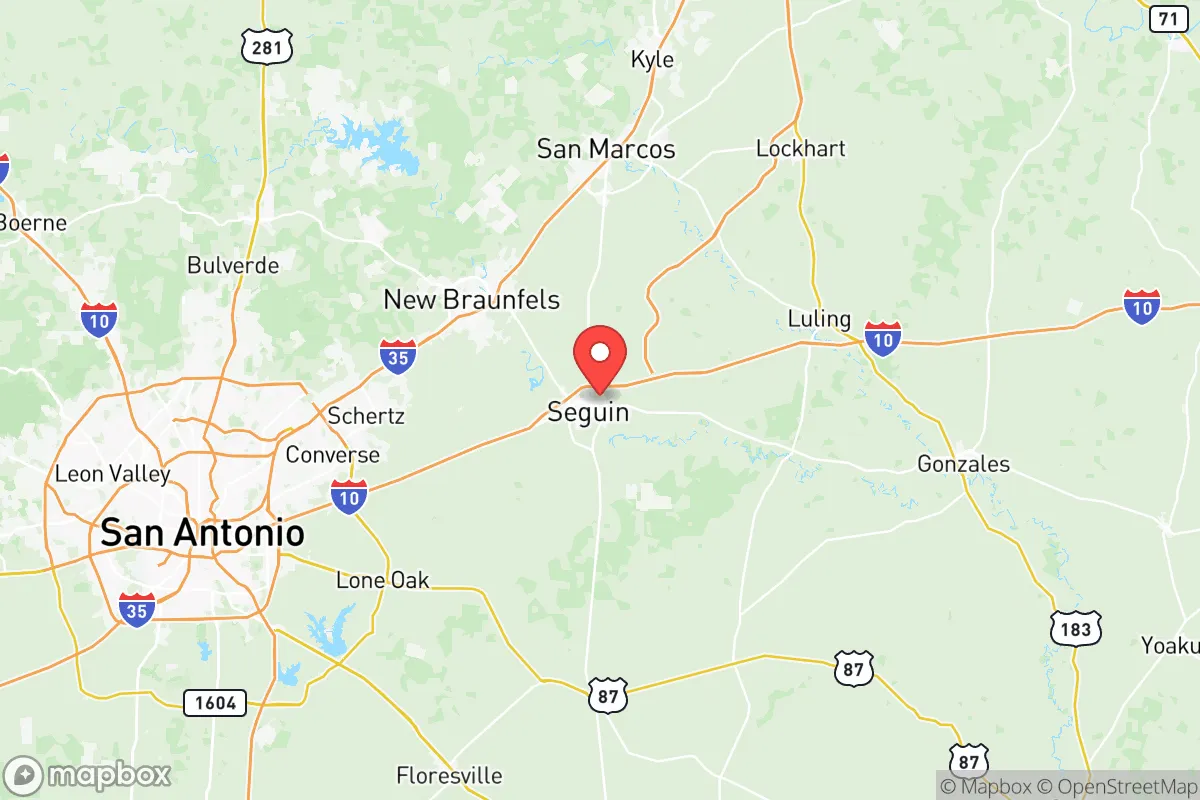
Guadalupe County offers a spectrum of quality-of-life options that span from fast-growing exurban hubs to quiet farming communities, attracting everyone from San Antonio commuters and military personnel near Randolph AFB to retirees seeking affordable acreage. The county sits along the I-35 corridor between Austin and San Antonio, and its character shifts noticeably from one town to the next, with cost, pace, and amenities varying block by block.
Largest town(s) & population centers
The county’s largest population centers are Seguin (the county seat, ~30,000 residents), Schertz (partly in Guadalupe and Bexar counties, ~45,000 total), and Cibolo (~37,000). Daily life in Seguin revolves around the historic downtown square, Texas Lutheran University, and a mix of local manufacturing and retail employers like Caterpillar and Continental Tire. Seguin offers a relatively affordable cost of living within the county and a slower, more traditional small-city feel. Schertz and Cibolo, by contrast, are classic San Antonio exurbs—master-planned subdivisions, chain retail corridors, and commute averages of 28.8 minutes to downtown San Antonio. Families with school-age children gravitate to these two towns for their highly rated independent school districts (Schertz-Cibolo-Universal City ISD). A newer population node is Santa Clara, a rapidly growing unincorporated area near the Bexar County line where large-lot subdivisions are filling in farm fields.
Smaller towns & rural pockets
Smaller communities retain a distinctly rural character. Marion (pop. ~1,200) is a tight-knit farming town with a single grocery store and a strong sense of community; its school district is small and highly personalized. Geronimo (pop. ~1,000) sits along the Guadalupe River and is popular among anglers and those seeking a quiet rural retreat with river access. McQueeney (pop. ~2,600) is a lake community on Lake McQueeney, offering waterfront lots and a recreational lifestyle—boat docks, fishing, and weekend getaways—though it remains mostly residential with limited commercial services. Kingsbury (pop. ~700) and Lake Dunlap (an unincorporated area) are similarly low-density, with homes on large lots or along water. In these pockets, daily life means driving 15–25 minutes for groceries or medical care, but residents gain privacy, land, and lower property costs.
Cost & lifestyle range
The countywide cost of living index stands at 115 (15% above the U.S. average), pulled up by the exurban housing market. The median home value is $285,900 and median rent $1,439. At the high end, Schertz and Cibolo command prices near that median—or higher for new construction in neighborhoods like The Heights at Cibolo or Northcrest. Seguin offers more options below $250,000, especially in older central neighborhoods or on the outskirts. The rural stretches of Kingsbury and Marion have the lowest costs: land is cheaper, and manufactured homes are common. At the very low end, rents for a two-bedroom in Kingsbury can dip below $1,000, while a similar unit in Schertz typically exceeds $1,400. Commute times vary accordingly: Schertz and Cibolo residents enjoy the shortest drives (often <25 minutes to San Antonio), whereas a resident of Kingsbury commuting to downtown San Antonio faces roughly 40 minutes. For those working in Austin, any Guadalupe County base means a commute of an hour or more, though the Marcia-Kyle area provides a closer alternative via SH 130.
The county suits a diverse range of residents best: military employees at Randolph AFB and Fort Sam Houston find Schertz and Cibolo ideal for short commutes and good schools; remote workers and retirees buy acreage in Marion or Kingsbury for a quieter, cheaper lifestyle; and families on a budget who still want San Antonio access often land in Seguin, where the trade-off is a longer drive but lower housing costs and a genuine downtown identity. Regardless of which pocket a newcomer picks, Guadalupe County offers a real choice between suburban convenience and rural independence—not just a generic “county” experience.

Crime in Guadalupe County
Crime rates similar to the national median for U.S. locations.
Violent CrimeViolent Crime Analysis
Property CrimeProperty Crime Analysis
Crime Analysis
Guadalupe County, positioned between the Austin and San Antonio metro areas, presents a mixed safety profile that demands careful attention from potential residents. With a violent crime rate of 342.3 per 100,000 residents and a property crime rate of 1,780.9 per 100,000, the county sits above the national average for violent offenses but below the Texas state average for property crime. The county's rapid growth—fueled by suburban expansion from both metro poles—has strained law enforcement resources and contributed to localized crime spikes in certain communities.
Crime in context
Guadalupe County's violent crime rate of 342.3 per 100,000 is approximately 15% higher than the national average of roughly 300 per 100,000, though it remains below the Texas state average of about 450 per 100,000. Property crime at 1,780.9 per 100,000 is roughly 10% below the Texas average of 1,980 per 100,000, placing the county in a relatively better position for theft and burglary. However, these aggregate numbers mask significant variation between the county's incorporated cities and unincorporated areas. The county's location in the 25th Judicial District, which includes progressive-leaning Bexar County to the south, has raised concerns among residents about lenient sentencing patterns that may contribute to recidivism. The Guadalupe County District Attorney's office, which prosecutes cases in Seguin and the surrounding areas, has faced criticism for plea-bargaining rates that some argue prioritize case clearance over public safety.
What residents experience
Daily life in Guadalupe County varies sharply by location. Seguin, the county seat and largest city, reports the highest concentration of violent crime, particularly aggravated assault and robbery, often linked to gang activity along the I-10 corridor. Schertz and Cibolo, which straddle the Bexar County line, experience lower violent crime rates but struggle with property crime—especially vehicle burglaries and package thefts from suburban subdivisions. Marion and Santa Clara, smaller communities in the northern part of the county, report the lowest crime rates overall, benefiting from their rural character and smaller populations. Residents in these areas often cite a stronger sense of community watch and quicker sheriff's response times. The county's proximity to San Antonio means that some property crime is driven by offenders crossing the county line, a pattern that local law enforcement has struggled to disrupt due to jurisdictional friction and differing prosecution philosophies between Guadalupe County and Bexar County's more progressive district attorney.
Neighborhood-level variation is pronounced. Subdivisions near the Lake Dunlap and Lake McQueeney areas, popular with retirees and weekenders, see seasonal spikes in burglary during summer months when homes are vacant. Newer master-planned communities in Santa Clara and Garden Ridge generally report lower crime due to HOA security measures and higher property values, while older neighborhoods near downtown Seguin and along the Highway 123 corridor experience more frequent incidents. The Guadalupe County Sheriff's Office publishes a crime mapping tool that shows the heaviest concentration of incidents within a two-mile radius of the Seguin city center. For families considering relocation, the safest bets are the northern and eastern portions of the county, particularly the Kingsbury and McQueeney areas, where violent crime is nearly absent and property crime remains below the county average.
* Values derived from national, state, county, city and local statistics and may differ in a specific area. Last updated: 2026-06-03T01:33:34.000Z
Narrative content on this page is AI-generated and may contain mistakes. Verify any details that matter before acting on them.
ReloMaps may earn a commission from affiliate links at no extra cost to you.

