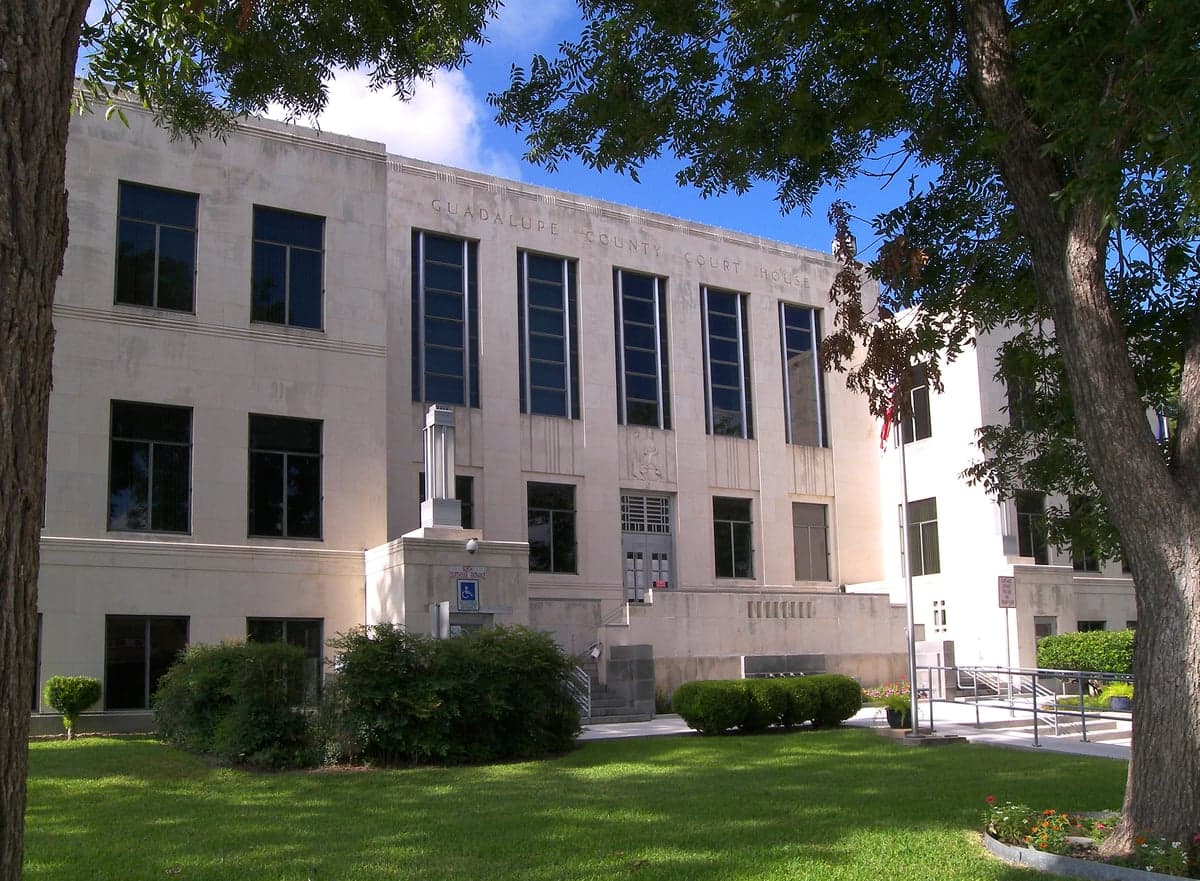
Photo: Wikipedia
Political ClimatePolitical Climate in Guadalupe County
Showing district-level results — no local-only data available.
Local Political AnalysisPolitical Analysis of Guadalupe County
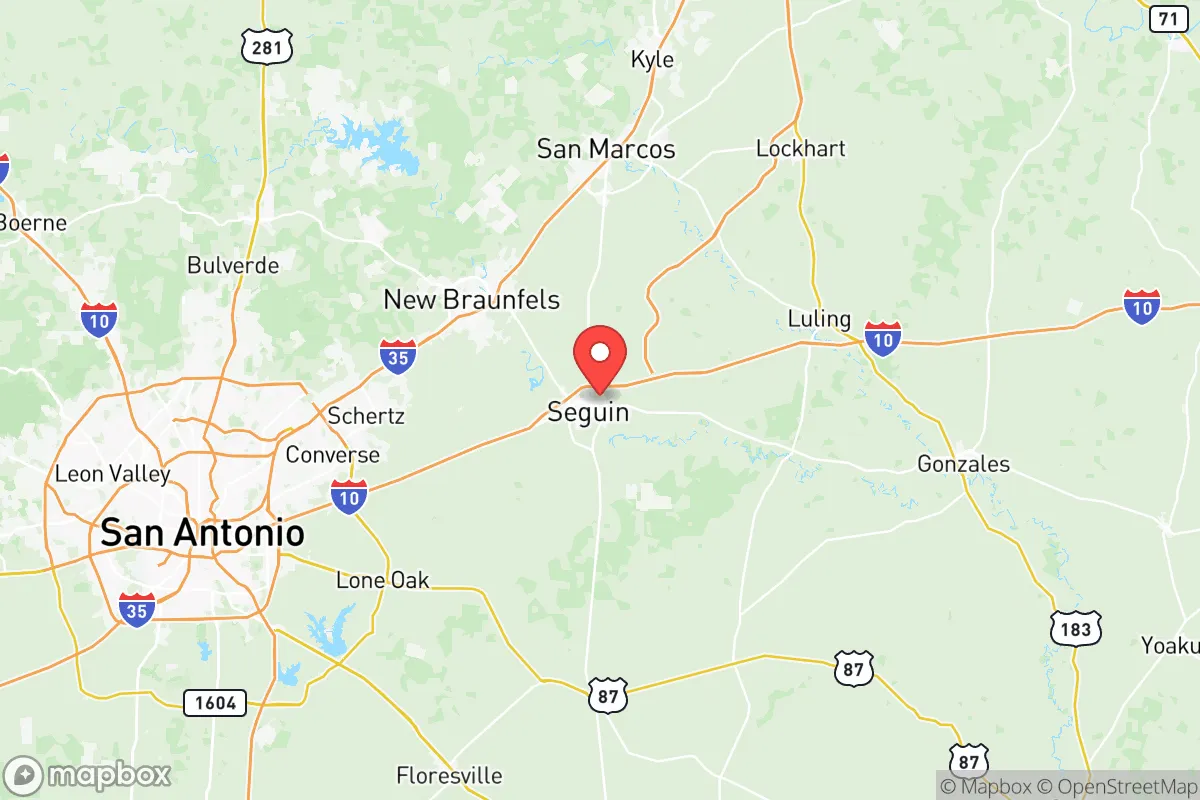
You know, I’ve been in Guadalupe County long enough to watch it shift under our feet. The Cook Partisan Voting Index gives the county a solid R+7, meaning it votes about seven points more Republican than the national average. That’s a reliable red, but not uniform across the map. The county seat, Seguin, has a historic, slower-growth core that still leans conservative, but it’s not as deep red as the rural precincts. Meanwhile, Schertz and Cibolo—the bedroom communities creeping up from San Antonio—show more of a mixed bag; Schertz has swingy precincts that sometimes break for Democrats in local races, especially as new subdivisions fill up with families escaping Bexar County taxes and crime. Cibolo’s newer developments are still heavily Republican, but you see younger voters who aren’t as glued to party lines. The really deep red stays out in Marion and New Berlin, where the pickup trucks outnumber Priuses by about fifty to one. Overall, the county’s trajectory is solid red, but I’d be lying if I said the progressive creep from the south doesn’t worry me. Every new housing development brings folks who bring their San Antonio politics with them, and that’s how a county starts to slide.
How it compares
Texas as a whole sits at R+4, so Guadalupe County is basically the state’s conservative backbone, not the bleeding edge. We’re about three points redder than the state average, which puts us in the same company as neighboring Comal and Kendall counties—real flag-waving country. But here’s where it gets interesting: the state’s R+4 gets pulled down by heavily populated, left-leaning counties like Harris, Dallas, and Bexar. Guadalupe County, on the other hand, doesn’t have that drag. Our Latino population—significant in Seguin and parts of Schertz—still votes more conservatively here than in Bexar County, where union ties and city machine politics swing things blue. I’d argue we’re a microcosm of what Texas could be if it didn’t have the big urban anchors. The state legislature tilts right, but the county commissioners court is even more reliably pro-business, pro-Second Amendment, and skeptical of unfunded mandates from Austin. That’s the difference: our local government feels like it answers to us, not to some D.C. or Austin bureaucrat.
What this means for residents
For those of us living here, the political climate translates to practical liberties you notice every day. Property taxes are still a pain—Texas tax structure means they’re high anywhere—but Guadalupe County keeps its rate lower than Bexar or Travis, and we don’t see the kind of zoning overreach that strangles small businesses in San Antonio. The sheriff’s office doesn’t play games with state preemption laws on gun rights; you can carry without a permit like the law says, and nobody’s setting up red-flag ordinances behind your back. School boards in our county—like Navarro ISD or Schertz-Cibolo-Universal City ISD—still mostly focus on academics and discipline, not woke curriculum experiments. But I do see warning signs: progressive activists are starting to show up at commissioner meetings, pushing for “racial equity” policies and density planning that would trade our rural character for taxpayer-funded train stations. If you value local control and the freedom to live without government peering over your shoulder, this is still one of the best spots in Texas. But you have to stay engaged, because that can change fast.
Culturally, the county draws a sharp line between the small-town, church-going ethos of places like Seguin and the more suburban, cookie-cutter vibe of the I-35 corridor towns. We don’t have the county-wide mask mandates or vaccine passports you see in Austin or Dallas County—our health department follows the state lead, not the WHO. School choice is a popular topic; many parents here send kids to private Christian schools or homeschool, and the county commission has signaled support for open enrollment. The biggest policy distinction from the state at large is that we’re less willing to hand over local land-use control to Austin planners. If you want a big lot, a workshop, and no HOA breathing down your neck, Guadalupe County is your place. That’s the kind of freedom that keeps me here, even as I keep one eye on the ballot box.

State Political ClimatePolitical Climate in Texas
State Political AnalysisPolitical Environment in the State
Texas leans solidly Republican at the state level, with a Cook PVI of R+4, but that number doesn't tell the whole story. The dominant coalition is a mix of rural conservatives, suburban pragmatists, and a growing libertarian streak, but the last 15 years have seen a slow blueing of the big metros even as the rest of the state digs in. If you're looking at Texas as a relocation option, you need to understand that the political landscape isn't uniform — where you land inside the state matters just as much as the state itself.
Urban vs. rural divide
The political map of Texas is a tale of three Texases. The big urban islands — Austin, El Paso, Dallas, Houston, and San Antonio — are deep blue or trending that way, driven by younger transplants, university populations, and minority coalitions. Austin is the most liberal major city in the South, regularly electing far-left city councils and pushing policies like defunding police proposals. El Paso is a Democratic stronghold with a heavy Hispanic working-class base. Meanwhile, the suburbs that ring these cities — places like Collin County (north of Dallas), Fort Bend County (southwest of Houston), and Comal County (north of San Antonio) — are the true battlegrounds. Collin County was once a GOP fortress, but the 2020 election saw Trump win it by only 7 points after 20-point margins in the past. Fort Worth and Lubbock remain reliably conservative, but the real rural-conservative base is in the Panhandle, West Texas, and East Texas timber country. The divide is stark: you can drive 30 minutes from downtown Austin and land in deeply red Burnet County where Trump won by 25+ points.
Policy environment
Texas has no state income tax — that's the big headline, and it's real. The trade-off is higher property taxes and sales tax, but overall the tax burden is below average. The regulatory posture is famously business-friendly: no state-level prevailing wage, no collective bargaining for public employees, and a "right to work" law that keeps unions weak. Education policy has become a flashpoint — the 2023 school voucher fight (SB 1) failed in the House, but Governor Abbott is pushing hard for education savings accounts in 2025, and it's likely to pass with a more conservative legislature. Healthcare policy is minimal: Texas refused Medicaid expansion, leaving a coverage gap, but that's a feature for those who see it as avoiding federal overreach. Election laws have tightened: SB 1 (2021) added ID requirements for mail ballots, limited drive-through voting, and banned 24-hour polling places. Conservatives see it as election integrity; progressives call it suppression. The bottom line: Texas policy is generally aligned with small-government principles, but the property tax burden and local regulations can vary wildly depending on your city and county.
Trajectory & freedom
Are Texans becoming more free? It depends on the axis. On gun rights, HB 1927 (2021) made Texas a permitless carry state — you can carry a handgun without a license if you're not prohibited. That was a clear expansion of liberty. On parental rights, HB 900 (2023) restricted sexually explicit materials in school libraries, a move that many conservatives see as protecting kids from government-imposed ideology. On medical autonomy, the state banned nearly all abortions (trigger law after Dobbs) with no exceptions for rape or incest, and the SB 8 private enforcement mechanism is still in place — that's a major restriction on personal choice, though conservatives in the audience may see it as freedom for the unborn. On the other hand, business freedom is shrinking in some areas: cities like Austin have imposed paid sick leave mandates and plastic bag bans (struck down by courts, but they try). The Texas Supreme Court recently upheld a law limiting local governments' ability to regulate short-term rentals. The trend is two steps forward on property rights and gun rights, one step back on local control.
Civil unrest & political movements
Texas has seen its share of political turbulence. The 2020 "Summer of Love" protests in Austin turned into a multi-month occupation of the city's police headquarters, and the city council later cut the police budget by a third, though voters partially reversed it in 2021 by passing Proposition A that mandated minimum police staffing. Border politics are visceral: the state launched Operation Lone Star in 2021 under Governor Abbott, deploying DPS troopers and National Guard to the border, busing migrants to sanctuary cities. That has been a massive political flashpoint, with conservative counties cheering and liberal counties filing lawsuits. The Texas Freedom Caucus is a growing force in the state House, pushing the governor further right on immigration and education. Secession rhetoric ("Texit") is mostly noise — a 2022 GOP platform committee floated a referendum, but it's not realistic. Election integrity continues to be a hot issue: Harris County (Houston) was sued over its handling of 2022 elections, leading to a state takeover of elections that the county is fighting. New residents will notice the constant tension between state preemption and local progressive ordinances.
Projection
Over the next 5-10 years, Texas is likely to shift slightly blue in the suburbs while the rural areas double down on red. Population growth is coming from both domestic migration (mostly conservative-leaning families from California and the Midwest) and international immigration (largely Democratic-leaning Latino and Asian populations). The big question is whether new arrivals adopt the state's existing politics or transplant their old ones. Early evidence from Collin County suggests a slow drift left — but the state legislature is so aggressively gerrymandered that the GOP will likely hold power through 2030. Expect continued fights over school choice, property tax reform (a constitutional cap on appraisal growth already exists but may tighten), and immigration enforcement. The state will probably pass some form of education savings accounts in the next session. Personal freedom will expand on guns and property rights but face new battles on medical privacy and corporate regulation.
For someone moving in now, the practical takeaway is this: choose your county carefully. If you want the full low-regulation, low-tax, high-personal-freedom experience, avoid the urban cores. Head to Midland, Keller, or Georgetown for a more stable conservative environment. If you end up in Austin or Houston's inner loop, expect local policies that will feel more like Portland or Chicago — and property taxes that never stop climbing. Texas is still freer than most of the country, but it's not a monolith, and the direction depends entirely on where you plant your flag.
* Values derived from national, state, county, city and local statistics and may differ in a specific area. Last updated: 2026-06-03T01:33:34.000Z
Narrative content on this page is AI-generated and may contain mistakes. Verify any details that matter before acting on them.
ReloMaps may earn a commission from affiliate links at no extra cost to you.

