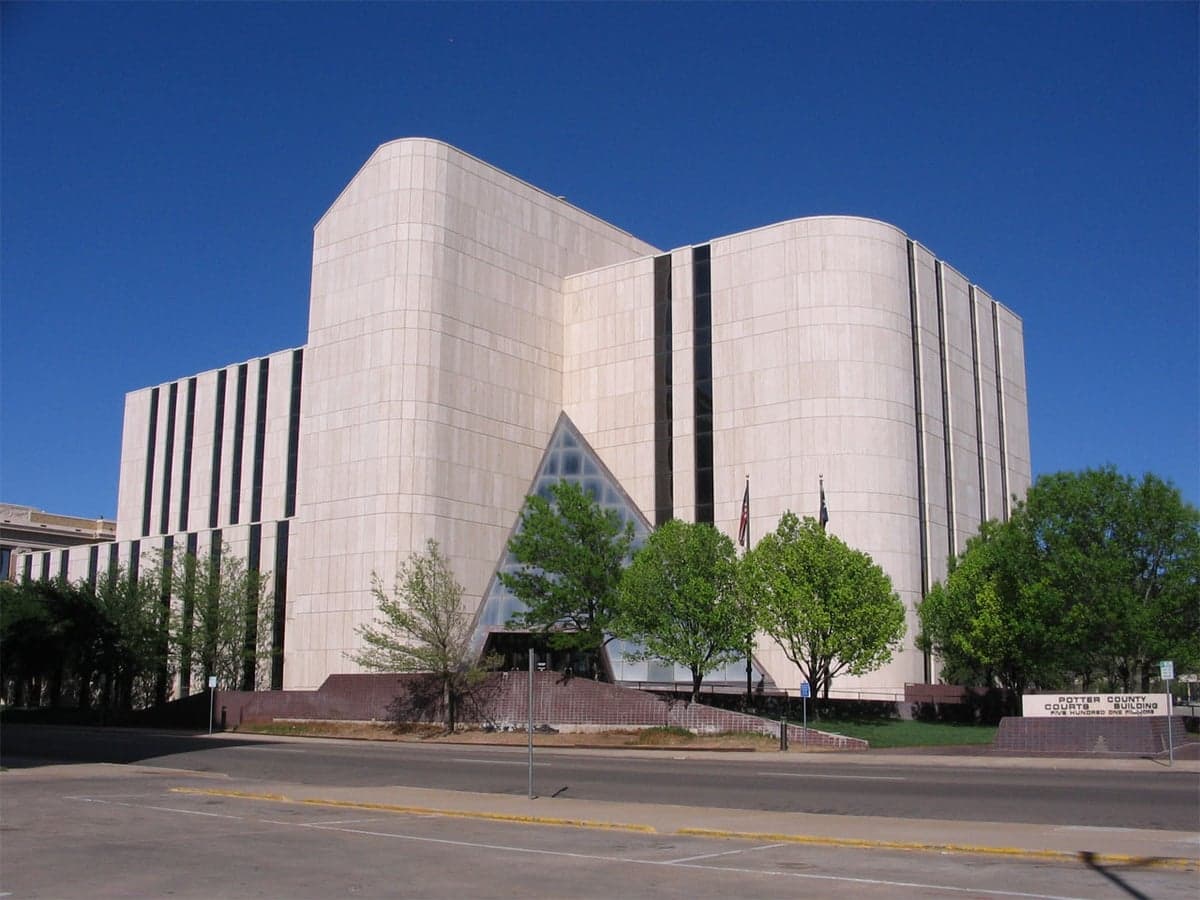
Photo: Wikipedia
Political ClimatePolitical Climate in Potter County
Showing district-level results — no local-only data available.
Local Political AnalysisPolitical Analysis of Potter County
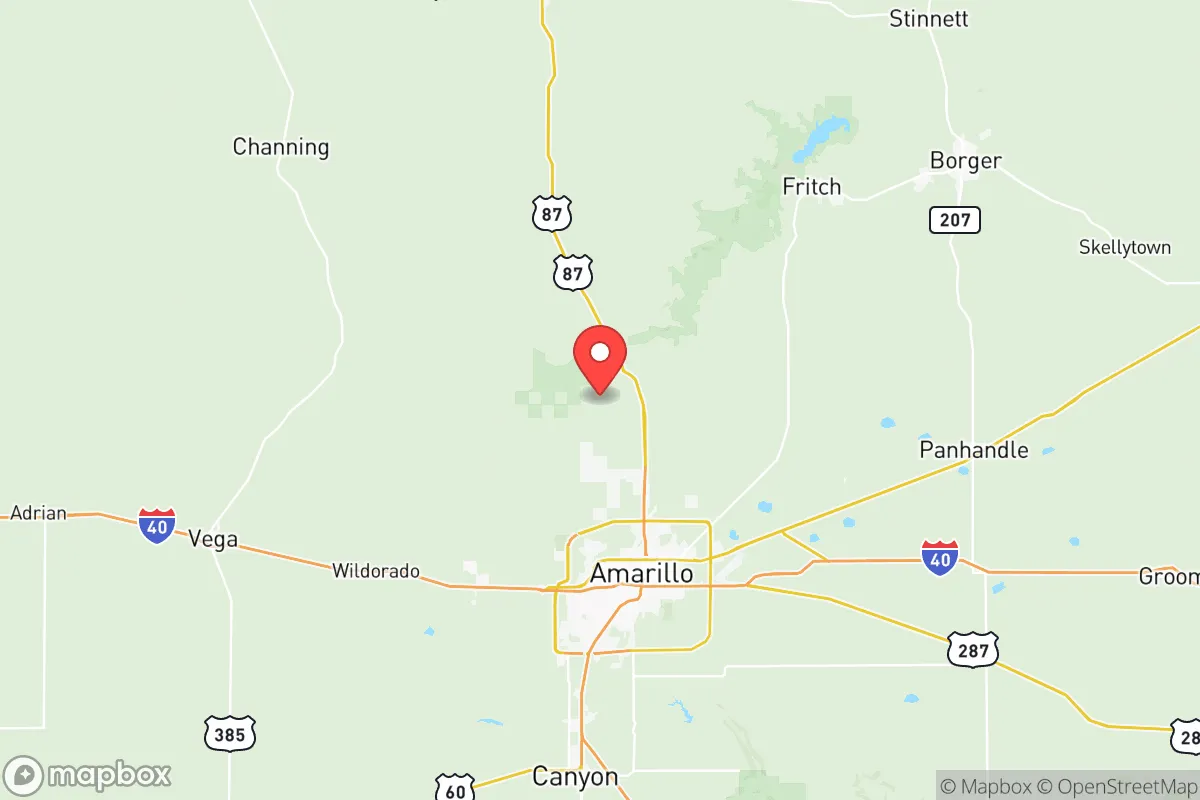
Potter County, anchored by Amarillo, is one of the most reliably conservative corners of Texas, carrying a Cook Partisan Voting Index of R+24. That’s a full 20 points more Republican than the state as a whole, which sits at R+4. In practical terms, this means the county hasn’t voted for a Democratic presidential candidate since 1964, and even then it was a squeaker. The political trajectory here has been a slow, steady march rightward for decades, though the last few election cycles have shown some interesting cracks in the foundation, particularly in the city limits of Amarillo itself.
How it compares
When you stack Potter County against the rest of Texas, the difference isn’t just about party registration—it’s about culture and trust. The R+24 rating means local elections are often decided in the Republican primary, not the general. That’s a far cry from the statewide R+4, where Democrats can and do win statewide office. The real story is the urban-rural split within the county. The city of Amarillo, especially its older neighborhoods near the medical district and the downtown core, has seen a noticeable shift toward the center-left in recent years. Precincts around the Texas Tech University Health Sciences Center and the historic Plemons-Eakle area have started voting more like Austin-lite, with Democratic candidates pulling 45-48% of the vote in 2020 and 2022. Meanwhile, the rural precincts outside the city—places like the unincorporated communities of Bushland and the areas around the Pantex Plant—are deep red, often hitting 80% Republican or higher. The swing precincts are the newer subdivisions on the west side of Amarillo, where families and young professionals are split between fiscal conservatism and social libertarianism.
What this means for residents
For folks living here, the political climate means a government that generally stays out of your business—at least for now. Property taxes are a perennial headache, but the county commission and city council have historically been reluctant to raise them without a fight. The bigger concern is the creeping influence of progressive policies from Austin and Washington. You see it in school board meetings, where debates over library books and curriculum have become heated, and in the city council’s occasional flirtation with zoning changes that feel like overreach. The Amarillo City Council, currently split 4-3 between conservatives and moderates, has been a battleground over issues like mask mandates and homeless camping ordinances. The conservative majority has held the line so far, but the margin is thin. Long-term, the worry is that if the urban precincts keep trending left, the county could flip to a more purple shade within a decade, bringing with it the kind of government overreach that makes you feel like you need permission to live your own life.
Culturally, Potter County still feels like the Texas of the 1990s—church on Sunday, pickup trucks, and a general distrust of politicians who promise to fix everything. The Pantex Plant, a nuclear weapons assembly facility, is the largest employer and a reminder that this is a community that values national security and personal responsibility over handouts. The biggest policy distinction from the rest of Texas is the county’s aggressive approach to water rights and land use, which has kept development sprawl in check. That’s a double-edged sword: it preserves the rural character, but it also keeps housing prices higher than you’d expect for the Panhandle. If you’re looking for a place where the government still remembers it works for you, Potter County is it—but keep an eye on those Amarillo city council races. That’s where the future is being decided.

State Political ClimatePolitical Climate in Texas
State Political AnalysisPolitical Environment in the State
Texas has been a reliably Republican state for decades, with a Cook Partisan Voting Index of R+4, but the political landscape is far from monolithic. The dominant coalition is a mix of rural conservatives, suburban moderates, and a growing number of transplants from blue states, creating a dynamic where the GOP still holds all statewide offices but the margins have tightened in presidential races—from a 16-point win in 2012 to a 9-point win in 2020 and a 5-point win in 2024. Over the last 10-20 years, the state has seen a slow but steady shift toward competitiveness, driven by explosive growth in the urban cores of Dallas-Fort Worth, Houston, San Antonio, and especially Austin, while the rural and exurban counties have only deepened their red hue.
Urban vs. rural divide
The political map of Texas is a stark checkerboard. The major metros—Harris County (Houston), Dallas County, Bexar County (San Antonio), and Travis County (Austin)—are solidly blue, with Travis County delivering over 70% of its vote to Democrats in recent cycles. These urban centers are the engine of the state's leftward drift, fueled by young professionals, minority voters, and a steady stream of Californians and New Yorkers. Meanwhile, the rural and exurban counties—places like Collin County (north of Dallas), Montgomery County (north of Houston), and Tarrant County (Fort Worth)—have become Republican strongholds, with Collin County flipping from purple to deep red after 2020. The real battleground is the suburbs: Fort Bend County (southwest of Houston) and Williamson County (north of Austin) have seen dramatic shifts, with Fort Bend flipping blue in 2018 and Williamson trending left as Austin's sprawl pushes outward. If you're moving to Texas, your experience of the political climate will depend almost entirely on whether you settle in a blue city, a red rural town, or a purple suburb.
Policy environment
Texas's policy environment is a mixed bag for conservatives. On the plus side, the state has no personal income tax, a regulatory posture that favors business, and a right-to-work law that keeps unions weak. Property taxes are high—averaging around 1.6% of home value—but the lack of income tax is a major draw. Education policy is a flashpoint: the state has a school choice voucher program (the Texas Education Savings Account program, passed in 2023) that lets parents use public funds for private or homeschool expenses, a win for parental rights. However, the state's public school funding formula is outdated and relies heavily on local property taxes, creating inequities between wealthy and poor districts. Healthcare is a perennial frustration: Texas has the highest uninsured rate in the nation (around 17%), and the state has refused to expand Medicaid under the Affordable Care Act, a stance that pleases fiscal conservatives but leaves rural hospitals struggling. Election laws have tightened: the 2021 Senate Bill 1 restricted mail-in voting, added ID requirements, and banned 24-hour and drive-through voting, which Republicans say ensures integrity but Democrats call suppression. For a conservative, the policy environment is generally favorable, but the high property taxes and underfunded infrastructure are real concerns.
Trajectory & freedom
On the freedom front, Texas has moved in both directions. On the positive side, the state has expanded gun rights: the 2021 permitless carry law (HB 1927) allows most adults to carry a handgun without a license, a major win for Second Amendment advocates. Parental rights were strengthened with the 2023 law banning gender-transition procedures for minors (SB 14) and requiring school libraries to remove books deemed "sexually explicit." Property rights got a boost with the 2023 law limiting homeowners association authority over short-term rentals. But there are concerning trends. The state's abortion ban (the 2021 Heartbeat Act, SB 8) is among the strictest in the nation, banning the procedure after about six weeks with a private enforcement mechanism—a policy that many conservatives support but that has created legal uncertainty for doctors. Medical autonomy took a hit with the 2023 law requiring hospitals to provide life-sustaining treatment to infants born alive after an attempted abortion, which sounds reasonable but has been criticized as government overreach into medical decisions. On speech, the 2023 law (HB 20) requiring social media platforms to host content they might otherwise remove has been challenged as a violation of First Amendment rights. The overall trajectory is toward more government intervention in personal and medical decisions, even if the intent is conservative. A new resident should expect a state that is increasingly willing to use state power to enforce moral and cultural norms.
Civil unrest & political movements
Texas has seen its share of political flashpoints. The 2020 Black Lives Matter protests in Austin, Dallas, and Houston were large and occasionally violent, leading to property damage and a lasting sense of unease in some urban neighborhoods. The "Defund the Police" movement gained traction in Austin, where the city council cut the police budget by $150 million in 2020, only to reverse course after a spike in violent crime. On the right, the "Texas Nationalist Movement" has pushed for secession, though it remains a fringe idea with no serious political traction. Immigration is a constant flashpoint: Governor Greg Abbott's Operation Lone Star, launched in 2021, deployed state troopers and National Guard to the border, bused migrants to blue cities, and installed razor wire along the Rio Grande. This has created a visible, ongoing confrontation with the Biden administration and has made border security a daily reality for residents of El Paso, Eagle Pass, and the Rio Grande Valley. Election integrity remains a hot-button issue: the 2020 and 2024 elections saw claims of irregularities in Harris County, leading to a state takeover of the county's elections administration in 2023. A new resident will notice the political tension most in the urban-rural divide—drive 30 minutes outside any major city, and the yard signs and bumper stickers shift dramatically from "Beto" to "Abbott."
Projection
Over the next 5-10 years, Texas is likely to become more politically competitive, but not necessarily more liberal. The in-migration from California and New York is slowing, and many of the newcomers are actually conservatives fleeing blue states—a phenomenon called "ideological sorting." The suburbs of Dallas-Fort Worth and Houston are filling with families who want lower taxes and better schools, and they tend to vote Republican. However, the urban cores are getting younger and more diverse, and the Hispanic vote—long assumed to be Republican-leaning—is actually shifting left among younger voters. The state's growing population means more congressional seats and electoral votes, but the political outcome will depend on turnout. If Republicans can hold the suburbs and rural areas while making inroads with Hispanic voters, Texas will stay red. If Democrats continue to dominate the cities and turn out the youth vote, the state could become a true battleground by 2032. A conservative moving to Texas now should expect a state that remains Republican-controlled at the state level but with increasingly tight margins, and a cultural environment that is more polarized than the national image of "Texas friendly" suggests.
For a new resident, the bottom line is this: Texas offers a low-tax, business-friendly environment with strong gun rights and a government that is actively pushing back against progressive trends. But it's not a libertarian paradise—the state is willing to use its power to enforce conservative values on everything from abortion to school curriculum to social media. If you're looking for a place where the government stays out of your life, you'll find that's true for your wallet but not necessarily for your personal choices. The political climate is intense, especially in the cities, but if you settle in a red suburb or rural area, you'll find a community that shares your values and a state government that largely reflects them. Just be prepared for high property taxes, hot summers, and a political conversation that never seems to cool down.
* Values derived from national, state, county, city and local statistics and may differ in a specific area. Last updated: 2026-05-21T02:27:14.000Z
Narrative content on this page is AI-generated and may contain mistakes. Verify any details that matter before acting on them.
ReloMaps may earn a commission from affiliate links at no extra cost to you.

