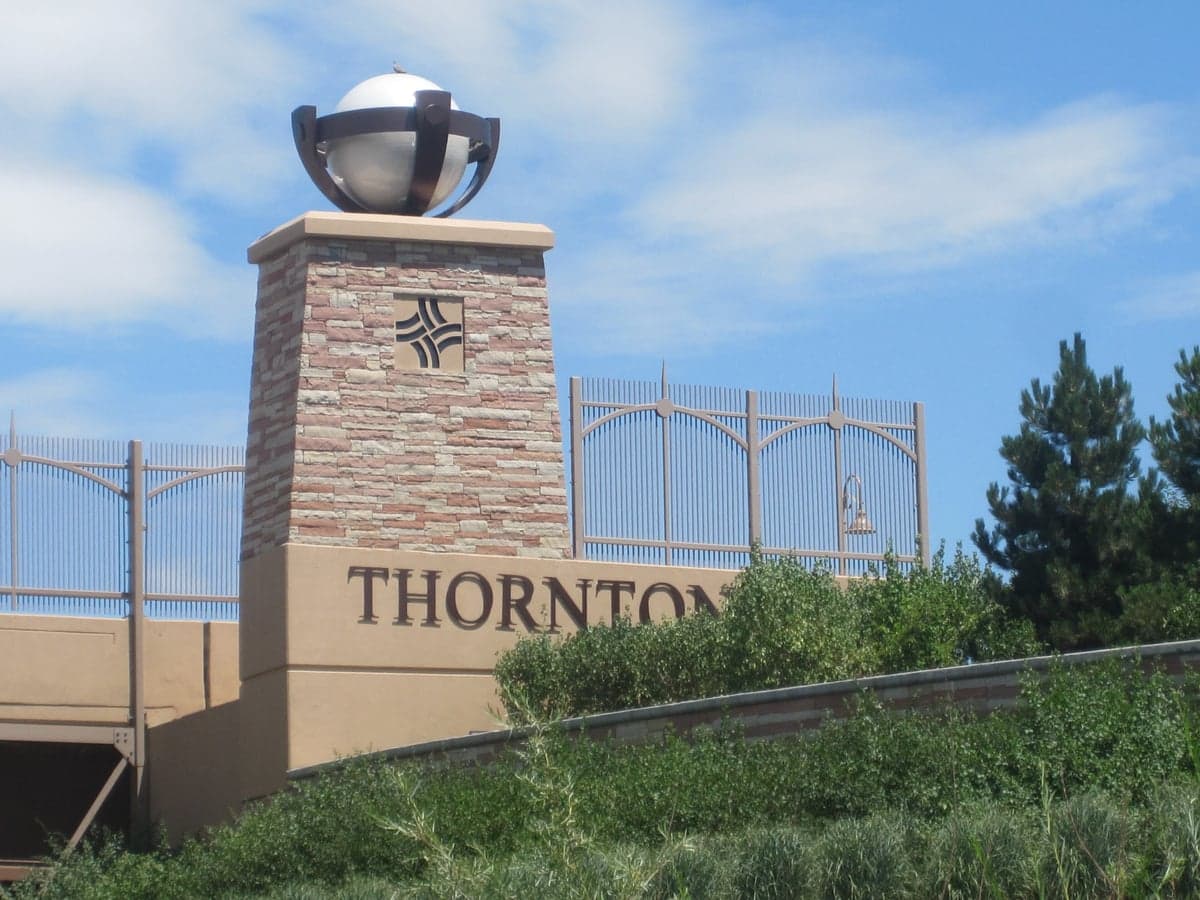
Photo: Wikipedia
Political ClimatePolitical Climate in Thornton, CO
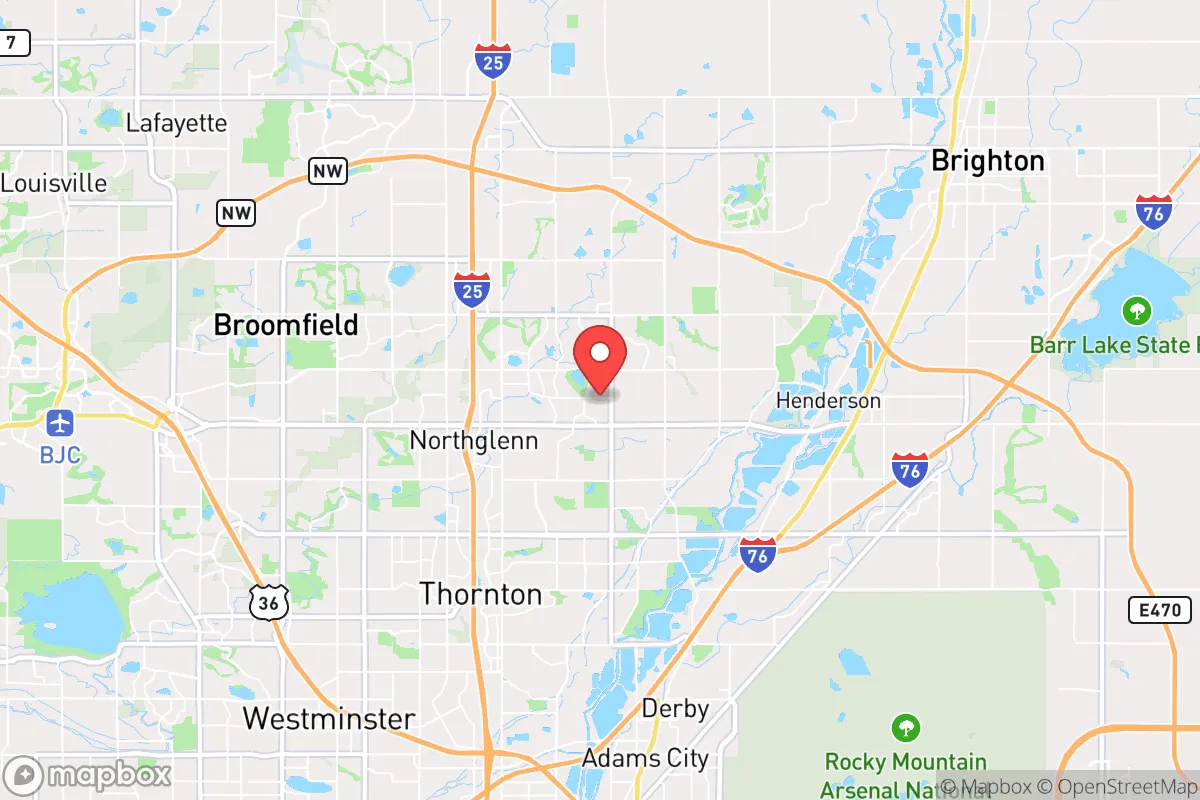
District shown is the primary district for this city’s centroid. Cities may span multiple districts.
Local Political AnalysisPolitical Analysis of Thornton, CO
Thornton, Colorado, sits in a political tug-of-war that mirrors its geography—caught between the deep-blue Denver metro and the reliably red plains to the north. The Cook PVI rating of EVEN tells you everything you need to know: this city is a true battleground, and it’s been shifting leftward over the past decade. If you’d asked me ten years ago, I’d have said Thornton was a solid working-class, law-and-order town. Today? It’s trending purple, and if you’re paying attention, you can see the progressive fingerprints all over local policy—from zoning fights to school board decisions. For someone who values limited government and personal freedoms, that’s a yellow flag worth watching.
How it compares
Drive ten minutes south into Denver, and you’re in a city that votes +29 Democratic—a world apart. Head north to Brighton or Fort Lupton, and you’ll find communities that still lean conservative, with Adams County’s rural pockets holding the line. Thornton itself is the hinge. It’s more moderate than Boulder (obviously) and less conservative than Weld County towns like Erie or Firestone. But here’s the rub: as Denver’s sprawl pushes north, Thornton’s new developments are drawing younger, more progressive transplants. The city council has already flirted with inclusionary housing mandates and “climate action” resolutions—stuff that would’ve been laughed out of a meeting room in 2010. The contrast with nearby Northglenn is subtle but real; Northglenn still feels a bit more blue-collar and skeptical of government overreach, while Thornton’s leadership seems increasingly eager to adopt Denver-lite policies.
What this means for residents
For a conservative-leaning resident, the practical impact is a slow creep of regulations and taxes disguised as “progress.” Property taxes have ticked up to fund new transit-oriented developments and bike lanes that few locals asked for. The school district—Adams 12—has seen curriculum battles over CRT and gender ideology, with progressive board members gaining ground in recent elections. If you value parental rights and local control, you’ll need to stay engaged. On the flip side, Thornton still has a strong police presence and hasn’t gone full “defund” like some Denver suburbs. The 2nd Amendment is still respected here, but you can feel the pressure: new “safe storage” ordinances and red-flag law discussions pop up every couple of years. It’s not Boulder yet, but the trajectory is concerning if you believe government should stay out of your garage and your kids’ classroom.
Culturally, Thornton is a mixed bag. You’ve got longtime families who remember when this was all farmland, mixed with a growing Hispanic population that tends to be socially conservative but economically pragmatic. The city’s annual “Thorfest” and the Adams County Fair still feel like old-school community events, not woke festivals. But the new developments along I-25 and the light-rail extension are bringing chain stores and a more transient population that doesn’t share those roots. The biggest policy distinction? Thornton has its own municipal court that’s been aggressive on code enforcement—think lawn length, fence height, parking restrictions. That’s a double-edged sword: it keeps the neighborhood tidy, but it’s also a tool for government to micromanage your property. If you’re looking for a place where you can live and let live, Thornton still offers that—for now. But keep one eye on the city council meetings, because the direction of travel is clear, and it’s not toward more freedom.

State Political ClimatePolitical Climate in Colorado
State Political AnalysisPolitical Environment in the State
Colorado has shifted from a classic purple swing state to a solidly blue-leaning state over the past two decades, driven primarily by explosive growth in the Denver metro area and the Front Range. While the state still elects a few Republicans in statewide races, Democrats have controlled the governorship, both chambers of the legislature, and most statewide offices since 2018, and the trendline is unmistakably progressive. For a conservative considering relocation, the state’s political trajectory is a cautionary tale of how rapid in-migration from blue states, combined with aggressive progressive policymaking, can transform a once-balanced state.
Urban vs. rural divide
The political map of Colorado is a stark story of two states. The urban core — Denver, Boulder, and the inner-ring suburbs of Aurora and Lakewood — is overwhelmingly Democratic, often voting 70-80% for the party’s candidates. The Front Range corridor, stretching from Fort Collins down through Colorado Springs, is the battleground. Colorado Springs itself remains a conservative stronghold, home to Focus on the Family and the Air Force Academy, but its influence is diluted by the sheer population weight of Denver and its suburbs. The Western Slope and rural Eastern Plains, including towns like Grand Junction, Durango, and Lamar, vote heavily Republican, but their populations are small and shrinking. The key shift has been in once-purple suburban counties like Jefferson, Arapahoe, and Larimer, which have flipped decisively blue since 2016. Weld County, north of Denver, remains a rare bright spot for conservatives, voting +30 points Republican in 2024, but it’s an island in a sea of blue.
Policy environment
Colorado’s policy environment is now firmly progressive, with a track record that should give any freedom-minded person pause. The state has a flat income tax rate of 4.4%, which is relatively low, but that’s where the good news ends. Property taxes are moderate, but the state has aggressively expanded its regulatory footprint. In 2021, the legislature passed the Colorado Option, a government-designed health insurance plan that effectively sets price controls on private insurers. Education policy is dominated by the teachers’ unions, with school choice under constant attack — the state’s voucher program was gutted by the courts, and charter school growth has stalled. Election laws have been dramatically loosened: Colorado was one of the first states to implement universal mail-in voting and automatic voter registration, which critics argue has eroded ballot integrity. The state also has a red flag law (HB 19-1177) that allows for temporary firearm seizure without a criminal conviction, a major flashpoint for gun owners.
Trajectory & freedom
Colorado is becoming less free by nearly any measure, and the pace is accelerating. The most alarming trend for conservatives is the assault on Second Amendment rights. In 2023, the legislature passed a ban on so-called “assault weapons” (SB 23-169) and raised the purchasing age for all firearms to 21. A new 2024 law (HB 24-1349) imposes a 10-day waiting period on all gun purchases. Parental rights have taken a hit as well: the state’s Comprehensive Human Sexuality Education law (HB 19-1032) mandates explicit sex ed in public schools, with no parental opt-out for the content. Medical freedom has been curtailed by strict vaccine mandates for healthcare workers and schoolchildren, though these have been partially rolled back. Property rights are under pressure from a wave of “upzoning” laws that strip local control over housing density, and the state’s oil and gas regulatory overhaul (SB 19-181) has effectively banned new drilling in many areas, devastating the Western Slope economy. On the positive side, Colorado has no state-level rent control, and the state’s TABOR (Taxpayer Bill of Rights) amendment still provides a check on runaway spending, though lawmakers have found ways to work around it.
Civil unrest & political movements
Colorado has seen its share of political flashpoints. The 2020 protests in Denver were among the largest in the country, with the city’s “autonomous zone” lasting several days before being cleared. The state’s sanctuary policies are a major concern: Colorado is a “sanctuary state” in practice, with Denver and Boulder refusing to cooperate with ICE detainers. Immigration politics are heated, particularly in the Denver metro area, which has seen a surge of migrants bused from Texas. Election integrity remains a hot-button issue: the 2020 election in Colorado was conducted almost entirely by mail, and while no widespread fraud was proven, the system’s lack of voter ID requirements and the use of unsecured ballot drop boxes have fueled ongoing distrust. On the right, the Colorado Republican Party is deeply fractured between establishment and populist factions, and the Weld County secession movement (the “51st state” proposal) has fizzled. The state’s red flag law has been a rallying point for gun rights activists, with several counties passing “Second Amendment sanctuary” resolutions, though these have no legal force.
Projection
Over the next 5-10 years, Colorado will likely continue its leftward drift. The demographics are unforgiving: the state’s growth is concentrated in the Denver-Boulder corridor, which attracts young, college-educated, and progressive-leaning transplants from California and the Northeast. The rural counties are losing population, meaning their political influence will continue to wane. The state’s independent redistricting commission has already locked in a congressional map that gives Democrats a 5-3 advantage, and that’s unlikely to change. The biggest wildcard is whether the state’s affordability crisis — driven by high housing costs and rising taxes — will slow in-migration or even trigger an exodus. If it does, the political calculus could shift, but that’s a long shot. A conservative moving to Colorado today should expect that within a decade, the state will have a Democratic trifecta permanently, with all the policy consequences that entails: higher taxes, more gun control, and a regulatory environment that chokes economic freedom.
Bottom line for a new resident: Colorado is a beautiful state with a strong economy, but its political trajectory is hostile to conservative values. If you’re moving here, you’ll be living in a state where your vote for statewide office will likely be drowned out by the Denver metro area. Your best bet is to target the remaining conservative enclaves — Colorado Springs, Weld County, or the Western Slope towns like Grand Junction — where local governance still reflects your values. But even there, you’ll be fighting an uphill battle against a state government that is increasingly comfortable using its power to impose progressive policies on every corner of the state. Come for the mountains, but be prepared to defend your freedoms at the ballot box and in the legislature.
* Values derived from national, state, county, city and local statistics and may differ in a specific area. Last updated: 2026-05-02T12:31:51.000Z
Narrative content on this page is AI-generated and may contain mistakes. Verify any details that matter before acting on them.
ReloMaps may earn a commission from affiliate links at no extra cost to you.

