Strategic Assessment of Trophy Club, TX
Multiple tactical vulnerabilities. Population density, target proximity, or disaster risk are likely compounding. A retreat property and exit planning is required.
What does the Strategic Assessment tell us?
Our Strategic Assessment grades tactical survivability of an area. Major population centers, military targets, fallout zones, natural disasters, and border exposure all drive risk — lower exposure means a more defensible position in a crisis.
This is heavily inspired by Joel Skousen's Strategic Relocation book. Highly recommended you checkout the book ($)What does this tell us?
Our Strategic Assessment grades tactical survivability of an area. Major population centers, military targets, fallout zones, natural disasters, and border exposure all drive risk — lower exposure means a more defensible position in a crisis.
This is heavily inspired by Joel Skousen's Strategic Relocation book. Highly recommended you checkout the book ($)Strategic Pillars

Key Distances
Regional Safe Places
Below is our recommended "safe zones" in Texas and the surrounding area based on our strategic heuristics. For most people, it's unrealistic to live in a “safe zone” full-time due to work, family or other personal reasons. They tend to be more rural. However, many of these areas are perfect for second homes and retreat properties that double as a vacation home or even a short-term rental.

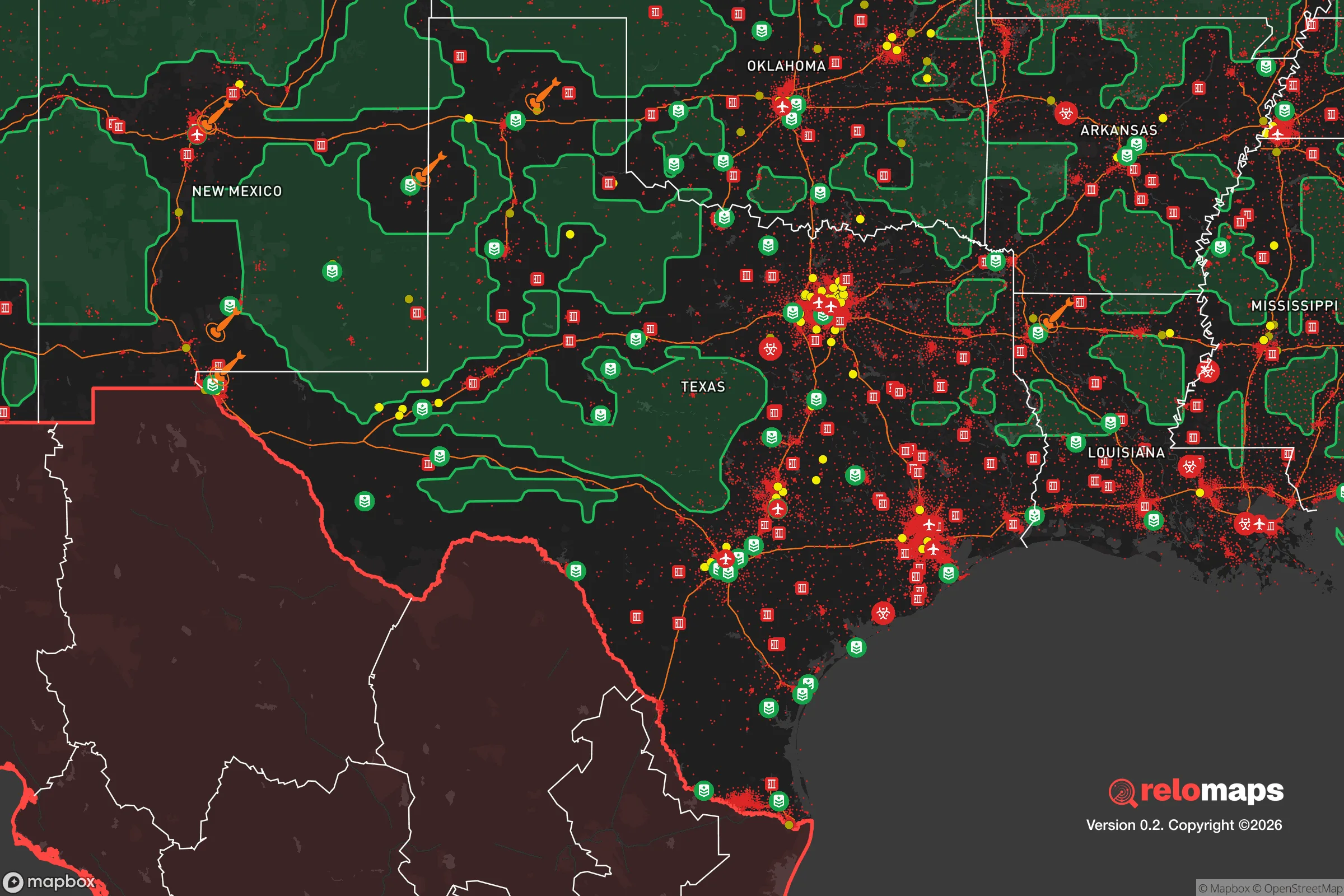


Important Note: For informational purposes only. This does not mean nothing bad ever happens in the green zones. Please use common sense. This is based on public data and modeled with AI. We tried to take a conservative approach but mistakes happen. We update this regularly as new information becomes available.
Solar Generator Recommendations
Backup power matters more here than in safer locations. We've picked three solar generators across budgets and capacity tiers — start with the budget unit if you only need a few essentials, or step up if you want to run a fridge and HVAC for days at a time.

Jackery Portable Power Station Explorer 300
Budget OptionPower on the Go: Weighing only 11 lbs, it's convenient to set up and store with book-sized foldable solar panels

BLUETTI Portable Power Station AC180
Designed for both indoor and outdoor scenarios, AC180 is highly capable as it has a robost capacity and continuous output power.

EF ECOFLOW DELTA Pro Ultra Power Station
Upgraded PickEcoFlow DELTA Pro Ultra is a whole-home energy system designed to grow with your family. Integrated with the Smart Home Panel 2, it scales to meet your evolving energy needs — keeping your home powered, intelligent, and secure through every stage of life.
We earn a commission, at no additional cost to you.
Strategic Assessment Analysis
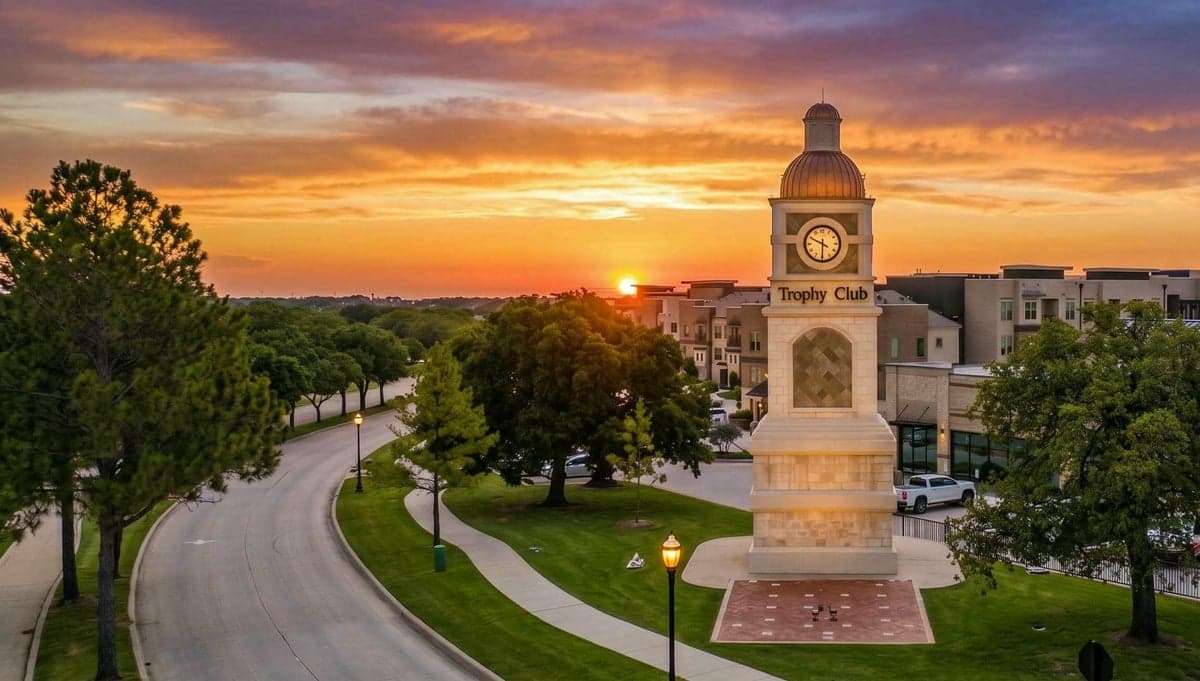
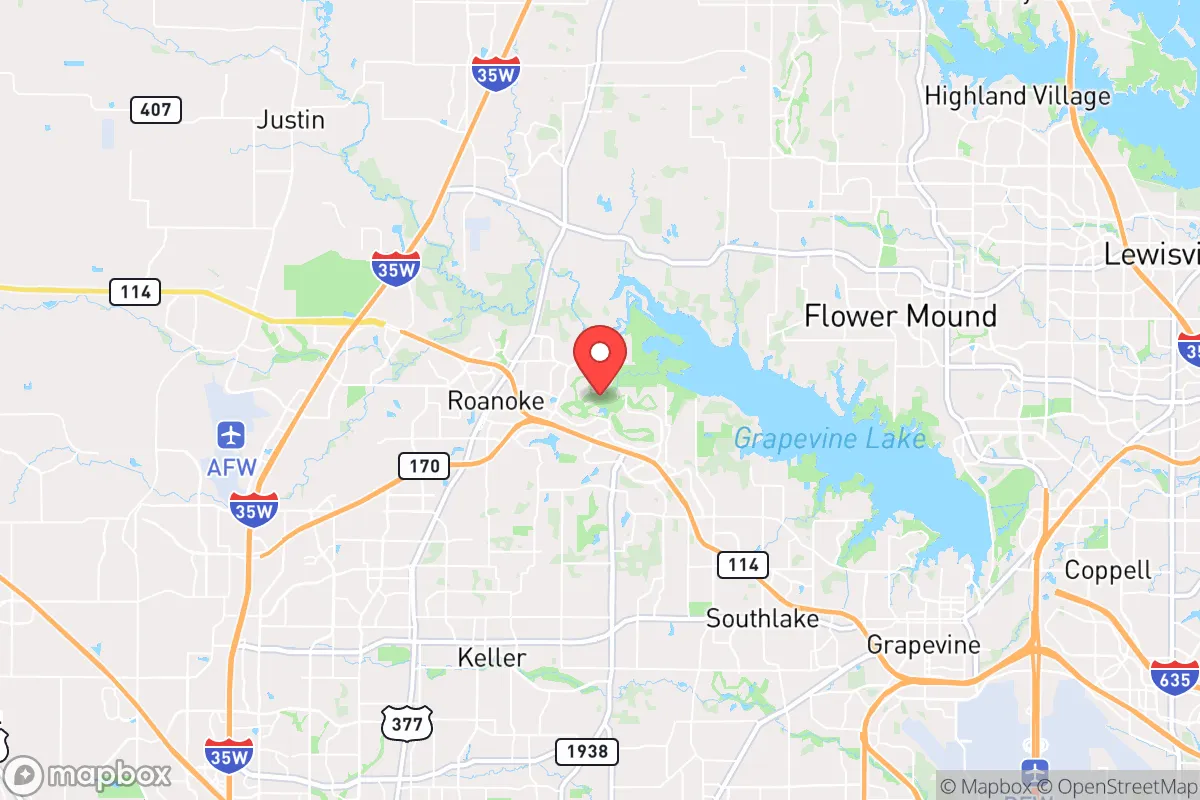
Trophy Club, Texas, occupies a strategic niche in the far northern reaches of the Dallas-Fort Worth metroplex, offering a blend of suburban insulation and proximity to critical infrastructure that appeals to those prioritizing resilience. Its location along the southern edge of Denton County, roughly 30 miles northwest of downtown Dallas, places it outside the immediate blast radius of a major urban target while still providing access to supply chains and medical networks. The town’s layout—wrapped around the Trophy Club Country Club and bisected by State Highway 114—creates a natural buffer of golf courses, greenbelts, and low-density residential lots that slow vehicular traffic and limit choke points. For a relocator with a prepper mindset, this is not a hardened bunker, but it is a defensible staging area with a population under 15,000, a strong homeowners’ association culture, and a tax base that keeps local services responsive.
Geographic position and natural advantages for long-term security
Trophy Club sits on the edge of the Cross Timbers ecoregion, a transition zone between the Blackland Prairie and the Eastern Cross Timbers. This means the area has slightly more tree cover—post oaks, cedars, and mesquite—than the flat, exposed plains to the west, offering limited but meaningful concealment and windbreak for a rural retreat. The terrain is gently rolling, with elevations around 600–700 feet, providing decent line-of-sight for observation without creating impassable ridges. The town is bordered by the Lake Grapevine reservoir to the south and the Denton Creek floodplain to the east, both of which serve as natural barriers that funnel movement through a handful of road crossings. For a survivalist, these water features are double-edged: they provide a reliable freshwater source (Lake Grapevine holds roughly 140,000 acre-feet) but also create potential ambush points if civil order collapses. The area’s clay-loam soils are marginal for large-scale agriculture but support kitchen gardens and rainwater catchment, and the 100-year floodplain along Denton Creek is mostly undeveloped, offering a buffer against suburban sprawl from the south.
Risks, exposures, and proximity to fallout-relevant landmarks
The most significant strategic liability for Trophy Club is its position within the DFW metroplex’s outer ring. While it is not a primary target, it lies within 15 miles of the Alliance Airport cargo hub and the Fort Worth Naval Air Station Joint Reserve Base (Carswell Field), both of which are plausible secondary targets in a conflict scenario. The town is also directly under the approach path for DFW International Airport’s northern runways, meaning a large-scale aviation incident—whether accidental or deliberate—could deposit debris or contamination across the area. Highway 114, the main arterial, runs east-west through the town’s center and connects directly to downtown Fort Worth; in a mass evacuation event, this road would become a parking lot, trapping residents who cannot use the limited secondary routes (Dove Road, Trophy Club Drive, and the gravel farm roads to the north). On the positive side, Trophy Club has no major industrial facilities, chemical plants, or rail lines carrying hazardous materials within its borders. The nearest nuclear power plant is Comanche Peak, 60 miles southwest—outside the 10-mile plume exposure pathway zone, but within the 50-mile ingestion pathway zone. For a relocator concerned with fallout, the prevailing winds in north Texas blow from the south-southeast, meaning a release from Comanche Peak would push contamination toward the Red River, not directly over Trophy Club. Still, the town’s proximity to DFW (20 miles) and the Federal Reserve Bank of Dallas (30 miles) makes it a potential staging area for federal response, which could attract unwanted attention during civil unrest.
Practical resilience for a relocator: food, water, energy, and defensibility
Water security is the strongest card Trophy Club holds. The town’s municipal supply comes from the Trinity Aquifer and Lake Grapevine, both managed by the Tarrant Regional Water District, which has redundant pipelines and storage. A private well is feasible on larger lots (many homes sit on half-acre to one-acre parcels), though the aquifer depth varies from 200 to 400 feet, requiring a significant drilling investment. Rainwater harvesting is legal and encouraged, with average annual rainfall of 36 inches—enough to support a 5,000-gallon cistern system for household use. Food security is weaker: the town has no working farms or community gardens within its limits, and the nearest year-round farmers’ market is in Southlake (10 miles). The soil is alkaline and rocky, so a serious grower would need raised beds and imported topsoil. For energy, Trophy Club is served by Oncor, which has a mixed reliability record during winter storms (the 2021 blackout left parts of the town without power for 72 hours). Solar is viable—the area averages 215 sunny days per year—but the HOA has strict aesthetic guidelines that limit rooftop panel placement. A backup generator is almost mandatory for a prepper household, and natural gas lines are available in most subdivisions, allowing for a whole-house generator without propane storage. Defensibility is moderate: the town has a single police station with about 20 officers, supplemented by the Denton County Sheriff’s Office. The street layout is a mix of cul-de-sacs and winding roads, which naturally slows vehicle pursuit but also creates dead ends that could trap residents. The golf course and surrounding greenbelts provide open fields of fire for a perimeter defense, but they also offer cover for anyone approaching on foot. The nearest hospital is Texas Health Presbyterian in Flower Mound (8 miles), which has a Level III trauma center—adequate for routine emergencies but not for mass casualty events.
The overall strategic picture for Trophy Club is one of calculated compromise. It is not a remote bug-out location—you can see the Dallas skyline from the higher elevations on a clear day—but it is not a high-risk urban core either. For a relocator who wants to maintain a professional career in DFW while building a resilient household, this town offers a workable middle ground: good water access, moderate defensibility, and a conservative community culture that values property rights and self-reliance. The downsides are real—proximity to military and aviation targets, dependence on a single highway, and HOA restrictions that can conflict with prepper infrastructure—but they are manageable with planning. If the goal is to be within a day’s drive of the Hill Country or the Ozarks for a secondary retreat, while still having a comfortable primary residence with good schools and low crime, Trophy Club is a solid choice. Just don’t expect to go unnoticed, and don’t assume the golf course will stay green when the grid goes down.

* Values derived from national, state, county, city and local statistics and may differ in a specific area. Last updated: 2026-05-16T22:26:59.000Z
Narrative content on this page is AI-generated and may contain mistakes. Verify any details that matter before acting on them.
ReloMaps may earn a commission from affiliate links at no extra cost to you.

