Political ClimatePolitical Climate in Trophy Club, TX
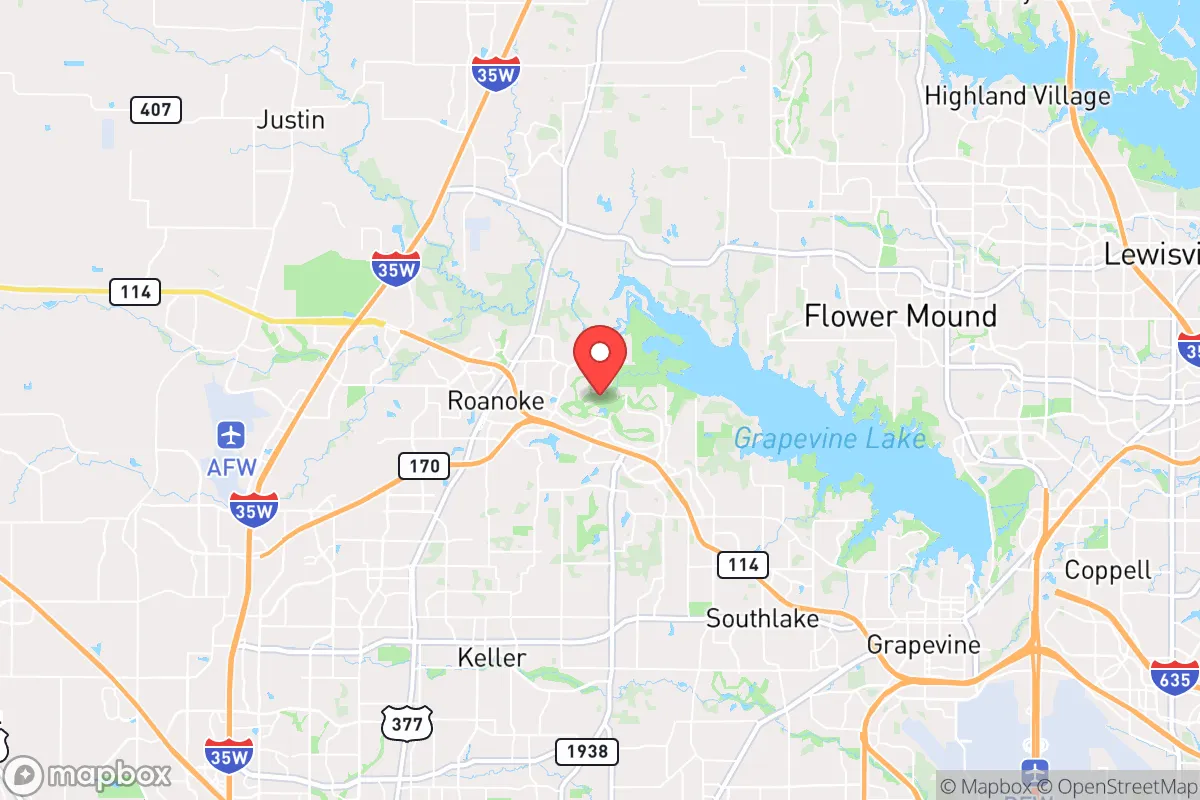
District shown is the primary district for this city’s centroid. Cities may span multiple districts.
Local Political AnalysisPolitical Analysis of Trophy Club, TX
Trophy Club has long been a solidly conservative stronghold, and that hasn't changed much over the years. The area sits at a Cook PVI of R+11, which is significantly more Republican than the state of Texas as a whole, which clocks in at R+4. You can feel it in the local elections, the school board meetings, and just about every neighborhood chat. The trajectory here is one of steady, quiet conservatism—folks moved to Trophy Club specifically to get away from the hustle and the more progressive leanings of places like Dallas or Fort Worth. There's a real sense that this is a place where traditional values aren't just tolerated, they're expected.
How it compares
When you stack Trophy Club up against the rest of Texas, the difference is stark. The state as a whole has been trending slightly more purple in recent years, especially in the major metro areas. But Trophy Club? It's a different story. Neighboring Southlake and Keller are also conservative, but Trophy Club feels more insulated from the creeping progressive influence you see in parts of Denton or even some corners of Tarrant County. The R+11 rating isn't just a number; it reflects a community that actively votes against government overreach and for personal freedoms. You don't see the same kind of push for new regulations or social experiments here that you might in Austin or even some of the closer-in suburbs. It's a place where the Second Amendment is a given, not a debate, and where local leaders are generally more interested in keeping taxes low and roads paved than in chasing the latest national trends.
What this means for residents
For someone living here, the political climate means a lot of day-to-day peace of mind. You're not constantly fighting against new local ordinances that infringe on your property rights or your personal choices. The school board, for instance, has historically been very focused on parental rights and local control, which is a huge relief compared to what you hear happening in other districts. There's a strong, unspoken agreement that the government's job is to stay out of your life, not to manage it. The biggest concern among long-time residents is that as the area continues to grow, we might see an influx of folks from more progressive areas who don't share that same mindset. So far, though, the community has held firm, and the voting patterns show it.
Culturally, this translates into a very specific kind of freedom. You can send your kids to school without worrying about a political agenda being pushed in the classroom. You can own a home and a piece of land without a mountain of new zoning rules telling you what to do with it. The local events, the community groups, the churches—they all reflect a place that values self-reliance and personal responsibility. If you look at nearby Roanoke or even parts of Grapevine, you'll see a bit more of a mixed bag politically, but Trophy Club has managed to keep its identity. The policy distinctions are subtle but real: lower property tax rates relative to some neighboring towns, a more hands-off approach to business regulation, and a general attitude that the best government is the one that governs least. For anyone who values that kind of environment, it's hard to beat.

State Political ClimatePolitical Climate in Texas
State Political AnalysisPolitical Environment in the State
Texas remains a solidly Republican state with a Cook PVI of R+4, but the last 15 years have seen a dramatic shift from a deep-red monolith to a competitive battleground. The dominant coalition is still conservative, powered by the suburbs, rural areas, and the booming exurbs, but explosive growth in the blue metros of Austin, Dallas, and Houston has narrowed the gap. In 2024, Donald Trump still won Texas by about 5 points, down from 9 in 2020 and 16 in 2012, signaling a slow but real leftward drift driven by transplants and demographic change.
Urban vs. rural divide
The political map of Texas is a study in extremes. The state’s biggest metros—Harris County (Houston), Dallas County, Travis County (Austin), and Bexar County (San Antonio)—are now solidly Democratic, with Travis County voting nearly 75% for Biden in 2020. These urban cores are surrounded by a sea of deep-red rural counties that vote 80%+ Republican, like those in the Panhandle and East Texas. The real action is in the suburbs and exurbs: Collin County (north of Dallas) and Fort Bend County (southwest of Houston) were once reliably red but have become competitive, with Collin County going from +22 R in 2012 to just +8 R in 2024. Meanwhile, the Rio Grande Valley, historically a Democratic stronghold, has been shifting right, with counties like Starr and Hidalgo moving double digits toward Republicans in 2024. This urban-rural chasm means a resident’s political experience depends entirely on which part of the state they call home.
Policy environment
Texas’s policy environment is defined by a low-tax, low-regulation posture that conservatives prize. There is no state income tax, and property taxes are high but capped at 10% annual growth for homesteads. The regulatory climate is business-friendly, with no state-level rent control or strict environmental mandates. On education, the state has embraced school choice through the Texas Education Savings Account program (passed in 2023), allowing parents to use public funds for private or homeschool expenses. Healthcare policy is mixed: Texas refused Medicaid expansion under the ACA, keeping the system lean, but the state has the highest uninsured rate in the nation. Election laws were tightened in 2021 with SB 1, which banned drive-through voting and 24-hour polling places, and imposed stricter ID requirements—a move supporters say protects integrity and critics call suppression. For a conservative moving in, the policy environment is largely aligned with limited government, but the property tax burden and lack of healthcare access are real trade-offs.
Trajectory & freedom
On personal liberty, Texas has been a mixed bag in recent years. The good news for conservatives: constitutional carry (permitless carry) became law in 2021, allowing any legal gun owner to carry a handgun without a license. The Texas Heartbeat Act (SB 8) banned abortion after six weeks in 2021, and a near-total ban took effect in 2022 after Dobbs. Parental rights were strengthened with the Parental Bill of Rights (HB 900), which requires schools to notify parents of medical services and restricts sexually explicit library materials. However, there are concerning trends. The state has aggressively expanded its surveillance powers through Operation Lone Star, deploying state troopers and National Guard to the border, which some see as a necessary security measure but others view as government overreach. Property rights took a hit with the Texas Railroad Commission’s increased permitting delays for oil and gas, and the state’s abundant use of eminent domain for pipelines and transmission lines remains a sore point for landowners. The trajectory is toward more state-level intervention in personal life, even if the direction is conservative—a trend that should give pause to anyone who values maximum individual freedom.
Civil unrest & political movements
Texas has seen its share of political flashpoints. The 2020 protests in Austin over George Floyd’s death were among the largest in the country, with the city council later defunding the police by cutting $150 million from the department. This sparked a backlash that helped elect a Republican mayor in 2022 and led to the “Save Austin Now” ballot initiative, which restored police funding and banned homeless camping. Immigration politics are a constant flashpoint: El Paso and the border region have seen repeated surges of migrants, with Governor Abbott busing thousands to New York and Chicago. The “Texas Secede” movement, led by the Texas Nationalist Movement, has gained some traction online but remains fringe. Election integrity remains a hot-button issue, with the 2020 and 2022 cycles seeing widespread claims of fraud (largely unsubstantiated) and the creation of a state election audit unit under the Secretary of State. A new resident will notice the intensity of these debates, especially in the suburbs where yard signs and bumper stickers are common.
Projection
Over the next 5-10 years, Texas is likely to become more politically competitive, but not necessarily more liberal. The in-migration from California and other blue states is slowing, and many of those newcomers are actually conservative-leaning or quickly adopt Texas’s low-tax ethos. The suburbs of Dallas-Fort Worth and San Antonio are growing fastest, and they are trending right again after a brief leftward shift. The Rio Grande Valley’s rightward drift is real and could make Texas more red in the long run. However, the urban cores will continue to grow in population and political power, meaning the state legislature will face increasing pressure to moderate on issues like school funding and healthcare. The biggest wildcard is the 2026 gubernatorial race, where a strong Democratic challenger could force the GOP to tack further right. For a conservative moving in now, expect a state that remains Republican-controlled but with more internal friction and a growing libertarian streak that resists both left-wing and right-wing overreach.
For a new resident, the bottom line is this: Texas offers a policy environment that is broadly aligned with conservative values—low taxes, gun rights, school choice, and parental rights—but it is not a libertarian paradise. The state government is active and willing to use its power, whether for border enforcement, education mandates, or property seizures. If you value maximum personal freedom and minimal government, you will need to stay engaged and vote to keep the trajectory on track. The political climate is dynamic, and your experience will vary dramatically depending on whether you settle in a red exurb like Keller or a blue enclave like Austin. Choose your county wisely.
* Values derived from national, state, county, city and local statistics and may differ in a specific area. Last updated: 2026-05-16T22:26:59.000Z
Narrative content on this page is AI-generated and may contain mistakes. Verify any details that matter before acting on them.
ReloMaps may earn a commission from affiliate links at no extra cost to you.

