Photo: Wikipedia
Political ClimatePolitical Climate in Wasatch County
Showing district-level results — no local-only data available.
Local Political AnalysisPolitical Analysis of Wasatch County
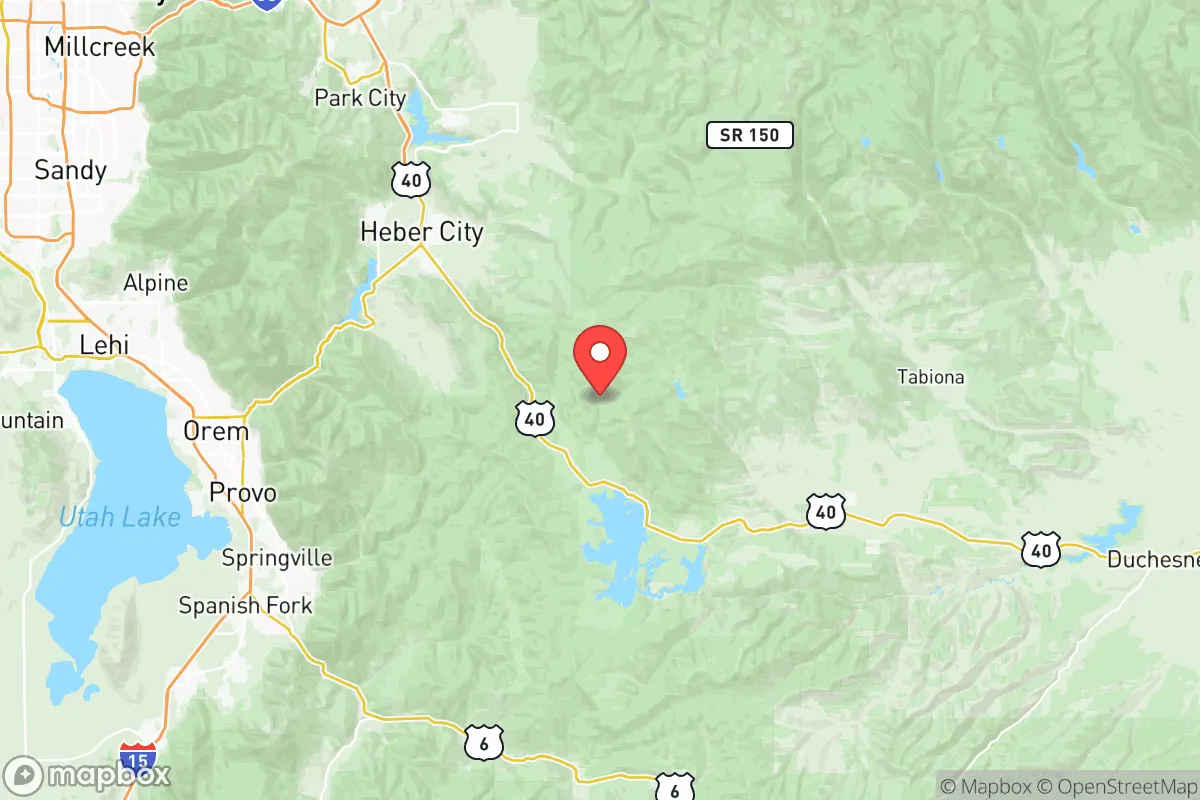
Wasatch County is a reliably conservative area, but its politics are more nuanced than the straight red you might expect from a Utah mountain county. The county as a whole leans Republican by a comfortable margin, with a Cook PVI of R+10, just a shade less red than the statewide R+11. That one-point difference, however, hints at a subtle but real political divide within the county, driven by the growing influence of Heber Valley's resort towns and the influx of out-of-state transplants.
How it compares
Compared to the rest of Utah, Wasatch County is slightly less conservative, and that gap has been widening over the last decade. The statewide R+11 is driven by deeply red rural counties and the reliably conservative suburbs of Utah County. Wasatch County's R+10 reflects a tug-of-war between its traditional agricultural and ranching communities—places like Wallsburg and Daniel, which vote heavily Republican—and the newer, more moderate populations in Heber City and Midway. In the 2024 presidential primary, for instance, Heber City precincts showed a measurable share of votes for Nikki Haley, while Wallsburg and Daniel went overwhelmingly for Trump. The swing precincts are largely in the Heber City limits and along the US-40 corridor, where younger families and remote workers have settled. These voters tend to be fiscally conservative but more moderate on social issues like land use and environmental regulation, creating a subtle but persistent counterweight to the county's deep-red core.
What this means for residents
For conservative residents, Wasatch County is a comfortable place to live. Local government, from the county commission to the school board, is dominated by Republicans, and policy debates tend to center on growth management, water rights, and property taxes rather than ideological battles. The county's Republican Party is active and well-organized, and conservative candidates rarely face serious general-election challenges. For liberal or moderate residents, the political reality is more of a mixed bag. You won't find many overtly progressive elected officials, but the county's rapid growth has created a pragmatic streak: issues like affordable housing, traffic congestion, and preserving open space have bipartisan support. The Heber Valley area, in particular, has a visible minority of Democratic and independent voters who organize around local environmental and quality-of-life issues. They are unlikely to flip the county blue anytime soon, but they have enough presence to influence specific ballot measures and local zoning debates.
Culturally, Wasatch County feels distinct from the Wasatch Front's more urbanized conservatism. There is a strong libertarian undercurrent here—many residents moved to the area specifically to escape the density and regulation of Salt Lake and Utah counties. This shows up in attitudes toward land use: the county has resisted some state-level efforts to mandate higher-density housing, and local politics often revolve around the tension between preserving rural character and accommodating growth. The influence of The Church of Jesus Christ of Latter-day Saints is still significant, but less monolithic than in neighboring Utah County; you'll find a growing number of non-LDS residents, especially in the resort-adjacent communities. For anyone moving here, the key takeaway is that Wasatch County is a place where conservative values dominate, but the rapid pace of change is forcing a more pragmatic, issue-by-issue approach to local governance. Whether you lean red or blue, you'll find your voice matters most on the specific questions of how—and how fast—this valley grows.

State Political ClimatePolitical Climate in Utah
State Political AnalysisPolitical Environment in the State
Utah is one of the most reliably Republican states in the country, with a Cook Partisan Voting Index of R+11, meaning it votes about 11 points more Republican than the national average in presidential elections. The state hasn't voted for a Democratic presidential candidate since 1964, and Republicans hold every statewide office and supermajorities in both legislative chambers. Over the past 20 years, however, the political center of gravity has shifted slightly — the Wasatch Front has grown more diverse and suburban, while rural counties have hardened their conservative stance, creating a more nuanced political landscape than the raw numbers suggest.
Urban vs. rural divide
The political map of Utah breaks down along a clear urban-rural axis, but with a twist. The dominant population center is the Wasatch Front, stretching from Salt Lake City north to Ogden and south to Provo. Salt Lake County, home to over 1.1 million people, is the state's only competitive county — it went for Joe Biden in 2020 by about 8 points, a flip from Trump's narrow 2016 win there. This is driven by the city of Salt Lake itself, which is reliably Democratic, and the increasingly diverse and educated suburbs like Millcreek and Holladay. Meanwhile, Utah County, anchored by Provo and home to Brigham Young University, is deeply conservative — Trump won it by 37 points in 2020. The rural counties, like San Juan in the southeast and Box Elder in the north, vote Republican by margins of 50 to 70 points. The divide isn't just about party — it's about culture. Urban voters tend to prioritize environmental issues, transit, and social services, while rural voters focus on land use, water rights, and federal overreach.
Policy environment
Utah's policy environment is shaped by a unique blend of conservative governance and pragmatic Mormon-influenced communitarianism. The state has no income tax on Social Security benefits and a flat 4.65% income tax rate, with a state sales tax of 4.85% (local options push it higher). Property taxes are low by national standards, averaging about 0.6% of home value. The regulatory posture is business-friendly — Utah is a right-to-work state with minimal occupational licensing barriers. Education policy is a flashpoint: the state passed a universal school voucher program in 2023 (HB 215), allowing families to use public funds for private or homeschool expenses, but it faces ongoing legal challenges. Healthcare is a mixed bag — Utah expanded Medicaid under the Affordable Care Act in 2019 via a voter initiative, but the legislature has since added work requirements. Election laws are moderately restrictive: voter ID is required, same-day registration is available, and mail-in voting is universal (every active voter gets a ballot automatically). The state has no initiative or referendum process for statutes, only for constitutional amendments, which limits direct democracy.
Recent policy direction
Over the past five years, Utah's legislature has moved decisively in a conservative direction on several fronts. On gun rights, the state enacted permitless carry in 2021 (HB 60), allowing any law-abiding adult to carry a concealed firearm without a permit. On parental rights, the 2023 "Utah Fits All" scholarship program (HB 215) expanded school choice dramatically, and a 2024 law (HB 261) restricts how schools can discuss race and gender, requiring "individual dignity" over group identity. On speech and privacy, the state passed a social media regulation law in 2023 (SB 152) requiring age verification and parental consent for minors, and a 2024 privacy law (HB 467) limits how platforms can recommend content to teens. On medical autonomy, Utah banned gender-affirming surgeries for minors in 2023 (SB 16) and restricted hormone treatments. On property rights, the state has fought federal land control aggressively, passing a 2024 resolution (HCR 7) demanding the transfer of 31 million acres of federal land to state control. On voting, the legislature tightened ballot access in 2024 (HB 300), requiring stricter signature verification and limiting third-party ballot collection. The overall direction is toward more individual liberty in education and firearms, but more government intervention in social media, medical care for minors, and election integrity.
Civil unrest & political movements
Utah is not known for widespread civil unrest, but there have been notable flashpoints. The most visible is the ongoing tension over public lands — the "Sagebrush Rebellion" has deep roots here, with rural counties like Kane and Garfield passing resolutions demanding federal land transfer, and the state's 2024 HCR 7 resolution drawing national attention. In 2020, Black Lives Matter protests in Salt Lake City turned violent, with property damage and clashes with police, leading to a lasting divide between urban activists and rural conservatives. The "Utah Patriot" movement, a loose coalition of anti-government and Second Amendment advocates, holds regular rallies at the state capitol, particularly around election integrity issues — the 2020 election audit in Davis County became a national story when a Republican clerk refused to certify results. Immigration politics are relatively muted compared to border states, but West Valley City and Ogden have seen tensions over sanctuary city proposals, which have been consistently blocked by the legislature. The Church of Jesus Christ of Latter-day Saints (LDS Church) remains a powerful cultural force, and its official neutrality on most partisan issues means that political movements here tend to be less religiously charged than in the Bible Belt.
Projection
Over the next 5-10 years, Utah's political trajectory will be shaped by two forces: continued in-migration and demographic change. The state is growing fast — about 1.5% annually — driven by domestic migration from California, Colorado, and the Pacific Northwest. These newcomers tend to be younger, more educated, and slightly more moderate than native Utahns, especially in the suburbs of Salt Lake County. This will likely make the Wasatch Front more competitive — Salt Lake County could become a permanent Democratic stronghold, and neighboring Summit County (Park City) is already reliably blue. However, rural counties are likely to stay deeply red, and the legislature's Republican supermajority is not at risk in the near term. The real shift will be in policy: expect continued fights over water rights, growth management, and education funding as the state's population booms. The LDS Church's influence may wane slightly as the non-Mormon population grows, but its institutional power in the legislature will persist. For a new resident, the state will remain solidly conservative, but with a growing urban-liberal counterweight that makes local politics more interesting than the statewide numbers suggest.
For a new resident, the bottom line is this: Utah offers a stable, low-tax, business-friendly environment with a strong conservative tilt, but the political reality varies dramatically by location. If you're conservative, you'll feel at home almost anywhere outside of Salt Lake City proper. If you're liberal, you'll find a vibrant community in the capital and a few suburbs, but you'll be in the minority statewide. The state's politics are pragmatic rather than ideological — expect compromise on water and growth issues, but firm lines on guns, education, and social policy. The biggest practical takeaway is that your local government matters more here than in many states, so choose your county and city carefully.
* Values derived from national, state, county, city and local statistics and may differ in a specific area. Last updated: 2026-10-14T19:01:05.000Z
Narrative content on this page is AI-generated and may contain mistakes. Verify any details that matter before acting on them.
ReloMaps may earn a commission from affiliate links at no extra cost to you.

