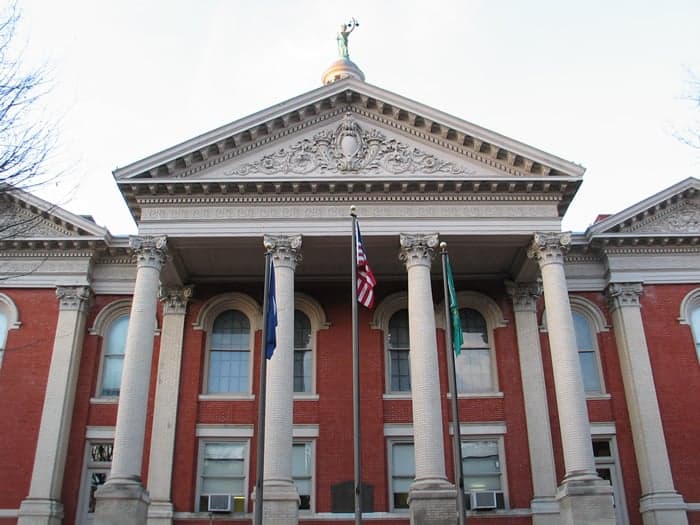
Photo: Wikipedia
Quality of Life in Augusta County
A livable area that tracks near national norms for affordability, walkability, and neighborhood health.
What does Quality of Life tell us?
Quality of Life measures an area by evaluating factors like cost of living, nearby amenities, country club access, airport proximity, socioeconomic signals and neighborhood character. For large states, this is a general average — quality of life can vary dramatically between metro areas, suburbs, and rural communities within the same state.
What does this tell us?
Quality of Life measures an area by evaluating factors like cost of living, nearby amenities, country club access, airport proximity, socioeconomic signals and neighborhood character. For large states, this is a general average — quality of life can vary dramatically between metro areas, suburbs, and rural communities within the same state.
Cost of Living
6% below national average
100%
The Real Cost of Living in Augusta County for 2026
| Tier | Individual | Family (4) |
|---|---|---|
| Survival | $17k | $32k |
| Comfortable | $55k | $80k |
| Luxury | $113k+ | $174k+ |
| Elite (Top 5%) | $132k+ | $205k+ |
Quality-of-Life Analysis
Augusta County, Virginia offers a broad quality-of-life spectrum that spans from the walkable, historic streets of its county seat to deeply rural mountain hollows and commuter-friendly subdivisions, attracting a mix of remote workers, outdoor enthusiasts, and families seeking lower costs than the nearby Shenandoah Valley cities. The county’s character shifts noticeably as you move from the I-81 corridor into the Blue Ridge foothills, with each area presenting distinct trade-offs in convenience, space, and community feel. Understanding this range is essential for anyone weighing a move to this part of the Shenandoah Valley.
Largest town(s) & population centers
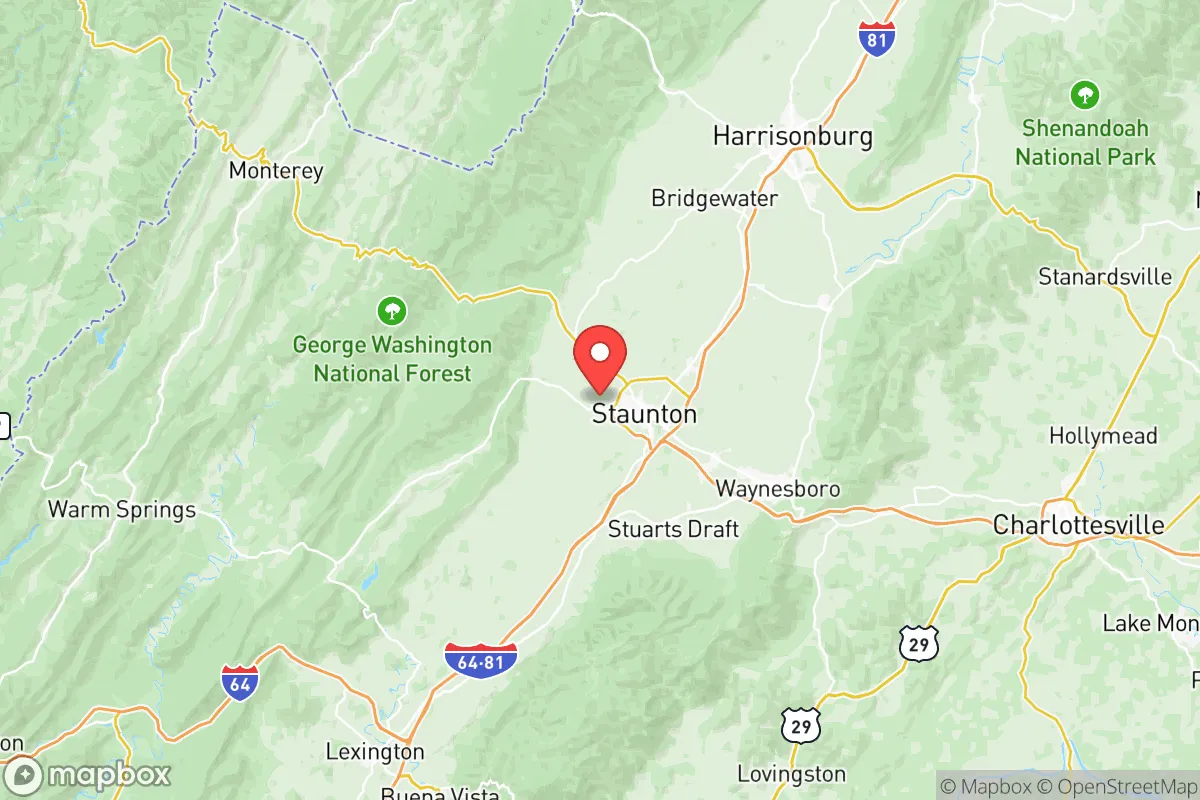
Staunton, though an independent city, functions as Augusta County’s primary commercial and cultural hub, with a walkable downtown anchored by the American Shakespeare Center’s Blackfriars Playhouse and a thriving farm-to-table restaurant scene. Daily life here centers on historic brick sidewalks, independent bookstores, and a calendar of festivals like the Staunton Music Festival. Waynesboro, the county’s largest incorporated town within its borders, offers a more industrial-tinged character with a revitalizing Main Street and direct access to the Blue Ridge Parkway. Verona, straddling I-81, has grown rapidly with big-box retail, chain hotels, and the Augusta County Government Center, making it the most car-dependent and amenity-rich pocket for daily errands. Residents in these population centers enjoy the shortest average commute of 23.8 minutes, well under the national average, with many working in Staunton’s healthcare sector or commuting south to Harrisonburg.
Smaller towns & rural pockets
Moving off the interstate, Churchville (population roughly 1,200) sits at the base of the Allegheny Mountains, offering a quiet, rural lifestyle with a single general store and easy access to the George Washington National Forest for hiking and hunting. Middlebrook and Mount Solon are unincorporated crossroads communities where agriculture dominates the landscape, and residents often drive 20–30 minutes to Staunton for groceries and medical care. Greenville, just south of Staunton, is a small village with a historic district and a strong sense of local identity, while Craigsville in the county’s far west feels almost Appalachian in character, with a slower pace and lower property values. These smaller pockets appeal to those who prioritize land, privacy, and mountain views over proximity to restaurants or nightlife.
Cost & lifestyle range
The cost-of-living index of 94 (6% below the U.S. average) masks significant internal variation. At the lower end, Craigsville and parts of Deerfield offer median home values well below the countywide $281,400, with some fixer-uppers available under $150,000, appealing to buyers willing to trade commute time for acreage. The median rent of $1,057 is most attainable in older apartments in Waynesboro’s core or in duplexes along the Route 250 corridor. At the higher end, newer subdivisions in Fishersville and Stuarts Draft push home values toward $400,000, with larger homes on half-acre lots and proximity to Augusta Health, the county’s largest employer. Lifestyle differences are stark: a Fishersville resident can walk to a grocery store and a medical office park, while a Churchville resident may have a 30-minute drive to the nearest pharmacy but enjoys immediate access to the Shenandoah Mountain Trail. Property taxes remain low across the county, but the trade-off is fewer municipal services—rural areas rely on private wells and septic, and internet speeds vary widely, with fiber available in towns but satellite or DSL common in the mountains.
Augusta County works best for people who value geographic variety and are willing to make deliberate choices about where they live within its borders. Remote workers and retirees often gravitate to the walkable towns of Staunton or Waynesboro, while families seeking space and lower housing costs find their niche in Fishersville or Stuarts Draft. Those who thrive here are typically comfortable with a slower pace, appreciate the proximity to Shenandoah National Park and the Blue Ridge Parkway, and accept that some amenities—like specialty shopping or fine dining—require a 30-minute drive. The county’s strength lies in offering a genuine choice between small-city convenience and rural solitude, all within a single, affordable tax base.

Crime in Augusta County
Generally safer than 60% of comparable U.S. locations.
Violent CrimeViolent Crime Analysis
Property CrimeProperty Crime Analysis
Crime Analysis
Augusta County, Virginia, presents a notably safer environment than both the state and national averages, with a violent crime rate of 210.8 per 100,000 residents and a property crime rate of 1,394.5 per 100,000. These figures place the county in a favorable position for those prioritizing personal and property security, though the data masks meaningful variation between the county’s more rural stretches and its small-town hubs like Staunton, Waynesboro, and Verona. The overall safety picture is one of moderate risk, heavily influenced by the region’s conservative judicial philosophy and lower population density, which together keep crime rates well below the commonwealth’s urban centers.
Crime in context
Augusta County’s violent crime rate of 210.8 per 100,000 is roughly 40% lower than the Virginia state average of approximately 350 per 100,000 and less than half the national rate of about 380 per 100,000. Property crime, at 1,394.5 per 100,000, also undercuts the state average of roughly 1,800 per 100,000 and the national figure of 2,100 per 100,000. These numbers reflect a jurisdiction where the Augusta County Commonwealth’s Attorney’s Office and local judges in the 25th Judicial Circuit have maintained a consistently tough-on-crime stance, avoiding the progressive prosecutorial policies seen in larger, more liberal jurisdictions like Fairfax County or Richmond. In those areas, district attorneys have adopted policies of non-prosecution for certain low-level offenses, which critics argue emboldens repeat offenders and increases recidivism. Augusta County, by contrast, has not seen such reforms, and its crime statistics benefit from a judicial environment that prioritizes victim accountability and public safety over offender-centric leniency.
What residents experience
Residents of Augusta County report that property crime—particularly theft from vehicles and unlocked sheds—is the most common safety concern, especially in areas near major transportation corridors like Interstate 81 and US Route 250. The town of Verona, which sits at the intersection of I-81 and I-64, sees a slightly elevated rate of larceny and vehicle break-ins compared to more isolated communities like Greenville or Middlebrook. Violent crime is rare and typically confined to domestic incidents or disputes among known individuals, not random stranger-on-stranger attacks. The Staunton-Augusta County area benefits from a well-funded sheriff’s department and a community policing model that emphasizes visibility and rapid response. Residents in the county’s western reaches, near the George Washington National Forest, report feeling extremely safe, with many leaving doors unlocked—a stark contrast to the experience of those living in or near Waynesboro, where property crime rates are slightly higher due to the city’s proximity to the interstate and its role as a regional retail hub.
Neighborhood-level variation
Safety in Augusta County is not uniform. The most significant divide exists between the county’s unincorporated rural areas and its small towns. Staunton and Waynesboro, while independent cities, are surrounded by Augusta County and their crime patterns spill over into adjacent county neighborhoods. For example, areas near Waynesboro’s downtown and along Rosser Avenue see more police activity and property crime reports than the county’s northern precincts near Mount Solon or Bridgewater. The Augusta County Sheriff’s Office publishes monthly crime maps showing that the highest concentration of incidents occurs within a five-mile radius of the I-81 exits at Verona and Fishersville. Conversely, the southern end of the county, around Stuarts Draft and Lyndhurst, reports consistently lower crime rates, likely due to lower population density and fewer transient populations. For prospective residents, choosing a home in the county’s more remote western or southern sections offers the greatest safety, while those who prefer proximity to amenities in Fishersville or Verona should invest in good home security and remain vigilant about vehicle security.
* Values derived from national, state, county, city and local statistics and may differ in a specific area. Last updated: 2026-10-19T00:06:15.000Z
Narrative content on this page is AI-generated and may contain mistakes. Verify any details that matter before acting on them.
ReloMaps may earn a commission from affiliate links at no extra cost to you.

