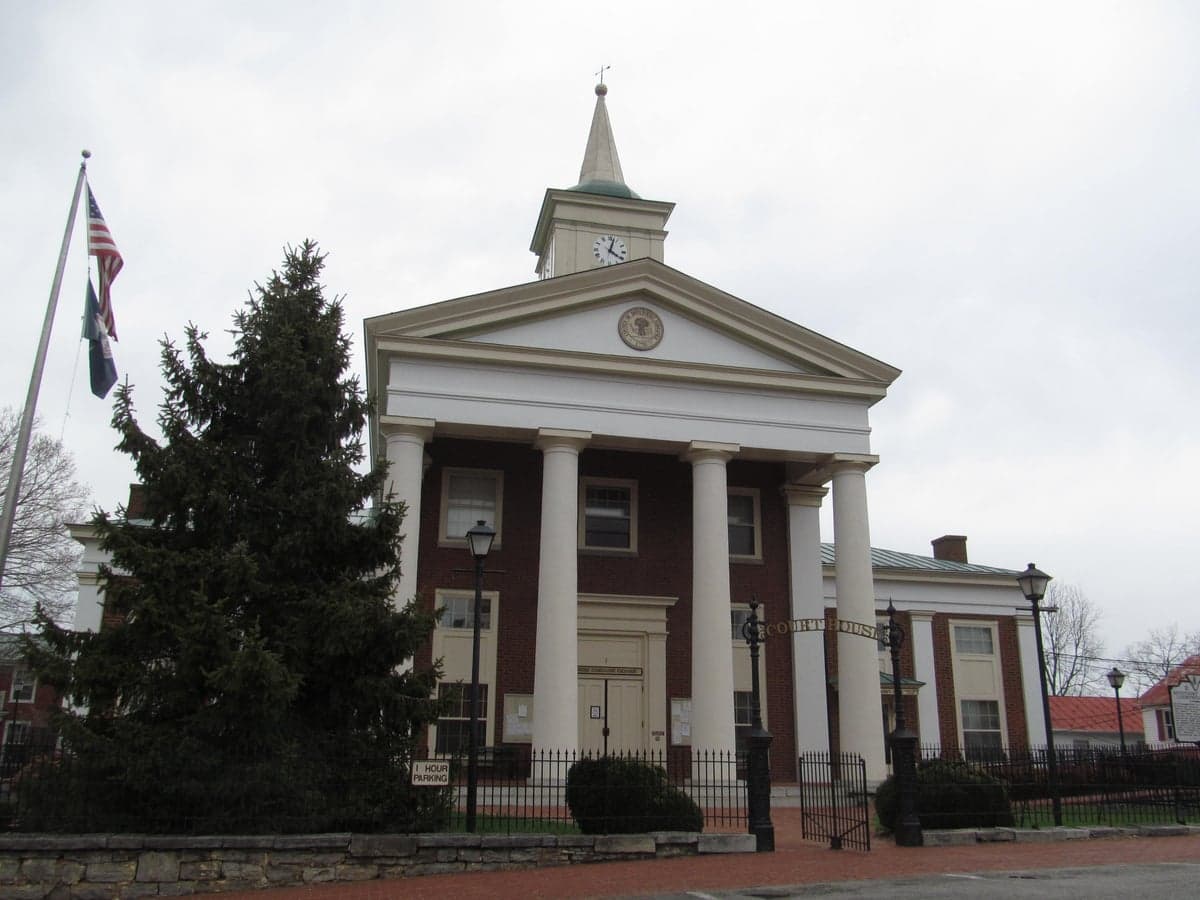
Photo: Wikipedia
Demographics of Botetourt County
Affluence Level in Botetourt County
A middle-class area roughly in line with national averages across income, home values, education, and employment.
People of Botetourt County
Today, Botetourt County, Virginia is home to roughly 33,875 residents, a population that remains overwhelmingly white (90.8%) and native-born (only 0.4% foreign-born), with a character shaped by centuries of Scots-Irish and German settlement. The county’s identity is distinctly rural and conservative, with a population density of just 68 people per square mile, and a strong sense of place rooted in the Blue Ridge foothills and the James River valley. Residents often identify more with their specific community—Fincastle, Troutville, Buchanan—than with the county as a whole, and the area retains a quiet, self-reliant culture that prizes land ownership, local churches, and outdoor life.
Settlement & growth (pre-1960)
Long before European settlers arrived, the region that is now Botetourt County was part of the vast homeland of the Siouan-speaking Monacan people, who lived in small villages along the James River and its tributaries. By the early 1700s, pressure from the Iroquois Confederacy to the north and encroaching English colonists had largely displaced the Monacans from this area, leaving the valley sparsely populated by the time the first permanent European settlers arrived.
The first major wave of settlement came in the 1740s and 1750s, when tens of thousands of Scots-Irish and German immigrants pushed west from Pennsylvania down the Great Wagon Road. These were not wealthy planters but hardscrabble farmers and frontiersmen, drawn by the promise of cheap land in the Virginia backcountry. The Scots-Irish, in particular, became the dominant cultural group, establishing farms and small communities along the James River and Catawba Creek. The county was officially formed in 1770 from part of Augusta County, and its first courthouse was built in Fincastle, which remains the county seat to this day. Fincastle quickly became a commercial and political hub for the surrounding area, a role it held well into the 19th century.
During the early 1800s, the population grew steadily but slowly, as the region remained largely agricultural. The construction of the James River and Kanawha Canal in the 1830s and 1840s brought some economic activity to river towns like Buchanan and Eagle Rock, but the county never saw the industrial boom that transformed other parts of Virginia. The railroad arrived in the 1850s, connecting the county to larger markets and spurring the growth of Troutville and Daleville as shipping points for timber and agricultural goods. The Civil War hit the county hard—Botetourt sent multiple companies to fight for the Confederacy, and the home front suffered from shortages and the loss of young men—but the post-war decades saw a slow return to the rhythms of farm life.
The late 19th and early 20th centuries brought a modest influx of German and Irish immigrants, who found work on the railroad and in the region's iron furnaces and limestone quarries. However, the county's population remained overwhelmingly native-born and rural. The Great Depression and World War II accelerated a long-term trend of out-migration, as younger residents left for industrial jobs in Roanoke, Lynchburg, and points north. By 1950, the county's population had actually declined from its 1900 peak, a pattern that would not reverse until the late 20th century.
Modern era (post-1965)
The 1965 Hart-Cellar Act, which fundamentally reshaped American immigration, had almost no direct effect on Botetourt County. The foreign-born population today is just 0.4%, one of the lowest rates in Virginia, and the county has not developed any significant immigrant enclaves. Instead, the demographic story of the modern era is one of domestic migration and suburbanization.
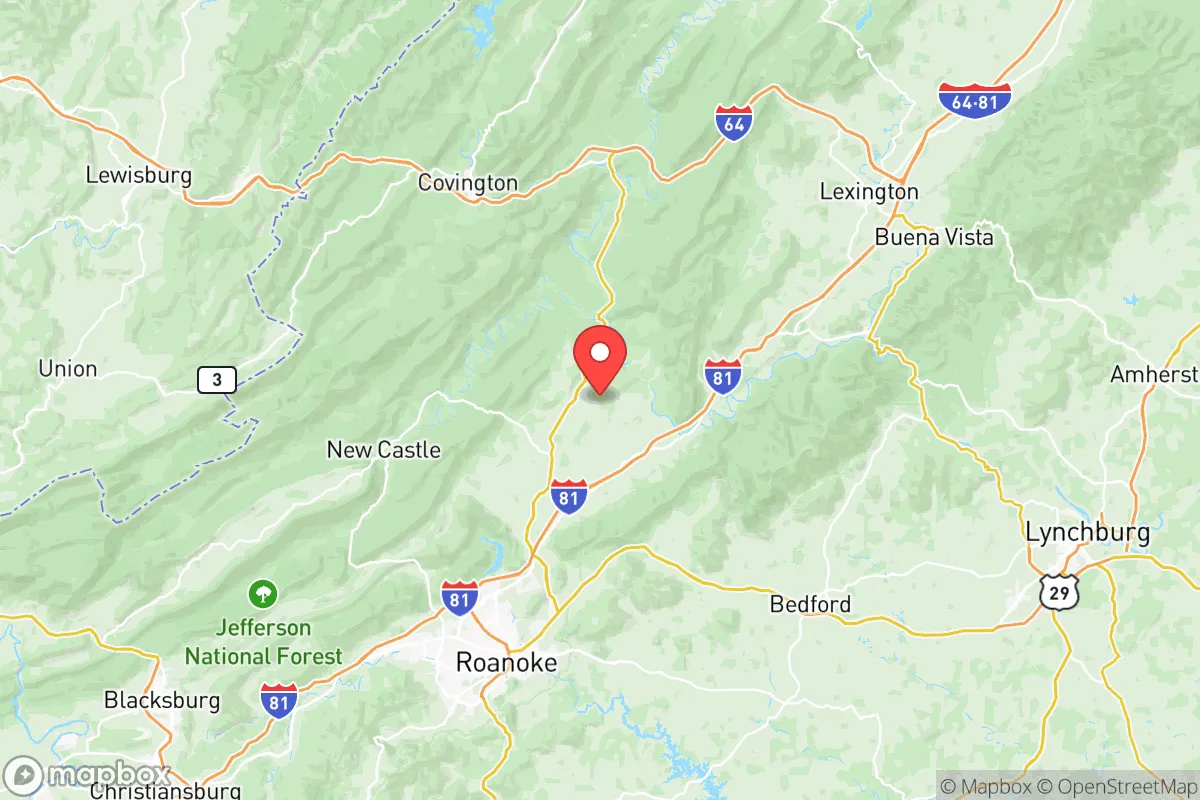
Beginning in the 1970s and accelerating through the 1990s, Botetourt County began to attract white-collar commuters from the nearby city of Roanoke, located just 15 miles to the southwest. These new residents were drawn by the promise of larger lots, lower taxes, and better schools than what the city could offer. The result was a wave of suburban-style development in the southern part of the county, particularly around Daleville and Troutville, which saw the construction of new subdivisions, shopping centers, and the Lord Botetourt High School complex. This growth was almost entirely white and native-born, reinforcing the county's existing demographic character.
The Hispanic population, now at 2.4%, began to grow in the 2000s, driven largely by migrant labor in the region's poultry and agricultural industries. These families tend to be concentrated in the more rural northern and eastern parts of the county, around Buchanan and Eagle Rock, rather than in the suburban south. The Black population, at 2.4%, is a legacy of the county's pre-Civil War history—a small number of enslaved families lived in the area, and their descendants have remained, though many left during the Great Migration. Today, Black residents are scattered across the county, with no single majority-Black community. East and Southeast Asian residents (0.4%) and Indian-subcontinent residents (0.2%) are present in very small numbers, mostly professionals employed in the healthcare and engineering sectors in Roanoke who have chosen to live in Botetourt for its schools and rural character.
The most significant demographic shift of the modern era has been the aging of the population. The county's median age is now 46.5, well above the national average, as younger adults continue to leave for college and urban job markets, while retirees from Roanoke and other parts of Virginia move in for the slower pace of life. This has created a growing demand for healthcare and senior services, particularly in Fincastle, where the county's hospital and medical offices are concentrated.
The future
Botetourt County's population is projected to grow slowly over the next 10-20 years, likely reaching 36,000-37,000 by 2040. This growth will be driven almost entirely by domestic migration—specifically, by retirees and telecommuters from the Washington, D.C., and Richmond metro areas, who are seeking lower housing costs and a more rural lifestyle. The county's racial and ethnic composition is expected to remain overwhelmingly white, with only a slight increase in Hispanic and Asian shares, as the area lacks the job base and housing stock to attract large numbers of new immigrants.
The most visible change will be the continued suburbanization of the southern end of the county, particularly along the U.S. 220 and I-81 corridors between Daleville and Troutville. This area will likely see more mixed-use development, including townhomes and apartment complexes, as the county tries to attract younger families and workers. Meanwhile, the northern and eastern parts of the county—around Buchanan, Eagle Rock, and Springwood—will remain deeply rural, with working farms, second-growth forests, and a population that is both older and more resistant to change.
Culturally, the county is likely to become more polarized between the suburban south, which will gradually adopt more moderate political and social views, and the rural north and east, which will remain staunchly conservative. This tension is already visible in debates over zoning, school funding, and economic development. The county's identity as a place of self-reliant, land-owning families will persist, but it will increasingly coexist with a newer identity as a bedroom community for Roanoke and a refuge for remote workers.
For someone moving in now, Botetourt County offers a stable, safe, and deeply rooted community where neighbors still know each other and the pace of life is slow. The trade-off is a lack of diversity, limited cultural amenities, and a social fabric that can feel insular to newcomers. It is a place best suited for those who value quiet, space, and tradition over urban energy and rapid change.

* Values derived from national, state, county, city and local statistics and may differ in a specific area. Last updated: 2026-10-15T02:07:26.000Z
Narrative content on this page is AI-generated and may contain mistakes. Verify any details that matter before acting on them.
ReloMaps may earn a commission from affiliate links at no extra cost to you.

