Photo: Wikipedia
Political ClimatePolitical Climate in Botetourt County
Showing state-level results — no local-only data available.
Local Political AnalysisPolitical Analysis of Botetourt County
Botetourt County has been a reliably Republican stronghold for decades, and that hasn't changed much even as the rest of Virginia has shifted blue. The county’s Cook Partisan Voting Index (PVI) sits at R+12, meaning it votes about 12 points more Republican than the national average. That’s a stark contrast to Virginia as a whole, which now carries a D+4 PVI after trending Democratic in presidential elections since 2008. In Botetourt, you’ll still see plenty of “Trump 2024” signs on rural roads, but the county isn’t a monolith—pockets of blue are growing, especially in the more suburban and exurban parts near Roanoke.
How it compares
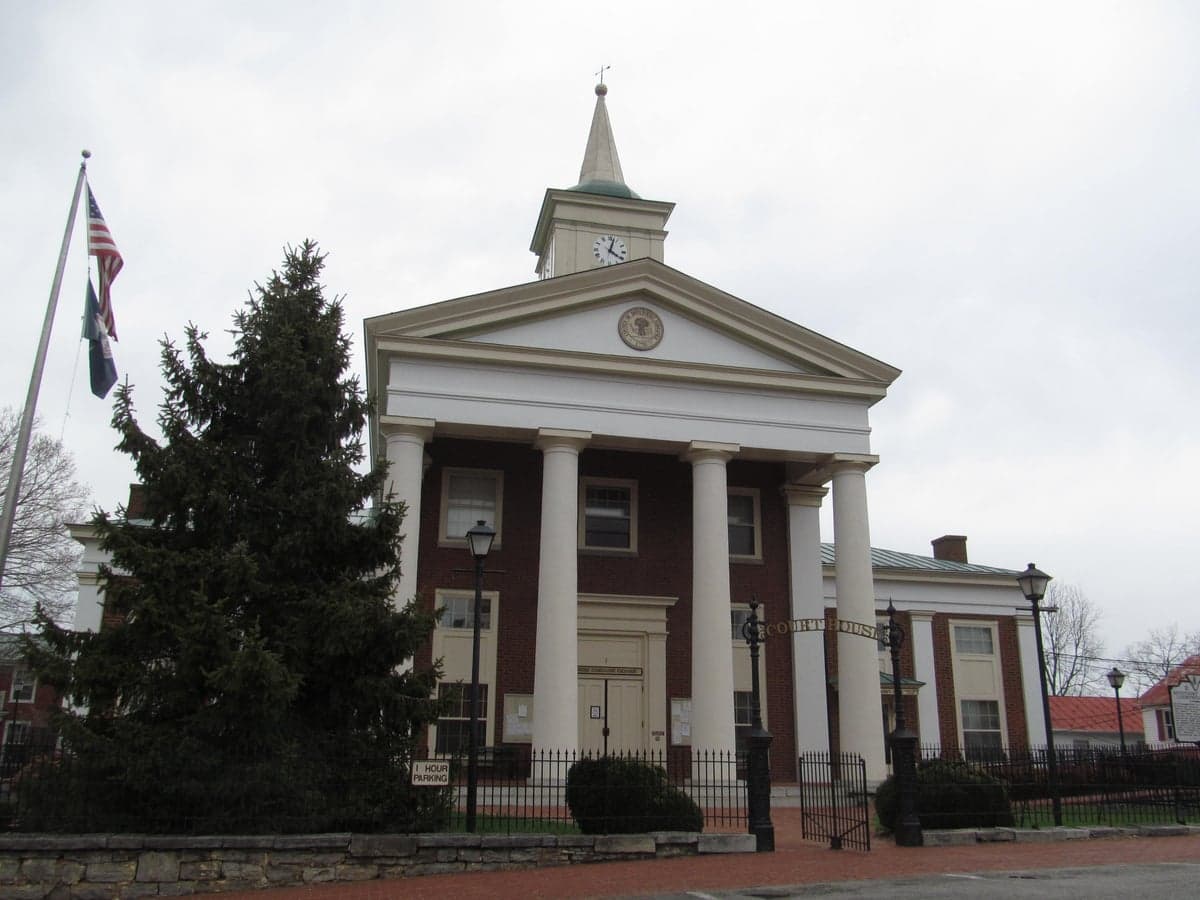
The gap between Botetourt and the state is wide and getting wider. While Virginia’s statewide shift left has been driven by the explosive growth of Northern Virginia, Richmond, and Hampton Roads, Botetourt has held steady. In the 2024 presidential election, Donald Trump carried Botetourt with roughly 65% of the vote, while Kamala Harris won Virginia overall by about 5 points. That 30-point spread is typical for the county. But look closer at the precincts: Troutville and Daleville, the more suburban bedroom communities along I-81, have trended purple. In 2024, Daleville’s precincts came in around 52-48 for Trump—still red, but competitive. Meanwhile, Fincastle, the historic county seat, and Buchanan, the small river town to the north, are deeply red, often hitting 70-75% Republican. The swing precincts are really the newer subdivisions in the southern part of the county, where Roanoke commuters have settled. Those folks tend to be more moderate, sometimes splitting tickets for local races.
What this means for residents
For conservative residents, Botetourt feels like a safe harbor. Local government, from the Board of Supervisors to the School Board, is dominated by Republicans. Tax policy is generally low—the county’s real estate tax rate is around $0.54 per $100 of assessed value, well below Virginia’s average. Gun rights are broadly supported, and you won’t find much pushback on Second Amendment issues. For liberal residents, it can feel isolating at times, but not hostile. The growing blue pockets in Daleville and Troutville mean there are like-minded neighbors, and Roanoke City—just 15 minutes south—offers a deeply progressive urban core with a Democratic mayor and city council. State-level representation is a mixed bag: Botetourt is split between two state Senate districts, one held by a Republican and one by a Democrat, which means your voice in Richmond depends heavily on which side of the county you live on.
Culturally, Botetourt is more rural and traditional than the state as a whole. You’ll see church potlucks, high school football on Friday nights, and a strong volunteer fire department culture. The county has resisted some of the progressive policy shifts seen in Virginia’s cities—like stricter gun laws or zoning changes for denser housing. But it’s not static. The influx of remote workers from Roanoke and even Northern Virginia is slowly nudging the county’s politics toward the center. If you’re moving here, expect a place where your neighbor might wave from a pickup truck with a flag decal, but also where you can find a local farmers market and a growing craft brewery scene. The political climate is stable, but the undercurrent of change is real—especially in the southern precincts where the next election could tip a few seats. For now, though, Botetourt remains a reliably red island in a blue-trending state, and that’s unlikely to shift dramatically in the next decade.

State Political ClimatePolitical Climate in Virginia
State Political AnalysisPolitical Environment in the State
Virginia has shifted from a reliably conservative-leaning swing state to a solidly Democratic-leaning one over the past two decades, carrying a Cook PVI of D+4. The transformation is driven almost entirely by explosive growth in the Washington, D.C. suburbs, which now dominate statewide elections and have turned the state a consistent blue in presidential and U.S. Senate races. However, the state remains deeply divided geographically, with a conservative stronghold in the western and southern regions that still holds significant power in the state legislature and local governance, creating a patchwork of political realities for anyone considering a move here.
Urban vs. rural divide
The political map of Virginia is a study in stark contrasts. The Democratic stronghold is anchored by the densely populated Northern Virginia suburbs—places like Arlington, Alexandria, and Fairfax County—which alone account for over a third of the state's vote. These areas have grown increasingly liberal with each election cycle, driven by a highly educated, diverse, and professional-class workforce tied to the federal government and tech sectors. The other major Democratic engine is the Richmond metro area, particularly the city itself and surrounding Henrico County, which has flipped from purple to solid blue in the last decade. Norfolk and Virginia Beach in Hampton Roads are more competitive but lean Democratic in most statewide races. In contrast, the rural and exurban regions—Southwest Virginia (coal country), the Shenandoah Valley, and the Southside along the North Carolina border—vote overwhelmingly Republican. Counties like Lee, Wise, and Carroll routinely deliver 70-80% of their vote to GOP candidates. The divide is so sharp that a drive from Arlington to Abingdon feels like crossing into a different state, both culturally and politically.
Policy environment
Virginia's policy environment is a hybrid that reflects its divided government. The state has a flat income tax rate of 5.75% and a sales tax of 5.3% (higher in some localities), which is moderate by national standards. Property taxes are set locally and vary widely—Loudoun County in NoVA has rates around $1.05 per $100 of assessed value, while rural Grayson County is under $0.50. The state has a right-to-work law and is generally business-friendly, with a AAA bond rating. Education policy is a major battleground: the state has seen fierce fights over school funding, critical race theory, and transgender student policies, with the current Republican governor, Glenn Youngkin, pushing for parental rights and school choice via charter schools and lab schools. Healthcare is a mixed bag—Virginia expanded Medicaid under the Affordable Care Act in 2019, but the state has some of the highest health insurance premiums in the country. Election laws are relatively accessible: no-excuse absentee voting, same-day registration, and early voting are all in place, though voter ID is required.
Recent policy direction
The last five years have seen Virginia swing back and forth on key cultural and liberty issues, making it a bellwether for national trends. On gun rights, the state passed a series of restrictions in 2020 under a Democratic trifecta—including a one-handgun-per-month limit, universal background checks, and a "red flag" law—but a 2021 court ruling struck down the ban on carrying firearms in places of worship. The current Republican administration has not rolled back these laws, but enforcement is lax in conservative counties. On education and parental rights, Youngkin signed an executive order banning "inherently divisive concepts" in schools and created a tip line for parents to report critical race theory instruction, though actual classroom changes have been modest. Medical and bodily autonomy is a flashpoint: Virginia remains a Southern outlier with relatively broad abortion access up to the second trimester, but a 2024 law banned the procedure after 15 weeks with exceptions for rape, incest, and fetal abnormalities. Property rights are generally strong, though Northern Virginia localities have aggressive zoning and land-use regulations that can frustrate homeowners. Privacy and surveillance are less regulated than in blue states like California; there is no comprehensive state data privacy law. Voting access has expanded under Democratic control, with automatic voter registration and no-excuse absentee voting, but Republicans have pushed for stricter voter ID and purges of voter rolls, leading to ongoing litigation.
Civil unrest & political movements
Virginia has been a stage for some of the most visible political flashpoints in the country. The 2017 Unite the Right rally in Charlottesville, which turned violent and resulted in a death, remains a scar on the state's reputation and galvanized both left-wing anti-fascist movements and right-wing nationalist groups. The 2020 protests in Richmond over the removal of Confederate statues saw clashes between police and demonstrators, and the city's Robert E. Lee statue became a national symbol of the debate over public monuments. On the right, the Virginia Citizens Defense League holds annual "Lobby Day" rallies at the state capitol, often drawing thousands of armed activists. Immigration politics are less heated than in border states, but Prince William County and Fairfax County have declared themselves "sanctuary" jurisdictions, refusing to cooperate with federal immigration enforcement in most cases. Election integrity remains a live issue: the 2020 election saw no major fraud, but Republican activists continue to challenge the state's expanded mail-in voting system, and a 2024 audit of voter rolls removed thousands of non-citizens, fueling ongoing distrust.
Projection
Over the next 5-10 years, Virginia is likely to continue its slow but steady drift leftward, driven by the relentless growth of Northern Virginia and the urbanization of Richmond and Hampton Roads. The state's D+4 PVI will probably edge toward D+6 or D+7 as more young, diverse, and college-educated voters move into the D.C. suburbs. However, the rural conservative vote will remain a powerful counterweight in state legislative races, meaning Virginia will likely stay a divided government state—with a Democratic-leaning governorship and legislature alternating control. The key wildcard is in-migration from other states: if the trend of conservatives moving to lower-tax, lower-regulation states like Florida and Texas accelerates, Virginia's blue shift could accelerate. Conversely, if remote work allows more conservative-leaning families to move to cheaper rural areas within the state, the rural-urban gap could widen further. For a new resident, expect the political climate to become more polarized, with Northern Virginia increasingly resembling a Northeast state and the rest of Virginia holding firm as a Southern conservative stronghold.
Bottom line for a new resident: If you're a conservative, you'll find a welcoming community in most of the state outside of the D.C. suburbs, but you'll be fighting an uphill battle in statewide elections. If you're a liberal, you'll feel at home in Northern Virginia and Richmond, but you'll encounter a deeply conservative culture in the rural areas. The practical takeaway is that Virginia offers a genuine choice—you can live in a blue bubble or a red one, but the state government will likely remain a compromise between the two. Your taxes, school policies, and local regulations will vary dramatically depending on which county you choose, so pick your locality carefully.
* Values derived from national, state, county, city and local statistics and may differ in a specific area. Last updated: 2026-10-15T02:07:26.000Z
Narrative content on this page is AI-generated and may contain mistakes. Verify any details that matter before acting on them.
ReloMaps may earn a commission from affiliate links at no extra cost to you.

