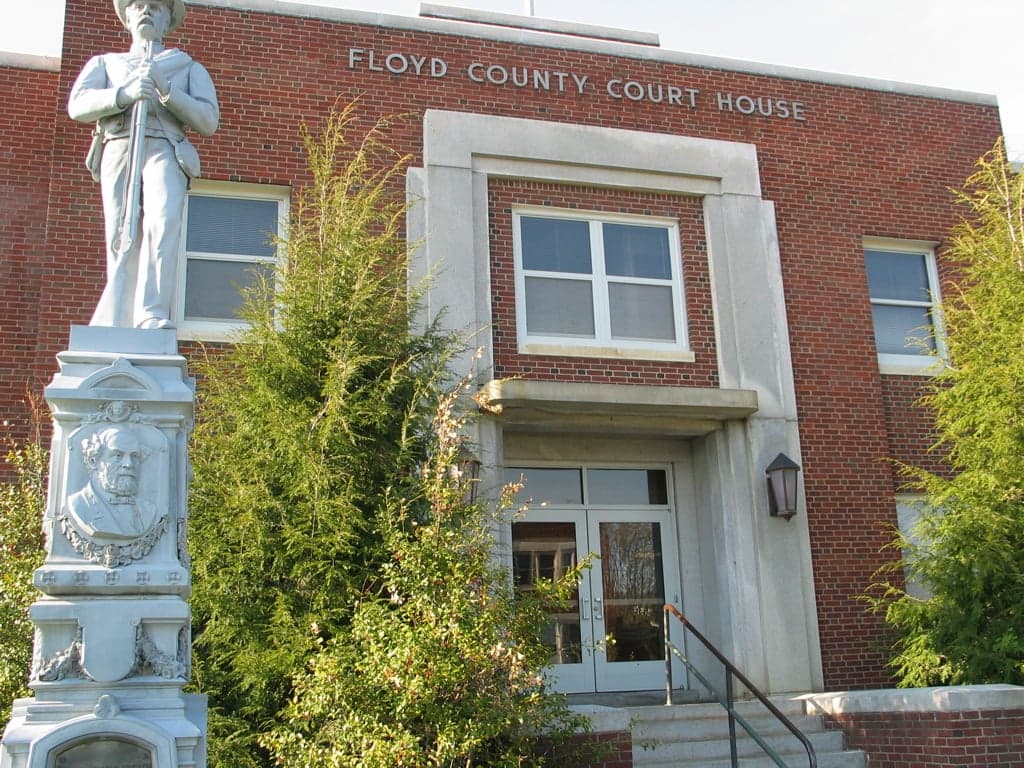
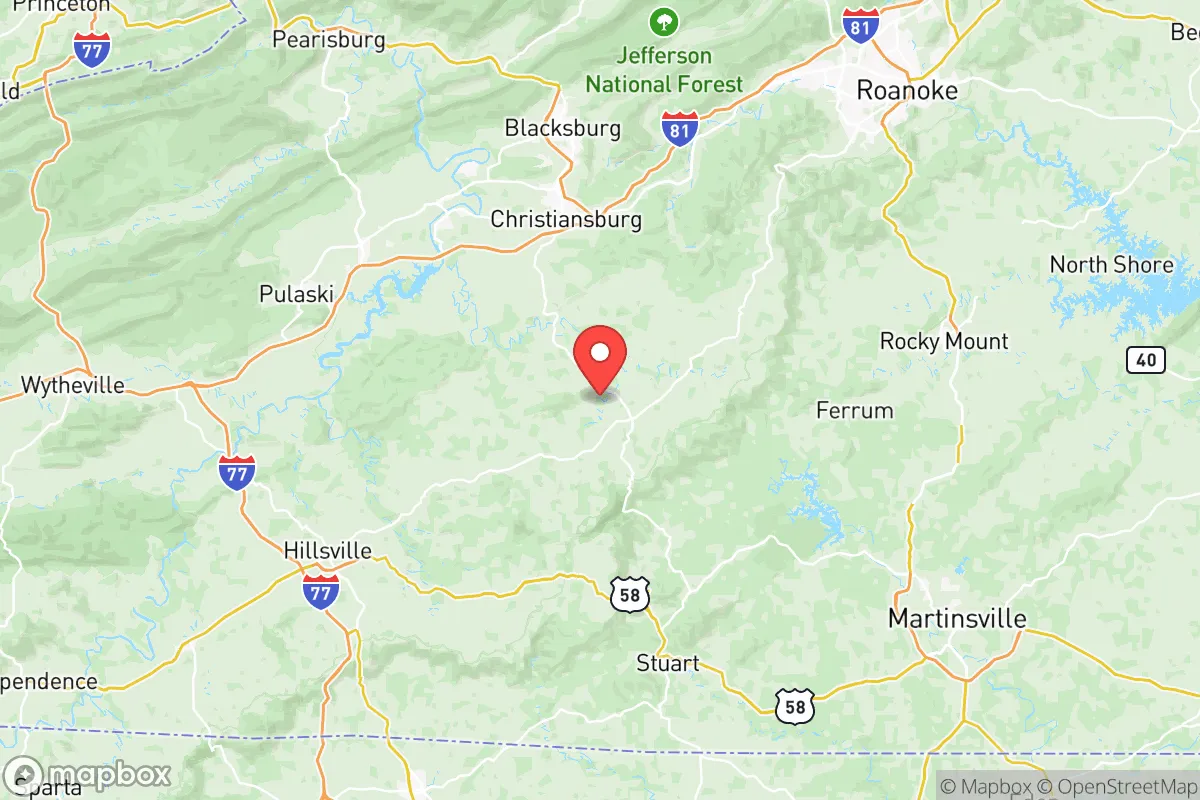
Photo: Wikipedia
Personal Sovereignty in Floyd County
Viable for self-reliance. Generally workable, though some barriers may limit total independence.
What does Personal Sovereignty tell us?
Personal Sovereignty measures your capacity for self-reliance and independence with minimal government friction. Higher scores mean fewer barriers between you and the way you want to live... but it assumes you have the space you need and good neighbors.
What does this tell us?
Personal Sovereignty measures your capacity for self-reliance and independence with minimal government friction. Higher scores mean fewer barriers between you and the way you want to live... but it assumes you have the space you need and good neighbors.
State Policy
Energy independence: Importer (20% of energy produced in-state)
Personal Liberty
Homesteading

Personal Liberty Analysis
Floyd County, Virginia, offers a notably high degree of personal sovereignty relative to much of the state, particularly when compared to Northern Virginia or the urban crescent of Richmond and Hampton Roads. The county’s rural character, low population density, and local political culture create an environment where individual autonomy in daily life, property use, and self-defense is broadly respected. For a relocation reader prioritizing freedom from overregulation, Floyd County presents a compelling balance of low taxes, permissive gun laws, and viable off-grid living, though it operates within the broader legal framework of Virginia, which has seen some state-level shifts in recent years.
Tax burden and regulatory posture: How light is the government footprint?
Floyd County’s tax burden is among the lightest in Virginia, a key draw for those seeking financial autonomy. The county’s real property tax rate is $0.49 per $100 of assessed value, well below the state average of roughly $0.80. Personal property tax on vehicles is also low, typically around $2.50 per $100 of assessed value, and the county does not levy a local sales tax beyond the state’s 5.3% rate. There is no county-level income tax, as Virginia’s state income tax (ranging from 2% to 5.75%) is the only income tax residents pay. The regulatory posture is similarly light-touch. The county has no zoning ordinance in unincorporated areas—a critical detail for homesteaders. This means that in places like Check, Copper Hill, and Willis, you can build structures, keep livestock, and operate small-scale businesses without navigating a zoning board. However, the town of Floyd itself does have a zoning code, so anyone looking to buy within the town limits should verify permitted uses. The county’s building code enforcement is minimal for agricultural and owner-built structures, though state-level septic and well regulations still apply. Overall, the regulatory environment is permissive, with the county government generally taking a hands-off approach to land use and business operations.
Self-defense and gun law specifics: What you can and cannot do
Floyd County is deeply gun-friendly, reflecting both Virginia’s preemption laws and local culture. Virginia is a “shall-issue” state for concealed carry permits, meaning the sheriff’s office must issue a permit to any qualified applicant who passes a background check and completes a training course. Floyd County’s sheriff, Paul A. Burnette, has publicly stated his office will not enforce any state-level gun control measures he deems unconstitutional, a stance that resonates with many residents. Open carry is legal without a permit for anyone 18 or older who can legally possess a firearm. The county has no local ordinances restricting firearm possession, and there are no “gun-free zones” beyond those mandated by state law (e.g., schools, courthouses). For self-defense in the home, Virginia’s “castle doctrine” applies, with no duty to retreat. Outside the home, the state’s “stand your ground” law, enacted in 2020, removes the duty to retreat in any place where a person has a legal right to be. Magazine capacity limits and “assault weapon” bans do not exist at the state level, so standard-capacity magazines and commonly owned rifles like AR-15s are legal. For a reader prioritizing self-defense rights, Floyd County offers one of the most permissive environments in the eastern United States.
Self-reliance and homesteading viability: Lot sizes, zoning, and off-grid feasibility
Homesteading and off-grid living are not just possible in Floyd County—they are a defining feature of the local lifestyle. The absence of county-wide zoning in unincorporated areas means you can raise chickens, goats, and even cattle on small acreage without special permits. Minimum lot sizes for a single-family home are not set by the county, though the Virginia Department of Health requires at least 1 acre for a conventional septic system and 2.5 acres for an alternative system. This makes properties in Indian Valley and Alum Ridge particularly attractive for self-sufficient living, as they often come with 5- to 20-acre parcels at prices far below the national median. Off-grid solar is legal and common; the county does not require a permit for solar panel installation on existing structures, though grid-tied systems must meet utility interconnection standards. Rainwater collection is unrestricted, and composting toilets are permitted with health department approval. The county’s agricultural and forestal districts offer tax incentives for keeping land in productive use, further supporting self-reliance. However, be aware that the town of Floyd requires building permits and has stricter setback rules, so true off-grid living is best pursued in the outlying communities like Burks Fork or Simpsons.
Personal liberties: Parental rights, medical autonomy, speech, and property
Floyd County’s culture strongly emphasizes personal liberties, particularly in areas of parental rights and medical autonomy. The county school board has resisted state-level mandates on curriculum transparency and health policies, and parents generally have wide latitude to opt children out of specific instruction. Medical freedom is a live issue: the county board of supervisors passed a resolution in 2021 affirming that no county resources would be used to enforce vaccine mandates, and local healthcare providers often offer direct-pay and concierge models that bypass insurance. Free speech is robustly protected, with the county’s public meetings and social media channels hosting vigorous debate without censorship. Property rights are the bedrock of local autonomy. The county’s lack of zoning, combined with Virginia’s right-to-farm law, means that agricultural odors, noise, and machinery are generally protected from nuisance lawsuits. Eminent domain is rarely used, and the county has no inclusionary zoning or rent control. For a reader who values the ability to make decisions about their children’s education, their own healthcare, and their property without government interference, Floyd County ranks among the most liberty-oriented jurisdictions in Virginia.
Compared to other rural counties in Virginia, Floyd County stands out for its combination of low taxes, permissive gun laws, and genuine off-grid feasibility. While it operates under Virginia’s state-level framework—which includes a state income tax and some environmental regulations—the local government’s hands-off posture and the community’s self-reliant ethos create an environment where personal sovereignty is the default, not the exception. For a relocation reader seeking a place where the government stays out of daily life, Floyd County delivers a level of autonomy that is increasingly rare in the modern United States.

* Values derived from national, state, county, city and local statistics and may differ in a specific area. Last updated: 2026-10-20T09:03:01.000Z
Narrative content on this page is AI-generated and may contain mistakes. Verify any details that matter before acting on them.
ReloMaps may earn a commission from affiliate links at no extra cost to you.

