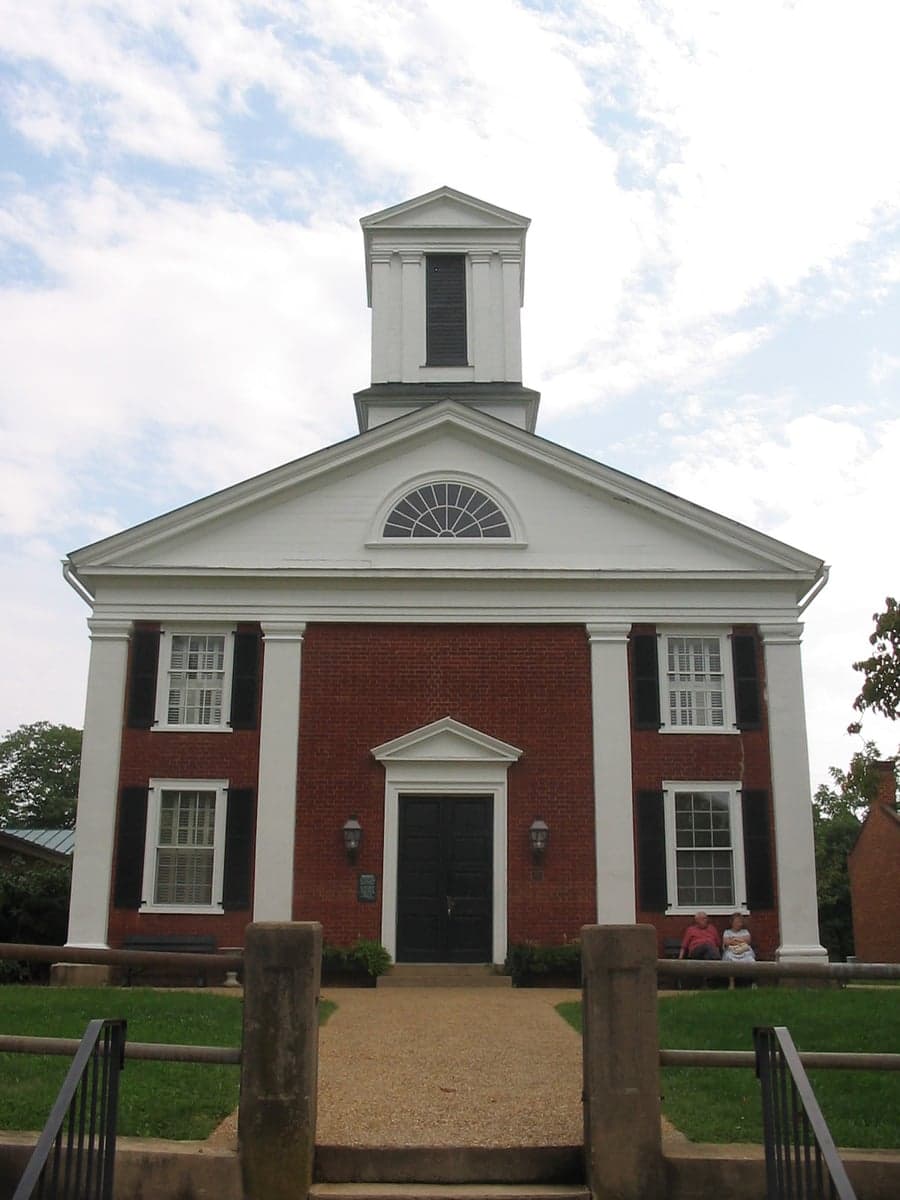
Photo: Wikipedia
Personal Sovereignty in Rappahannock County
Viable for self-reliance. Generally workable, though some barriers may limit total independence.
What does Personal Sovereignty tell us?
Personal Sovereignty measures your capacity for self-reliance and independence with minimal government friction. Higher scores mean fewer barriers between you and the way you want to live... but it assumes you have the space you need and good neighbors.
What does this tell us?
Personal Sovereignty measures your capacity for self-reliance and independence with minimal government friction. Higher scores mean fewer barriers between you and the way you want to live... but it assumes you have the space you need and good neighbors.
State Policy
Energy independence: Importer (20% of energy produced in-state)
Personal Liberty
Homesteading

Personal Liberty Analysis
Rappahannock County, Virginia, offers one of the strongest personal sovereignty environments in the Commonwealth, characterized by minimal local government intrusion, low population density, and a deeply ingrained culture of self-reliance. Unlike the heavily regulated suburbs of Northern Virginia or the dense urban centers of Richmond and Hampton Roads, Rappahannock operates with a distinctly light-touch regulatory posture that prioritizes individual autonomy. For the relocation researcher focused on personal freedom, this rural county in the Blue Ridge foothills presents a compelling alternative where the default answer from local government is often "yes" or "we don't regulate that," rather than a thicket of permits and restrictions.
Tax burden and regulatory posture: How light is the local government footprint?
Rappahannock County's tax burden is among the lowest in Virginia, a direct reflection of its limited government services and small administrative footprint. The county's real property tax rate is approximately $0.54 per $100 of assessed value, significantly lower than neighboring Fauquier County ($0.53) and far below the rates found in Loudoun or Fairfax counties. There is no local personal property tax on vehicles in Rappahannock, a notable advantage for residents who own multiple vehicles or trucks for work and recreation. The county government operates with a lean budget and a part-time Board of Supervisors, meaning fewer layers of bureaucracy for residents to navigate. Zoning is minimal outside the designated village areas of Washington, Sperryville, and Flint Hill, where historic district overlays impose some design review. Outside these small villages, the county's regulatory posture is permissive: building permits are required, but the process is straightforward and typically handled by a small planning office. There are no county-wide noise ordinances, no restrictive sign regulations for home-based businesses, and no local income tax. The state income tax is a flat 5.75%, and Virginia's sales tax is 5.3% (with no additional local option tax in Rappahannock). For a family or individual seeking to minimize their tax burden and regulatory friction, Rappahannock's posture is clearly on the "light-touch" end of the spectrum.
Self-defense and gun law specifics: What are the actual legal protections?
Rappahannock County sits in a state that is generally favorable to gun rights, but the local environment amplifies those protections through culture and enforcement posture. Virginia is a "shall-issue" state for concealed handgun permits, and Rappahannock's Circuit Court processes applications efficiently with no local restrictions beyond state law. The county has no local ordinances restricting the purchase, possession, or carrying of firearms, and open carry is common and uncontroversial in public spaces, including the general stores in Sperryville and Washington. The county's sheriff's office is known for a pro-Second Amendment stance, and there is no history of local law enforcement enforcing federal firearms regulations beyond what state law mandates. Stand-your-ground laws apply statewide, and Rappahannock's rural character means that defensive use of force is generally viewed sympathetically by local juries. The county has no local gun buyback programs, no "safe storage" ordinances, and no restrictions on magazine capacity or firearm types. For the relocation reader, the key takeaway is that Rappahannock's gun culture is not just permissive but actively protective of individual rights, with local officials who view the Second Amendment as a core liberty rather than a regulatory challenge.
Self-reliance and homesteading viability: Lot sizes, zoning, and off-grid feasibility
Rappahannock County is one of the most homestead-friendly jurisdictions in Virginia, with zoning and land-use policies that actively enable self-reliance. The county's Agricultural and Forestal District program covers vast swaths of land, offering tax incentives for keeping property in agricultural or forestry use while allowing for farm-based businesses. Minimum lot sizes in the county's agricultural zones are 5 acres, and many parcels available for purchase range from 10 to 100 acres, providing ample space for gardening, livestock, and timber management. Off-grid living is legally feasible: the county does not require connection to municipal water or sewer systems, and private wells and septic systems are standard. Solar panels, rainwater collection, and composting toilets are all permitted without special permitting beyond standard building codes. The villages of Castleton and Woodville are particularly known for their self-sufficient homesteading communities, where residents raise goats, keep bees, and operate farm stands without significant regulatory interference. The county's zoning code explicitly allows for "home occupations" and "farm-based businesses" with minimal red tape, meaning a resident can sell eggs, produce, or crafts from their property without a conditional use permit. For the family seeking to reduce dependence on supply chains and government services, Rappahannock's regulatory environment is designed to say "yes" to self-reliance.
Personal liberties: Parental rights, medical autonomy, speech, and property
Rappahannock County's approach to personal liberties is grounded in a strong tradition of local control and minimal interference. Parental rights are robust: the county's public school system, Rappahannock County Public Schools, operates with a policy of deference to parents on educational and health decisions, and homeschooling is common and well-supported by local networks. The county has no local health department mandates that exceed state requirements, and medical autonomy—including vaccine choice and alternative medical treatments—is respected as a private matter. Freedom of speech and assembly are protected by the county's hands-off approach; there are no local noise or permit requirements that would restrict political gatherings, protests, or religious services on private property. Property rights are strongly protected, with no county-wide rental registration, no rent control, and no local ordinances restricting short-term rentals beyond state-level tax registration. The county's comprehensive plan explicitly emphasizes "preserving the rural character and individual property rights" as a guiding principle. For the relocation reader, this means that in Rappahannock, the default assumption is that you can use your property as you see fit, raise your children according to your values, and make medical decisions without government second-guessing—provided you are not creating a public nuisance.
Overall, Rappahannock County ranks among the most sovereignty-friendly jurisdictions in Virginia, comparable to other rural strongholds like Highland County or Bath County, but with the advantage of proximity to the cultural and economic resources of the Shenandoah Valley and the Washington, D.C. area. The county's light regulatory touch, low tax burden, and permissive approach to self-defense, homesteading, and personal liberties create an environment where individual autonomy is the default rather than the exception. For the relocation researcher who values personal freedom above all else, Rappahannock offers a rare combination of rural independence and legal protection that is increasingly difficult to find in modern Virginia.

* Values derived from national, state, county, city and local statistics and may differ in a specific area. Last updated: 2026-09-19T01:45:25.000Z
Narrative content on this page is AI-generated and may contain mistakes. Verify any details that matter before acting on them.
ReloMaps may earn a commission from affiliate links at no extra cost to you.

