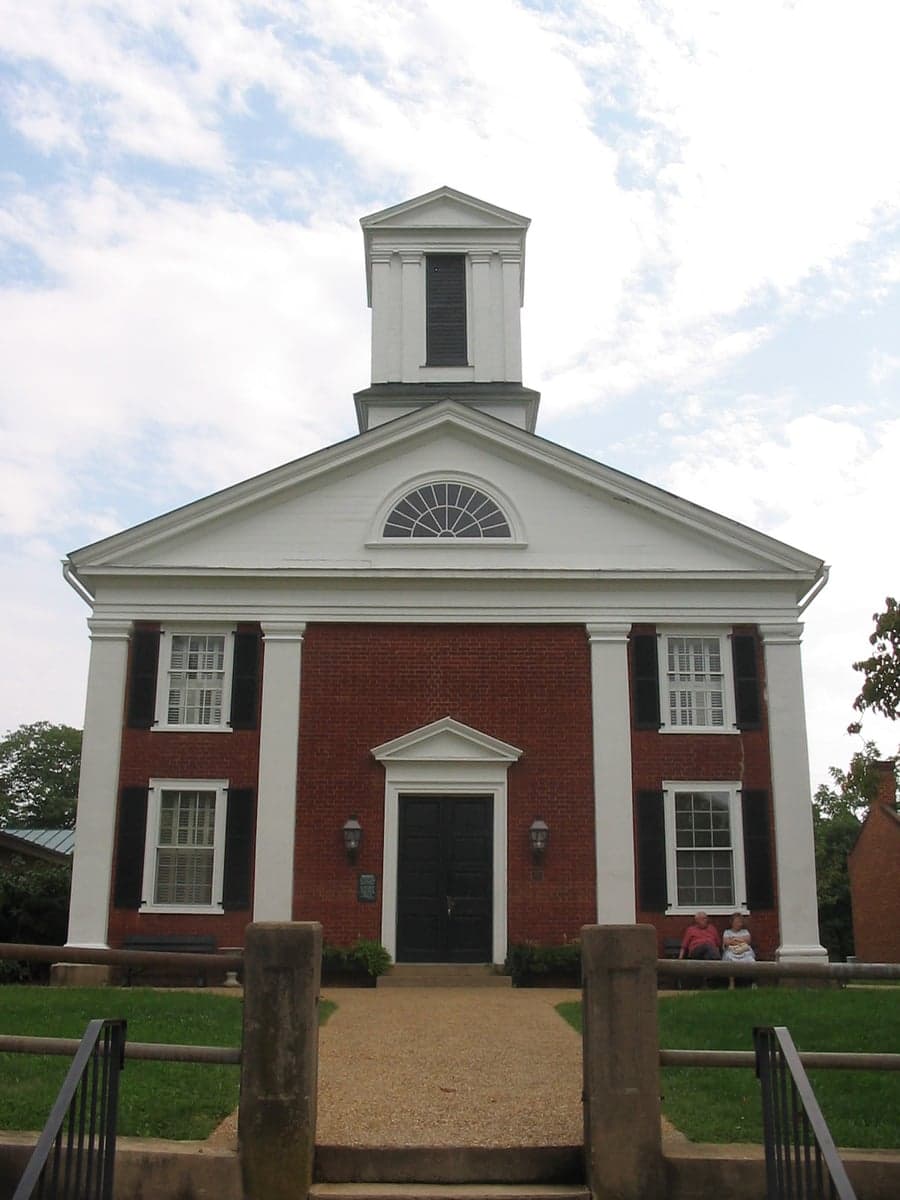
Photo: Wikipedia
Political ClimatePolitical Climate in Rappahannock County
Showing district-level results — no local-only data available.
Local Political AnalysisPolitical Analysis of Rappahannock County
Rappahannock County, Virginia, is a fascinating political outlier in the commonwealth. While the state as a whole has a Cook Partisan Voting Index (PVI) of D+4, Rappahannock County leans slightly more Democratic at D+6. This isn't a recent shift; the county has been trending blue for over a decade, driven largely by an influx of retirees and telecommuters from the D.C. metro area who value the rural landscape but bring more progressive politics. The county voted for Joe Biden by about 10 points in 2020, a margin that has widened from Hillary Clinton's 5-point win in 2016. But don't let the D+6 label fool you—this is a deeply nuanced place where the "blue" is concentrated in specific pockets, and the "red" runs just as deep in others.
How it compares
Compared to Virginia as a whole, Rappahannock County is a microcosm of the state's urban-rural divide, but with a twist. The state's D+4 PVI is driven by massive Democratic margins in Northern Virginia, Richmond, and Hampton Roads. Rappahannock's D+6 is more surprising because it's a rural county with no major cities. The difference comes down to demographics: the county's population is older, whiter, and wealthier than the state average, but many of those residents are ex-urbanites who brought their blue votes with them. In contrast, the rest of rural Virginia—places like Lee County or Patrick County—leans heavily Republican, often R+30 or more. So Rappahannock is a blue island in a red sea of rural Virginia, but it's a softer blue than the deep-blue suburbs of Fairfax County. The swing precincts here aren't in the towns; they're in the rural stretches between them, where independent voters in places like Woodville and Sperryville can flip a precinct from one election to the next.
What this means for residents
For conservative residents, the D+6 lean means they're often in the minority at the county level, but not overwhelmingly so. They still hold sway in local races, especially for sheriff and school board, where party labels matter less than personal reputation. For liberal residents, the blue lean means their votes count more here than in neighboring Fauquier County (R+10), but they still have to work for it—turnout in the Little Washington precinct is critical for Democratic wins. The practical effect is a local government that tends toward moderation. The county's Board of Supervisors often has a mix of both parties, and decisions on land use, zoning, and school funding are more pragmatic than ideological. You won't see the culture-war battles that dominate in more polarized counties. Both sides tend to agree on preserving the county's rural character, even if they disagree on how to do it.
Culturally, Rappahannock County stands apart from much of Virginia. There's no Walmart, no stoplights, and a fierce local independence that transcends party lines. The county's policy distinctions are subtle but real: it was one of the first in Virginia to adopt a comprehensive solar energy ordinance, a move that pleased environmentalists but also drew support from farmers looking to lease land. At the same time, the county has resisted regional transit initiatives that would connect it more closely to D.C., reflecting a deep-seated wariness of outside influence. The local paper, the Rappahannock News, covers school board meetings and farm-to-table dinners with equal seriousness. In the end, the political climate here is less about red vs. blue and more about a shared, stubborn commitment to keeping Rappahannock County exactly as it is—a place where your neighbor might have a Biden sign in the front yard and a Trump flag on the back porch, and nobody thinks twice about it.

State Political ClimatePolitical Climate in Virginia
State Political AnalysisPolitical Environment in the State
Virginia has shifted from a reliably purple swing state to a solidly Democratic-leaning one over the past two decades, with a Cook Partisan Voting Index of D+4. The transformation is driven by explosive growth in the Washington, D.C. suburbs, particularly in Northern Virginia, which now dominates state elections. While the state still elects Republicans in rural and exurban districts, the overall trajectory has been a steady march leftward since the early 2000s, when George W. Bush narrowly carried the state in 2004. Today, Democrats control the governorship, both chambers of the General Assembly, and both U.S. Senate seats, though the margins are often razor-thin in the state legislature.
Urban vs. rural divide
The political map of Virginia is a stark study in contrasts. The Democratic stronghold is the densely populated crescent from Northern Virginia (Arlington, Alexandria, Fairfax County) down through Richmond and into Hampton Roads (Norfolk, Virginia Beach). These three regions alone account for over 60% of the state’s vote. Fairfax County, with over 1.1 million residents, votes roughly 65-70% Democratic in statewide races. Meanwhile, rural and exurban areas—Southside Virginia, the Shenandoah Valley, and Southwest Virginia—vote heavily Republican. Counties like Lee, Wise, and Buchanan in the far southwest routinely give Republicans 75-80% of the vote. The suburbs of Richmond, such as Chesterfield and Henrico, have been trending blue, while the exurbs of Loudoun and Prince William counties have flipped from red to blue over the past decade. The result is a state where the urban core and its suburbs decide every statewide election, leaving rural conservatives with limited influence at the top of the ticket.
Policy environment
Virginia’s policy environment reflects its Democratic lean but with notable moderation. The state has a flat income tax rate of 5.75% and a sales tax of 5.3% (plus local add-ons), which is middle-of-the-pack nationally. Property taxes are set locally and vary widely—from around 0.8% in rural counties to over 1.2% in Northern Virginia. The regulatory posture is generally business-friendly, with a right-to-work law on the books, though the state has raised its minimum wage to $12.00 per hour as of 2023, with a path to $15.00. Education policy is a flashpoint: Virginia has seen a fierce debate over parental rights in schools, with Governor Glenn Youngkin (R) making it a centerpiece of his 2021 campaign. The state has also expanded Medicaid under the Affordable Care Act, a move that passed with bipartisan support in 2018. Election laws are moderately restrictive—voter ID is required, but same-day registration is not allowed, and early voting is available for 45 days. The state has no straight-ticket voting option.
Recent policy direction
Virginia’s recent policy direction has been a tug-of-war between a Democratic legislature and a Republican governor. In 2020, Democrats passed a sweeping gun control package that included universal background checks, a red flag law, and a one-handgun-per-month limit. In 2021, they abolished the death penalty and legalized recreational marijuana (though retail sales have been delayed until 2024). On education, Governor Youngkin issued executive orders banning "critical race theory" from K-12 classrooms and creating a tip line for parents to report divisive content. The legislature has also passed laws protecting abortion access up to 26 weeks, making Virginia a regional outlier in the South. On property rights, the state has a strong "right to farm" law protecting agricultural operations from nuisance lawsuits, but it also has some of the strongest environmental regulations in the South, including a mandate for 100% carbon-free electricity by 2050. Voting access has been a battleground: Democrats passed no-excuse absentee voting and expanded early voting, while Republicans have pushed for stricter voter ID and purges of voter rolls.
Civil unrest & political movements
Virginia has been a focal point for political movements on both sides. The 2017 Unite the Right rally in Charlottesville, which turned violent, put the state on the national map for white nationalist activity and sparked a backlash that helped Democrats sweep statewide offices that year. The 2020 protests following George Floyd’s murder saw significant unrest in Richmond, including the toppling of Confederate statues on Monument Avenue. On the right, the "Parents Matter" movement, fueled by debates over school curriculum and transgender policies, has been particularly active in Loudoun County and Virginia Beach. Immigration politics are less heated than in border states, but Northern Virginia has several sanctuary cities, including Arlington and Alexandria, which limit cooperation with federal immigration enforcement. Election integrity controversies flared after the 2020 election, with some rural counties passing resolutions questioning the results, though no widespread fraud was found. The state has also seen a growing secessionist movement in Southwest Virginia, with several counties voting to explore joining West Virginia, though the effort has no legal path forward.
Projection
Over the next 5-10 years, Virginia is likely to continue its leftward drift, driven by demographic trends. Northern Virginia is growing faster than the rest of the state, and its population is younger, more diverse, and more educated—all factors that correlate with Democratic voting. The exurbs of Richmond and Hampton Roads are also trending blue as they become more suburban. However, the state’s rural areas are aging and shrinking, which will further reduce their political clout. The wild card is whether the Democratic majority can hold together as the party’s coalition becomes more progressive on issues like housing, transit, and climate. If the party overreaches, it could trigger a backlash in the suburbs, as seen in Youngkin’s 2021 win. But the long-term trend is clear: Virginia will be a blue state for the foreseeable future, with Republicans limited to occasional wins in off-year elections when turnout is lower. Someone moving in now should expect a state where the political center of gravity is in the D.C. suburbs, and where conservative voices will have to fight for influence at the margins.
For a new resident, the bottom line is that Virginia offers a mix of moderate taxes, strong public services, and a dynamic economy, but the political climate is increasingly dominated by the priorities of Northern Virginia. Conservatives will find a welcoming environment in the Shenandoah Valley, Southwest Virginia, and parts of the Richmond exurbs, but they will have limited influence on statewide policy. Liberals will feel at home in the urban crescent, but should expect ongoing battles over education and gun rights. The state is not a culture-war battleground like Florida or Texas, but it is a place where the two sides are closely matched and every election feels consequential. If you value a stable, well-run state with a growing economy and are comfortable with a center-left political environment, Virginia is a strong choice. If you are looking for a reliably conservative state with low taxes and minimal regulation, you may want to look further south.
* Values derived from national, state, county, city and local statistics and may differ in a specific area. Last updated: 2026-09-19T01:45:25.000Z
Narrative content on this page is AI-generated and may contain mistakes. Verify any details that matter before acting on them.
ReloMaps may earn a commission from affiliate links at no extra cost to you.

