
Photo by Christian Alvarez on Unsplash
Personal Sovereignty in Williamsburg City County
Viable for self-reliance. Generally workable, though some barriers may limit total independence.
What does Personal Sovereignty tell us?
Personal Sovereignty measures your capacity for self-reliance and independence with minimal government friction. Higher scores mean fewer barriers between you and the way you want to live... but it assumes you have the space you need and good neighbors.
What does this tell us?
Personal Sovereignty measures your capacity for self-reliance and independence with minimal government friction. Higher scores mean fewer barriers between you and the way you want to live... but it assumes you have the space you need and good neighbors.
State Policy
Energy independence: Importer (20% of energy produced in-state)
Personal Liberty
Homesteading

Personal Liberty Analysis
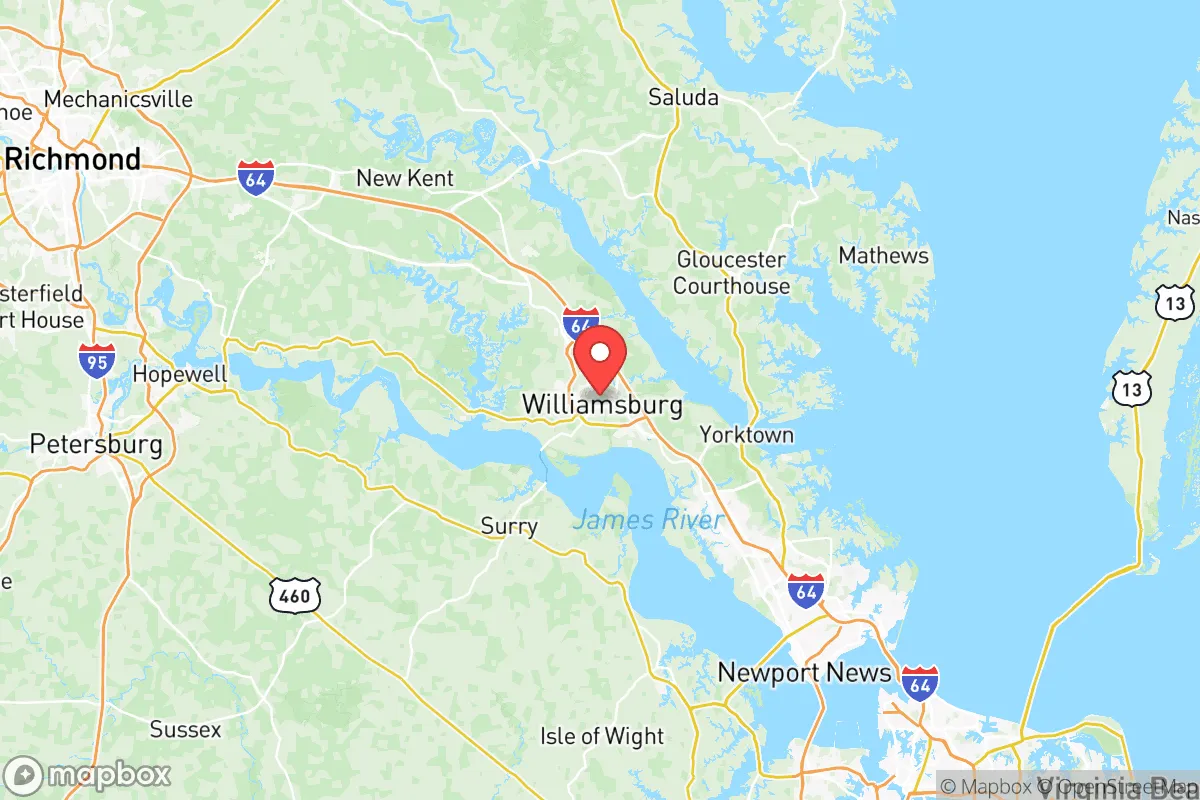
Williamsburg City County, Virginia, presents a nuanced environment for personal sovereignty, where the autonomy of individuals and families is shaped by a blend of state-level protections and local municipal codes. While Virginia’s statewide legal framework provides a baseline for self-defense rights and limited government overreach, the city of Williamsburg itself—along with its more rural fringes like Norge and Grove—imposes a regulatory posture that can feel heavier than in the deeply rural counties of Southside Virginia. For a conservative-leaning reader prioritizing independence, the key trade-off is access to historic charm and urban amenities versus a lighter-touch, more self-reliant lifestyle found just outside the city limits.
Tax burden and regulatory posture in Williamsburg City County
Williamsburg City County’s tax burden is moderate by Virginia standards but notably higher than in surrounding, more rural jurisdictions. The city’s real property tax rate sits at $0.84 per $100 of assessed value (2025), which is roughly 30% higher than in neighboring James City County ($0.65) and nearly double the rate in New Kent County ($0.48). Personal property taxes on vehicles and boats are also levied at the state rate of 4.15% of assessed value, with no local add-on, but the city’s higher real estate taxes can pinch families seeking larger lots. The regulatory posture in Williamsburg proper is distinctly municipal: zoning codes are strict, with minimum lot sizes of 6,000 square feet in most residential districts, and the city enforces a robust historic district overlay that limits exterior modifications on older homes. In contrast, the unincorporated areas of Grove and Toano (within James City County but part of the broader Williamsburg metro) have more permissive zoning, with agricultural-residential districts allowing lots as small as 1 acre for single-family homes. The city’s business license tax is a flat $50 for most small enterprises, but home-based businesses face additional permitting hurdles if they generate customer traffic—a point of friction for entrepreneurs seeking to operate from their property. Overall, the regulatory environment is moderately heavy within the city core, but lightens considerably as you move toward the county line.
Self-defense and gun law specifics in Williamsburg City County
Virginia is a “shall-issue” state for concealed handgun permits, and Williamsburg City County follows state law without local add-ons. The city does not impose any additional waiting periods, magazine capacity bans, or assault weapon restrictions beyond what state code requires. Open carry is legal for anyone 18 or older who can legally possess a firearm, though local police have been known to stop open carriers for “suspicious activity” calls—a practice that has drawn criticism from Second Amendment advocates. The nearest gun ranges are the Williamsburg Shooting Range (indoor, 25 yards) and the James City County Shooting Range (outdoor, up to 100 yards) in Toano, both of which are well-maintained and popular with locals. For purchasing firearms, there are two FFL dealers within city limits: Williamsburg Arms and Colonial Shooting Academy (the latter also offers training classes). Stand-your-ground laws apply statewide, meaning there is no duty to retreat before using deadly force in self-defense, and Virginia’s Castle Doctrine extends to vehicles and occupied structures. However, the city’s proximity to the liberal-leaning college campus of William & Mary means that campus carry is prohibited (per state law for all public universities), and some private businesses in the Merchants Square area post “no firearms” signs. For a family prioritizing self-defense, the legal environment is solid, but the cultural climate in the city core can feel less gun-friendly than in rural areas like New Kent or King and Queen counties.
Self-reliance and homesteading viability: lot sizes, zoning, and off-grid feasibility
Homesteading and off-grid living are not practical within Williamsburg city limits due to strict zoning and utility requirements. The city mandates connection to municipal water and sewer for all new construction, and minimum lot sizes of 6,000 square feet preclude any meaningful agricultural activity. However, the surrounding areas of James City County—particularly the communities of Toano and Norge—offer more viable options. In Toano, agricultural-residential zoning allows lots as small as 1 acre, and many properties have existing wells and septic systems. The county does not prohibit rainwater collection, and solar panels are permitted by right on residential structures, though homeowners’ associations in subdivisions like Ford’s Colony may impose aesthetic restrictions. For those seeking true off-grid living, the rural fringes of New Kent County (a 20-minute drive from Williamsburg) have no building permit requirements for structures under 200 square feet, and the county does not enforce any minimum lot size for agricultural use. The Williamsburg area’s growing season is 210 days, suitable for vegetable gardens and small orchards, and the local extension office in Toano offers soil testing and Master Gardener programs. The biggest hurdle for homesteaders is the cost of land: a 1-acre lot in James City County starts around $80,000, while similar lots in New Kent can be found for $40,000. For families serious about self-reliance, the Williamsburg metro’s best bet is to look at the unincorporated areas of Toano or the rural pockets of New Kent, rather than the city itself.
Personal liberties: parental rights, medical autonomy, speech, and property
Virginia law provides a strong baseline for parental rights, with a state statute affirming that parents have the fundamental right to direct their children’s upbringing, education, and healthcare. Williamsburg City County does not have any local ordinances that override this, though the city’s public school system (Williamsburg-James City County Schools) has adopted policies that some conservative parents view as overreaching—such as a 2023 policy allowing students to use preferred names and pronouns without parental notification. Homeschooling is straightforward: parents must file a notice of intent with the school division and provide evidence of a curriculum, but there are no standardized testing requirements for homeschooled students. Medical autonomy is generally respected, with Virginia being a “right-to-try” state for terminally ill patients and having no state-level vaccine mandate for adults. However, the city’s health department follows CDC guidelines closely, and during the 2020-2021 period, Williamsburg had some of the strictest mask mandates in the region. Free speech is protected under the First Amendment, and the city has not enacted any local ordinances restricting public assembly or protest beyond standard time-place-manner rules. Property rights are robust: Virginia is a “Dillon’s Rule” state, meaning local governments only have powers explicitly granted by the state, which limits the city’s ability to impose rent control or restrictive land-use regulations beyond zoning. The city does enforce a short-term rental ordinance requiring permits for Airbnb-style rentals, which can be a nuisance for property owners but is not a fundamental infringement on property rights. Overall, personal liberties in Williamsburg City County are moderately protected, with the main friction points being school policies and the city’s historic district regulations.
In the broader context of Virginia, Williamsburg City County offers a middle-ground sovereignty environment—stronger on self-defense and property rights than Northern Virginia or the Richmond city limits, but weaker on homesteading feasibility and regulatory lightness than the rural counties of Southside or the Shenandoah Valley. For a family or individual who values historic character, walkable neighborhoods, and access to cultural amenities, the trade-off in personal autonomy is manageable. For those who prioritize maximum self-reliance—off-grid living, minimal zoning, and a gun-friendly culture—the better bet is to look at the rural fringes of Toano, New Kent, or even further west toward Louisa County. The Williamsburg metro’s real strength lies in its balance: it is not a freedom haven, but it is also not a heavy-handed regulatory environment, making it a viable option for conservative-leaning families who want a mix of autonomy and community infrastructure.

* Values derived from national, state, county, city and local statistics and may differ in a specific area. Last updated: 2026-10-15T09:32:56.000Z
Narrative content on this page is AI-generated and may contain mistakes. Verify any details that matter before acting on them.
ReloMaps may earn a commission from affiliate links at no extra cost to you.

