
Photo by Christian Alvarez on Unsplash
Political ClimatePolitical Climate in Williamsburg City County
Showing district-level results — no local-only data available.
Local Political AnalysisPolitical Analysis of Williamsburg City County
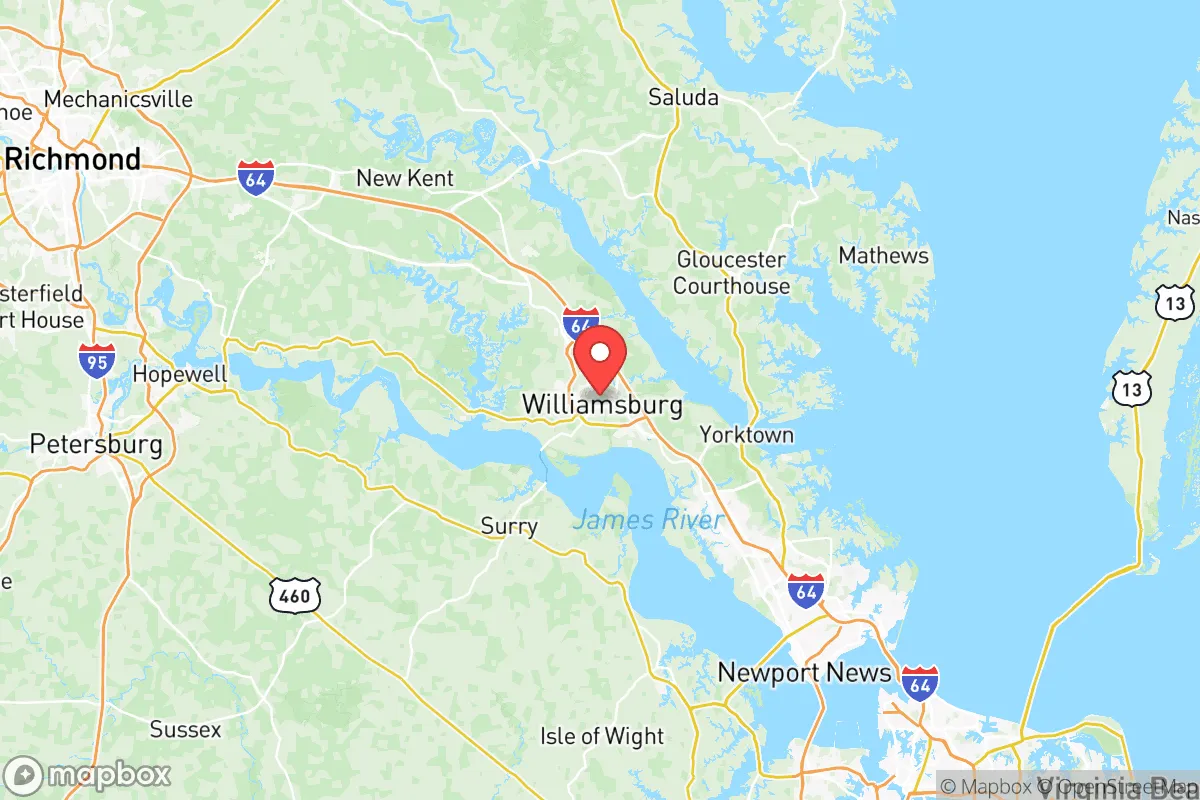
Williamsburg City County, Virginia, sits in a curious political middle ground that surprises many newcomers. The area carries a Cook PVI of R+3, meaning it leans slightly Republican compared to the nation, but this masks a deeply divided local landscape. The city of Williamsburg itself, home to the College of William & Mary, tilts reliably blue, while the more rural and suburban parts of James City County and upper York County—which share the Williamsburg mailing address—vote solidly red. The result is a community where a precinct in the historic district can go +20 for Democrats while a precinct off Route 60 near Toano swings +25 for Republicans. Over the past decade, the overall trend has been a slow drift leftward, driven by the growing student population and an influx of retirees from Northern Virginia and the Northeast, but the county’s rural roots keep it from flipping blue outright.
How it compares
The contrast with Virginia as a whole is stark. The state carries a Cook PVI of D+4, reflecting the dominance of the DC suburbs, Richmond, and Hampton Roads’ urban core. Williamsburg City County is roughly 7 points more Republican than the state average, a gap that has narrowed slightly since 2016 but remains significant. In the 2024 presidential race, for example, the Williamsburg area voted about 52% Republican to 46% Democratic, while Virginia statewide went 51% Democratic to 47% Republican. The key difference is that the state’s blue lean comes from massive margins in Fairfax County and Arlington, whereas Williamsburg’s red lean is powered by the exurban and rural precincts in James City County—places like Norge, Croaker, and the area around the Williamsburg-Jamestown Airport. The city of Williamsburg proper, with its walkable downtown and college campus, votes much more like Charlottesville or Alexandria, but it’s simply outnumbered by the surrounding county.
What this means for residents
For conservative residents, the local R+3 lean means they are not swimming against the tide in county-level elections. The James City County Board of Supervisors and the Williamsburg-James City County School Board have consistently had Republican or conservative-leaning majorities. Property taxes remain relatively low compared to Northern Virginia, and there is a strong local push for limited government and Second Amendment rights. For liberal residents, the picture is more mixed. They reliably win city council seats in Williamsburg proper and have influence on the school board, but county-wide races are an uphill battle. The College of William & Mary provides a steady base of progressive activism, and the city itself has passed non-discrimination ordinances and supports environmental initiatives, but those policies rarely extend into the county’s more rural areas. The practical reality is that both sides have to negotiate; the county’s swing precincts—like those around the Williamsburg Crossing shopping center and the Lightfoot area—often decide close races, forcing candidates to moderate their positions.
Culturally, the divide shows up in everyday life. The city of Williamsburg has a vibrant arts scene, farmers’ markets, and a strong focus on historic preservation and tourism, while the county’s unincorporated areas feel more like traditional Virginia countryside, with churches, gun ranges, and a slower pace. The two sides coexist largely peacefully, but you’ll hear different conversations at the coffee shop on Duke of Gloucester Street versus the diner on Richmond Road. Looking ahead, the trajectory is toward a slow blue shift as the college expands and more remote workers move in, but the county’s rural character and strong military ties—Langley Air Force Base and Naval Weapons Station Yorktown are nearby—will keep it from ever looking like Arlington. For now, Williamsburg City County remains one of Virginia’s truest bellwethers, a place where the national political tug-of-war plays out in miniature, precinct by precinct.

State Political ClimatePolitical Climate in Virginia
State Political AnalysisPolitical Environment in the State
Virginia has shifted from a reliably purple swing state to a solidly Democratic-leaning one over the past 15 years, now carrying a Cook PVI of D+4. The transformation is driven almost entirely by explosive growth in the Washington, D.C. suburbs—particularly Fairfax County, Loudoun County, and Prince William County—which now cast enough votes to outweigh the rest of the state combined. While the state still elects a Republican governor (Glenn Youngkin won in 2021), Democrats have controlled the legislature for most of the last decade, and no Republican has won a statewide race for Senate or President since 2009. For a conservative relocator, this means living in a state where your vote carries weight in local races but is consistently overwhelmed at the statewide level.
Urban vs. rural divide
The political map of Virginia is a textbook case of the urban-rural split. The D.C. suburbs—Arlington, Alexandria, Fairfax, Loudoun, and Prince William—are the Democratic engine, delivering margins of 30-50 points in presidential elections. Richmond and Norfolk/Virginia Beach add another 300,000+ Democratic votes between them. Meanwhile, rural and exurban Virginia is deeply Republican: Southwest Virginia (counties like Lee, Wise, and Buchanan) votes 70-80% Republican, as do the Shenandoah Valley counties like Augusta and Rockingham. The Richmond suburbs like Chesterfield and Hanover are competitive but lean Republican, while Loudoun County flipped from +17 Romney in 2012 to +24 Biden in 2020—the fastest suburban shift in the nation. The dividing line is essentially I-95: everything east of it (except the Eastern Shore) is Democratic; everything west is Republican, with the exception of college towns like Charlottesville and Blacksburg.
Policy environment
Virginia’s policy environment is a mixed bag that reflects its purple-to-blue trajectory. The state income tax is a flat 5.75% (one of the highest flat rates in the South), and sales tax is 5.3% (plus local add-ons). Property taxes are moderate and set locally. The regulatory posture is generally business-friendly in the Richmond suburbs and rural areas, but the D.C. suburbs impose stricter land-use and environmental rules. Education policy is a flashpoint: Virginia has a statewide school choice program (the Education Improvement Scholarships Tax Credit) but no universal voucher system. The state’s public schools are among the best in the South in the D.C. suburbs, but rural schools struggle with funding. Healthcare policy is dominated by the 2018 Medicaid expansion under the ACA, which added 400,000 enrollees. Election laws are moderate: no-excuse absentee voting, same-day registration, and voter ID required (but a photo ID or signed affidavit is accepted). Gun laws have tightened significantly since 2020: universal background checks, a red flag law, and a one-handgun-per-month limit. There is no permit required for open carry, but concealed carry requires a permit.
Recent policy direction
The last five years have seen Virginia move decisively left on several fronts, though with some brakes applied by the Youngkin administration. In 2020, the Democratic legislature passed the Virginia Clean Economy Act, mandating 100% carbon-free electricity by 2050. In 2021, they abolished the death penalty and legalized recreational marijuana (sales began in 2024). On gun policy, the 2020 package included the red flag law and a ban on assault weapons for those under 21. On education, Youngkin’s 2022 executive orders banned "inherently divisive concepts" in public schools and created a tip line for parents to report critical race theory instruction—though no concrete legislation passed. On parental rights, the 2023 Model Policies on the Treatment of Transgender Students required schools to notify parents if a child requests a name or pronoun change, and to allow parents to opt their child out of sexually explicit content. On abortion, Virginia remains a relative outlier in the South: abortion is legal up to 26 weeks (the second trimester), with a 24-hour waiting period and parental consent for minors. A 2024 bill to enshrine abortion rights in the state constitution failed in the legislature. On voting, the 2020 Virginia Voting Rights Act expanded access, but a 2024 law requiring citizenship verification for voter registration was vetoed by Youngkin. Property rights remain strong: Virginia is a "Dillon Rule" state, meaning localities only have powers granted by the state, which limits local zoning fights but also restricts local control.
Civil unrest & political movements
Virginia has been a national flashpoint for political movements. The 2017 Unite the Right rally in Charlottesville remains the most infamous event, leading to the removal of Confederate statues and a statewide debate over historical memory. The 2020 protests in Richmond over the Robert E. Lee statue turned into a 24-hour occupation by activists, and the statue was eventually removed in 2021. On the right, the 2021 "Parents Matter" movement in Loudoun County—sparked by a sexual assault incident in a school bathroom—became a national template for conservative school board activism. The 2022 "Operation Ceasefire" in Richmond saw the state police crack down on illegal gun possession, a bipartisan effort. Immigration politics are less volatile than in border states: Virginia has no sanctuary city laws, but Fairfax County and Arlington have policies limiting cooperation with ICE. The 2023 "Virginia is for Lovers" license plate controversy (over a pro-LGBTQ+ design) was a minor culture war skirmish. Election integrity has been a persistent issue: the 2020 election saw Trump’s legal challenges fail in Virginia courts, and a 2021 audit found no widespread fraud, but the state GOP continues to push for stricter voter ID laws. A new resident would notice the political polarization in yard signs, bumper stickers, and local news coverage, but actual civil unrest is rare outside of organized protests in Richmond and Charlottesville.
Projection
Over the next 5-10 years, Virginia is likely to continue its leftward drift, but at a slower pace. The D.C. suburbs are still growing—Loudoun County added 40,000 residents between 2020 and 2024—and they are becoming more Democratic as new arrivals from blue states settle in. However, the rest of the state is also growing, particularly the Richmond suburbs (Chesterfield, Hanover) and the Hampton Roads area, which are trending slightly right. The wild card is the 2030 redistricting: if Republicans can hold the governor’s mansion in 2029, they could draw more favorable maps. The demographic shift is clear: the state’s population is becoming more diverse, more educated, and more urban, all trends that favor Democrats. A conservative moving in now should expect that the state will likely vote Democratic in presidential elections for the foreseeable future, but that Republican governors can still win (as Youngkin did) by running as moderates on education and the economy. The state legislature will remain closely divided, meaning major policy shifts will require bipartisan compromise. The practical reality: if you live in a rural or exurban county, your local government will be Republican; if you live in a D.C. suburb, it will be Democratic. Statewide, you’ll be in the minority as a conservative, but with enough representation to block the most extreme proposals.
Bottom line for a new resident: Virginia offers a high quality of life with strong schools, a diverse economy, and beautiful geography, but it is not a conservative haven. If you’re a conservative, you’ll find your values reflected in rural and exurban communities, but you’ll be swimming against the statewide tide on taxes, gun policy, and social issues. If you’re a liberal, you’ll feel at home in the D.C. suburbs and Richmond, but you’ll encounter strong resistance in the rest of the state. The key is to choose your locality carefully: Loudoun County is a Democratic stronghold, Chesterfield County is a purple battleground, and Augusta County is deep red. Pick your county, and you’ll find your tribe.
* Values derived from national, state, county, city and local statistics and may differ in a specific area. Last updated: 2026-10-15T09:32:56.000Z
Narrative content on this page is AI-generated and may contain mistakes. Verify any details that matter before acting on them.
ReloMaps may earn a commission from affiliate links at no extra cost to you.

