
Photo by Christian Alvarez on Unsplash
Quality of Life in Williamsburg City County
A livable area that tracks near national norms for affordability, walkability, and neighborhood health.
What does Quality of Life tell us?
Quality of Life measures an area by evaluating factors like cost of living, nearby amenities, country club access, airport proximity, socioeconomic signals and neighborhood character. For large states, this is a general average — quality of life can vary dramatically between metro areas, suburbs, and rural communities within the same state.
What does this tell us?
Quality of Life measures an area by evaluating factors like cost of living, nearby amenities, country club access, airport proximity, socioeconomic signals and neighborhood character. For large states, this is a general average — quality of life can vary dramatically between metro areas, suburbs, and rural communities within the same state.
Cost of Living
26% above national average
63%
The Real Cost of Living in Williamsburg City County for 2026
| Tier | Individual | Family (4) |
|---|---|---|
| Survival | $22k | $41k |
| Comfortable | $76k | $112k |
| Luxury | $127k+ | $197k+ |
| Elite (Top 5%) | $196k+ | $304k+ |
Quality-of-Life Analysis
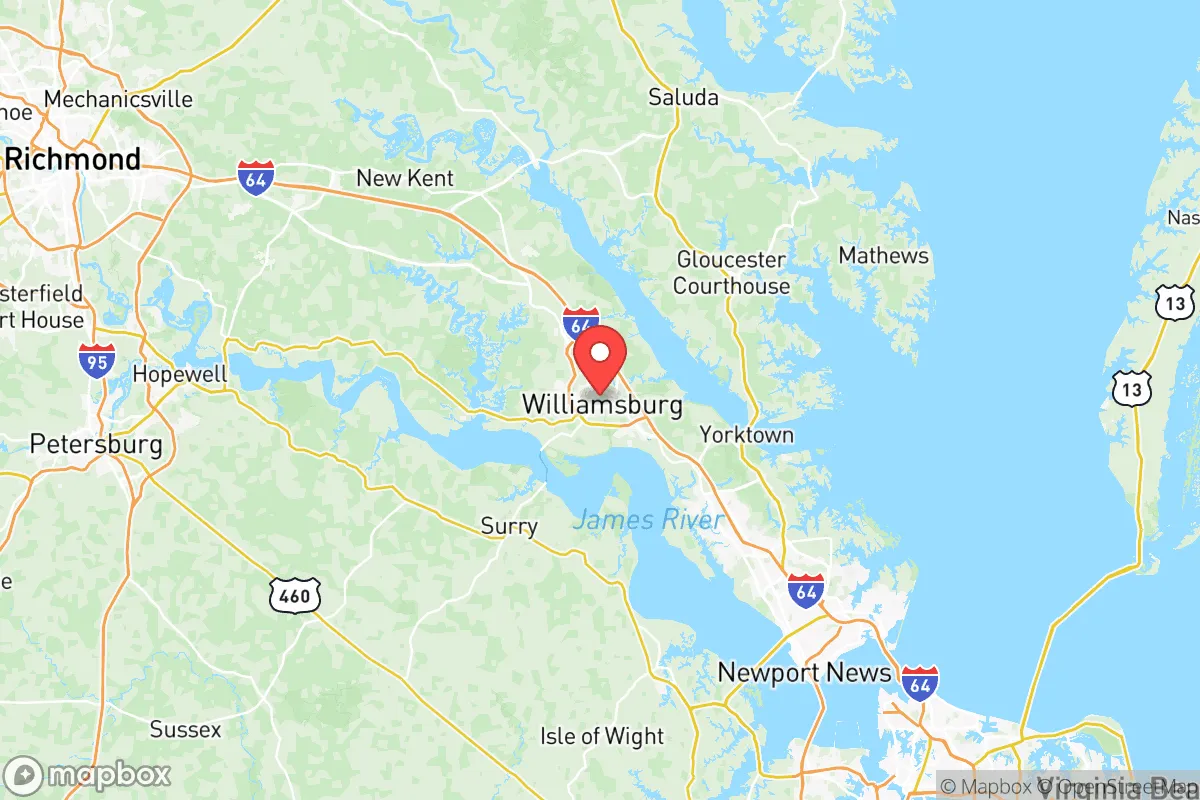
Williamsburg City County, Virginia, is a geographically compact jurisdiction that blends a historic college town, suburban residential corridors, and protected rural landscapes, drawing everyone from history-focused retirees and William & Mary faculty to military families and commuters seeking a slower pace. The county’s character shifts dramatically within a few miles: the Colonial Williamsburg core buzzes with tourism and student life, while the outer edges near the James River and York County line offer quiet farmland and creek-side neighborhoods. This spectrum of settings means residents can choose between walkable urbanism, family-oriented subdivisions, or semi-rural privacy, all within a single county of roughly 75,000 people.
Largest town(s) & population centers
The dominant population center is the City of Williamsburg itself, which is coterminous with the county and serves as the historic, commercial, and educational hub. Daily life here revolves around the College of William & Mary campus, the Colonial Williamsburg living-history museum, and the mixed-use Merchants Square area. Residents in the city core—roughly bounded by Richmond Road, Jamestown Road, and Capitol Landing Road—enjoy walkable access to restaurants, boutique shopping, and cultural events like the Williamsburg Farmers Market and the Virginia Arts Festival. Just west of the historic district, the New Town development (near Monticello Avenue) functions as a secondary town center with a movie theater, grocery stores, and apartment complexes popular with young professionals and empty-nesters. The Lightfoot area, along the Route 60 corridor near the Williamsburg Premium Outlets, is a dense commercial zone with big-box retail and fast-casual dining, but its residential pockets are mostly mid-range subdivisions and garden-style apartments. For daily errands, most residents rely on the Monticello Avenue and Richmond Road corridors, which handle the bulk of traffic but also concentrate services like hospitals (Sentara Williamsburg Regional Medical Center) and the Williamsburg-James City County Courthouse.
Smaller towns & rural pockets
Williamsburg City County is small enough that it contains no separate incorporated towns, but several unincorporated communities and rural areas define its quieter edges. Toano, located along I-64 near the New Kent County line, is a former railroad stop that now hosts a mix of newer subdivisions (e.g., the Reserve at Toano) and older farmsteads, with a small commercial node anchored by a Food Lion and a gas station. Norge, situated between Williamsburg and Toano along Route 60, is a loose collection of homes, churches, and a post office, with no real downtown—residents here commute to the city or to jobs in Richmond or Newport News. The Diascund Reservoir area, straddling the James City County line, offers waterfront homes on large wooded lots, appealing to those seeking privacy and recreational fishing. South of the Colonial Parkway, the Grove community near the James River is a historically African American settlement with a few remaining farm properties and a strong sense of place, though it remains largely residential with minimal commercial services. These rural pockets are characterized by well water, septic systems, and gravel driveways, a stark contrast to the city’s grid of sidewalks and streetlights.
Cost & lifestyle range
The county’s overall cost of living index of 126 (100 = US average) masks a wide internal spread. At the high end, the historic district and the Kingsmill on the James gated community (a 2,500-acre planned resort with an Anheuser-Busch golf course) feature median home values well above the county’s $393,200 average, often exceeding $700,000 for single-family homes on the James River. These areas attract retirees and executives who value proximity to Colonial Williamsburg and the marina. At the lower end, the Quarterpath at Williamsburg area and older apartment complexes along Bypass Road offer median rents near the county’s $1,361 figure, drawing students and service workers. The average commute of just 17 minutes is among the shortest in Virginia, a direct result of the county’s compact size and the fact that many residents work within the city limits or at nearby Naval Weapons Station Yorktown. However, lifestyle trade-offs are real: the historic district offers no big-box stores and limited parking, while rural areas like Toano require a 15-minute drive for a full grocery run. The county’s lack of a true suburban sprawl corridor means that even the most affordable homes in Norge or Lightfoot still sit within 20 minutes of the region’s major employers, including William & Mary, Sentara Healthcare, and the Colonial Williamsburg Foundation.
This county works best for people who value a defined sense of place and are willing to accept trade-offs in convenience for character. History buffs, academics, and early-career professionals gravitate to the walkable core, while families and long-term residents often settle in the subdivisions of Lightfoot or the rural edges of Toano for more space and lower property taxes. Retirees with disposable income are drawn to the riverfront enclaves, and military personnel stationed at nearby bases appreciate the short commute and stable housing market. The county’s small size means that no resident is ever far from a different lifestyle—a weekend can shift from a colonial tavern to a kayak launch on the Chickahominy River without crossing a county line.

Crime in Williamsburg City County
Generally safer than 60% of comparable U.S. locations.
Violent CrimeViolent Crime Analysis
Property CrimeProperty Crime Analysis
Crime Analysis
Williamsburg City County, Virginia, reports a violent crime rate of 210.4 incidents per 100,000 residents and a property crime rate of 1,393.7 per 100,000, placing it in a middle tier for safety compared to other Virginia localities. While these figures are below the national average for violent crime, the property crime rate is notably elevated, particularly in areas frequented by tourists and students. The city’s dual identity as a historic tourism hub and a college town (home to William & Mary) creates a unique safety dynamic where crime patterns are heavily influenced by seasonal population surges and transient populations.
Crime in context
Williamsburg’s violent crime rate of 210.4 per 100,000 is roughly 40% lower than the national average of 380 per 100,000, but it sits slightly above the Virginia state average of 195 per 100,000. Property crime, at 1,393.7 per 100,000, is about 15% higher than the national average of 1,210 per 100,000 and significantly above the Virginia state average of 1,150 per 100,000. This disparity is largely driven by thefts from vehicles and shoplifting in the Merchants Square and Richmond Road commercial corridors, which see heavy foot traffic from tourists visiting Colonial Williamsburg and students from the College of William & Mary. By contrast, neighboring James City County reports a violent crime rate of just 95 per 100,000, while York County sits at 110 per 100,000, making Williamsburg the higher-crime jurisdiction in the Historic Triangle region.
What residents experience
Residents of Williamsburg most frequently encounter property crimes—particularly larceny and vehicle break-ins—rather than violent confrontations. The Richmond Road corridor, from the Williamsburg Premium Outlets to the Monticello Avenue intersection, is a known hotspot for theft, with police data showing a concentration of shoplifting and stolen-vehicle reports. The area around the William & Mary campus, including the Sorority Court and Fraternity Row, sees elevated rates of bicycle theft and minor vandalism, though violent incidents are rare. The city’s police department has a visible presence in the historic district, but the sheer volume of visitors (over 4 million annually) creates opportunities for pickpocketing and credit card fraud. Residents living in the subdivisions off Longhill Road and in the Quarterpath area report lower property crime rates, as these neighborhoods have less commercial traffic and more private parking.
It is important to note that Williamsburg operates under a progressive judicial philosophy in its General District Court and Circuit Court, with judges who often emphasize diversion programs and reduced sentencing for non-violent property offenders. This approach, while intended to reduce recidivism, has been criticized by some residents for creating a "revolving door" effect for repeat shoplifters and car burglars. The Williamsburg Commonwealth’s Attorney’s office has pursued alternative sentencing for drug-related property crimes, which may contribute to the perception that consequences are insufficient to deter theft. For families and retirees considering relocation, the practical impact is that locking vehicles and securing valuables is not optional—it is a daily necessity, especially in the commercial and campus zones.
Neighborhood-level variation
Safety varies considerably within Williamsburg’s 9 square miles. The College Terrace and Kingspoint neighborhoods, near the campus, report the highest number of police calls for theft and noise complaints, driven by student parties and opportunistic crime. The historic district east of Boundary Street is heavily patrolled and sees very few violent crimes, though property crime still occurs in parking garages. The most consistently safe areas are the residential enclaves west of Route 199, such as the Ford’s Colony and Governor’s Land communities, which have private security and gated access. These neighborhoods report violent crime rates near zero and property crime rates below 500 per 100,000. Conversely, the apartment complexes along Bypass Road and Capitol Landing Road have higher rates of domestic disturbance calls and vehicle break-ins, reflecting the challenges of dense, transient rental housing. For the most current block-level data, the Williamsburg Police Department’s online crime map is updated weekly and shows clear clusters around the Walmart on Richmond Road and the New Town mixed-use development.
* Values derived from national, state, county, city and local statistics and may differ in a specific area. Last updated: 2026-10-15T09:32:56.000Z
Narrative content on this page is AI-generated and may contain mistakes. Verify any details that matter before acting on them.
ReloMaps may earn a commission from affiliate links at no extra cost to you.

