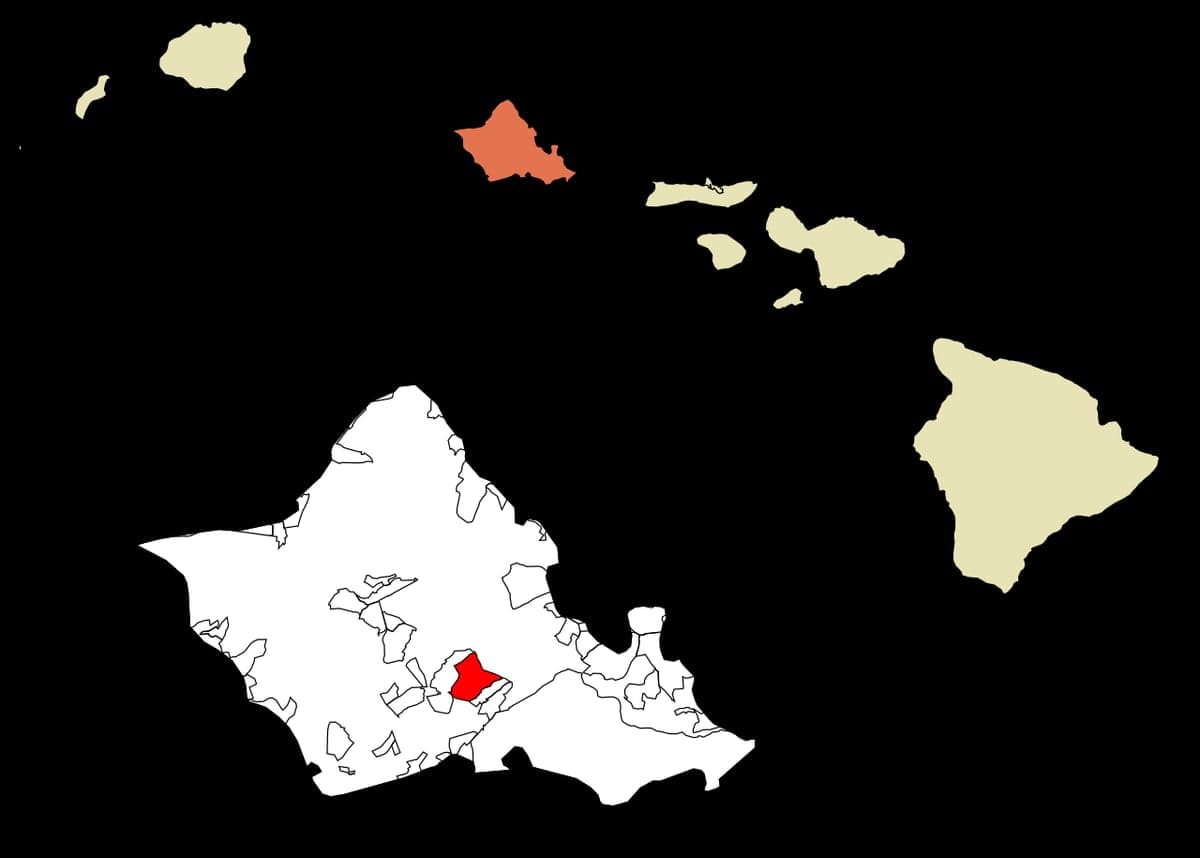
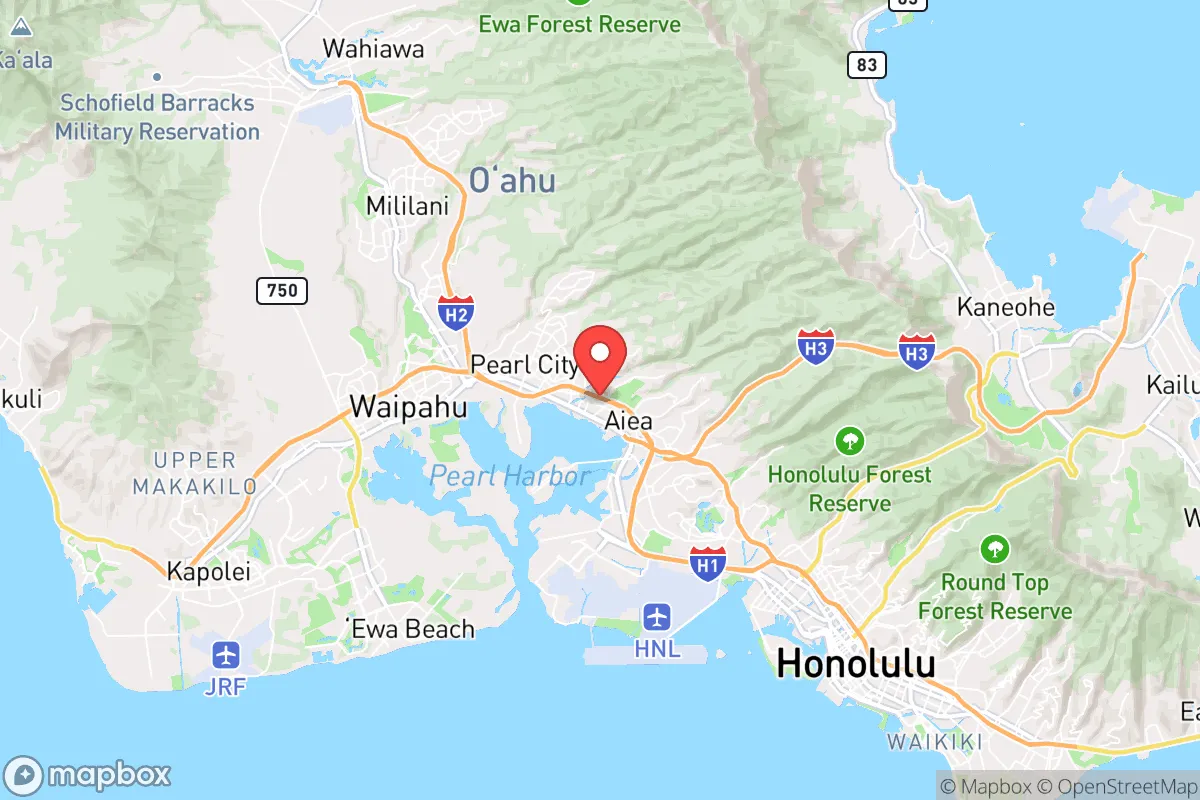
Photo: Wikipedia
Personal Sovereignty in Waimalu, HI
Moderate friction. Expect trade-offs in some aspect of personal liberty and independence.
What does Personal Sovereignty tell us?
Personal Sovereignty measures your capacity for self-reliance and independence with minimal government friction. Higher scores mean fewer barriers between you and the way you want to live... but it assumes you have the space you need and good neighbors.
What does this tell us?
Personal Sovereignty measures your capacity for self-reliance and independence with minimal government friction. Higher scores mean fewer barriers between you and the way you want to live... but it assumes you have the space you need and good neighbors.
State Policy
Energy independence: Importer (2% of energy produced in-state)
Personal Liberty
Homesteading

Personal Liberty Analysis
Waimalu, Hawaii presents a complex and often contradictory environment for personal sovereignty, one where the stunning natural beauty and tight-knit community are counterbalanced by a state government that consistently ranks among the most restrictive in the nation for individual liberties. For the conservative-leaning individual or family prioritizing autonomy, self-reliance, and minimal government overreach, Waimalu offers a unique set of trade-offs. The overarching reality is that while you can carve out a life of relative privacy and self-sufficiency on your own property, the state’s regulatory and tax apparatus will be a constant, heavy presence, making it a location for those who value strategic adaptation over outright freedom from the state.
Tax burden and regulatory posture for residents and property owners
Hawaii’s tax and regulatory climate is a primary concern for anyone focused on personal sovereignty. The state has one of the highest combined tax burdens in the country, and Waimalu residents are fully exposed to this. There is no local property tax on Oahu; instead, the City and County of Honolulu levies a property tax that, while not the highest in the state, is substantial. More critically, Hawaii imposes a general excise tax (GET) on nearly all business transactions, which is effectively a hidden sales tax that drives up the cost of everything from groceries to construction materials. For a prepper or survivalist, this means every tool, supply, and piece of equipment you buy to build self-reliance is more expensive. The state’s regulatory posture is equally aggressive, with some of the nation’s strictest land use and environmental regulations. Building a new structure, adding a rainwater catchment system, or even making significant alterations to your property requires navigating a dense bureaucracy. This is not a place where you can easily go "off-grid" without explicit government permission. The state’s heavy-handed approach to land use is a direct challenge to the idea of property as a sovereign domain, making Waimalu a location where you must work within the system, not outside it.
Self-defense rights and Hawaii’s restrictive gun laws
For those who view the right to keep and bear arms as a cornerstone of personal sovereignty, Waimalu and the state of Hawaii represent one of the most challenging environments in the United States. Hawaii has some of the strictest gun control laws in the country, and the process for legally owning a firearm is lengthy, invasive, and discretionary. To purchase a handgun, you must first obtain a permit from the Honolulu Police Department, which requires fingerprinting, a background check, and a waiting period. The state maintains a registry of all firearms and ammunition purchases. Concealed carry is effectively impossible for ordinary citizens; the state has a "may-issue" policy, and the Honolulu Police Chief has historically denied virtually all applications, a policy that was recently upheld in court. Open carry is also prohibited. This means that for self-defense outside the home, your options are severely limited. Inside the home, you can own a firearm, but the legal hurdles and the state’s clear hostility to the Second Amendment create a significant barrier. For a survivalist mindset, this is a major red flag. The state has demonstrated a willingness to restrict individual capacity for self-defense, and any future crisis could see even more aggressive measures. This is not a place where you can rely on your own ability to defend your family or property without first jumping through extensive government hoops.
Self-reliance and homesteading viability in Waimalu’s zoning
The potential for self-reliance in Waimalu is a mixed bag, heavily dependent on the specific property you choose. The area is a mix of older single-family homes, townhouses, and some larger lots, particularly in the more rural-feeling parts of Waipahu and along the slopes of the Waianae Range. Lot sizes in Waimalu are generally small, averaging between 5,000 and 8,000 square feet, which limits the scale of any homesteading activities. While you can certainly maintain a substantial vegetable garden, raise a few chickens (with county permits), and install a rainwater catchment system for irrigation, you will not be able to keep larger livestock or achieve anything close to food self-sufficiency. The soil is fertile, and the year-round growing season is a major advantage, but the small lot size and strict county zoning laws regarding structures and accessory dwellings are limiting. Going fully off-grid is nearly impossible due to building codes that require grid connection for new construction and the high cost of solar battery systems. The state’s high electricity rates (among the highest in the nation) do make solar a smart financial move, but it’s a supplement, not a replacement. For a prepper, Waimalu offers a chance to build a resilient suburban homestead—think intensive gardening, food preservation, and water storage—but it is not a place for a remote, self-sufficient compound. The regulatory environment actively discourages the kind of radical self-reliance that many in the survivalist community seek.
Personal liberties: parental rights, medical autonomy, and property control
On the broader front of personal liberties, Hawaii’s state government has a track record of prioritizing collective mandates over individual choice, which is a significant concern for conservative families. Parental rights in education have been increasingly challenged, with the state Department of Education implementing policies on curriculum and health that can override parental input. While homeschooling is legal, it requires notification and adherence to state standards, and the state has shown a willingness to intervene in family decisions regarding medical care. Medical autonomy is heavily restricted; Hawaii has strict vaccine mandates for school attendance and has historically been aggressive in public health orders. The state’s response to the COVID-19 pandemic, which included prolonged lockdowns, travel restrictions, and vaccine passports, is a clear example of government overreach that many conservatives found alarming. Property rights are also constrained by the state’s powerful land use commission and county zoning boards, which can dictate what you can do with your land. The concept of "eminent domain" is a live issue, and the state’s control over water rights is absolute. For someone who values the ability to make independent decisions about their family’s health, education, and property, Waimalu presents a landscape where the state is a constant, often intrusive, partner.
In the final analysis, Waimalu offers a strategic paradox for the sovereignty-minded individual. The physical isolation of the island, the strong sense of local community, and the potential for a productive suburban homestead are genuine assets. However, these are purchased at the cost of living under one of the most powerful and intrusive state governments in the country. Compared to a state like Texas or Idaho, where personal sovereignty is more deeply embedded in the legal and cultural fabric, Waimalu is a place of managed freedom. It is a location for those who are willing to navigate a dense regulatory environment, accept high taxes, and live with severe restrictions on self-defense in exchange for a unique lifestyle and a degree of physical security from mainland chaos. For the survivalist or prepper, it is a high-cost, high-effort location that rewards strategic compliance and community building, but it is not a refuge from government overreach. It is, instead, a place to practice resilience within a system that is not designed to maximize your personal sovereignty.

* Values derived from national, state, county, city and local statistics and may differ in a specific area. Last updated: 2026-04-24T07:23:12.000Z
Narrative content on this page is AI-generated and may contain mistakes. Verify any details that matter before acting on them.
ReloMaps may earn a commission from affiliate links at no extra cost to you.

