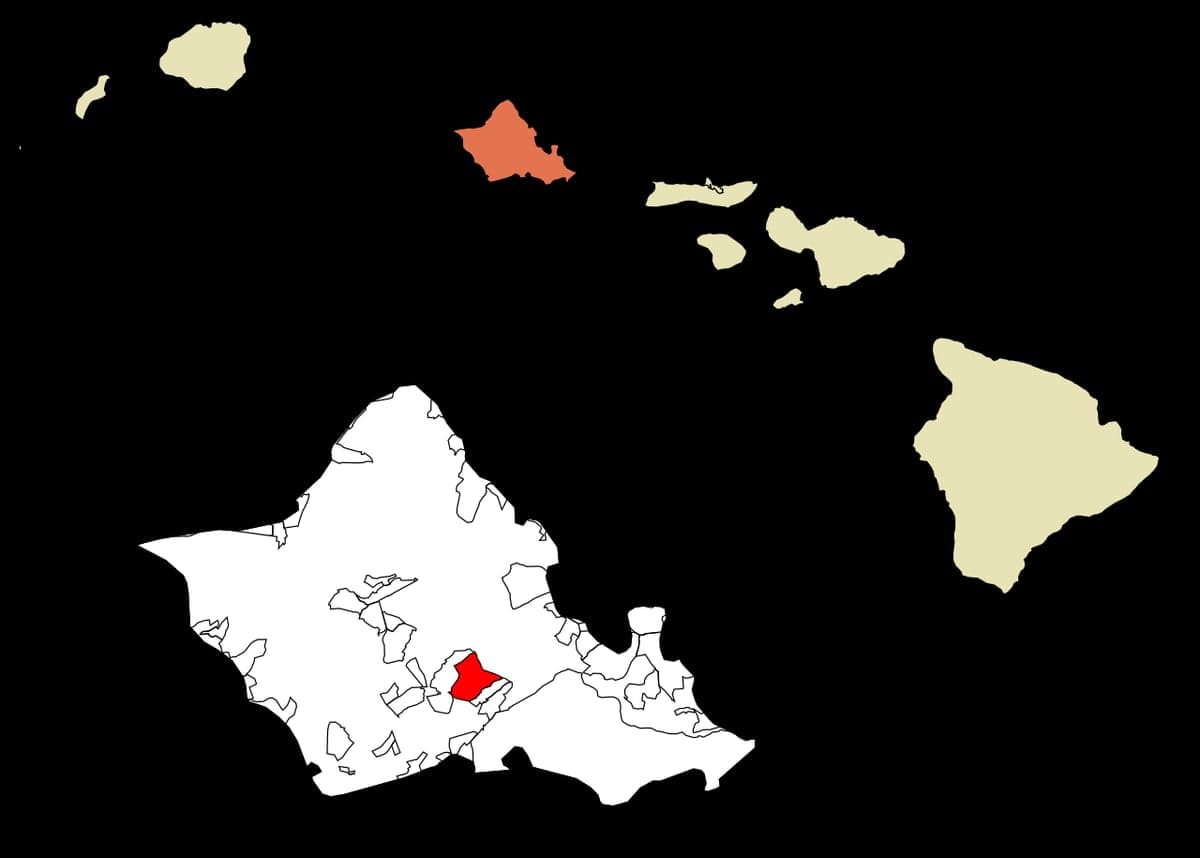
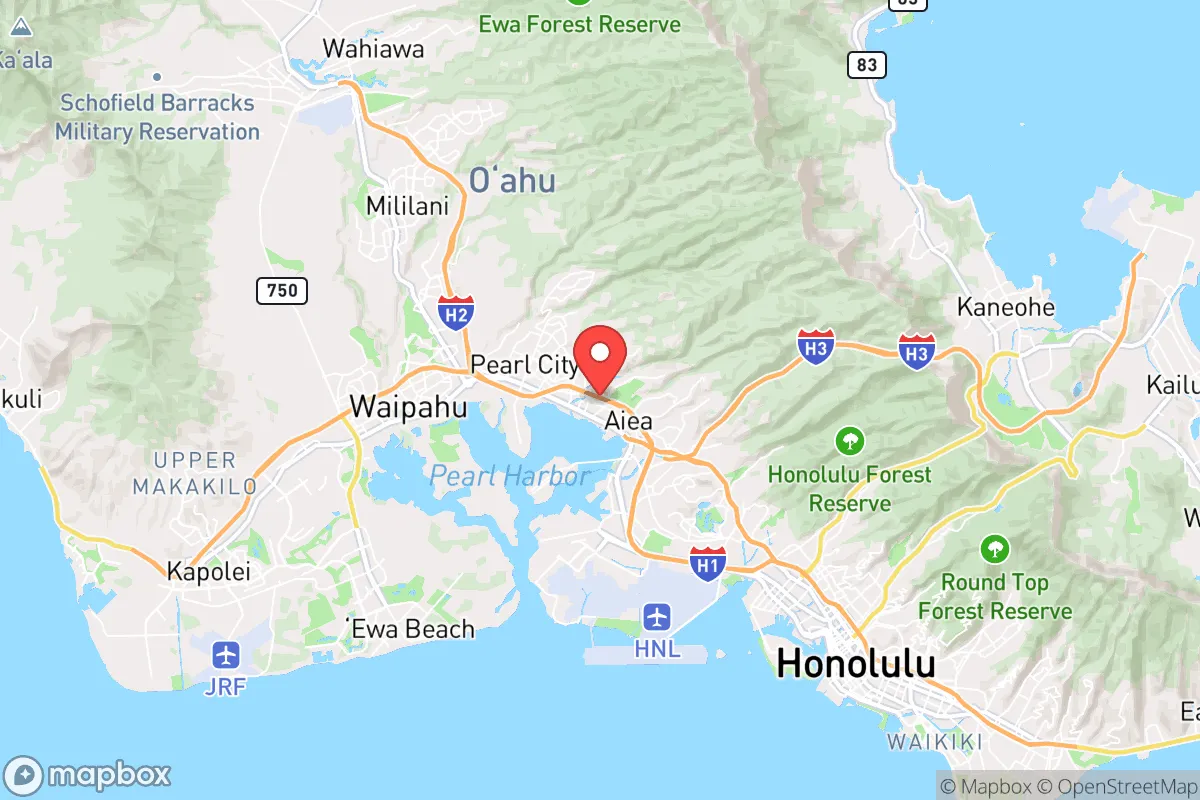
Photo: Wikipedia
Political ClimatePolitical Climate in Waimalu, HI
District shown is the primary district for this city’s centroid. Cities may span multiple districts.
Local Political AnalysisPolitical Analysis of Waimalu, HI
Waimalu, Hawaii, leans heavily Democratic, with a Cook PVI of D+13, meaning it votes about 13 points more Democratic than the national average. This isn't a new trend—it's been a solid blue stronghold for decades, but the character of that blue vote has shifted. In the past, you had a more moderate, union-backed, "old-school" Democrat who cared about local jobs and keeping the cost of living manageable. Now, you're seeing a younger, more progressive wave that's pushing for policies that feel disconnected from the day-to-day realities of folks who've lived here for generations. The trajectory is concerning: it's not just about party registration anymore, it's about a growing acceptance of government solutions for everything, from housing to how you run your small business.
How it compares
To really understand Waimalu, you have to look at its neighbors. Drive a few miles west into Mililani or Waipahu, and you'll find a similar Democratic lean, but with a stronger Filipino and local Japanese influence that tends to be more socially conservative on family and community issues. Head east toward Hawaii Kai or up into the more rural parts of Windward Oahu, like Kailua, and you'll find a different breed of Democrat—wealthier, more environmentally focused, and often more willing to embrace progressive social experiments. Waimalu sits in the middle, but it's being pulled left by the influence of Honolulu proper, just a short drive south. The contrast is stark when you compare it to the neighbor islands: a town like Kailua-Kona on the Big Island or Kihei on Maui still has a stronger independent streak, with more folks willing to vote for a Republican or a Libertarian if the local candidate talks sense about property rights or fishing access. Waimalu doesn't have that same political diversity anymore.
What this means for residents
For the average person living here, the political climate translates into a slow, steady creep of regulations and mandates. It's not a sudden takeover—it's the little things. Want to rent out a room in your house to make ends meet? The county has a whole list of new rules and fees that make it harder. Thinking about starting a home-based food business? The health department and zoning board have layers of paperwork that didn't exist ten years ago. The local school board and city council are increasingly filled with folks who see government as the first answer, not the last resort. Property taxes, while still lower than the mainland, are climbing to fund new social programs. The biggest red flag for me is the housing policy: the push for more government-controlled affordable housing, rather than just getting out of the way and letting people build, is a classic sign of a place that's forgotten how to let free markets work. It's a comfortable place to live if you don't rock the boat, but the boat is definitely being steered by people who think they know better than you do.
One cultural distinction that stands out is the local attitude toward firearms and self-defense. Hawaii has some of the strictest gun laws in the nation, and Waimalu reflects that. There's a general acceptance of the state's authority to regulate who can own what, which is a far cry from the mainland or even parts of the Big Island. The same goes for land use—the state and county have a heavy hand in deciding what you can do with your own property. It's a trade-off: you get a clean, orderly community, but you lose a lot of personal autonomy. If you value being left alone to make your own choices, Waimalu's political climate is something to watch carefully. The trend is toward more control, not less, and that's a hard thing to reverse once it's in place.

State Political ClimatePolitical Climate in Hawaii
State Political AnalysisPolitical Environment in the State
Hawaii has been a one-party Democratic stronghold for decades, with Democrats holding supermajorities in both legislative chambers and every statewide office since 1962. The state’s political DNA is deeply collectivist, shaped by plantation-era labor unions and a strong cultural emphasis on community over individual rights. Over the last 10-20 years, the lean has only hardened: in 2020, Joe Biden won the state by 29 points, and in 2024, Kamala Harris carried it by roughly the same margin. But beneath the blue veneer, there’s a growing conservative undercurrent—especially among Native Hawaiians, military families, and rural residents—that feels increasingly alienated by Honolulu’s progressive agenda.
Urban vs. rural divide
The political map of Hawaii is essentially Oahu vs. everything else. Honolulu and its suburbs—Waikiki, Manoa, Kailua—are the engine of Democratic dominance, powered by government workers, tourism employees, and the University of Hawaii system. These areas vote 70-80% Democratic in most races. The rest of the state tells a different story. The Big Island’s Puna district, once a libertarian-leaning enclave, has shifted left as mainland transplants flood in, but the Kona and Kohala coasts still lean Republican. Maui’s Upcountry (Kula, Makawao) is a mix of ranchers and retirees who vote red, while Kahului and Kihei are solidly blue. Kauai’s North Shore is progressive, but the west side (Waimea, Hanapepe) is more conservative. The most striking outlier is the Leeward side of Oahu—Ewa Beach, Kapolei, Waianae—where military families and Native Hawaiian communities have pushed those precincts to the right, sometimes flipping them for Republican candidates in local races. In 2022, Republican gubernatorial candidate Duke Aiona won Waianae and parts of Ewa Beach, a sign that the rural-urban divide is real and growing.
Policy environment
Hawaii’s policy environment is a textbook case of government overreach. The state has the highest combined tax burden in the nation, with a 4% general excise tax that applies to nearly every transaction (including rent and business-to-business sales) and a progressive income tax that tops out at 11%. Property taxes are low by mainland standards, but that’s a trade-off: the state controls land use so tightly that housing is prohibitively expensive. Education policy is dominated by a single statewide school district—the only one in the country—which means parents have almost no local control. School choice is virtually nonexistent; charter schools exist but are heavily regulated. Healthcare is heavily regulated, with the state mandating employer-provided coverage and running a robust Medicaid program. Election laws are moderately restrictive: no-excuse absentee voting is allowed, but voter ID is not required, and same-day registration is available. The state has a “sanctuary” policy that limits cooperation with federal immigration enforcement, and in 2023, the legislature passed a bill prohibiting local law enforcement from inquiring about immigration status. For a conservative, the message is clear: the state government trusts itself far more than it trusts you.
Trajectory & freedom
Hawaii is becoming less free by almost any measure. The most glaring example is gun rights: in 2022, after the Bruen decision, the state legislature passed Act 52, which banned the open carry of firearms and imposed a “good cause” requirement for concealed carry permits that effectively nullifies the Supreme Court ruling. The law also raised the minimum age to purchase a rifle to 21 and expanded the state’s “red flag” law. On parental rights, the state passed Act 2 in 2022, which requires public schools to adopt a “gender-inclusive” curriculum and prohibits schools from notifying parents if a child changes their gender identity or pronouns—a direct assault on parental authority. Medical freedom took a hit in 2023 with Act 1, which codified abortion access into state law and removed parental consent requirements for minors. Property rights are under constant threat from the state’s powerful Land Use Commission, which can rezone land without local input. The only bright spot for conservatives is the state’s recent push to legalize “ohana” (accessory dwelling units) on residential lots, which could ease the housing crisis—but even that is mired in bureaucracy. The trajectory is unmistakable: more mandates, less choice, and a government that sees individual liberty as an obstacle to its agenda.
Civil unrest & political movements
Hawaii has a long history of civil unrest, but the most visible flashpoint in recent years has been the fight over the Thirty Meter Telescope (TMT) on Mauna Kea. In 2019, thousands of Native Hawaiian protesters blocked access to the mountain, leading to months of standoffs with police. The movement was a mix of indigenous sovereignty, environmentalism, and anti-government sentiment—a coalition that doesn’t fit neatly on the left-right spectrum. On the right, the Hawaii Republican Party is small but active, with a strong presence in the military community and among evangelical churches. The “Aloha First” movement, which advocates for local control and limits on mainland migration, has gained traction in rural areas. Election integrity has been a minor issue: in 2020, the state’s all-mail voting system was criticized for lax signature verification, but no major fraud was proven. Immigration politics are muted compared to the mainland, but the sanctuary policy has drawn fire from conservatives who argue it encourages illegal immigration. The most visible political movement is the push for Native Hawaiian sovereignty, which ranges from calls for federal recognition to outright secession. A 2023 poll found that 30% of Native Hawaiians support independence, a number that has grown steadily. For a new resident, the most noticeable flashpoint will be the tension between locals and newcomers—a resentment that often manifests as hostility toward mainland transplants, regardless of their politics.
Projection
Over the next 5-10 years, Hawaii will likely become more progressive and more expensive, driving out the very people who might push back. The state’s population has been declining since 2016, with net out-migration averaging 10,000-15,000 people per year. Those leaving are disproportionately middle-class families and conservatives, who are replaced by wealthy mainland retirees and remote workers who tend to vote Democratic. The Democratic supermajority is unlikely to be threatened; the only real question is whether the party’s progressive wing will push the state further left. Expect more gun control, more restrictions on parental rights, and more taxes. The housing crisis will worsen, and the state’s response will likely be more government intervention—rent control, more public housing, and tighter land-use restrictions. The sovereignty movement will continue to grow, but it’s unlikely to achieve independence; instead, expect more symbolic gestures like the 2023 law recognizing Hawaiian as an official state language. For a conservative, the outlook is grim: Hawaii is becoming a place where individual freedom is increasingly subordinate to collective goals, and the cost of living will continue to push out anyone who isn’t wealthy or subsidized by the government.
Bottom line for a new resident: If you’re moving to Hawaii, understand that you are entering a state where the government is deeply involved in your daily life—from what you pay for groceries to how you raise your kids. The natural beauty is unmatched, but the political climate is hostile to conservative values. If you’re a single person or a parent who values personal freedom, low taxes, and local control, you will find yourself swimming against a strong current. The best you can hope for is to find a like-minded community in a rural area like Waianae, Kona, or Upcountry Maui—but even there, the state’s long arm will reach you. Hawaii is a beautiful place to visit, but for a conservative, it’s a tough place to call home.
* Values derived from national, state, county, city and local statistics and may differ in a specific area. Last updated: 2026-04-24T07:23:12.000Z
Narrative content on this page is AI-generated and may contain mistakes. Verify any details that matter before acting on them.
ReloMaps may earn a commission from affiliate links at no extra cost to you.

