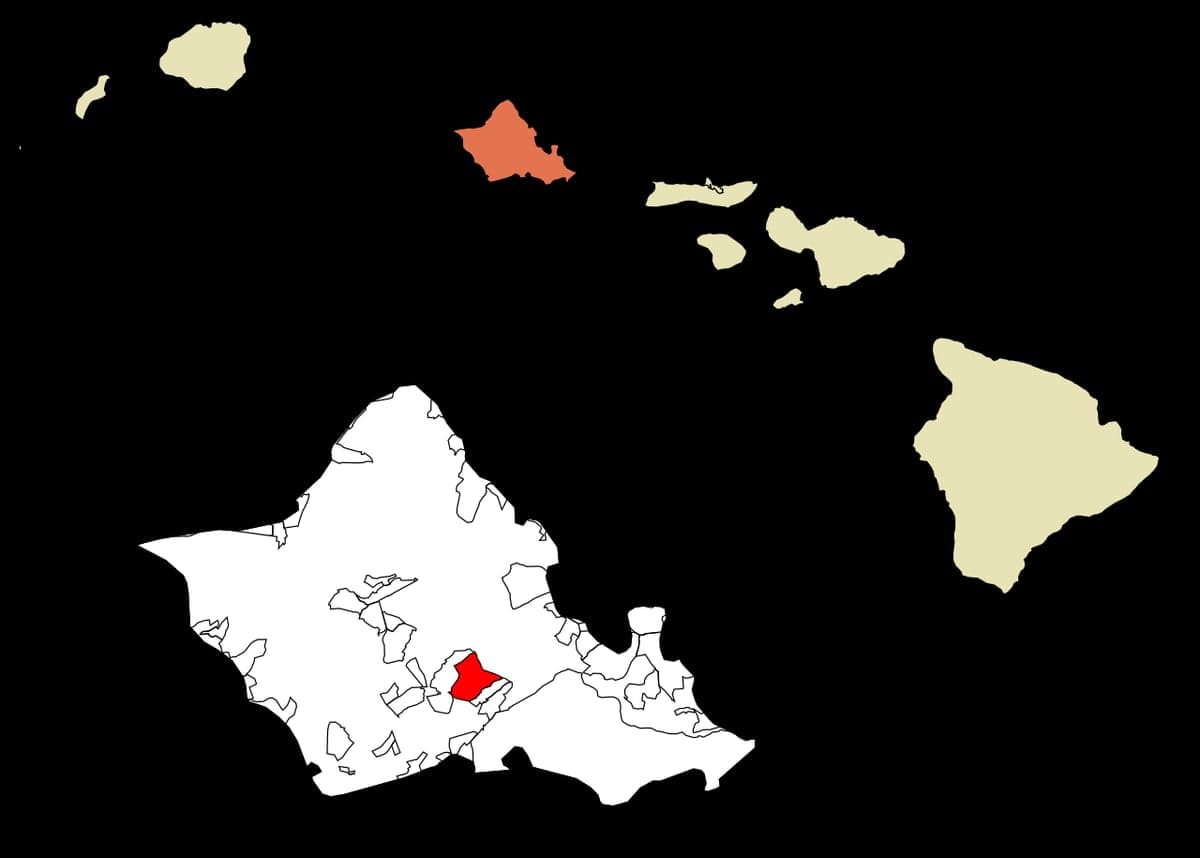
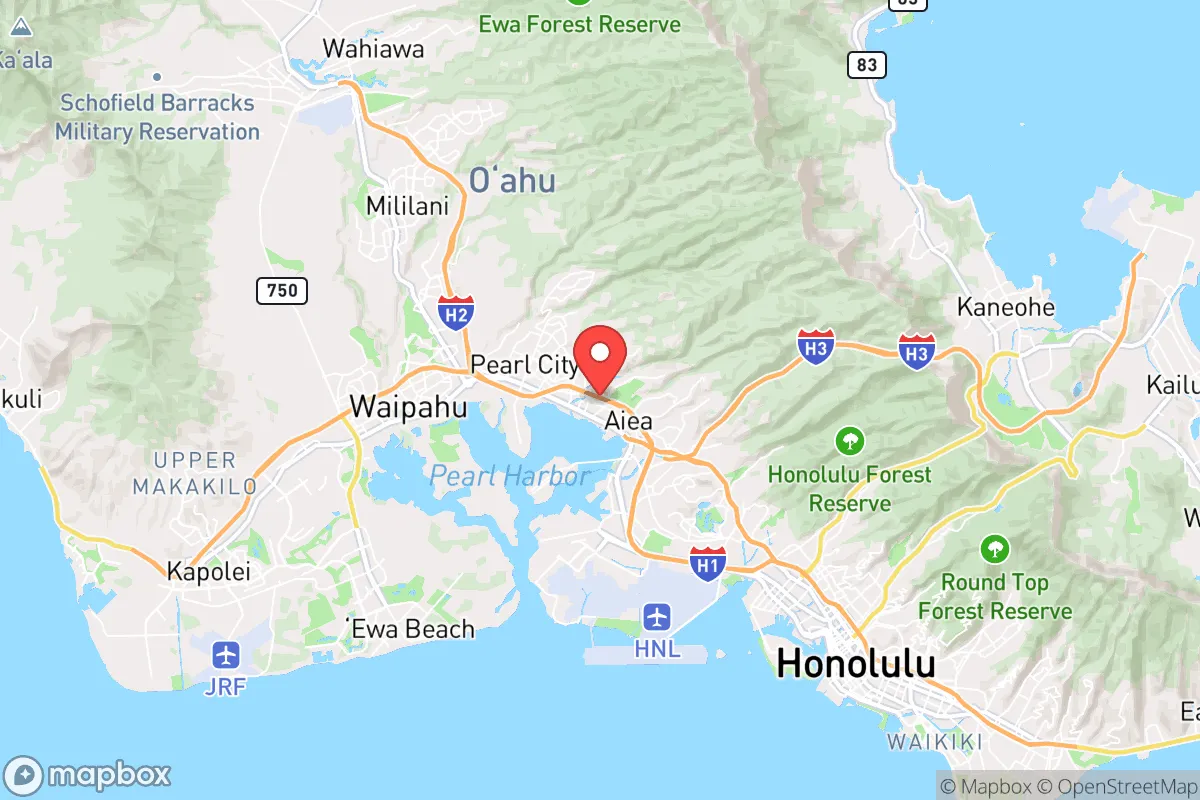
Photo: Wikipedia
Demographics of Waimalu, HI
Affluence Level in Waimalu, HI
An upper-middle-class area. Household wealth, education levels, and homeownership run ahead of national benchmarks.
People of Waimalu, HI
Waimalu, Hawaii, is a compact, densely populated community of 14,176 residents on Oahu’s central windward coast, where East and Southeast Asian groups form a decisive 53.3% majority, creating a cultural landscape distinct from the more tourist-heavy areas of the island. The city’s identity is shaped by a high proportion of college-educated residents (36.3%) and a low foreign-born share (6.4%), indicating a population that is largely native-born and professionally oriented. With a modest 11.3% White population and small Hispanic (8.0%) and Black (3.5%) communities, Waimalu feels more like a stable, middle-class Asian-American suburb than a typical melting pot, reflecting its roots in plantation-era migration patterns that have persisted into the 21st century.
How the city was settled and grew
Waimalu’s population history begins not with indigenous Hawaiian settlement but with the sugar and pineapple plantations that dominated central Oahu in the late 19th and early 20th centuries. The area was originally part of the vast agricultural lands of the Oahu Sugar Company, which drew waves of contract laborers from East Asia. The first major group to arrive were Japanese immigrants in the 1890s and 1900s, who built the initial worker housing in what is now known as Waimalu Camp, a neighborhood that still retains a concentration of older Japanese-American families. Following the Japanese, Filipino laborers arrived in the 1910s and 1920s, settling in the Waimalu Uka area, where they established a distinct community with its own social halls and churches. Chinese immigrants, though fewer in number, also came during this period, often as merchants and shopkeepers, and concentrated along the main road in Waimalu Town, the historic commercial core. By the 1940s, the plantation system was in decline, but the ethnic enclaves it created had already set the demographic foundation: a predominantly East Asian population, with Japanese and Filipino families forming the backbone of the community.
Modern era (post-1965)
The 1965 Hart-Cellar Act ended national-origin quotas, but Waimalu’s population did not see a dramatic new wave of immigration. Instead, the post-1965 era was defined by suburbanization and the maturation of the existing Asian-American population. As Honolulu expanded outward, Waimalu transitioned from a plantation camp to a bedroom community for professionals working in Honolulu and Pearl Harbor. New subdivisions like Waimalu Heights and Waimalu Gardens were developed in the 1970s and 1980s, attracting second- and third-generation Japanese and Filipino families moving up from older neighborhoods. These areas are now characterized by single-family homes and a stable, middle-class demographic. The foreign-born share today is just 6.4%, far below the state average, indicating that most residents are U.S.-born descendants of the original plantation laborers. The White population, at 11.3%, is largely composed of military-affiliated families stationed at nearby Joint Base Pearl Harbor-Hickam, who tend to live in newer rental complexes near the H-1 freeway corridor rather than in the older ethnic enclaves. The Hispanic and Black populations remain small (8.0% and 3.5% respectively), reflecting Waimalu’s limited role as a destination for newer immigrant groups compared to other Oahu communities like Waipahu or Kapolei.
The future
Waimalu’s population is heading toward gradual homogenization rather than fragmentation. The East and Southeast Asian majority—now 53.3%—is aging in place, with younger generations often moving to more affordable areas on the Leeward Coast or to the mainland for education and employment. The Indian subcontinent population is effectively zero (0.0%), and there is no sign of a significant influx from that region. The Hispanic and Black shares are likely to remain stable or grow only slightly, as Waimalu lacks the rental housing stock and job networks that attract newer immigrant communities. The college-educated share (36.3%) is above the national average, suggesting that the city will continue to attract professionals, but the overall population is projected to plateau or decline slightly as housing costs push out younger families. Over the next 10-20 years, Waimalu will likely become an older, more established Asian-American suburb, with its identity rooted in its plantation-era history rather than in new demographic currents.
For a conservative-leaning individual or family considering a move to Waimalu, the city offers a stable, family-oriented environment with a strong sense of community continuity. The population is predominantly native-born, English-speaking, and professionally employed, with low crime and good schools. The demographic trajectory is one of slow, steady aging rather than rapid change, making Waimalu a predictable and secure choice for those who value stability over diversity-driven dynamism.

* Values derived from national, state, county, city and local statistics and may differ in a specific area. Last updated: 2026-04-24T07:23:12.000Z
Narrative content on this page is AI-generated and may contain mistakes. Verify any details that matter before acting on them.
ReloMaps may earn a commission from affiliate links at no extra cost to you.

