Quality of Life in West Palm Beach, FL
Above-average quality of iife. The area offers a reasonable cost of living, decent mobility, and a mix of neighborhood amenities.
What does Quality of Life tell us?
Quality of Life blends cost of living, nearby amenities, socioeconomic signals, and neighborhood character. City-level scores represent the whole municipality; individual neighborhoods can differ.
What does this tell us?
Quality of Life blends cost of living, nearby amenities, socioeconomic signals, and neighborhood character. City-level scores represent the whole municipality; individual neighborhoods can differ.
Cost of Living
41% above national average
The Real Cost of Living in West Palm Beach, FL for 2026
| Tier | Individual | Family (4) |
|---|---|---|
| Survival | $27k | $51k |
| Comfortable | $72k | $106k |
| Luxury | $125k+ | $194k+ |
| Elite (Top 5%) | $176k+ | $272k+ |
66%
The Area Signal
A metric tracking the socioeconomic signals of the area.


Hobbies
Explore the areaGroceries
0 within 10 miles
Gas
0 within 10 miles
Hospital
0 within 20 miles
Airport
FLL — Fort Lauderdale–Hollywood
Post Office
Critical Amenities
Quality-of-Life Analysis
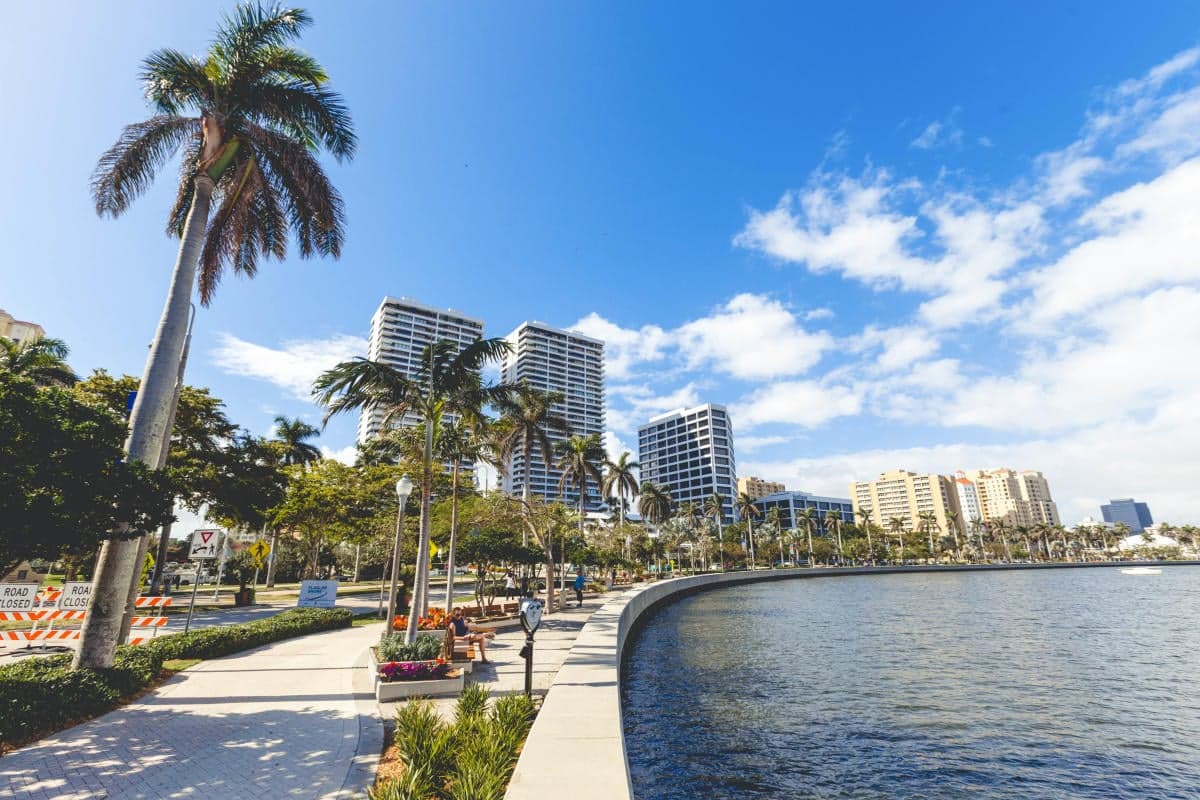
West Palm Beach presents a quality-of-life profile defined by coastal affluence, a rapidly diversifying economy, and a demographic mix that includes wealthy retirees, young finance professionals, and growing families drawn to Palm Beach County’s job market. The city’s median household income of roughly $68,000 sits below the county median, but the area’s overall prosperity is driven by the adjacent town of Palm Beach and the influx of hedge-fund and real-estate executives. The population skews older than the national average, with a median age near 40, and the city’s cultural and recreational offerings reflect a community that values outdoor living, fine dining, and access to Atlantic beaches.
Cost of living, housing affordability, and how West Palm compares to Boca Raton and Fort Lauderdale
West Palm Beach’s cost of living index stands at 141, meaning everyday expenses run 41% above the U.S. average. Housing is the primary driver: the median home value is $369,800, and the median rent is $1,709. While these figures are steep compared to the national median, they are notably lower than in nearby Boca Raton (median home value ~$520,000) and Fort Lauderdale (~$410,000). A renter earning the area’s median household income would spend roughly 30% of gross pay on rent, meeting the federal affordability threshold but leaving little margin for savings. The average commute of 23 minutes is shorter than in Miami-Dade or Broward counties, a practical advantage for workers commuting to downtown offices or the Palm Beach International Airport corridor. Property taxes in Palm Beach County average about 1.0% of assessed value, which is moderate for Florida but higher than in some inland counties. For buyers, the market has cooled slightly from 2022 peaks, with inventory rising and price reductions more common, offering slightly better negotiating leverage than in the hyper-competitive 2021–2022 period.
What daily life is like for families, professionals, and retirees in West Palm Beach
Daily life in West Palm Beach revolves around its downtown core, the Intracoastal Waterway, and a growing roster of cultural institutions. The city’s public schools are part of the Palm Beach County School District, the tenth-largest in the U.S., with several A-rated elementary schools like Palm Beach Public School and South Olive Elementary serving the central neighborhoods. High school options include the highly regarded Dreyfoos School of the Arts (a magnet school) and Alexander W. Dreyfoos Jr. School of the Arts. For families, the Mandel Public Library and the South Florida Science Center and Aquarium provide year-round programming. Professionals benefit from a downtown that has added over 2,000 residential units since 2020, along with co-working spaces and a walkable Clematis Street dining scene. Retirees are drawn to the Palm Beach County Convention Center events, the Kravis Center for the Performing Arts, and the nearby beaches of Palm Beach and Singer Island. The city’s rhythm is distinctly seasonal: from November through April, snowbirds and seasonal residents swell the population, making restaurant reservations and beach parking competitive, while summer months are quieter and more affordable for locals. The city also operates a free downtown trolley, and the Brightline rail station connects West Palm Beach to Fort Lauderdale and Miami in about an hour, a major asset for professionals who need to travel the tri-county corridor.
West Palm Beach is best suited for professionals and retirees who prioritize coastal lifestyle, cultural amenities, and a relatively short commute over low housing costs. Families will find strong school options and a safe downtown core, but should budget carefully for housing and childcare, which runs about 15% above the national average. The city is less ideal for those seeking a quiet, low-density suburban environment or for households needing to live on a single median income without significant housing subsidies. For anyone who values walkable waterfront access, a vibrant arts scene, and proximity to both Miami and the Treasure Coast, West Palm Beach offers a quality of life that justifies its premium price tag.

Crime in West Palm Beach, FL
Higher crime rates than 57% of comparable U.S. locations.
Violent CrimeViolent Crime Analysis
Property CrimeProperty Crime Analysis
Crime Analysis
West Palm Beach presents a crime picture that demands careful scrutiny from potential residents, with violent crime rates significantly exceeding national averages while property crime remains a persistent concern. The city recorded a violent crime rate of 492.1 incidents per 100,000 residents and a property crime rate of 1,497.1 per 100,000 in the most recent reporting period. These figures place West Palm Beach in a challenging position relative to both Florida state averages and national benchmarks, a situation compounded by the broader criminal justice environment in Palm Beach County.
Crime in context
West Palm Beach’s violent crime rate of 492.1 per 100,000 is roughly 40% higher than the national average of approximately 380 per 100,000 and substantially exceeds the Florida state average of around 380 per 100,000. Property crime, at 1,497.1 per 100,000, also outpaces the national average of about 1,954 per 100,000 but is notably lower than some peer cities in South Florida. The city’s position within Palm Beach County is critical context: the county has seen a pattern of progressive prosecutorial policies in recent years, with elected state attorneys and judges who have emphasized diversion programs, reduced cash bail, and sentence reductions for nonviolent offenders. While these policies aim to reduce incarceration, critics argue they have contributed to a revolving-door justice system that emboldens repeat offenders and undermines public safety. The result is a crime environment where clearance rates for violent crimes often lag, and property crimes—especially thefts from vehicles and burglaries—frequently go unsolved.
What residents experience
Daily life in West Palm Beach involves navigating a city where crime is not uniformly distributed but remains a tangible concern. Residents report that property crime is the most common encounter, with car break-ins, package thefts, and bicycle thefts occurring regularly in both downtown and residential neighborhoods. Violent crime, while less frequent, is concentrated in specific areas, particularly along the Tamarind Avenue corridor and parts of the Northwood neighborhood. The city’s nightlife and entertainment districts, such as Clematis Street and CityPlace, see elevated rates of aggravated assaults and robberies during late-night hours. Many residents adopt defensive habits: using steering wheel locks, installing security cameras, and avoiding walking alone after dark in less-trafficked areas. The presence of a progressive district attorney’s office has led to a perception among some residents that offenders face minimal consequences for property crimes, with many cases resulting in plea deals or probation rather than jail time.
Neighborhood-level variation is stark. The South End and Flamingo Park areas generally report lower crime rates, while West Palm Beach’s western neighborhoods near Military Trail and the Haverhill area experience higher rates of both violent and property crime. Gated communities and newer developments along Okeechobee Boulevard tend to have better security and lower incident rates. Prospective residents should examine block-by-block crime maps and consider that the city’s overall statistics mask significant disparities—a home in a well-patrolled historic district may feel far safer than a rental near a high-crime corridor. The broader Palm Beach County trend of lenient sentencing for repeat offenders means that even in safer pockets, residents remain exposed to regional crime patterns driven by a justice system that prioritizes rehabilitation over deterrence.
* Values derived from national, state, county, city and local statistics and may differ in a specific area. Last updated: 2026-09-14T15:09:05.000Z
Narrative content on this page is AI-generated and may contain mistakes. Verify any details that matter before acting on them.
ReloMaps may earn a commission from affiliate links at no extra cost to you.

