Political ClimatePolitical Climate in West Palm Beach, FL
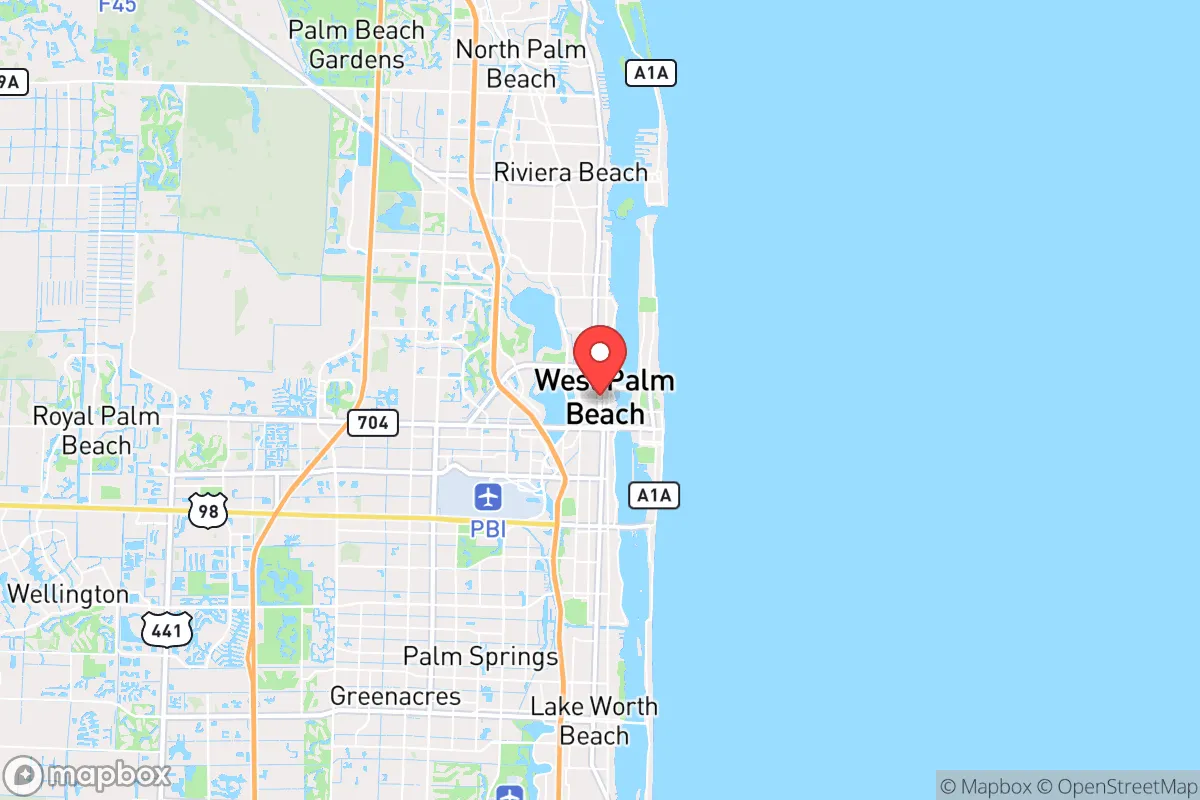
District shown is the primary district for this city’s centroid. Cities may span multiple districts.
Local Political AnalysisPolitical Analysis of West Palm Beach, FL
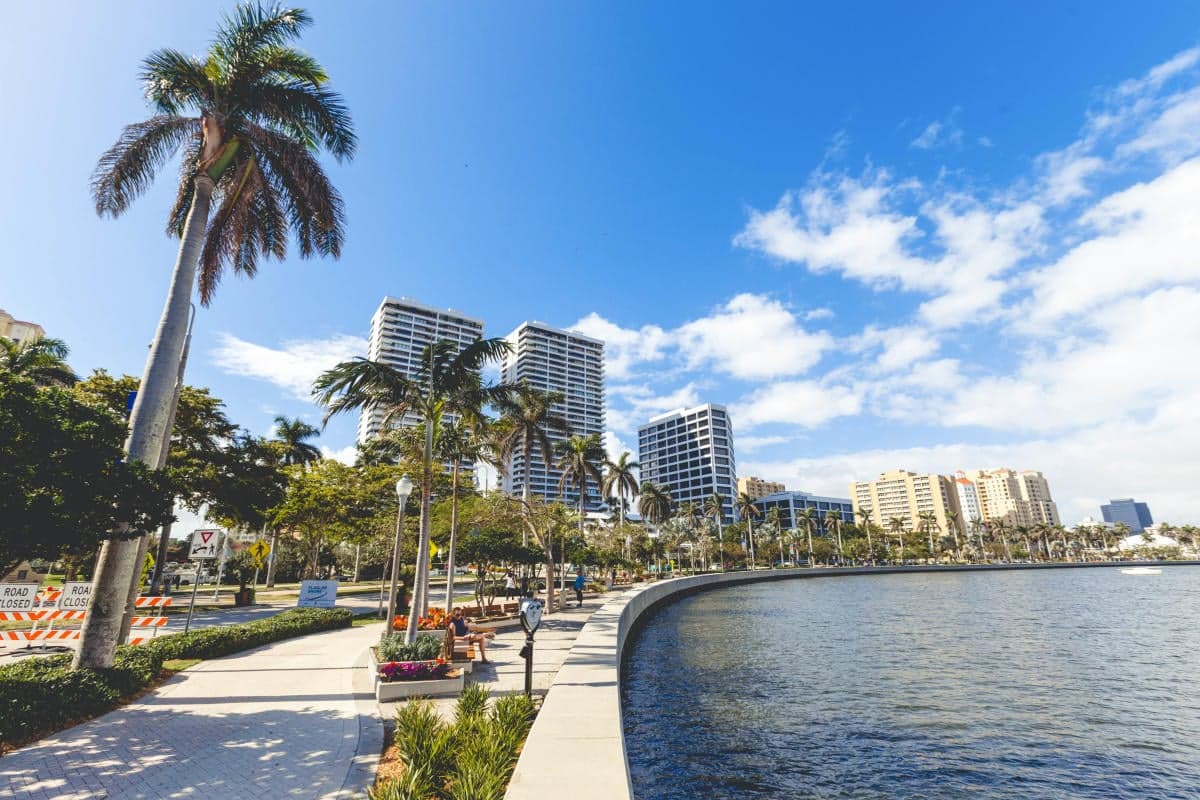
West Palm Beach sits in a fascinating political pocket of Florida. The city itself leans Democratic, but it's the anchor of Palm Beach County, which has been a perennial battleground—and the county's overall Cook Partisan Voting Index (PVI) is R+7, meaning it's seven points more Republican than the national average. That number can be misleading, though, because the political reality here is far more granular. The city's core, especially neighborhoods like Flamingo Park and the historic Northwood district, votes reliably blue, while the sprawling suburbs west of I-95—places like Wellington, Royal Palm Beach, and The Acreage—are deeply red. The trajectory over the last decade has been a slow but steady rightward shift in the county's overall margins, driven by transplants from the Northeast and Midwest who often bring conservative fiscal views, even if they're socially moderate.
How it compares
Compared to the rest of Florida, West Palm Beach is a moderate outlier. The state as a whole has no official Cook PVI, but it's widely considered a lean-Republican state that has trended redder since 2020. Palm Beach County, however, is one of the few remaining swing counties in a state that's become reliably Republican at the statewide level. In 2020, Joe Biden won Palm Beach County by about 13 points, while Donald Trump won Florida by over 3 points. That gap tells you everything: West Palm Beach is a blue island in a reddening state. Nearby Boca Raton to the south is similarly Democratic-leaning, but more moderate and older. Head north to Jupiter or Tequesta, and you'll find a much more conservative, affluent electorate. The contrast is stark—drive 20 minutes west from downtown West Palm Beach to Loxahatchee Groves, and you're in Trump country where yard signs for local GOP candidates outnumber Democrats' by 10 to 1.
What this means for residents
For conservative residents, West Palm Beach offers a comfortable reality: you're in a blue city, but the county and state are firmly in your column. Local elections are competitive, and Republican voters have real influence in county commission races and school board decisions. For liberal residents, the city itself feels like a safe space—progressive policies on housing, environmental protection, and LGBTQ+ rights are championed by the city commission. But you'll feel the state-level headwinds: the Republican-controlled legislature in Tallahassee frequently preempts local ordinances, from rent control to plastic bag bans. State preemption is the single biggest source of friction for West Palm Beach's progressive city government. The practical upshot is that your day-to-day life depends heavily on which side of the county line you live on—city dwellers enjoy a more urban, culturally liberal vibe, while suburbanites experience a more traditional, family-oriented conservatism.
Culturally, West Palm Beach has carved out a distinct identity as a blue-collar-meets-yacht-club town with a growing arts scene. The city's annual Palm Beach International Film Festival and the Clematis Street nightlife district draw a younger, more diverse crowd than the rest of the county. Policy-wise, the city has aggressively pursued affordable housing initiatives and green energy goals, which puts it at odds with the state's pro-development, fossil-fuel-friendly stance. The contrast with nearby Palm Beach—the ultra-wealthy island town that votes Republican but is socially liberal on issues like climate change—is a perfect microcosm of the area's complexity. In short, West Palm Beach is a place where you can find a Bernie Sanders bumper sticker next to a Trump flag, and both drivers will probably wave at you at a stoplight. That's the Florida way.

State Political ClimatePolitical Climate in Florida
State Political AnalysisPolitical Environment in the State
Florida has transformed from a quintessential swing state into a solidly Republican-leaning powerhouse over the past decade, with the GOP now holding a supermajority in both legislative chambers and a trifecta of state government. The shift has been dramatic: as recently as 2012, Florida was decided by less than one percentage point in the presidential race, but by 2024, Donald Trump carried the state by over 13 points. This realignment is driven by a massive influx of conservative-leaning migrants from the Northeast and Midwest, particularly to fast-growing metros like Naples, The Villages, and Panama City Beach, while the Democratic strongholds of Miami-Dade, Broward, and Orange counties have seen their margins shrink significantly.
Urban vs. rural divide
The political map of Florida is a textbook study in geographic polarization. The Democratic base is concentrated in the urban cores of Miami, Fort Lauderdale, Orlando, and Tampa, along with the college towns of Gainesville and Tallahassee. However, even these strongholds have shifted right: Miami-Dade County, which Hillary Clinton won by 29 points in 2016, went for Trump by 11 points in 2024. The Republican strongholds are the sprawling suburban and exurban counties of St. Johns (St. Augustine), Lee (Fort Myers), and Collier (Naples), along with the entire Panhandle and rural interior. The I-4 corridor from Tampa to Daytona Beach remains the key battleground, but it has trended red as well, with counties like Volusia and Polk flipping decisively Republican. The biggest political story of the last decade is the collapse of Democratic margins in South Florida's Hispanic communities, particularly among Cuban-Americans and Venezuelan-Americans in Hialeah and Doral, who have shifted hard toward the GOP over economic and social issues.
Policy environment
Florida’s policy environment is defined by a low-tax, low-regulation posture that has made it a magnet for both businesses and retirees. There is no state income tax, and the corporate income tax rate is a flat 5.5%. Property taxes are moderate, with a homestead exemption that caps annual assessment increases at 3% for primary residences. The regulatory climate is business-friendly, with no state-level minimum wage above the federal floor (though a $15/hour minimum was passed by ballot initiative in 2020 and is phasing in). Education policy is a major selling point for conservative families: Florida has one of the nation’s strongest school choice programs, with over 1.3 million students using vouchers or tax-credit scholarships to attend private or charter schools. The state also bans sanctuary city policies, requires voter ID, and has a "stand your ground" self-defense law. Healthcare is a mixed bag: Florida did not expand Medicaid under the ACA, leaving roughly 800,000 low-income residents in a coverage gap, but it has a robust private insurance market and a high number of Medicare Advantage enrollees.
Recent policy direction
The last five years have seen a cascade of legislation that has cemented Florida as a national leader in conservative governance. On gun rights, Florida enacted permitless carry (HB 543) in 2023, allowing any legal gun owner to carry a concealed firearm without a permit. On education and parental rights, the Parental Rights in Education Act (HB 1557), often called the "Don't Say Gay" law, restricts classroom instruction on sexual orientation and gender identity through third grade, while the Stop WOKE Act (HB 7) limits diversity training and critical race theory in schools and workplaces. On speech and privacy, the state has passed laws making it easier to sue media outlets for defamation and requiring social media platforms to host political candidates equally. On medical and bodily autonomy, Florida banned abortion after six weeks (HB 5) in 2023, with no exceptions for rape or incest, though a 2024 ballot measure to enshrine abortion rights failed to reach the 60% threshold. On property rights, the state has preempted local rent control ordinances and limited local government authority over land use. On voting, Florida has enacted strict voter ID laws, limited drop boxes, and banned ballot harvesting, while also expanding early voting days. The overall direction is toward maximizing individual liberty in economic and self-defense matters while restricting it on social and medical issues.
Civil unrest & political movements
Florida has seen its share of political flashpoints, but large-scale civil unrest has been relatively rare compared to other states. The most visible protests in recent years were the 2020 Black Lives Matter demonstrations in Miami, Orlando, and Jacksonville, which were met with a heavy law enforcement presence and led to the passage of the "anti-riot" bill (HB 1) in 2021, which enhanced penalties for participating in violent protests and created new crimes for blocking roadways. Immigration politics are a constant undercurrent, particularly in South Florida, where the state has bused migrants to Democratic-led states like California and Massachusetts as a protest against federal border policy. There is no serious secession or nullification movement, but the state has aggressively challenged federal authority on immigration, environmental regulation, and vaccine mandates. Election integrity remains a hot-button issue: the state’s 2020 and 2022 elections were widely seen as smooth, but the creation of a state-level Office of Election Crimes and Security has led to high-profile prosecutions of alleged voter fraud, which critics call voter intimidation. A new resident would notice the omnipresence of political signage, the frequency of "Florida Man" jokes, and the palpable sense that the state is a laboratory for conservative policy experiments.
Projection
Over the next 5-10 years, Florida is likely to become even more Republican, driven by continued in-migration from high-tax states like New York, Illinois, and California. The fastest-growing counties—Sumter (The Villages), St. Johns, and Lee—are all deep red, while the Democratic-leaning urban cores are growing more slowly or stagnating. The Hispanic vote, which once kept Florida competitive, is now reliably Republican in many precincts, and younger voters in the state are more conservative than their national peers on economic and education issues. The biggest wild card is climate change: rising sea levels and more intense hurricanes could eventually slow growth in coastal areas like Miami Beach and Fort Myers, but for now, the state’s low taxes and business-friendly climate continue to attract new residents. A relocator moving in now should expect a state where the GOP will likely hold a supermajority for the foreseeable future, with continued conservative policy innovation on education, taxes, and regulation. The Democratic Party will remain competitive only in a handful of legislative districts and local races, mostly in the urban core.
For a new resident, the bottom line is that Florida offers a stable, predictable conservative governance environment with low taxes, strong school choice, and a business-friendly regulatory climate. Conservative families will find a state that aligns with their values on education, gun rights, and fiscal policy. Liberal residents will find themselves in a clear minority at the state level, but with strong local representation in cities like Miami, Orlando, and Tampa, and a vibrant cultural scene that remains largely unaffected by state politics. The key practical takeaway is that Florida is not a swing state anymore—it is a red state with a few blue islands, and anyone moving here should be comfortable with that reality.
* Values derived from national, state, county, city and local statistics and may differ in a specific area. Last updated: 2026-09-14T15:09:05.000Z
Narrative content on this page is AI-generated and may contain mistakes. Verify any details that matter before acting on them.
ReloMaps may earn a commission from affiliate links at no extra cost to you.

