 Popular
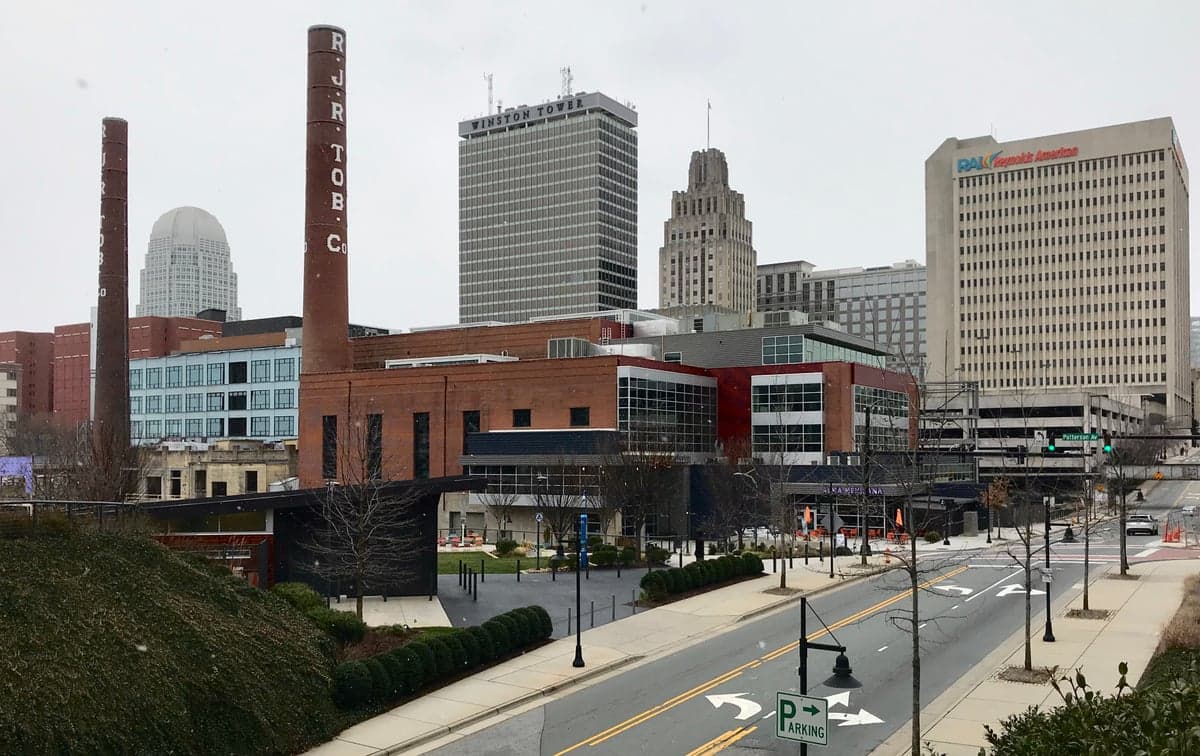
Photo: Wikipedia
Personal Sovereignty in Winston Salem, NC
Viable for self-reliance. Generally workable, though some barriers may limit total independence.
What does Personal Sovereignty tell us?
Personal Sovereignty measures your capacity for self-reliance and independence with minimal government friction. Higher scores mean fewer barriers between you and the way you want to live... but it assumes you have the space you need and good neighbors.
What does this tell us?
Personal Sovereignty measures your capacity for self-reliance and independence with minimal government friction. Higher scores mean fewer barriers between you and the way you want to live... but it assumes you have the space you need and good neighbors.
State Policy
Energy independence: Importer (15% of energy produced in-state)
Personal Liberty
Homesteading

Personal Liberty Analysis
Winston-Salem offers a mixed bag for those prioritizing personal sovereignty, where North Carolina’s generally pro-liberty state framework clashes with local municipal codes that can feel like creeping overreach. The city sits in Forsyth County, a jurisdiction that leans left relative to the surrounding rural areas, meaning you’ll find a patchwork of freedoms—strong on gun rights and property use at the state level, but with local zoning and tax policies that demand vigilance. For a survivalist or prepper mindset, the key is understanding where the state’s constitutional protections end and where city council ordinances begin, because that boundary determines how much autonomy you actually keep.
Tax burden and regulatory posture: what keeps more money in your pocket
North Carolina’s flat income tax rate of 4.5% (as of 2025, with scheduled reductions to 3.99% by 2027) is a clear win for anyone wanting to keep more of their earnings. The state’s sales tax is 4.75%, but Forsyth County adds a local 2.5% for a combined 7.25%—not the lowest in the state, but far from the highest. Property taxes in Winston-Salem run about $0.66 per $100 of assessed value, which on a $300,000 home comes to roughly $1,980 annually. That’s moderate, but the city’s regulatory posture is where frustration builds. Winston-Salem enforces a strict Unified Development Ordinance that dictates everything from fence heights to backyard chicken limits (max four hens, no roosters). For a prepper wanting to build a root cellar or install a rainwater catchment system, you’ll need permits and inspections—government oversight that eats into self-reliance. The state’s right-to-work laws and lack of a state-level minimum wage above the federal $7.25 give employers flexibility, but local business licensing can be a hassle for side hustles like selling eggs or firewood. Compared to deep-red rural counties like Yadkin or Davie, Forsyth’s bureaucracy feels heavier, but it’s still lighter than anything you’d find in New York or California.
Self-defense and gun law specifics: what you can carry and where
North Carolina is a shall-issue state for concealed carry, and Winston-Salem residents benefit from that. As of 2024, permitless concealed carry is legal for anyone 21 or older who can legally possess a firearm, thanks to the state’s permitless carry law enacted in 2023. That means you can carry a concealed handgun without a permit, though a permit still allows reciprocity in other states. Open carry is legal without a permit for anyone 18 or older. However, local restrictions bite: Winston-Salem city parks ban firearms in certain areas like playgrounds and recreation centers, and Forsyth County courthouses and schools are off-limits. The city also has a “gun-free zone” at the Benton Convention Center and some municipal buildings. Stand-your-ground laws apply statewide, so you have no duty to retreat in your home, vehicle, or any place you have a lawful right to be. Magazine capacity is unrestricted, and suppressors are legal with a federal tax stamp. For a prepper, the main concern is that Winston-Salem’s city council has shown interest in local gun ordinances—like a 2022 proposal to ban firearms in city-owned buildings that was narrowly defeated. The political climate means you need to stay active in local elections to prevent further erosion. Compared to rural areas, you’ll have fewer places to shoot (only one public range in the county), but your legal right to carry is solid.
Self-reliance and homesteading viability: lot sizes, zoning, and off-grid feasibility
Inside Winston-Salem city limits, homesteading is a challenge. Minimum lot sizes in residential zones are typically 6,000 to 10,000 square feet, which means most homes sit on less than a quarter-acre. That’s enough for a large garden and a few chickens, but forget about goats, pigs, or a serious food forest. The city’s zoning code explicitly bans “agricultural uses” in most residential districts, so raising livestock for meat or dairy is effectively illegal. Rainwater harvesting is allowed but must be for non-potable uses only, and you need a permit for any system over 1,000 gallons. Solar panels are permitted, but homeowners associations (HOAs) in many subdivisions can restrict their placement—a common workaround is to buy in unincorporated Forsyth County, where zoning is looser. If you want true off-grid viability, look at the outskirts: areas like Pfafftown, Lewisville, or Rural Hall, where you can find 1- to 5-acre parcels that allow well water, septic systems, and livestock. Even there, Forsyth County requires building permits and inspections for any structure over 200 square feet, so you can’t just throw up a cabin. The state’s building code is uniform, but local enforcement varies. For a prepper, the best bet is to buy land in an adjacent county like Stokes or Surry, where zoning is minimal and you can live with fewer eyes from the government. Inside Winston-Salem, self-reliance means urban gardening and bartering, not full homesteading.
Personal liberties: parental rights, medical autonomy, speech, and property
North Carolina has strong parental rights on paper—the state’s Parents’ Bill of Rights, passed in 2023, requires schools to notify parents of curriculum changes and medical services, and it bans instruction on gender identity and sexual orientation in K-4. In practice, Winston-Salem/Forsyth County Schools have been a battleground, with the district initially resisting the law before complying. For parents, this means you have legal backing to opt your child out of objectionable material, but you’ll need to stay engaged. Medical autonomy is a mixed bag: North Carolina has no state-level vaccine mandate for adults, but COVID-era restrictions in 2020-2021 saw the city and county impose mask mandates and business closures that many conservatives viewed as overreach. The state’s emergency powers law was reformed in 2023 to limit governors’ unilateral authority, but local health directors still have broad powers during declared emergencies. Free speech is protected, but Winston-Salem’s city council has debated “hate speech” resolutions that, while non-binding, signal a cultural tilt toward censorship. Property rights are generally strong—North Carolina is a “Dillon’s Rule” state, meaning local governments only have powers explicitly granted by the state, so your property can’t be easily rezoned without due process. However, the city’s rental inspection program (requiring landlords to register and pass inspections) is a form of government oversight that some see as a slippery slope. Overall, your personal liberties in Winston-Salem are better than in most blue states, but you’ll have to fight for them at the local level—the city council and school board are where the real erosion happens.
Compared to other mid-sized Southern cities, Winston-Salem sits in the middle of the sovereignty spectrum. It’s freer than Charlotte or Raleigh, where urban density brings more regulation, but less free than rural counties like Wilkes or Alleghany, where you can live with minimal government interference. For a single individual or parent with a prepper mindset, the calculus is simple: the state gives you a solid foundation of gun rights, low taxes, and parental control, but the city will test your patience with zoning, permits, and cultural battles. If you’re willing to live on the outskirts or fight in local elections, Winston-Salem can work. If you want maximum autonomy with zero municipal meddling, look further west or north into the foothills. The sovereignty here is earned, not given—and that’s exactly how a survivalist should view it.

* Values derived from national, state, county, city and local statistics and may differ in a specific area. Last updated: 2026-05-03T04:51:02.000Z
Narrative content on this page is AI-generated and may contain mistakes. Verify any details that matter before acting on them.
ReloMaps may earn a commission from affiliate links at no extra cost to you.

