 Popular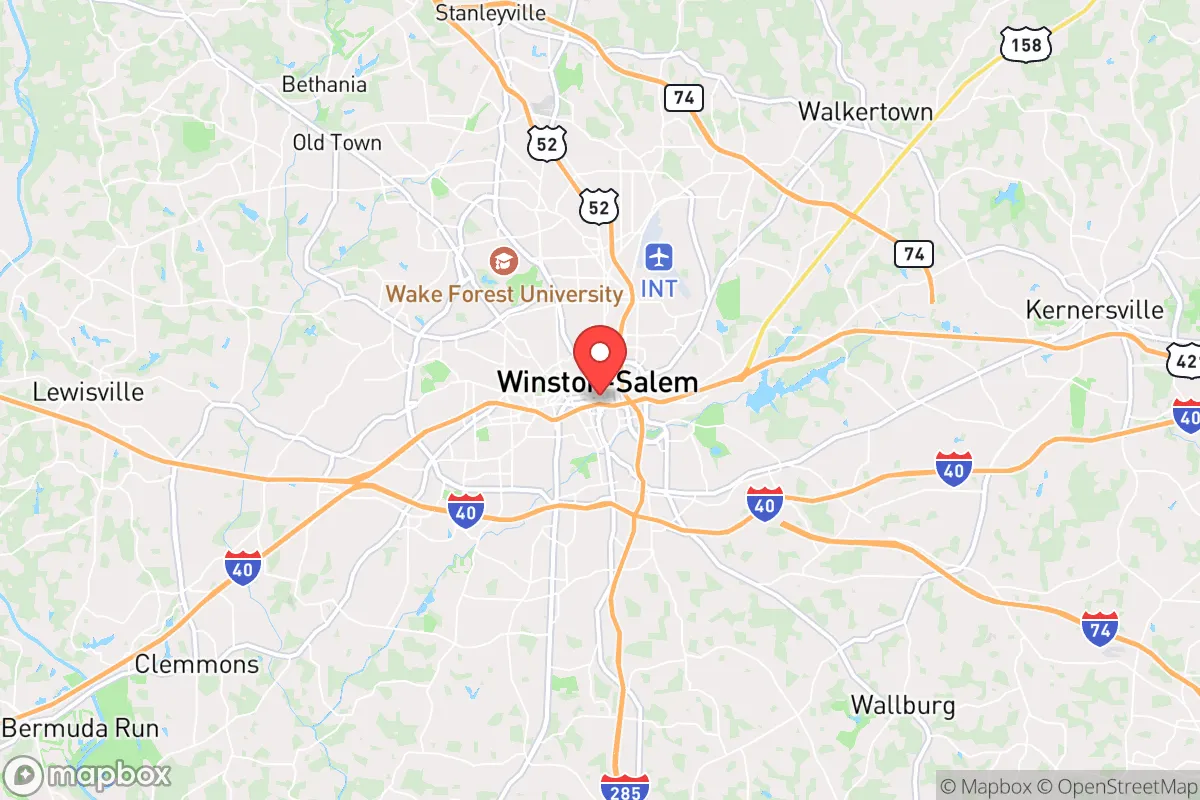
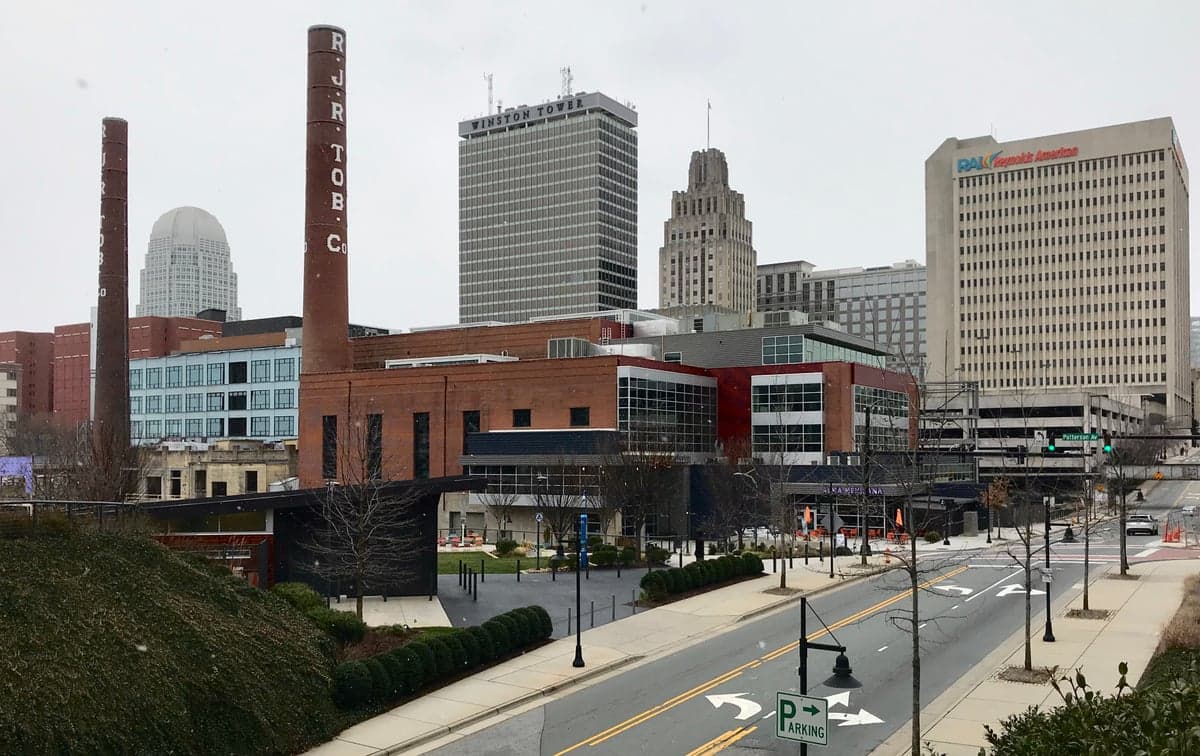
Photo: Wikipedia
Political ClimatePolitical Climate in Winston Salem, NC
District shown is the primary district for this city’s centroid. Cities may span multiple districts.
Local Political AnalysisPolitical Analysis of Winston Salem, NC
Winston-Salem sits in a county that leans reliably Republican, with a Cook PVI of R+9, but if you’ve lived here as long as I have, you know the city itself tells a more complicated story. The old guard—tobacco money, manufacturing roots, and a deep Southern sense of personal liberty—still holds a lot of sway in the surrounding Forsyth County, but the city core has been drifting left for the past decade. You’ll see it in local school board races, in city council votes on zoning and policing, and in the quiet but steady influx of folks from places like Greensboro and Raleigh who bring a different set of priorities. The trajectory is clear: the county will stay red for a while, but the city is slowly turning purple, and that shift has real consequences for anyone who values limited government and local control.
How it compares
Drive 20 minutes east to Greensboro, and you’re in a city that’s been reliably blue for years—its city council and school board are openly progressive, and you can feel the difference in everything from tax rates to how aggressively the city enforces mask mandates or business regulations. Head west to the more rural Yadkin County, and you’re in deep red territory where folks still wave “Don’t Tread on Me” flags and the county commission wouldn’t dream of imposing a property tax hike without a fight. Winston-Salem sits right in the middle, but the comparison that stings for conservatives is with nearby Clemmons and Lewisville—smaller towns that have kept their conservative character by resisting annexation and maintaining strict local control. Those towns have lower crime rates, fewer business closures from overregulation, and a sense that your personal choices aren’t being second-guessed by a city planner or a diversity officer. Winston-Salem’s recent push toward “equity” initiatives and its willingness to take state and federal grants with strings attached are red flags for anyone who’s watched other cities lose their character to top-down mandates.
What this means for residents
For a conservative family or a small business owner, the practical effect is that you have to be more careful about where you buy a house or open a shop. The city’s zoning board has gotten more aggressive about mixed-use developments that bring in higher-density housing and chain retailers, often overriding neighborhood concerns about traffic and property values. The school system, once a point of pride, has seen a slow erosion of parental rights—things like opt-out forms for controversial curriculum materials are harder to find, and the district has embraced social-emotional learning programs that some parents feel cross a line into values instruction. On the plus side, the county commission still has a conservative majority, so property taxes haven’t spiked the way they have in Guilford County, and the sheriff’s office still cooperates with ICE detainer requests. But if you value the Second Amendment, you should know that Winston-Salem’s city council has passed symbolic resolutions supporting “safe storage” ordinances—non-binding for now, but a clear signal of where the wind is blowing.
Culturally, Winston-Salem still has a strong independent streak—you’ll find gun shows at the fairgrounds, churches on every corner, and a thriving farmers market where nobody asks your politics. But the arts district downtown has become a magnet for younger, more progressive transplants, and the city’s official branding leans heavily into diversity and inclusion language that can feel performative to longtime residents. The real test will come in the next few years as the city considers a potential “community safety” task force that could recommend defunding police programs or redirecting funds to social workers. If that passes, you’ll see a lot of families I know start looking at houses in Clemmons or even further out in Davie County. For now, Winston-Salem is still a place where a conservative can live comfortably—if you keep your head down, know your neighbors, and vote in every local election. But the long-term trend is concerning, and anyone who tells you otherwise hasn’t been watching the city council meetings.

State Political ClimatePolitical Climate in North Carolina
State Political AnalysisPolitical Environment in the State
North Carolina has long been a classic swing state, but over the past decade it’s settled into a reliably red-leaning posture, with Republicans controlling the General Assembly and the state Supreme Court, and the governorship flipping back to Democrats in 2024. The state’s overall partisan lean is roughly R+3 to R+5 in presidential elections, but the real story is the widening urban-rural chasm: booming metro areas like Charlotte and Raleigh-Durham are pulling left, while the vast rural and exurban counties—places like Union, Cabarrus, and Johnston—are digging in deeper red. The 10-20 year arc shows a state that’s becoming more polarized, but the conservative coalition has held firm thanks to strong legislative majorities and a steady influx of families fleeing high-tax states.
Urban vs. rural divide
The political map of North Carolina is a textbook case of the urban-rural split. The major Democratic strongholds are Mecklenburg County (Charlotte), Wake County (Raleigh), and Durham County—these three counties alone deliver about 30% of the statewide Democratic vote. Charlotte’s banking and tech sectors have attracted a younger, more progressive workforce, while Raleigh-Durham’s Research Triangle draws academics and transplants from blue states. But step outside the I-85 corridor and the landscape shifts dramatically. Rural counties like Robeson, Columbus, and Vance are still conservative, though some have seen Democratic erosion as cultural issues take precedence over economic ones. The real battleground is the exurban ring: Union County (southeast of Charlotte) voted 62% for Trump in 2024, while Johnston County (southeast of Raleigh) went 64% red. These are the fast-growing areas where families are moving specifically for lower taxes, better schools, and a slower pace of life. The coastal counties—New Hanover (Wilmington), Brunswick, and Carteret—are also trending red, driven by retirees and military families from Camp Lejeune and Fort Liberty.
Policy environment
North Carolina’s policy environment is a mixed bag, but the conservative majority has made significant strides. The state has a flat income tax of 4.5%, down from 5.25% in 2021, with a scheduled phase-down to 3.99% by 2027. Corporate taxes are already at 2.5%, among the lowest in the Southeast. There’s no state property tax, and sales tax caps at 7.5% in most counties. On education, the state has a robust school choice program: the Opportunity Scholarship Program now provides vouchers of up to $7,500 per student for private school tuition, and over 70,000 students used vouchers in 2024-25. The General Assembly also passed the Parents’ Bill of Rights in 2023, requiring schools to notify parents about curriculum changes and medical services. Healthcare is a sore spot: the state finally expanded Medicaid in 2023 under a bipartisan deal, but the program is tightly managed and hasn’t led to the cost blowouts seen in blue states. Election integrity is solid—voter ID is required (photo ID since 2023), absentee ballots have witness requirements, and same-day registration is not allowed. The state also banned sanctuary cities in 2015, and local law enforcement is required to cooperate with ICE.
Trajectory & freedom
On the freedom front, North Carolina is moving in the right direction, but it’s not a slam dunk. The biggest win for personal liberty was the 2023 repeal of the pistol purchase permit system, which had required a sheriff’s approval for handgun purchases—a relic of Jim Crow-era gun control. Constitutional carry (permitless concealed carry) has been introduced but hasn’t passed yet; for now, concealed carry requires a permit and training. On parental rights, the 2023 Parents’ Bill of Rights was a clear win, requiring schools to get parental consent before using a child’s preferred name or pronouns, and banning instruction on gender identity and sexuality in K-4. Medical freedom took a hit with the 2023 abortion ban at 12 weeks (with exceptions for rape, incest, and life of the mother), which was a compromise—pro-lifers wanted a heartbeat bill, but the current law is more restrictive than the previous 20-week limit. Property rights are strong: the state has a right-to-farm law that protects agricultural operations from nuisance lawsuits, and there’s no statewide rent control. The biggest red flag is the growth of local government overreach: Charlotte and Raleigh have both passed zoning changes that allow higher density and reduce single-family zoning, which some see as a threat to neighborhood character and property values.
Civil unrest & political movements
North Carolina has seen its share of political flashpoints, but they’ve been more contained than in states like Oregon or New York. The 2020 protests in Charlotte and Raleigh over George Floyd’s death turned violent in spots—looting in Charlotte’s South End, a statue toppled at the State Capitol—but were quickly suppressed by law enforcement. The state has a strong Second Amendment culture, and counter-protests by armed groups like the NC Patriot Guard and local 3% chapters were visible but peaceful. Immigration politics are tense: the state’s Hispanic population has grown to 10%, concentrated in the poultry and construction industries, and there have been localized sanctuary debates in Durham and Orange counties, but the state law banning sanctuary policies has held. Election integrity remains a hot-button issue: the 2020 election saw a narrow Trump loss (by 1.3 points), and subsequent audits found no widespread fraud, but the General Assembly passed the 2023 voter ID law and tightened absentee ballot rules. The most visible movement is the “School Choice” coalition, which has held rallies at the legislature and successfully pushed for voucher expansion. On the left, the “Moral Monday” protests at the General Assembly have been ongoing since 2013, but they’ve lost momentum as the conservative majority has solidified.
Projection
Over the next 5-10 years, North Carolina is likely to remain a red-leaning state, but the margin will narrow. The biggest demographic shift is the influx of out-of-state transplants—about 300,000 people moved to NC between 2020 and 2024, many from New York, California, and Illinois. These newcomers tend to be more moderate than the progressive activists, but they also bring blue-state voting habits on issues like housing and transit. The key battleground will be the exurban counties: Union, Johnston, and Brunswick are growing fast, and if they stay red, the state stays red. The wild card is the I-85 corridor between Charlotte and Raleigh, where smaller cities like Salisbury and Durham are seeing rapid development. If the state’s conservative majority can keep taxes low, expand school choice, and protect gun rights, it will continue to attract the kind of families who vote red. But if the legislature overreaches on social issues—like a total abortion ban or a bathroom bill 2.0—it could alienate suburban moderates and flip the state purple again. The 2024 governor’s race, where Democrat Josh Stein won by 3 points, shows the GOP can’t take the top of the ticket for granted.
For a new resident, the bottom line is this: North Carolina is a good bet if you value low taxes, school choice, and a strong Second Amendment culture. The state is not a conservative utopia—you’ll still find progressive enclaves in Charlotte and Raleigh, and the Medicaid expansion was a compromise that some see as a step toward government-run healthcare. But the legislative majority is solid, the economy is booming, and the cultural trajectory is more “live and let live” than “government knows best.” If you’re looking for a place where your property rights are respected, your kids can go to a school you choose, and your vote actually counts, North Carolina is one of the best options in the country right now.
* Values derived from national, state, county, city and local statistics and may differ in a specific area. Last updated: 2026-05-03T04:51:02.000Z
Narrative content on this page is AI-generated and may contain mistakes. Verify any details that matter before acting on them.
ReloMaps may earn a commission from affiliate links at no extra cost to you.

