 Popular
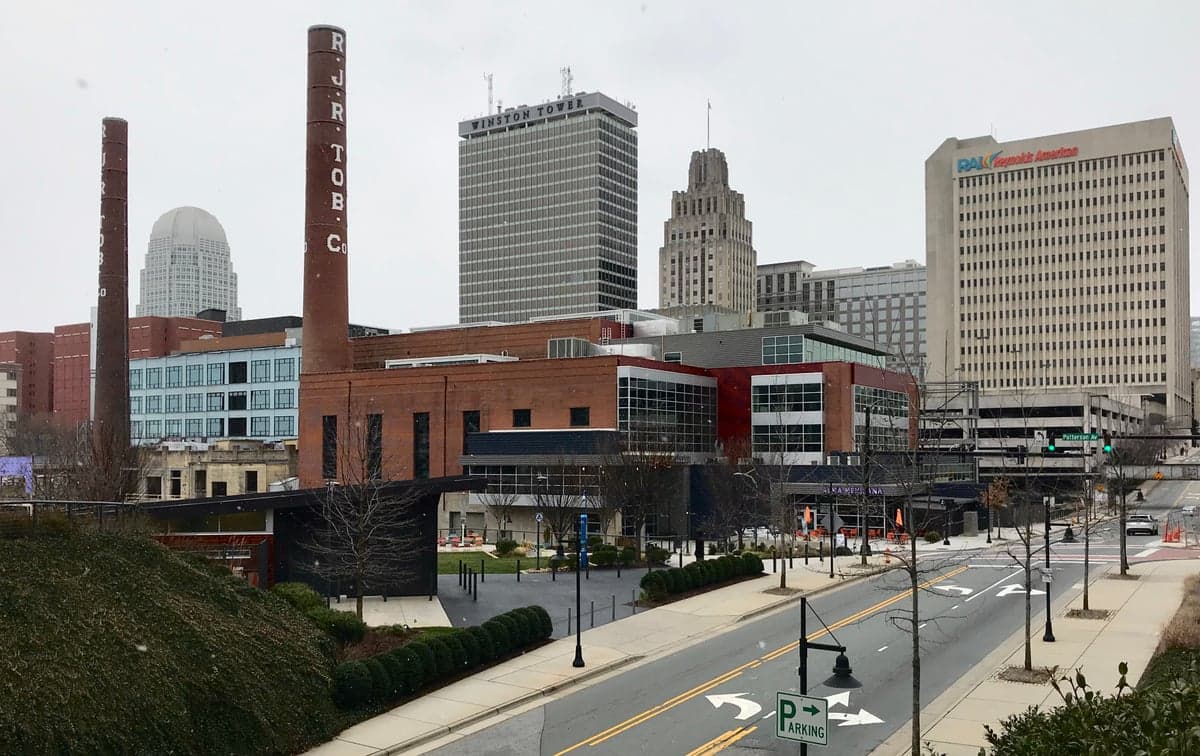
Photo: Wikipedia
Strategic Assessment of Winston Salem, NC
Meaningful friction. Expect exposure to either population pressure, blast zones, or natural disaster risk. Consider buying a retreat property.
What does the Strategic Assessment tell us?
Our Strategic Assessment grades tactical survivability of an area. Major population centers, military targets, fallout zones, natural disasters, and border exposure all drive risk — lower exposure means a more defensible position in a crisis.
This is heavily inspired by Joel Skousen's Strategic Relocation book. Highly recommended you checkout the book ($)What does this tell us?
Our Strategic Assessment grades tactical survivability of an area. Major population centers, military targets, fallout zones, natural disasters, and border exposure all drive risk — lower exposure means a more defensible position in a crisis.
This is heavily inspired by Joel Skousen's Strategic Relocation book. Highly recommended you checkout the book ($)Strategic Pillars

Key Distances
Regional Safe Places
Below is our recommended "safe zones" in North Carolina and the surrounding area based on our strategic heuristics. For most people, it's unrealistic to live in a “safe zone” full-time due to work, family or other personal reasons. They tend to be more rural. However, many of these areas are perfect for second homes and retreat properties that double as a vacation home or even a short-term rental.

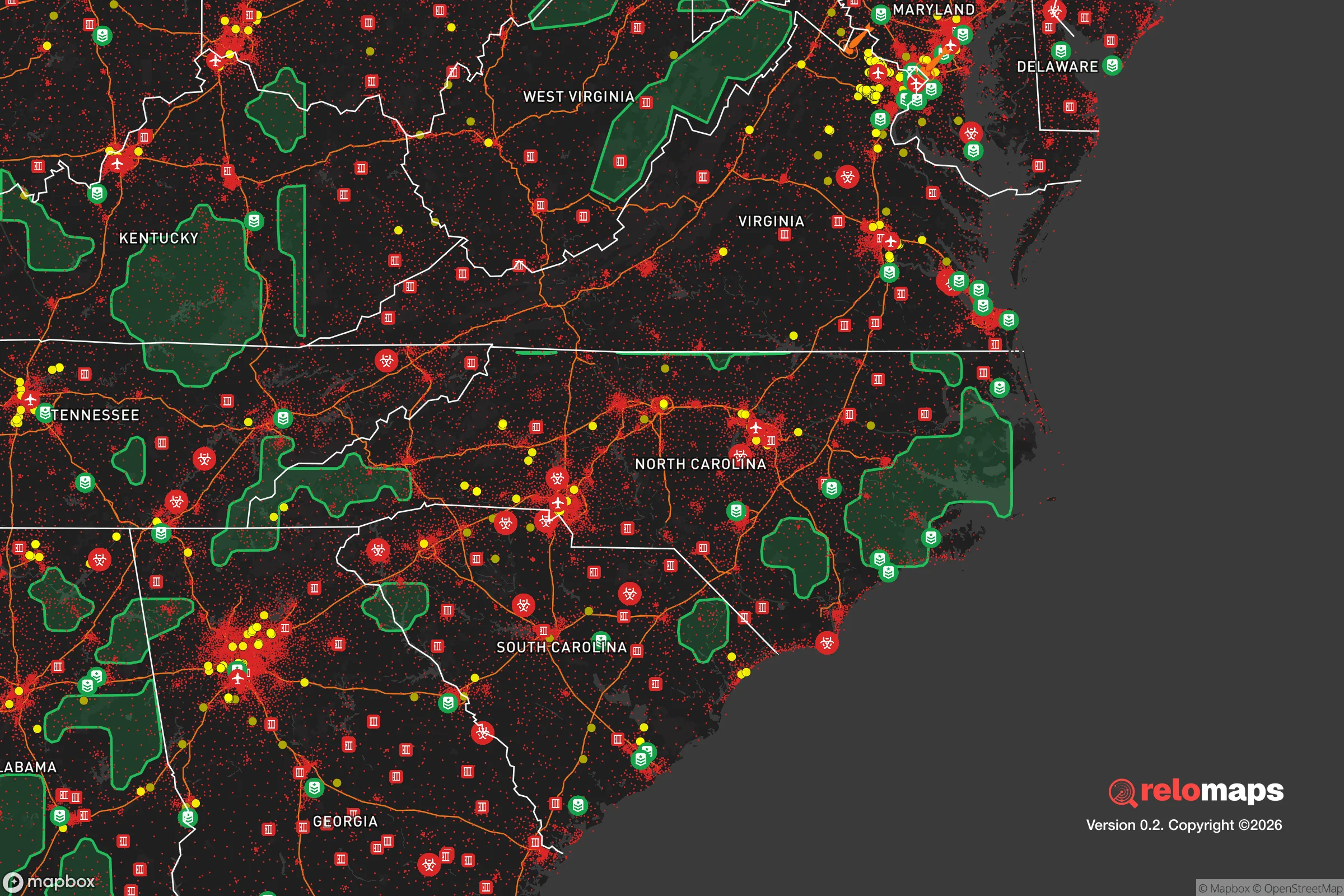


Important Note: For informational purposes only. This does not mean nothing bad ever happens in the green zones. Please use common sense. This is based on public data and modeled with AI. We tried to take a conservative approach but mistakes happen. We update this regularly as new information becomes available.
Solar Generator Recommendations
Backup power matters more here than in safer locations. We've picked three solar generators across budgets and capacity tiers — start with the budget unit if you only need a few essentials, or step up if you want to run a fridge and HVAC for days at a time.

Jackery Portable Power Station Explorer 300
Budget OptionPower on the Go: Weighing only 11 lbs, it's convenient to set up and store with book-sized foldable solar panels

BLUETTI Portable Power Station AC180
Designed for both indoor and outdoor scenarios, AC180 is highly capable as it has a robost capacity and continuous output power.

EF ECOFLOW DELTA Pro Ultra Power Station
Upgraded PickEcoFlow DELTA Pro Ultra is a whole-home energy system designed to grow with your family. Integrated with the Smart Home Panel 2, it scales to meet your evolving energy needs — keeping your home powered, intelligent, and secure through every stage of life.
We earn a commission, at no additional cost to you.
Strategic Assessment Analysis
Winston-Salem, North Carolina, occupies a strategic middle ground that resilience-minded relocators should study closely. It sits in the Piedmont Triad region, roughly equidistant from the Appalachian Mountains to the west and the Atlantic coast to the east, placing it outside the direct blast and fallout zones of major strategic targets like Washington D.C., New York City, or Norfolk Naval Base. The city’s historical economic base—tobacco, textiles, and now advanced manufacturing and healthcare—has fostered a culture of self-reliance and a diversified local economy that is less dependent on federal spending than the Research Triangle or the D.C. metro area. For a conservative-leaning individual or family prioritizing preparedness, Winston-Salem offers a blend of moderate urban infrastructure with a surrounding rural buffer that can support a more independent lifestyle.
Geographic position and natural advantages for long-term stability
Winston-Salem’s location in the Piedmont region provides a significant natural advantage: it is inland enough to avoid the worst of hurricane storm surge and coastal flooding, yet far enough from the Appalachian spine to avoid the severe winter weather and mountainous terrain that can complicate travel and supply lines. The city sits at an elevation of roughly 900 feet, which reduces the risk of riverine flooding compared to low-lying areas along the coast or the Mississippi basin. The Yadkin River and its tributaries run through the region, offering a reliable freshwater source, and the surrounding countryside is dotted with small farms, woodlots, and rural communities that could serve as fallback zones if urban infrastructure falters. The Triad’s position along Interstates 40 and 74, as well as U.S. 52, provides multiple egress routes toward the mountains or deeper into the Southeast, a critical factor if a major event forces evacuation from the East Coast corridor. The region’s temperate climate also supports year-round gardening and livestock raising, which aligns with a prepper’s goal of food sovereignty.
Risks, exposures, and proximity to fallout-relevant landmarks
No location is without vulnerabilities, and Winston-Salem has several that a strategic relocator must weigh. The most pressing risk is its proximity to the I-85 corridor, which connects Charlotte (about 80 miles south) to Greensboro and Durham. In a scenario involving civil unrest or a major disaster, this corridor could become a chokepoint for refugee flow and supply chain disruption. The city itself is home to several large employers—Wake Forest University Baptist Medical Center, Hanesbrands, and Reynolds American—that could become targets for looting or civil disorder if social order breaks down. Additionally, the Piedmont Triad International Airport in Greensboro is a potential secondary target in a conflict scenario, as it supports military and cargo operations. While Winston-Salem is not a primary nuclear target, it lies within the fallout plume radius of a strike on the Norfolk naval base or the Washington D.C. area, depending on wind patterns. The city’s industrial history also means there are legacy environmental hazards—old tobacco processing plants and chemical facilities—that could release toxins during a natural disaster or infrastructure collapse. For a conservative prepper, the key takeaway is that Winston-Salem is not a remote bug-out location; it is a semi-urban hub that requires a clear plan for both sheltering in place and evacuating westward toward the mountains if necessary.
Practical resilience for a relocator: food, water, energy, and defensibility
For a relocator focused on practical self-sufficiency, Winston-Salem offers a mix of urban convenience and rural access that can be leveraged with the right property choices. The city’s water supply comes from the Salem Lake and the Yadkin River, both of which are managed by the city’s water utility, but a prepper should plan for a private well or rainwater catchment system if buying land in the outer counties—Forsyth, Davidson, or Davie. The local climate supports three-season gardening, and the region has a strong agricultural heritage, with farmers’ markets and feed stores readily available in towns like Lewisville and Clemmons. Energy resilience is a mixed bag: Duke Energy provides grid power, but the region is prone to occasional ice storms and summer thunderstorms that can cause outages. Solar panels are a viable investment here, as the Piedmont receives about 210 sunny days per year, and many rural properties already have propane tanks for heating. Defensibility is the weakest point for an urban or suburban property in Winston-Salem proper. The city’s layout—sprawling neighborhoods, multiple entry points, and a dense downtown—makes it hard to secure a single perimeter. However, the surrounding unincorporated areas, particularly in western Forsyth County near the Yadkin River, offer more defensible terrain with limited road access and natural barriers like ridges and creeks. A relocator should prioritize a property with a good well, a septic system, and at least 5–10 acres of wooded land to provide both privacy and a buffer from neighbors. The local gun culture is strong, with several shooting ranges and gun shops in the area, and North Carolina’s permitless carry law (effective 2023) aligns with a preparedness mindset.
The overall strategic picture for Winston-Salem is one of calculated trade-offs. It is not a remote survivalist retreat, nor is it a high-risk urban center like Atlanta or D.C. It sits in a sweet spot for a conservative relocator who wants access to medical care, employment, and schools while maintaining the ability to retreat to a more self-sufficient lifestyle in the surrounding countryside. The city’s moderate political climate—Forsyth County leans slightly Republican, with a mix of rural conservatives and urban moderates—means a prepper family is less likely to face hostility from neighbors than in deep-blue metro areas. The biggest strategic risk is complacency: Winston-Salem’s relative stability could lull a relocator into under-preparing for the cascading effects of a national crisis, such as supply chain collapse or a pandemic. A serious prepper will use this location as a base of operations, not a final destination, and will have a secondary plan for moving deeper into the Appalachian foothills if the situation deteriorates. For a family willing to invest in land, water, and energy independence, Winston-Salem offers a viable long-term position in a region that is likely to remain one of the more stable corners of the Eastern United States during a period of national turbulence.

* Values derived from national, state, county, city and local statistics and may differ in a specific area. Last updated: 2026-05-03T04:51:02.000Z
Narrative content on this page is AI-generated and may contain mistakes. Verify any details that matter before acting on them.
ReloMaps may earn a commission from affiliate links at no extra cost to you.

