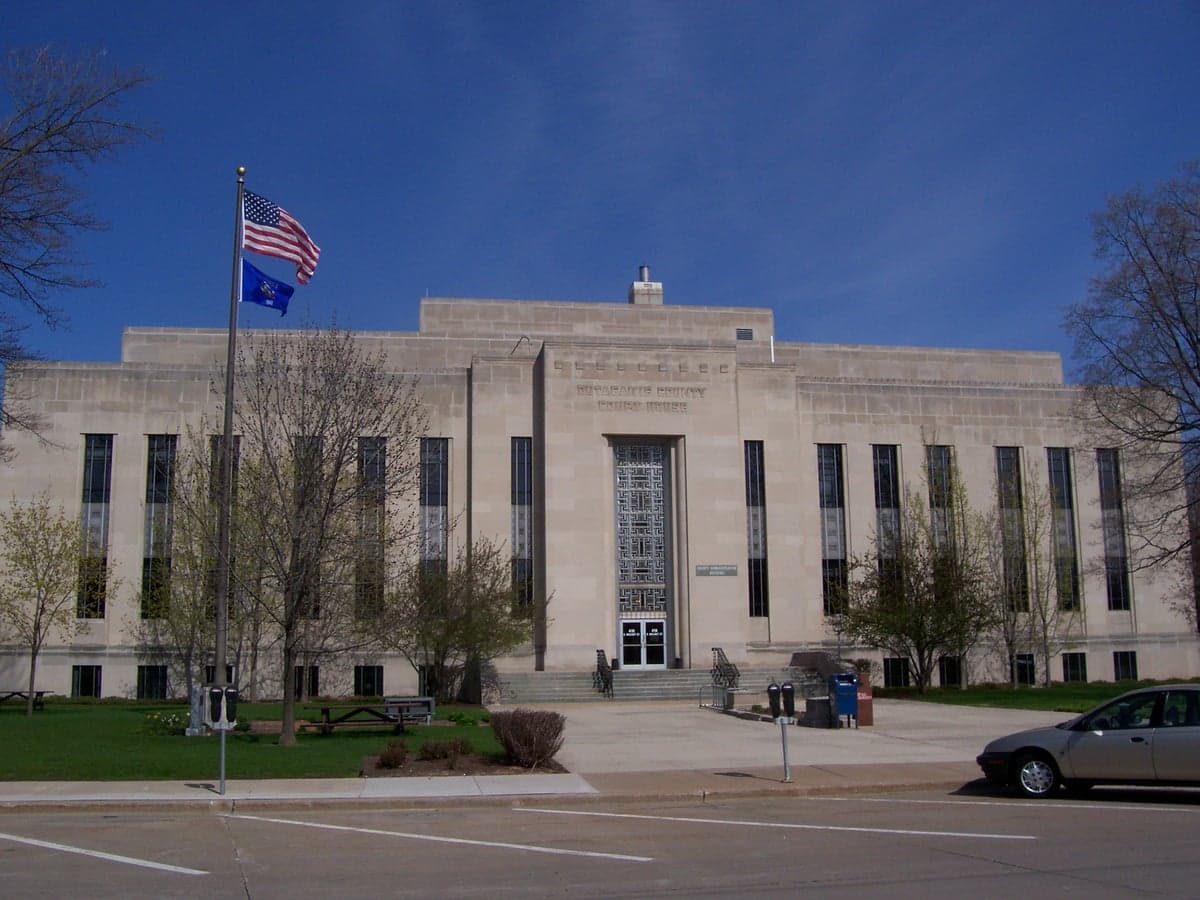
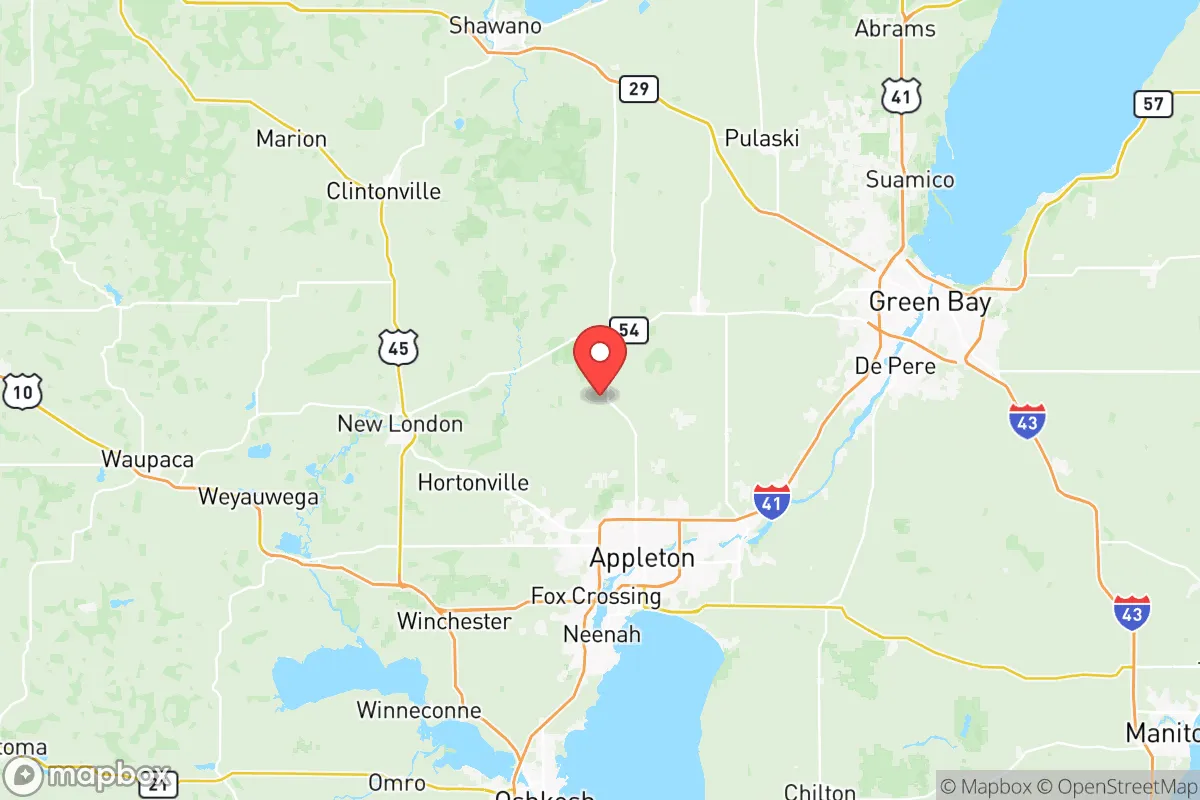
Photo: Wikipedia
Personal Sovereignty in Outagamie County
Moderate friction. Expect trade-offs in some aspect of personal liberty and independence.
What does Personal Sovereignty tell us?
Personal Sovereignty measures your capacity for self-reliance and independence with minimal government friction. Higher scores mean fewer barriers between you and the way you want to live... but it assumes you have the space you need and good neighbors.
What does this tell us?
Personal Sovereignty measures your capacity for self-reliance and independence with minimal government friction. Higher scores mean fewer barriers between you and the way you want to live... but it assumes you have the space you need and good neighbors.
State Policy
Energy independence: Importer (15% of energy produced in-state)
Personal Liberty
Homesteading

Personal Liberty Analysis
Outagamie County, Wisconsin, offers a notably high degree of personal sovereignty relative to many Midwestern counties, particularly those in the urbanized southeast of the state. The area balances a strong agricultural and manufacturing heritage with a regulatory environment that generally respects individual decision-making, from firearm ownership to property use. While not as libertarian-leaning as some rural northern Wisconsin counties, Outagamie provides a practical, middle-ground autonomy that appeals to families and individuals who value self-reliance without complete isolation. The county seat, Appleton, anchors a region where local governance tends to be more hands-off than in Dane County (Madison) or Milwaukee County, making it a viable option for those seeking freedom within a functioning community framework.
Tax burden and regulatory posture in Outagamie County
Wisconsin’s state-level tax burden is moderate, and Outagamie County’s local implementation keeps it competitive. The state income tax is progressive, with a top marginal rate of 7.65% (as of 2025), and the state sales tax is 5%, with Outagamie County adding a 0.5% county sales tax for a total of 5.5%. Property taxes are the primary local revenue source, and Outagamie’s effective rate hovers around 1.8% of assessed home value, slightly above the national average but below neighboring Brown County (Green Bay). The regulatory posture is business-friendly, particularly in the townships and smaller municipalities like Kaukauna, Little Chute, and Freedom, where zoning and permitting processes are streamlined compared to Appleton’s more structured urban code. The county does not impose a local income tax, and the overall regulatory burden on small businesses and homeowners is light relative to the state’s larger cities. For example, home-based businesses in rural townships like Greenville or Grand Chute face fewer licensing hurdles than in Appleton proper, reflecting a countywide preference for local control over state-level mandates.
Self-defense and gun law specifics in Outagamie County
Wisconsin is a “shall-issue” state for concealed carry permits, and Outagamie County fully aligns with this framework. The county sheriff’s office processes permits efficiently, with no local ordinances that exceed state law. Open carry is legal without a permit, and concealed carry requires a license issued after a background check and training course. No county-level restrictions on magazine capacity or firearm types exist, and the state preempts local governments from enacting stricter gun laws than state statutes. This means Appleton, Kaukauna, and all other municipalities within Outagamie County cannot ban firearms in public parks or impose waiting periods beyond state requirements. The county’s gun culture is robust, with multiple shooting ranges and gun shops, particularly in the more rural areas like Black Creek and Seymour. Stand-your-ground laws apply statewide, and there is no duty to retreat in any place where a person is lawfully present. For a relocation reader prioritizing self-defense rights, Outagamie County offers a permissive environment that is consistent across the entire county, unlike the patchwork of restrictions found in states like California or New York.
Self-reliance and homesteading viability across Outagamie County
Homesteading and off-grid living are viable in Outagamie County, but feasibility varies significantly by location. The county’s eastern and southern townships, such as Freedom and Center, feature large agricultural parcels with minimum lot sizes of 5 to 10 acres in agricultural zoning districts, allowing for substantial gardens, livestock, and even small-scale farming. In contrast, suburban towns like Grand Chute and Greenville have smaller residential lots (0.5 to 2 acres) with stricter setback requirements and homeowner association covenants that may limit livestock or outbuildings. Off-grid systems, such as solar panels and rainwater collection, are generally permitted, but the county requires building permits for electrical and plumbing work, and the state’s uniform dwelling code applies to new construction. Composting toilets are legal with proper permitting, and well water is common in rural areas, reducing reliance on municipal utilities. The county does not have a specific ban on tiny houses, but they must meet minimum square footage requirements (typically 600 sq ft for a single-family home) and be built to code. For those seeking maximum self-reliance, the rural townships of Bovina and Ellington offer the best combination of large lots, minimal zoning, and proximity to Appleton for supplies and services.
Personal liberties: parental rights, medical autonomy, speech, and property
Outagamie County reflects Wisconsin’s broader respect for personal liberties, with some notable specifics. Parental rights are strong: the state has a “parental bill of rights” law (2023) that affirms parents’ authority over their children’s education, healthcare, and religious upbringing. School districts in the county, including Appleton Area School District and Kaukauna School District, generally defer to parental decisions on curriculum opt-outs and medical consent. Medical autonomy is protected by state law, which allows adults to refuse any medical treatment and does not mandate COVID-19 vaccines for general employment. No county-level mask or vaccine mandates have been enacted since 2021, and local health departments focus on voluntary compliance. Free speech is robust, with no local hate speech ordinances that exceed state law, and property rights are protected by Wisconsin’s strong eminent domain laws, which require just compensation and public use. The county’s planning department is transparent about zoning changes, and public hearings are routine. For a conservative-leaning reader, Outagamie County’s legal environment is reassuringly predictable, with few surprises from local government overreach.
Overall, Outagamie County ranks as a solid choice for personal sovereignty in Wisconsin, sitting between the more restrictive urban counties and the more permissive rural north. Its tax burden is moderate, gun laws are permissive and uniform, homesteading is feasible in the right townships, and personal liberties are well-protected by state law. For a family or individual seeking a balance of community infrastructure and personal freedom, Outagamie County offers a practical, low-friction environment that avoids the extremes of either heavy regulation or complete isolation. The key is choosing the right municipality—rural townships like Freedom or Bovina for maximum self-reliance, or suburban towns like Grand Chute for convenience with fewer restrictions than Appleton proper.

* Values derived from national, state, county, city and local statistics and may differ in a specific area. Last updated: 2026-08-08T14:13:52.000Z
Narrative content on this page is AI-generated and may contain mistakes. Verify any details that matter before acting on them.
ReloMaps may earn a commission from affiliate links at no extra cost to you.

