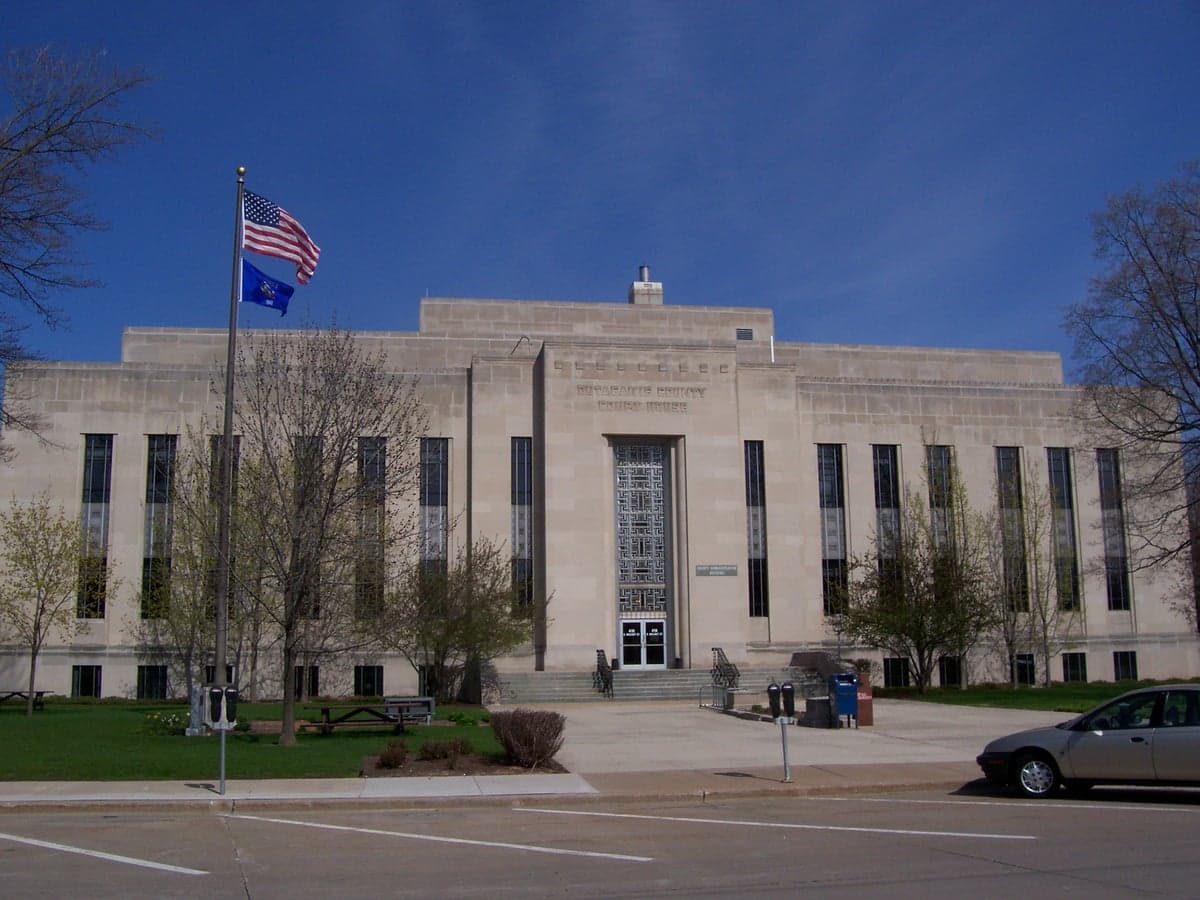
Photo: Wikipedia
Political ClimatePolitical Climate in Outagamie County
Showing district-level results — no local-only data available.
Local Political AnalysisPolitical Analysis of Outagamie County
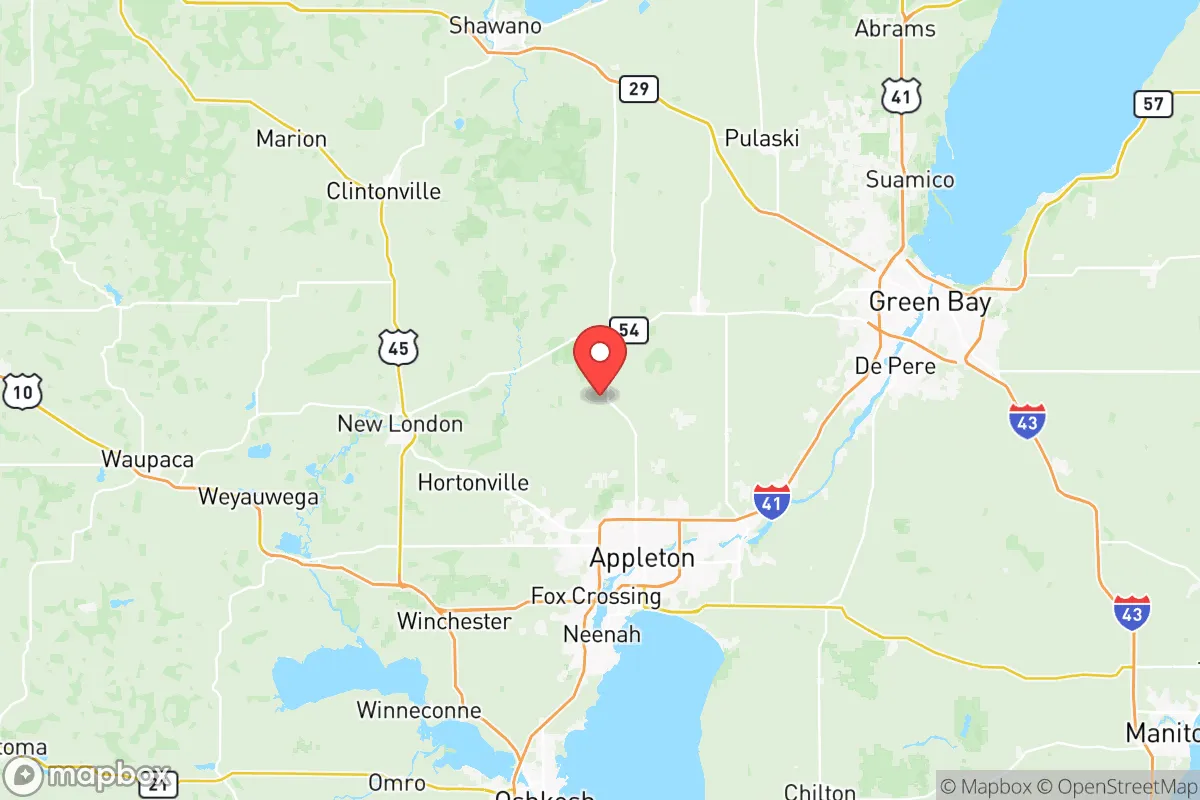
Outagamie County has been a reliable Republican stronghold for decades, but its political character is more nuanced than a simple red county label suggests. The Cook Partisan Voting Index (PVI) of R+8 means the county consistently votes about eight points more Republican than the national average, a significant margin that has held steady through recent election cycles. However, this Republican lean is not monolithic — the county contains a mix of deeply conservative rural towns, moderate suburban precincts, and a small but persistent Democratic base in the city of Appleton that keeps the overall picture from being entirely one-sided.
How it compares
The contrast between Outagamie County and the state of Wisconsin as a whole is striking. Wisconsin's statewide Cook PVI is EVEN, meaning it votes almost exactly in line with the national average, making it one of the most closely divided states in the country. Outagamie County's R+8 rating places it roughly eight points to the right of the state — a gap that has real consequences for how elections play out. In 2020, Donald Trump carried Outagamie County by about 12 points, while Joe Biden narrowly won Wisconsin statewide by less than a point. That divergence means Outagamie County is a key part of the Republican coalition in statewide races, but it is not so overwhelmingly red that Democrats ignore it entirely. Within the county, the political geography is clear: the city of Appleton, home to Lawrence University and a sizable professional class, leans Democratic and provides the county's blue anchor. Precincts in downtown Appleton and near the university campus regularly vote 60-70% Democratic. In contrast, the rural towns of Hortonville, Black Creek, and Seymour vote heavily Republican, often exceeding 70% for GOP candidates. The suburban towns of Grand Chute and Kaukauna are the true swing areas — they lean Republican but are more moderate, and their margins often determine whether the county goes R+5 or R+12 in a given election.
What this means for residents
For conservative residents, Outagamie County's political climate is broadly comfortable. Local offices — from county board to circuit court judges — are dominated by Republicans, and the county's Republican lean means conservative policy priorities like lower taxes and limited government expansion generally find receptive ears at the county level. For liberal residents, the picture is more mixed. While Appleton provides a progressive enclave with a Democratic mayor and city council, countywide elections are an uphill climb. That said, the county's moderate Republican tradition means that outright culture-war politics are less dominant here than in deeper-red parts of Wisconsin. Many local Republicans are business-oriented and pragmatic, which can create space for bipartisan cooperation on issues like economic development and infrastructure.
Culturally, Outagamie County reflects its Fox River Valley roots — a mix of manufacturing heritage, dairy farming, and a growing healthcare and education sector. The county is home to a significant population of Hmong Americans, concentrated in Appleton, which adds a layer of diversity that influences local politics, particularly around education and community services. Policy-wise, the county tends to be fiscally conservative but not aggressively socially conservative compared to rural Wisconsin counties further north. The local Republican Party is more Chamber of Commerce than Tea Party, though the national party's rightward shift has pulled some local candidates with it. For anyone moving to the area, the practical takeaway is this: Outagamie County is a reliably Republican place where the political temperature is warm but not boiling, and where the city of Appleton offers a genuine counterbalance that keeps the county from being a one-party echo chamber.

State Political ClimatePolitical Climate in Wisconsin
State Political AnalysisPolitical Environment in the State
Wisconsin is the ultimate swing state, with a Cook PVI of EVEN that perfectly captures its knife-edge political balance. Over the past 20 years, the state has lurched from reliably blue (voting for Democrats in every presidential election from 1988 to 2012) to a dead-even battleground where margins are measured in thousands of votes, not tens of thousands. The dominant coalitions are a shrinking but still potent union-and-urban base in Milwaukee and Madison versus a growing, energized conservative coalition in the WOW counties (Waukesha, Ozaukee, Washington) and the rural north and west. The trajectory is one of increasing polarization: the old "Fighting Bob" La Follette progressive tradition has been replaced by a trench-warfare partisan split that shows no signs of healing.
Urban vs. rural divide
The political map of Wisconsin is a story of three distinct regions. Milwaukee County is the Democratic stronghold, delivering roughly 70% of its vote to Democrats, powered by the city's Black and Latino populations and union households. Dane County, home to Madison and the University of Wisconsin, is even more lopsided — often hitting 75% Democratic — driven by young professionals, academics, and state government workers. The WOW counties — Waukesha, Ozaukee, and Washington — are the Republican counterweight, routinely giving 60-65% of their votes to GOP candidates. These are the suburbs that have become the engine of Wisconsin conservatism, home to white-collar professionals, small business owners, and evangelical Christians. The rural areas — places like Marathon County (Wausau), Brown County (Green Bay), and the Driftless Region in the southwest — have been trending redder, especially as manufacturing and dairy farming have consolidated. The 2020 election saw Kenosha County flip back to Trump after voting for Obama twice, a microcosm of the broader suburban and exurban shift rightward. The divide isn't just geographic; it's cultural. A bar in Waukesha and a coffee shop in Madison might as well be in different countries.
Policy environment
Wisconsin's policy environment is a patchwork of divided government outcomes. The state has a flat income tax rate of 4.4% (down from 7.65% in 2011 under Act 10-era reforms), and property taxes are among the highest in the Midwest — about 1.7% of home value on average, though they vary wildly by district. The state has a Republican-controlled legislature that has consistently passed right-to-work legislation (2015), voter ID laws (2011), and a 20-week abortion ban (2015, now unenforceable post-Dobbs). The state Supreme Court flipped to a 4-3 liberal majority in 2023 after Janet Protasiewicz's election, which has already led to the overturning of the state's 1849 abortion ban and the redrawing of legislative maps. Education policy is a battleground: the state has a robust school choice program (the Milwaukee Parental Choice Program, started in 1990, is the oldest in the nation), but public school funding has been a perennial fight, with rural districts especially squeezed. Healthcare is mixed: Wisconsin expanded Medicaid under the Affordable Care Act in 2014 (BadgerCare Plus), but the state has not created its own exchange, relying on the federal marketplace. Election laws are strict: voter ID is required, absentee ballot drop boxes were effectively banned by the state Supreme Court in 2022 (though that ruling may be revisited), and the state has a 6 p.m. deadline for returning absentee ballots on Election Day.
Recent policy direction
The last five years have been a whirlwind of policy shifts. Gun and self-defense law: Wisconsin is a shall-issue state for concealed carry (since 2011), with no permit required for open carry. Stand-your-ground laws were strengthened in 2011, and the state has a Castle Doctrine. No red flag law exists. Parental and education rights: The 2023 Act 12 gave parents more say in school curriculum and library materials, and the state has seen a surge in school board recall elections over critical race theory and LGBTQ+ issues. Speech and privacy: No major state-level speech restrictions, but local governments have experimented with mask mandates and vaccine passports, which were challenged in court. Medical and bodily autonomy: The 2023 state Supreme Court ruling in Kaul v. Urmanski effectively restored abortion access up to 20 weeks, but the legislature has not passed any new protections. The state has a 24-hour waiting period for abortions and requires parental consent for minors. Property rights: Wisconsin has strong property rights protections, with no statewide rent control and relatively low eminent domain use. Taxation: The 2023-25 budget included a $2 billion tax cut, mostly benefiting the middle class, but the state's sales tax (5%) is among the lowest in the nation. Voting and ballot access: The 2024 election saw a return to pre-2020 rules — no drop boxes, strict ID requirements, and a ban on third-party ballot collection. The new legislative maps, drawn by the state Supreme Court, are expected to produce a more competitive Assembly and Senate in 2024, potentially ending the GOP supermajority.
Civil unrest & political movements
Wisconsin has been a flashpoint for political violence and protest. The 2020 Kenosha unrest, following the shooting of Jacob Blake, saw two people killed by Kyle Rittenhouse, who was later acquitted on self-defense grounds. The 2021 Waukesha Christmas parade attack, where Darrell Brooks drove his SUV through the crowd, killing six, was a stark reminder of the state's raw political divisions. The 2011 Act 10 protests in Madison drew 100,000 people to the Capitol, and the 2020 election saw armed protests outside the state Capitol in Madison and Milwaukee. The state has a strong "Wisconsin Idea" tradition of civic engagement, but it's increasingly expressed through partisan channels. The Wisconsin Republican Party has been a national leader in election integrity activism, while the Wisconsin Democratic Party has focused on voter mobilization and legal challenges to GOP-drawn maps. Immigration politics are less heated than in border states, but the 2023 surge of migrants through the southern border has led to some local tensions in Green Bay and Sheboygan, where meatpacking plants employ many immigrants. No sanctuary city policies exist; in fact, the state passed a law in 2019 requiring local law enforcement to cooperate with ICE.
Projection
Over the next 5-10 years, Wisconsin is likely to remain a toss-up, but the demographic trends favor the Democrats slightly. The state's population is aging and becoming more diverse, with the Latino population growing fastest in the Milwaukee and Green Bay areas. The WOW counties are still growing, but at a slower rate, while Dane County is booming — Madison added 20,000 residents between 2020 and 2023. The new legislative maps will likely produce a more balanced state legislature, which could lead to more moderate policy outcomes on issues like abortion and education funding. However, the state's rural areas are depopulating, and the urban-rural divide is only widening. A relocator moving in now should expect a state where every election is a nail-biter, where your vote truly matters, and where the political conversation is constant and often heated. The state's economy is strong — unemployment is below 3% — but the political uncertainty is a drag on long-term investment, especially in manufacturing and agriculture.
For a new resident, the bottom line is this: Wisconsin offers a high quality of life with low crime in most areas, excellent schools in the suburbs, and a cost of living that's below the national average. But you will be living in a state that is perpetually at war with itself. If you're a conservative, you'll find a welcoming home in the WOW counties or the rural north, with a state legislature that has historically protected your values. If you're a liberal, you'll thrive in Madison or Milwaukee, where progressive policies are the norm. The key is to pick your community wisely — the state's political climate is not monolithic, and your experience will depend entirely on which county you call home. Just don't expect the political temperature to cool anytime soon.
* Values derived from national, state, county, city and local statistics and may differ in a specific area. Last updated: 2026-08-08T14:13:52.000Z
Narrative content on this page is AI-generated and may contain mistakes. Verify any details that matter before acting on them.
ReloMaps may earn a commission from affiliate links at no extra cost to you.

