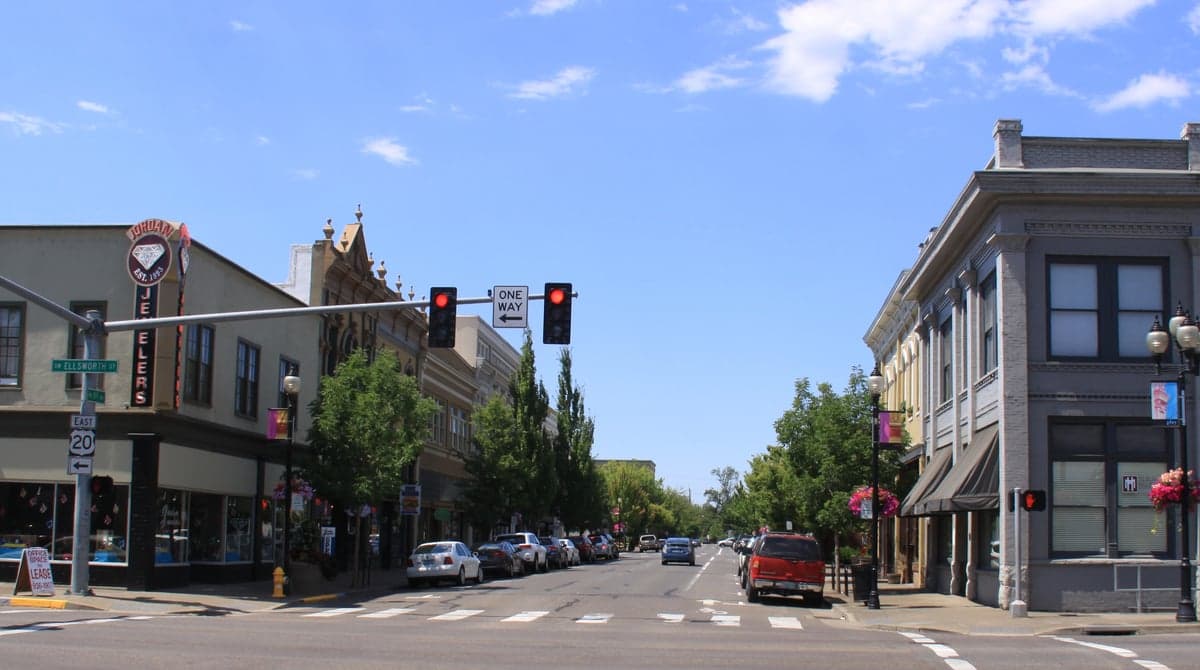
Photo: Wikipedia
Political ClimatePolitical Climate in Albany, OR
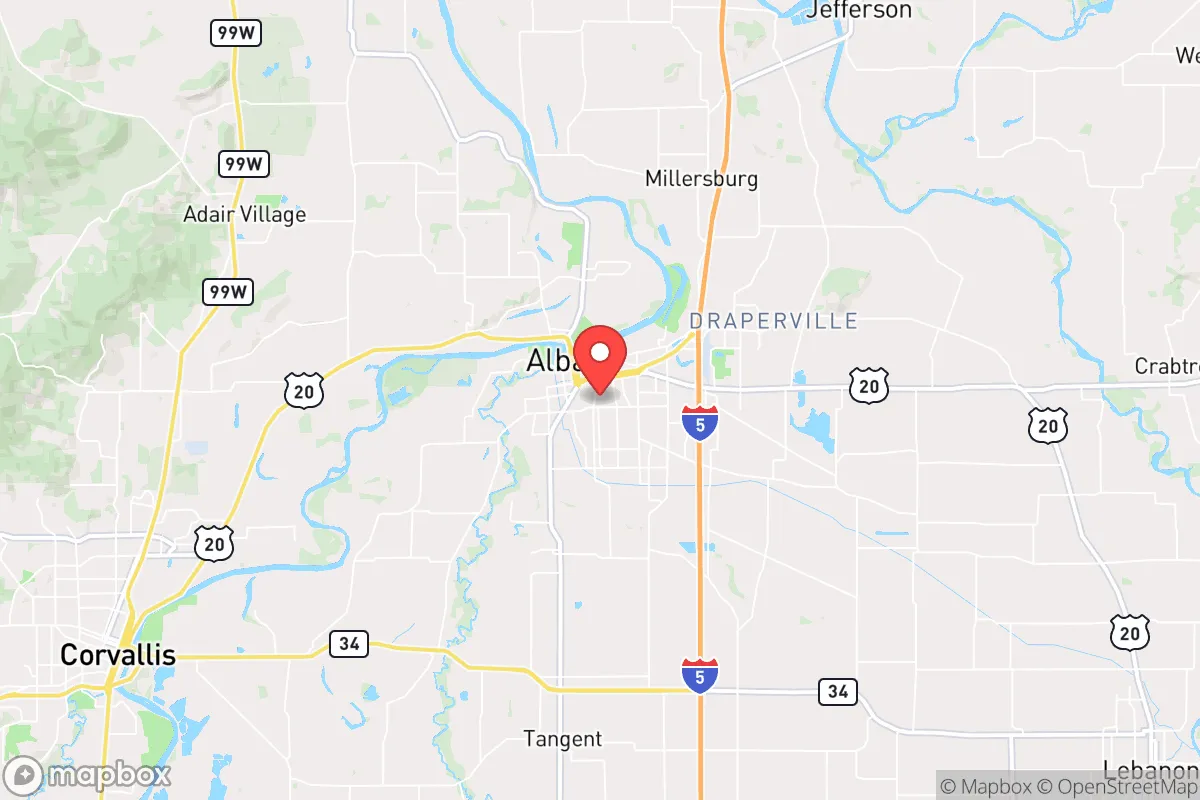
District shown is the primary district for this city’s centroid. Cities may span multiple districts.
Local Political AnalysisPolitical Analysis of Albany, OR
Albany, Oregon, sits in a politically tricky spot, and if you’ve lived here as long as I have, you’ve watched it shift from a reliably conservative, blue-collar town into something that leans left—especially in the city limits. The Cook PVI rating of D+4 tells the story: Albany is now a Democratic-leaning district, but that number hides a lot of tension. The city itself votes more progressive, while the surrounding rural areas—places like Tangent, Scio, and even parts of Linn County—still hold onto traditional values. It’s a split that’s gotten sharper over the last decade, and it’s not hard to see why.
How it compares
Drive ten minutes south to Lebanon or east to Sweet Home, and you’ll feel like you’re in a different world. Those towns vote heavily Republican, and they’re proud of it. Albany, by contrast, has become a bit of a blue island in a red sea. The city council and school board have taken on a more progressive tone in recent years, and you see it in local policy—things like zoning changes that favor density over single-family homes, and a push for “equity” initiatives in schools that raise eyebrows among folks who just want their kids to learn math and history. Meanwhile, the county commission remains more conservative, so there’s a constant tug-of-war. If you’re coming from a place like Corvallis (which is even further left), Albany might feel moderate. But if you’re from the rural outskirts, it can feel like the city is drifting away from common sense.
What this means for residents
For those of us who value personal freedoms and limited government, the trend here is concerning. You see it in small ways—like the city’s willingness to adopt state mandates on land use and environmental regulations that squeeze property owners. The push for higher density housing, for example, sounds good on paper, but it often means less say for homeowners about what happens on their street. And the school district’s focus on social-emotional learning and diversity training can feel like a distraction from academics. The tax burden is another sore spot: Oregon’s income tax is already high, and Albany’s local levies add to it. If you’re a small business owner or a tradesperson, you feel the pinch. The long-term worry is that as the city grows—and it is growing, with new apartments and a younger crowd moving in from the Willamette Valley—the political center of gravity will keep sliding left, making it harder to push back against overreach.
One thing that still sets Albany apart is its stubborn streak of independence. The timber and manufacturing roots run deep, and there’s a strong network of churches, gun clubs, and veteran groups that keep the old values alive. You’ll still hear people talk about the importance of the Second Amendment and local control at the diner. But the cultural shift is real. The annual River Rhythms festival and the historic downtown are nice, but they’re also symbols of a town trying to reinvent itself. If you’re considering a move here, know that you’ll find allies in the rural parts of the county, but inside Albany itself, you’ll need to keep an eye on the ballot box. The next few elections will tell us whether this D+4 rating is a temporary blip or a permanent change.

State Political ClimatePolitical Climate in Oregon
State Political AnalysisPolitical Environment in the State
Oregon has shifted from a purple swing state to a reliably blue stronghold over the past two decades, with Democrats controlling the governorship, both legislative chambers, and every statewide office since 2012. The state’s overall partisan lean is roughly D+10 in presidential elections, but that number masks a deep and growing chasm between the liberal Willamette Valley corridor and the rest of the state. For a conservative considering relocation, the trajectory is concerning: the state has moved leftward in every election cycle since 2000, driven by explosive growth in Portland, suburban Washington County, and college towns like Eugene and Corvallis.
Urban vs. rural divide
The political map of Oregon is a tale of two states. The I-5 corridor from Portland down through Salem to Eugene is solidly Democratic, with Multnomah County (Portland) delivering a staggering +44 margin for Biden in 2020. Washington County, once a swing area, has flipped decisively blue as tech workers from Intel and Nike have flooded in. Meanwhile, the rest of Oregon is deeply red. Eastern Oregon counties like Malheur, Harney, and Lake routinely vote 70-80% Republican. The southern Oregon coast, once a Democratic stronghold, has shifted right over the past decade — Coos County went from blue-leaning to +18 for Trump in 2020. The real flashpoint is the Portland suburbs: Clackamas County, which voted for George W. Bush in 2004, now votes D+10. Bend in Deschutes County is a microcosm of the divide — the city itself is liberal, but the surrounding rural areas keep the county competitive, though it flipped to Biden in 2020 after going for Trump in 2016.
Policy environment
Oregon’s policy landscape is a cautionary tale for conservatives. The state has no sales tax, but makes up for it with the nation’s 5th-highest personal income tax rate (top bracket 9.9%) and high property taxes. The regulatory environment is among the most restrictive in the West — the 2023 Oregon Climate Protection Program effectively bans new natural gas hookups in many areas, and the state’s land-use laws (SB 100) severely limit rural development. On education, Oregon ranks near the bottom nationally in reading and math proficiency, yet the state has poured billions into the Student Success Act with little improvement. Election laws are among the most progressive: Oregon was the first state to implement all-mail voting, and in 2021, the legislature passed HB 2681, which automatically registers voters from DMV data and allows same-day registration — a system that critics argue prioritizes turnout over integrity. The state also has no voter ID requirement, which remains a point of contention.
Trajectory & freedom
Oregon is becoming less free by nearly any measure a conservative would care about. On gun rights, the 2022 Measure 114 — passed by a narrow 50.7% vote — requires a permit to purchase a firearm, bans magazines over 10 rounds, and mandates a waiting period. It is currently tied up in court, but the trajectory is clear. On parental rights, the 2023 HB 2005 banned the sale of “ghost guns” and also restricted youth access to firearms, while the state’s HB 2021 (2021) allows minors to consent to gender-affirming care without parental notification — a major red flag for conservative families. On medical freedom, Oregon was the first state to legalize assisted suicide (1994’s Death with Dignity Act) and has some of the most permissive drug laws in the nation — but the 2023 HB 4002 recriminalized possession of small amounts of hard drugs after the disastrous Measure 110 experiment (2020) led to open drug use in Portland and other cities. Property rights are under constant threat from the state’s land-use planning system, which can block development on private land for decades. The bottom line: Oregon has added roughly 20 new regulations or restrictions per year since 2015 that limit personal choice in health, education, and self-defense.
Civil unrest & political movements
Oregon has a long history of political extremism on both sides, but the past five years have been dominated by left-wing activism. The 2020 Portland protests — which ran for over 100 consecutive nights — saw the federal courthouse attacked, businesses burned, and the city effectively cede control to autonomous zones. The Pacific Northwest Youth Liberation Front and other antifa-aligned groups remain active, though less visible. On the right, the Oregon Republican Party has become increasingly militant, with several county-level parties passing resolutions supporting secession or the creation of a “Greater Idaho” — a movement that would move 14 eastern Oregon counties into Idaho. That proposal has gained real traction: three counties (Malheur, Grant, and Lake) have voted in favor of exploring secession, and the Oregon legislature has been forced to hold hearings on the issue. Immigration politics are a flashpoint: Portland is a self-declared “sanctuary city” (since 1987), and the state’s SB 10 (2017) limits local law enforcement cooperation with ICE. Election integrity remains a hot-button issue — Oregon’s all-mail system has no voter ID requirement, and the 2020 election saw over 60,000 ballots rejected for signature mismatches or missing signatures, a rate that critics say disproportionately affects rural voters.
Projection
Over the next 5-10 years, Oregon will likely continue its leftward drift, but with increasing internal friction. The Portland metro area will keep growing, fueled by remote workers and California transplants, while rural counties will continue to depopulate. The Greater Idaho movement is unlikely to succeed legislatively, but it will remain a powerful symbol of rural frustration. The state’s budget is structurally unsound — the Oregon Public Employees Retirement System (PERS) has over $30 billion in unfunded liabilities, which will force either massive tax hikes or service cuts. The housing crisis in Portland and Bend will push more families to the exurbs, but those areas (like Canby, Newberg, and Sandy) are already seeing their politics shift left as new arrivals bring urban voting habits. The most likely scenario: Oregon becomes a one-party state with a permanent Democratic supermajority, while rural areas become increasingly marginalized and resentful. For a conservative moving in now, expect to see more gun restrictions, higher taxes, and a continued erosion of parental rights — but also a growing counter-movement in the eastern half of the state that may eventually force a political realignment.
For a conservative considering Oregon, the practical takeaway is stark: the state’s political trajectory is hostile to traditional values, gun rights, and fiscal conservatism. If you’re looking for a place where your vote will matter and your values are respected, stick to the eastern counties like Baker, Union, or Wallowa — but be prepared for a long commute to any job center. The Portland metro, Salem, and Eugene are essentially lost causes for conservatives. The best bet for a new resident is to target a red island in a blue state — places like Redmond, Prineville, or Klamath Falls — where local politics still reflect conservative principles, even as the state government in Salem grows more distant and hostile. Just don’t expect the state to change direction anytime soon.
* Values derived from national, state, county, city and local statistics and may differ in a specific area. Last updated: 2026-05-01T03:30:14.000Z
Narrative content on this page is AI-generated and may contain mistakes. Verify any details that matter before acting on them.
ReloMaps may earn a commission from affiliate links at no extra cost to you.

