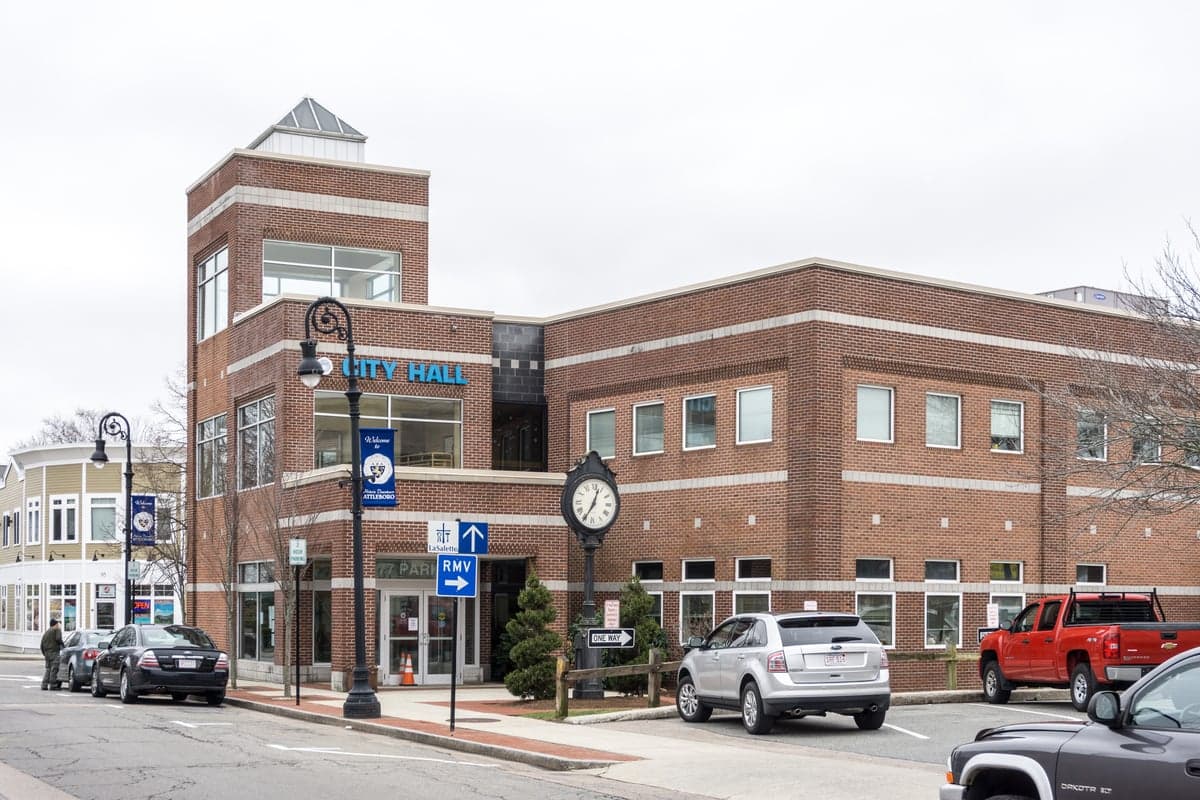
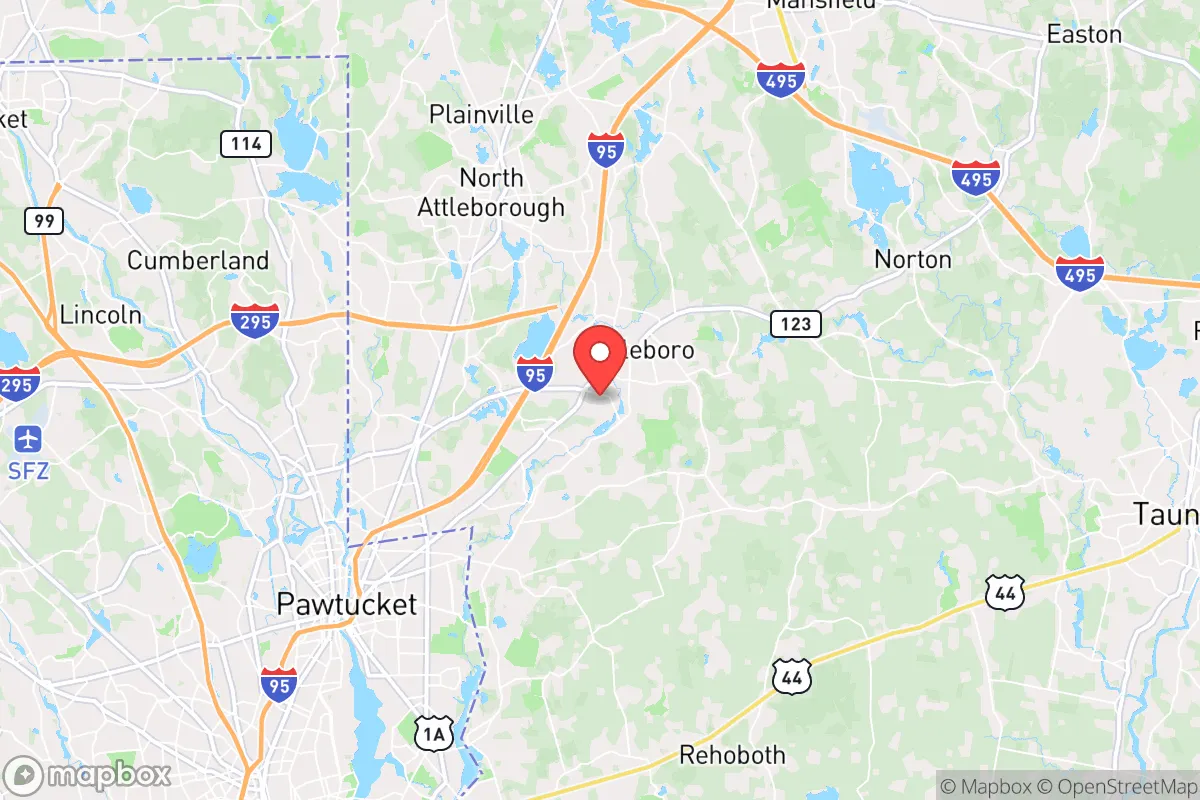
Photo: Wikipedia
Political ClimatePolitical Climate in Attleboro, MA
District shown is the primary district for this city’s centroid. Cities may span multiple districts.
Local Political AnalysisPolitical Analysis of Attleboro, MA
Attleboro, Massachusetts, has a Cook PVI of D+11, meaning it leans significantly more Democratic than the national average, and that shift has been pretty steady over the last decade. I remember when this town was a lot more purple—you’d see a mix of Reagan Democrats and union guys who’d split their tickets. Now, the local elections and state rep races are almost always decided in the Democratic primary, and the Republican presence has shrunk to a few stubborn holdouts in the more rural pockets near the Rehoboth line. The trajectory is clear: each cycle, the margin gets a little wider, and the local party machinery gets a little more entrenched.
How it compares
If you drive ten minutes north to North Attleboro, you’ll find a town that’s still competitive—it’s got a Cook PVI of D+2, and you’ll see plenty of Trump signs in yards near the Wrentham line. Head west to Plainville or Wrentham, and you’re in solidly Republican territory (R+6 and R+8, respectively), where the local boards are dominated by fiscal conservatives and the school committees fight hard against state mandates. Down south into Pawtucket, Rhode Island, you’re back in deep blue country (D+18), but that’s a different state with different tax and regulatory pressures. Attleboro sits right on that border, but it’s been pulled leftward by an influx of younger families from Providence and Boston who bring progressive voting habits with them. The contrast is stark: in Attleboro, you’ll see more Harris-Walz lawn signs than Trump ones, while just over the town line in Rehoboth, it’s the opposite.
What this means for residents
For a conservative-leaning resident, the practical effect is that local government increasingly reflects a one-party mindset. The city council and school committee are dominated by Democrats, and there’s less pushback on things like mask mandates in schools (which were enforced longer here than in neighboring towns) or zoning changes that favor high-density housing over single-family lots. Property taxes have crept up faster than in surrounding communities, partly because the city has taken on more state-funded social programs. The police department is well-funded, but there’s been quiet pressure to adopt “community policing” models that some see as a step toward defunding by another name. If you value local control over your property rights or the ability to opt out of state-level vaccine mandates, you’ll find Attleboro’s leadership less sympathetic than, say, the board in Norton or Foxborough.
On the cultural side, Attleboro has a few distinctions that set it apart. The city is home to a large Portuguese-American community, which historically leaned more conservative on social issues like abortion and gun rights, but that bloc has been fracturing as younger generations adopt national Democratic views. The annual Attleboro Arts Museum events and the downtown revitalization projects are heavily funded by grants that come with progressive strings attached—think DEI training requirements for vendors and mandatory “inclusive” signage. The local paper, The Sun Chronicle, has a center-left editorial board that rarely criticizes the city’s direction. If you’re looking for a place where your vote for a conservative candidate actually has a shot at influencing policy, you’d be better off in the towns to the west. But if you’re stuck here, you learn to pick your battles—the school committee meetings and zoning board hearings are where the real fights happen, and they’re getting harder to win every year.

State Political ClimatePolitical Climate in Massachusetts
State Political AnalysisPolitical Environment in the State
Massachusetts has long been one of the most reliably Democratic states in the nation, but don’t let the blue veneer fool you—there’s a deep and often overlooked conservative undercurrent, especially once you get outside the I-495 beltway. Over the last 20 years, the state has shifted further left on social and economic issues, but the pace has accelerated since 2020, with the legislature pushing through a wave of progressive policies that have many long-time residents feeling like they’re living in a different country. The dominant coalition is a mix of coastal liberals, academic elites, and union power brokers, but the state’s rural and suburban conservatives are increasingly organized and vocal, even if they rarely win at the ballot box.
Urban vs. rural divide
The political map of Massachusetts is a tale of two worlds. Greater Boston—including Boston proper, Cambridge, Somerville, and Brookline—is the engine of the state’s progressive politics, routinely delivering 80-90% Democratic margins. These areas are dense, highly educated, and increasingly wealthy, with a political culture that prioritizes climate action, public transit expansion, and social justice causes. Drive 45 minutes west, and you hit Worcester, a blue-collar city that’s more moderate but still reliably Democratic. The real contrast comes in the central and western parts of the state. Springfield and Holyoke are urban Democratic strongholds, but the surrounding Pioneer Valley towns like Longmeadow and Wilbraham lean conservative. Head further west to the Berkshires—Pittsfield and Great Barrington—and you find a mix of wealthy second-home owners and aging hippies, producing a quirky, moderate-left vibe. The true redoubts of Massachusetts conservatism are the rural towns of Central Massachusetts (like Sturbridge and Southbridge), the North Shore suburbs (like Peabody and Danvers), and the South Coast (like Fall River and New Bedford), where working-class voters and small business owners feel increasingly alienated from Beacon Hill. In 2020, Donald Trump won only 32% of the state vote, but he carried dozens of towns west of Worcester and on the South Coast—places where the local economy depends on manufacturing, fishing, and tourism, not tech and academia.
Policy environment
Massachusetts has a reputation for being a high-tax, high-regulation state, and that reputation is earned. The state income tax is a flat 5.0% (down from 5.15% in 2023 thanks to a voter-approved tax cut), but a 2022 ballot question added a 4% surtax on income over $1 million, making the top marginal rate 9.0%—one of the highest in the country. Property taxes are moderate by national standards but vary wildly by town; Boston has a rate of about $10.50 per $1,000 of assessed value, while rural towns like Charlemont can be over $20. Sales tax is 6.25%, and there’s no tax on groceries or clothing under $175. The regulatory environment is dense: the state has strict environmental laws, a strong union presence in construction and public services, and a permitting process that can take years for any major development. Education policy is a mixed bag—Massachusetts consistently ranks #1 in K-12 test scores, but the state’s education bureaucracy is powerful, and school choice is limited to inter-district transfers and a handful of charter schools. Healthcare is heavily regulated, with near-universal coverage under the 2006 Romneycare law that served as the model for Obamacare. Election laws are among the most liberal in the country: no-excuse mail-in voting, same-day registration, and early voting are all permanent fixtures. For a conservative, the policy environment feels like a slow squeeze—taxes are high, regulations are thick, and the state government is actively working to limit local control on issues like zoning, energy, and education.
Trajectory & freedom
Over the past five years, Massachusetts has become less free by any objective measure, especially for conservatives. The 2022 gun law (Chapter 179 of the Acts of 2022) expanded the state’s already strict assault weapons ban, created a new licensing system for firearms, and gave local police chiefs broad discretion to deny licenses—a system that has been challenged in court but remains in effect. Parental rights took a hit in 2023 when the state passed a law (Chapter 107) that allows schools to withhold information about a child’s gender identity from parents if the school deems it “appropriate.” Medical autonomy has been curtailed by the state’s aggressive COVID-19 mandates, which included one of the nation’s longest-lasting school mask mandates and a vaccine mandate for healthcare workers that led to thousands of resignations. Property rights are under pressure from the MBTA Communities Law, which forces towns near transit to rezone for higher-density housing, overriding local zoning boards. On the tax front, the 2022 millionaire’s tax (Question 1) was sold as a tax on the rich, but its broad language has led to audits of small business owners and retirees who sell a home or business. The state’s trajectory is clearly toward more government control, not less, and the legislature has shown no appetite for rolling back any of these measures.
Civil unrest & political movements
Massachusetts has a long history of political activism, but the last few years have seen a sharpening of divisions. The 2020 Black Lives Matter protests in Boston and Cambridge were large and mostly peaceful, but they also led to the toppling of a statue of Christopher Columbus in the North End and a wave of defund-the-police rhetoric that fizzled after crime spiked. On the right, the Massachusetts Fiscal Alliance and the Massachusetts Republican Party have been active, but they’re outspent and out-organized. The state’s sanctuary policy (the 2017 Trust Act) limits local police cooperation with ICE, and Boston and Somerville have gone further by refusing to hold detainers. Immigration politics are a flashpoint: the state has seen a surge of migrant arrivals since 2022, straining shelters and schools in Boston, Worcester, and Springfield, and leading to a backlash in working-class towns. Election integrity controversies have been minimal—Massachusetts has a well-run, mail-in-heavy system that both parties generally trust—but the 2022 Republican gubernatorial primary saw allegations of ballot harvesting in Worcester that were never proven. The most visible flashpoint for a new resident would be the constant presence of political signage and activism: you’ll see “Black Lives Matter” and “Trans Rights” signs in liberal towns, and “Don’t Tread on Me” and “Trump 2024” flags in rural areas. The state’s political culture is intense but mostly civil, though road rage incidents over bumper stickers are not unheard of.
Projection
Over the next 5-10 years, Massachusetts is likely to become more progressive, not less. The state’s population is aging and slowly declining, but the people moving in are overwhelmingly young, educated, and left-leaning, drawn to the Boston-area job market in biotech, finance, and academia. The rural and exurban areas that vote Republican are losing population, while the urban core is densifying. The state’s Democratic supermajority in the legislature is unlikely to be broken, and the party’s left wing is ascendant—expect more gun control, more housing mandates, more climate regulations, and possibly a move toward single-payer healthcare or a state-level wealth tax. The one wild card is the cost of living: if the state’s high taxes and housing costs drive out middle-class families and small businesses, the political calculus could shift, but that’s a slow-moving trend. For a conservative moving in now, the realistic expectation is that you will be a permanent minority in state politics, but you can find community in the towns west of Worcester, on the South Coast, or in the North Shore suburbs. The state’s strong local government tradition means that town-level politics can still be a refuge—many towns have conservative select boards and school committees—but Beacon Hill will continue to override local control on major issues.
Bottom line for a new resident: If you’re a conservative considering Massachusetts, you’re moving into a state where your vote for president or governor will almost certainly not count, but where your voice can still matter at the local level. You’ll pay high taxes, deal with a thicket of regulations, and watch the state government expand its reach into your family’s life. But you’ll also find excellent schools, beautiful natural landscapes, and a deep sense of history. The trade-off is real: you’re trading political influence for quality of life in a state that is stable, safe, and prosperous, but increasingly at odds with your values. If you can afford it and you’re willing to fight for your local school board and town meeting, you can carve out a good life here—just don’t expect the state to change direction anytime soon.
* Values derived from national, state, county, city and local statistics and may differ in a specific area. Last updated: 2026-05-01T11:28:13.000Z
Narrative content on this page is AI-generated and may contain mistakes. Verify any details that matter before acting on them.
ReloMaps may earn a commission from affiliate links at no extra cost to you.

