Photo: Wikipedia
Political ClimatePolitical Climate in Belleville, IL
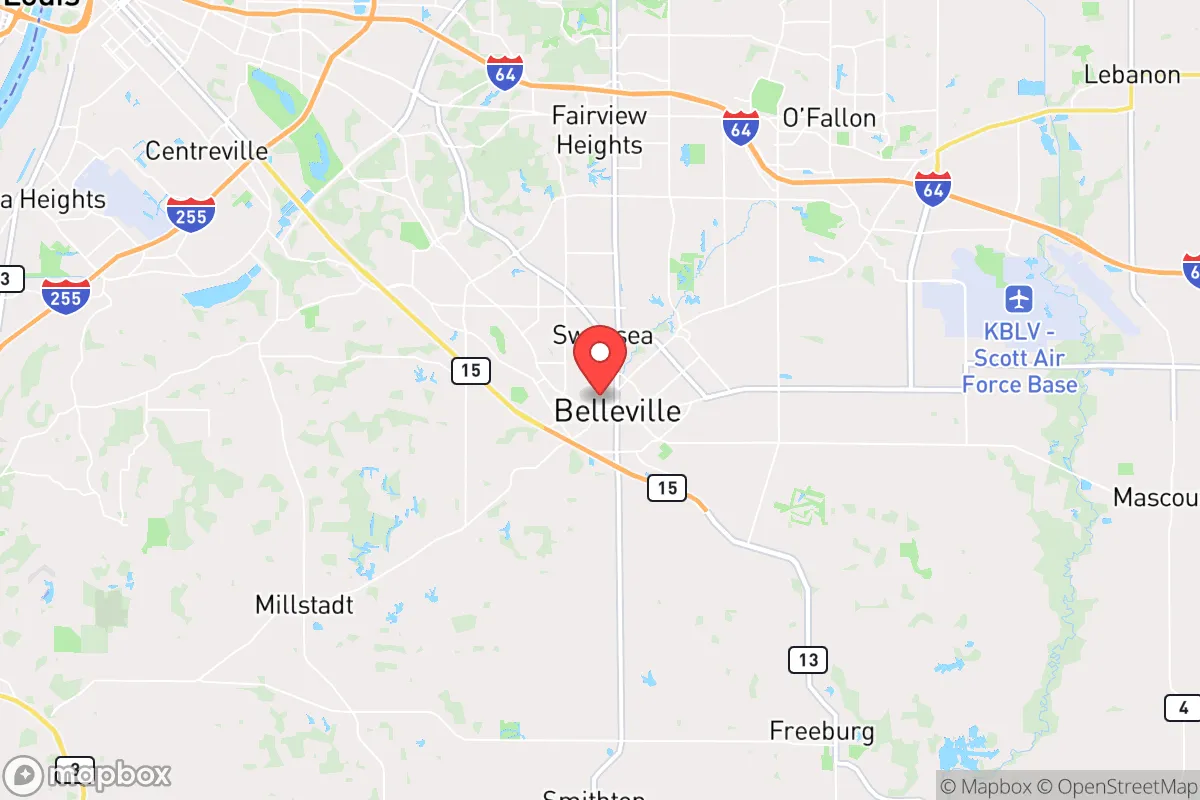
District shown is the primary district for this city’s centroid. Cities may span multiple districts.
Local Political AnalysisPolitical Analysis of Belleville, IL
Belleville, Illinois, sits in a political reality that’s shifted noticeably over the past decade. The Cook Partisan Voting Index (PVI) of D+5 tells you the district leans Democratic by a moderate margin, but that number doesn’t capture the full story. If you’ve lived here as long as I have, you remember when this was a reliably blue-collar, union-strong town where folks voted their pocketbook and didn’t much care for social experiments. Today, you’re seeing more progressive energy creeping in from St. Louis, just across the river, and it’s changing the feel of local elections and policy debates. The trajectory is toward a more uniformly left-leaning environment, and that’s something to keep an eye on if you value personal freedoms and limited government.
How it compares
Drive 15 minutes east into rural St. Clair County, and you’ll hit towns like Freeburg or Mascoutah, where the political vibe is noticeably more conservative—think Trump signs in yards and a strong local gun culture. Head west across the Mississippi into St. Louis County, and you’re in deep-blue territory, with a PVI often pushing D+20 or more. Belleville sits right in the middle, but it’s absorbing more of that St. Louis influence every year. The city council and county board have seen a steady influx of candidates who prioritize things like environmental mandates and social justice resolutions over the bread-and-butter issues of infrastructure and taxes. Compared to nearby O’Fallon, which still leans a bit more moderate, Belleville feels like it’s drifting faster toward the progressive side of the ledger.
What this means for residents
For a longtime resident, the biggest concern is how this shift translates into real-life overreach. You’re already seeing it in local ordinances—things like stricter noise regulations that target outdoor gatherings, or zoning changes that make it harder to run a small business out of your home. The school board has become a battleground, with debates over curriculum transparency and parental rights heating up. Property taxes, already high in Illinois, keep climbing to fund new programs that feel more about social engineering than education. If you value the right to live your life without a government checklist, Belleville’s direction is worth watching. The next few election cycles will tell you whether this is a temporary trend or a permanent shift, but the early signs point to more regulation, not less.
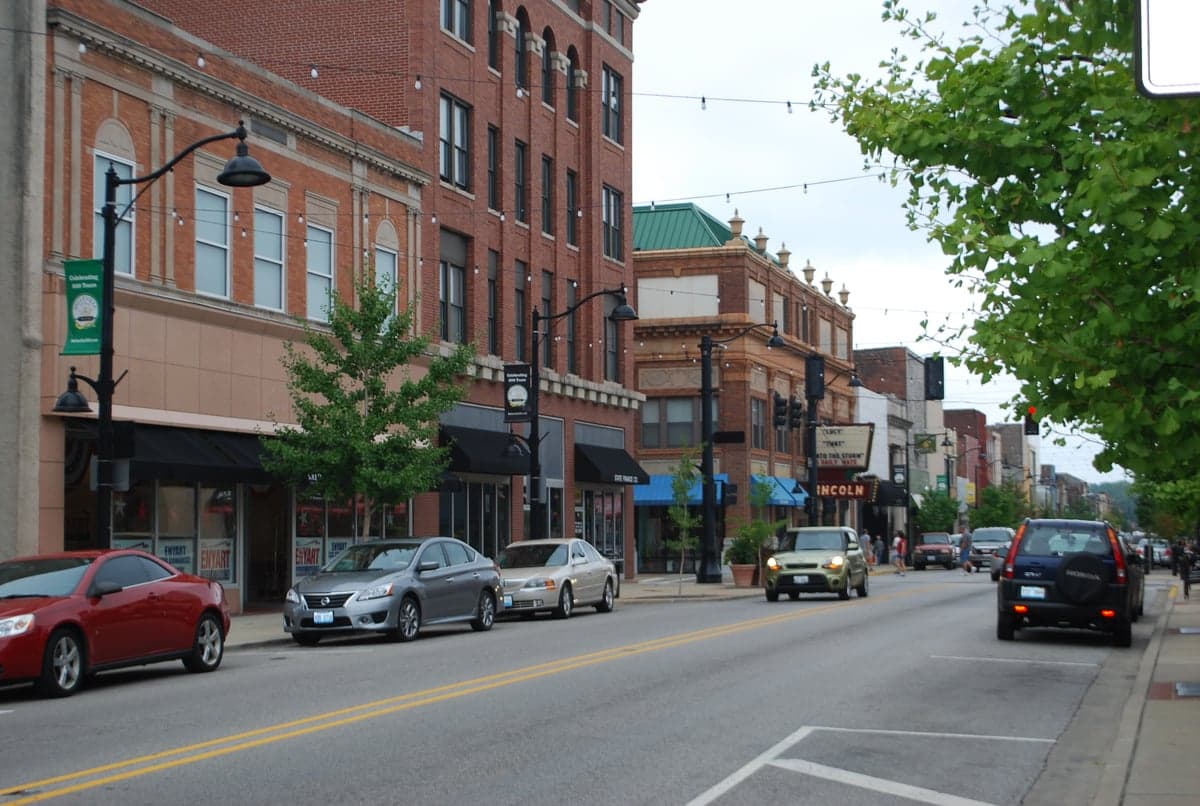
Culturally, Belleville still holds onto some of its old German-heritage charm—the annual Chili Cook-Off and the Art on the Square festival draw crowds that aren’t all political activists. But you’ll notice more “In This House We Believe” signs than you did five years ago, and the local paper’s editorial page has swung hard left. The policy distinctions that matter most are the quiet ones: how the city handles zoning for churches, whether the police department gets defunded incrementally through budget cuts, and how aggressively the county enforces state-level gun laws. If you’re considering a move here, I’d say come for the affordable housing and the proximity to St. Louis jobs, but keep your eyes open. The political climate is changing faster than the real estate listings, and not always in a way that respects the freedoms that made this area a good place to raise a family.

State Political ClimatePolitical Climate in Illinois
State Political AnalysisPolitical Environment in the State
Illinois is a deeply blue state in statewide elections, with Democrats holding a trifecta in state government and consistently winning presidential contests by double digits — but that blue veneer masks a stark internal divide. Over the past 20 years, the state has shifted from a competitive purple battleground to a solidly Democratic stronghold, driven by the massive population and political weight of Chicago and its inner suburbs, while the rest of the state has grown increasingly red. For a conservative considering a move here, the reality is that your vote in statewide races will almost certainly be drowned out, but your local community may feel like a different country entirely.
Urban vs. rural divide
The political map of Illinois is essentially a tale of two states. Cook County, home to Chicago, casts roughly 40% of the state's total vote and reliably delivers margins of 60-70% for Democrats. The collar counties — DuPage, Lake, Kane, Will, and McHenry — have been trending blue over the last decade, especially since 2016, as suburban voters shifted left on cultural and immigration issues. In 2020, even traditionally Republican strongholds like DuPage County voted for Joe Biden. Meanwhile, downstate Illinois is overwhelmingly Republican, with counties like Effingham, Williamson, and Jefferson routinely voting 70-80% for GOP candidates. The divide is so sharp that some downstate residents joke about "Chicagoland" running the state like a colony. Cities like Peoria, Rockford, and Springfield are purple-to-blue islands in a red sea, while Bloomington-Normal and Champaign-Urbana lean left due to their university populations. The rural-urban split is not just political — it's cultural, economic, and increasingly hostile, with downstate feeling ignored by a legislature that prioritizes Chicago's needs.
Policy environment
Illinois's policy environment is a case study in progressive governance that many conservatives find alarming. The state has the second-highest property tax burden in the nation, with effective rates averaging over 2% of home value, and a flat income tax rate of 4.95% that is scheduled to rise under recent legislation. In 2021, Illinois became the first state in the Midwest to eliminate cash bail entirely through the SAFE-T Act, a move that has sparked fierce backlash from law enforcement and rural counties. The state also has some of the most permissive abortion laws in the country, codified in the Reproductive Health Act of 2019, and has become a sanctuary state for illegal immigrants, with the TRUST Act limiting local cooperation with federal immigration enforcement. On education, Illinois mandates a comprehensive sex education curriculum that includes LGBTQ+ content, and the state has banned conversion therapy for minors. Gun rights are heavily restricted: Illinois requires a Firearm Owner's Identification (FOID) card, has a red flag law, and in 2023 passed a ban on assault weapons and high-capacity magazines. For conservatives, the policy environment feels like a relentless expansion of government control over personal decisions, from healthcare to parenting to self-defense.
Trajectory & freedom
Over the past five years, Illinois has become demonstrably less free by any conservative measure. The 2023 assault weapons ban (HB 5471) was a major flashpoint, with over 100 counties passing resolutions declaring themselves "sanctuary counties" for the Second Amendment — though those resolutions carry no legal weight. The SAFE-T Act, which eliminated cash bail, has led to a surge in criticism as some defendants arrested for violent crimes are released without bond. On parental rights, Illinois has moved aggressively in the opposite direction of states like Florida: the state mandates that schools allow students to use bathrooms and locker rooms matching their gender identity, and it has no law requiring parental notification for a minor's abortion. In 2024, the state expanded its child labor laws to restrict teen work hours, but also passed a law allowing undocumented immigrants to obtain driver's licenses. The trend is clear: Springfield is moving left faster than the rest of the country, and there is little appetite for rolling back any of these policies. For a conservative, the trajectory is one of diminishing personal autonomy, especially in areas of education, self-defense, and local control.
Civil unrest & political movements
Illinois has seen its share of political turbulence. The summer of 2020 saw widespread protests and looting in Chicago, with some estimates of property damage exceeding $100 million. The city's response — or lack thereof — became a national talking point, with then-Mayor Lori Lightfoot facing criticism for not deploying the National Guard quickly enough. Since then, organized conservative movements have grown, particularly downstate. The "Illinois Separation" movement, which advocates for Chicago and Cook County to secede from the rest of the state, has gained traction in rural areas, though it remains a fringe idea. Immigration politics are a constant flashpoint: Chicago's sanctuary city status has led to tensions with the state's Republican counties, which have passed resolutions opposing the state's pro-immigrant policies. Election integrity remains a concern for many conservatives, as Illinois has no voter ID law and allows same-day voter registration. In 2024, the state saw a high-profile controversy when a Republican candidate for Congress in the 13th district alleged irregularities, though no widespread fraud was proven. The overall atmosphere is one of deep cultural polarization, with rural residents feeling increasingly alienated from the state's political leadership.
Projection
Looking ahead five to ten years, Illinois is likely to become even more Democratic and more progressive. Demographic trends favor the blue side: Chicago's population is stabilizing after a post-pandemic dip, while the collar counties continue to diversify and shift left. Downstate, meanwhile, is shrinking — counties like Alexander and Pulaski have lost 30-40% of their population since 2000. The state's fiscal situation is a wildcard: Illinois has the worst-funded pension system in the country, with a $140 billion unfunded liability, and its credit rating is one notch above junk. If a fiscal crisis hits, it could accelerate out-migration of conservatives and businesses, further entrenching Democratic control. For a conservative moving in now, expect that your state government will continue to pass laws you disagree with on guns, immigration, and education. Your best bet is to find a red enclave — places like Edwardsville, Quincy, or the rural counties along the Mississippi River — where local culture and community values still align with your own, even if the state government does not.
For a conservative considering Illinois, the bottom line is this: you will be living in a state where your political views are in the minority at the state level, and where the government is actively expanding its reach into areas you may consider private. The trade-off is access to Chicago's economic opportunities, world-class universities, and cultural amenities — but those come at the cost of high taxes, restrictive gun laws, and a political climate that feels increasingly hostile to traditional values. If you can find a community like Naperville or Barrington that still retains a conservative character within a blue state, you might make it work. But if you value personal freedom and limited government above all, Illinois is likely not the place for you.
* Values derived from national, state, county, city and local statistics and may differ in a specific area. Last updated: 2026-04-23T08:55:30.000Z
Narrative content on this page is AI-generated and may contain mistakes. Verify any details that matter before acting on them.
ReloMaps may earn a commission from affiliate links at no extra cost to you.

