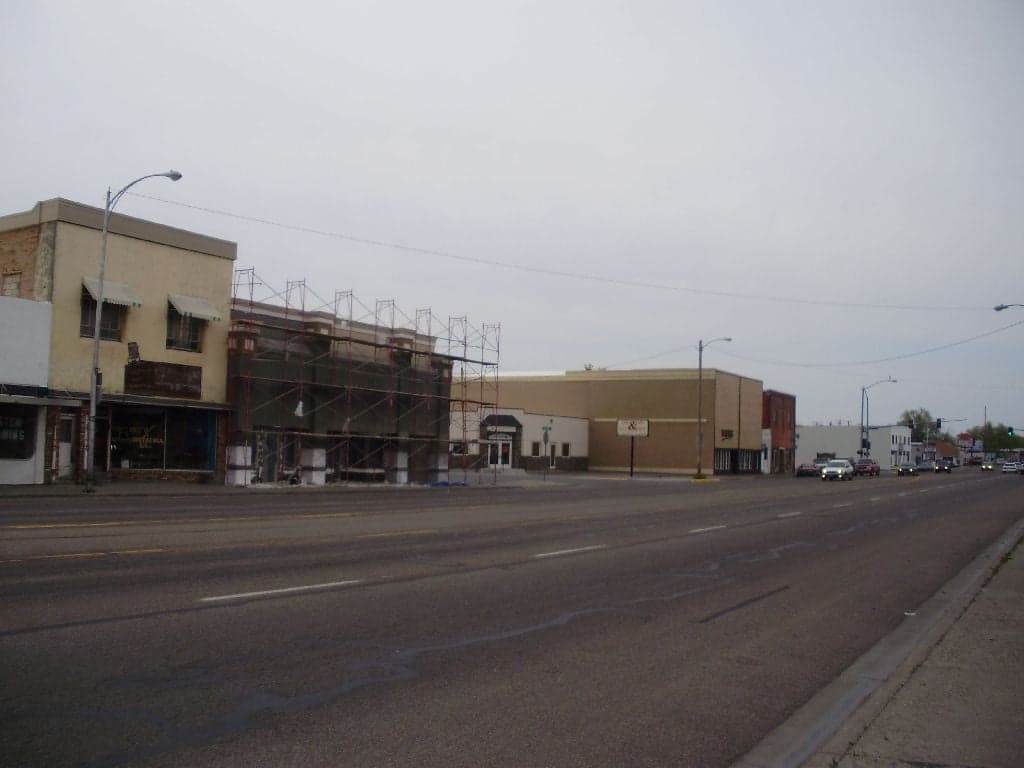
Photo: Wikipedia
Political ClimatePolitical Climate in Blackfoot, ID
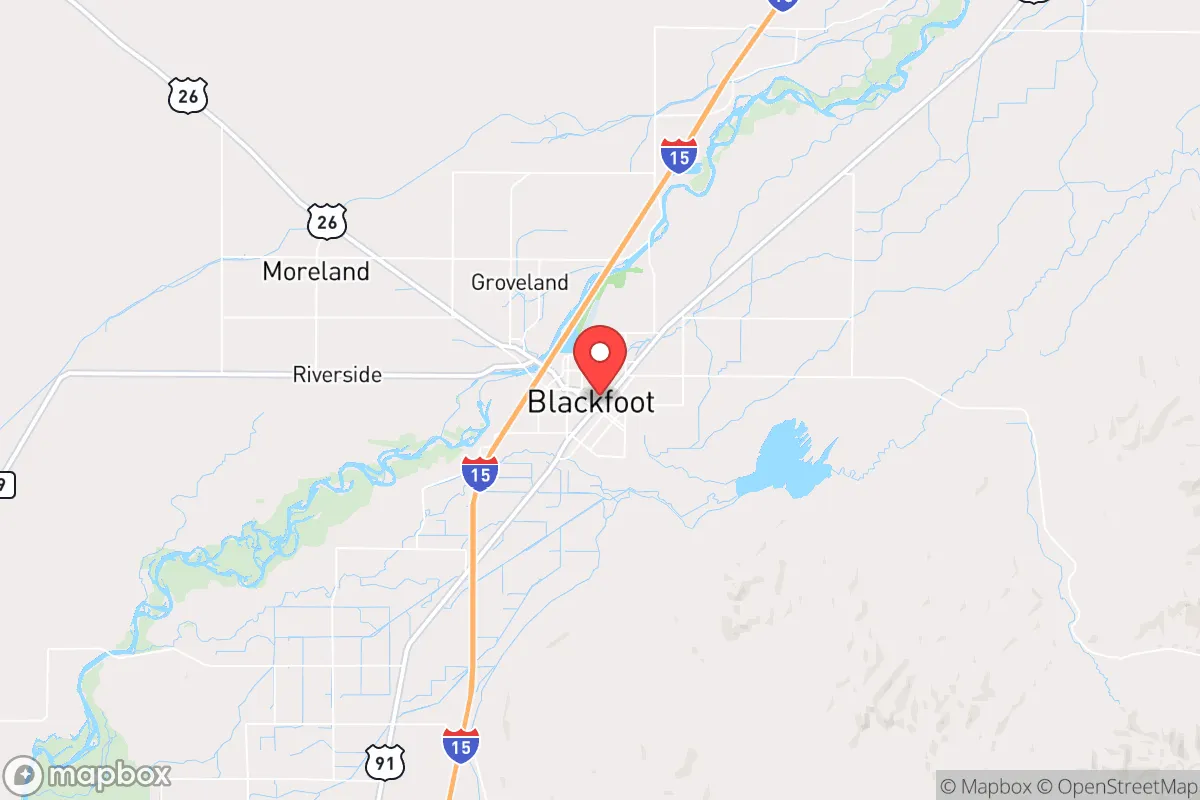
District shown is the primary district for this city’s centroid. Cities may span multiple districts.
Local Political AnalysisPolitical Analysis of Blackfoot, ID
Blackfoot, Idaho, has long been a rock-solid conservative community, and that hasn't changed much despite the national trends. The Cook PVI of R+13 tells the story pretty clearly—this isn't a swing area; it's a place where Republican candidates routinely win by double digits, and the local culture reflects that. If you look at the voting patterns over the last decade, you'll see that while places like Boise or even Pocatello have drifted a bit more toward the center on certain issues, Blackfoot has held the line. The surrounding Bingham County is even more conservative than the city itself, and that's saying something.
How it compares
When you stack Blackfoot up against other towns in eastern Idaho, the contrast is noticeable. Drive thirty miles west to Pocatello, and you'll find a university town with a more mixed political vibe—more registered Democrats, more visible progressive activism, and a city council that occasionally flirts with policies that feel out of step with the rest of the region. Head north to Idaho Falls, and while it's still conservative, it's a bit more establishment Republican—think Chamber of Commerce types who are fine with some federal funding for local projects. Blackfoot, by contrast, is more of a grassroots conservative town. The local elections here are dominated by folks who take a skeptical view of government overreach, whether it's from Washington, D.C., or the state capitol in Boise. The nearby town of Shelley is similar, but Blackfoot has a stronger agricultural base that keeps the politics grounded in property rights and limited regulation.
What this means for residents
For someone moving here, the political climate means you can expect a government that mostly stays out of your business. The local school board, city council, and county commission are all run by people who believe in local control and aren't looking to impose new mandates on how you live your life. That said, there have been some rumblings in recent years—a few younger families moving in from out of state, some pressure from state-level education reforms, and the occasional push for more "diversity initiatives" in the schools. Nothing has taken hold yet, but it's something to keep an eye on. The real concern for long-time residents is whether the steady growth in the region will bring in enough new people to shift the balance. So far, the newcomers tend to be folks fleeing high-tax states like California or Oregon, so they're actually reinforcing the conservative tilt rather than weakening it. But if that changes, you could see the kind of slow ideological drift that has happened in places like Boise over the past twenty years.
Culturally, Blackfoot is still a place where the Second Amendment is taken seriously, where property rights are respected, and where the local economy—potatoes, dairy, and small manufacturing—doesn't rely on government handouts. The biggest policy distinction you'll notice is the lack of red tape. Want to build a shop on your land? The county will likely say yes without a dozen permits. Want to homeschool your kids? No one's going to give you a hard time. That's the kind of freedom that's getting harder to find in many parts of the country, and it's why people who value personal liberty tend to feel at home here. The long-term outlook is cautiously optimistic, as long as the community stays engaged and doesn't let outside influences chip away at the local character.

State Political ClimatePolitical Climate in Idaho
State Political AnalysisPolitical Environment in the State
Idaho is one of the most reliably conservative states in the nation, with a Republican trifecta that has grown more assertive over the past decade. The state’s partisan lean has shifted from a moderate, libertarian-leaning conservatism to a hardline, culturally conservative posture, driven by a massive influx of out-of-state transplants and a rural population that feels increasingly under siege from federal overreach. In 2024, Donald Trump carried Idaho by over 30 points, and the state legislature has become a national laboratory for conservative policy, particularly on education, gun rights, and election integrity. The trajectory over the last 20 years is unmistakable: Idaho is moving further right, not left, and the political center has all but vanished.
Urban vs. rural divide
The political map of Idaho is a study in stark contrasts. The Treasure Valley, anchored by Boise, Meridian, and Nampa, is the state’s population center and the only region with any real Democratic presence. Ada County (Boise) has trended purple over the last decade, with Democrats winning county-level races in 2020 and 2022, but it swung back to the GOP in 2024 as the broader state shifted right. Still, Boise itself remains a blue island in a red sea, with progressive city policies on housing and homelessness that clash with the state legislature’s agenda. Drive 30 minutes outside the metro, and you hit deep-red territory. Canyon County (Nampa, Caldwell) is a conservative stronghold, voting +40 points for Trump in 2024, fueled by a growing population of families fleeing California and Washington. The rural north, including Coeur d’Alene and Sandpoint, is fiercely libertarian and culturally conservative, with a strong militia-adjacent undercurrent. The eastern plains, from Idaho Falls to Rexburg, are dominated by the LDS Church’s influence and vote Republican by margins that often exceed 70%. The only other notable blue pocket is Blaine County (Sun Valley), a wealthy ski resort area that votes like a coastal enclave. The divide isn’t just political—it’s cultural. Rural Idahoans see the Boise metro as a growing threat to their way of life, while urbanites view the legislature as extreme. This tension defines every major policy debate.
Policy environment
Idaho’s policy environment is aggressively pro-business, pro-gun, and anti-tax. There is no state income tax on corporate or personal income—a flat 5.8% rate was eliminated in 2024, replaced by a flat 5.3% rate that will drop further under current law. Property taxes are low by national standards, but local levies for schools can vary widely. The state has a right-to-work law, no state-level minimum wage above the federal floor, and a regulatory climate that ranks among the most business-friendly in the country. On education, the legislature has passed universal school choice via education savings accounts (ESAs) in 2023, allowing parents to use state funds for private or homeschool expenses. This was a major win for conservative families. Healthcare policy is limited—Idaho did not expand Medicaid until 2020, and only after a citizen initiative forced the issue. The state has strict abortion laws, with a near-total ban in effect since the Dobbs decision, and no exceptions for rape or incest. Election laws have been tightened: voter ID is required, same-day registration was eliminated in 2023, and the legislature has banned ballot drop boxes and ranked-choice voting. The state also passed a law in 2024 prohibiting any private funding of election administration, a direct response to the Zuckerberg-funded 2020 election grants. For a conservative, Idaho’s policy environment is a model of limited government and cultural traditionalism.
Trajectory & freedom
Idaho is becoming more free in many respects, but the definition of freedom is contested. On gun rights, the state passed constitutional carry in 2016 and has repeatedly preempted local gun ordinances, including a 2023 law that prohibits cities from banning firearms in public buildings. The 2024 “Second Amendment Preservation Act” forbids state and local law enforcement from enforcing any federal gun laws that violate the Idaho Constitution—a direct challenge to federal authority. On parental rights, the 2023 “Parental Rights in Education” law requires schools to notify parents of any curriculum involving sexual orientation or gender identity, and prohibits instruction on these topics in K-5. The 2024 “Women’s Sports Act” bans transgender athletes from female sports. On medical freedom, Idaho passed a law in 2023 prohibiting any COVID-19 vaccine mandate by private employers, and a 2024 law bans mRNA vaccines entirely for children under 18—a first in the nation. Property rights have been strengthened with a 2024 law limiting eminent domain for carbon pipelines. However, freedom is not absolute. The state has a strict anti-marijuana stance, with no medical or recreational program, and possession of even small amounts can lead to jail time. The legislature also passed a 2023 law banning “obscene” library materials, which critics say chills speech. For a conservative, the trajectory is positive: Idaho is pushing back against federal overreach and cultural leftism. For a libertarian, the drug laws and speech restrictions are concerning.
Civil unrest & political movements
Idaho has a long history of anti-government activism, but the modern flashpoints are more organized. The “People’s Rights” movement, founded by Ammon Bundy, has a strong presence in the Treasure Valley and rural areas, staging protests against COVID mandates, vaccine passports, and library books. In 2022, Bundy’s followers occupied the Idaho State Capitol for several days, leading to arrests. The state has also seen significant protests over abortion, with both pro-life and pro-choice rallies in Boise. Immigration politics are less visible than in border states, but the legislature passed a 2024 law requiring local law enforcement to cooperate with ICE, and there have been scattered protests against migrant farmworker housing. Election integrity remains a hot-button issue: in 2022, a group of activists attempted to audit the 2020 election results in Ada County, leading to a lawsuit. The state’s militia movement, centered in the Panhandle, is small but vocal, with groups like the Idaho Light Foot Militia conducting training exercises. A new resident would notice the prevalence of “Don’t Tread on Me” flags and “Let’s Go Brandon” signs, especially outside the Boise metro. The political climate is not violent, but it is charged. Most Idahoans are polite and keep to themselves, but the undercurrent of distrust toward the federal government is palpable.
Projection
Over the next 5-10 years, Idaho will likely become even more conservative, but the nature of that conservatism will shift. The influx of out-of-state transplants—mostly from California, Washington, and Oregon—is accelerating. These newcomers are not liberals; they are conservatives and libertarians fleeing high taxes, crime, and progressive policies. They are younger, more educated, and more culturally conservative than the native population. This will push the state further right on education, guns, and taxes, but may also create friction over growth and land use. The Boise metro will continue to trend purple, but the legislature will remain deep red due to rural overrepresentation. The biggest wildcard is the LDS Church’s influence: as the church moderates on some social issues (e.g., LGBTQ rights), there may be a subtle shift in the eastern part of the state. But for now, the trajectory is clear: Idaho will be a national leader in conservative policy, with more school choice, more gun rights, and more resistance to federal mandates. A new resident moving in now should expect to find a state that is culturally safe for traditional families, but increasingly crowded and expensive in the Treasure Valley. The rural areas will remain quiet and affordable, but the political temperature will stay high.
Bottom line for a new resident: If you are a conservative looking for a state that respects your rights, keeps taxes low, and pushes back against federal overreach, Idaho is a strong choice. You will find a like-minded community in most places, especially outside Boise. But be prepared for a growing population, rising home prices, and a political environment that is not passive—Idahoans are engaged and vocal. If you value personal liberty, traditional values, and a government that stays out of your life, you will feel at home here. Just don’t expect to smoke a joint or find a library book about gender theory in a public school. That’s not what this state is about.
* Values derived from national, state, county, city and local statistics and may differ in a specific area. Last updated: 2026-04-19T09:33:10.000Z
Narrative content on this page is AI-generated and may contain mistakes. Verify any details that matter before acting on them.
ReloMaps may earn a commission from affiliate links at no extra cost to you.

