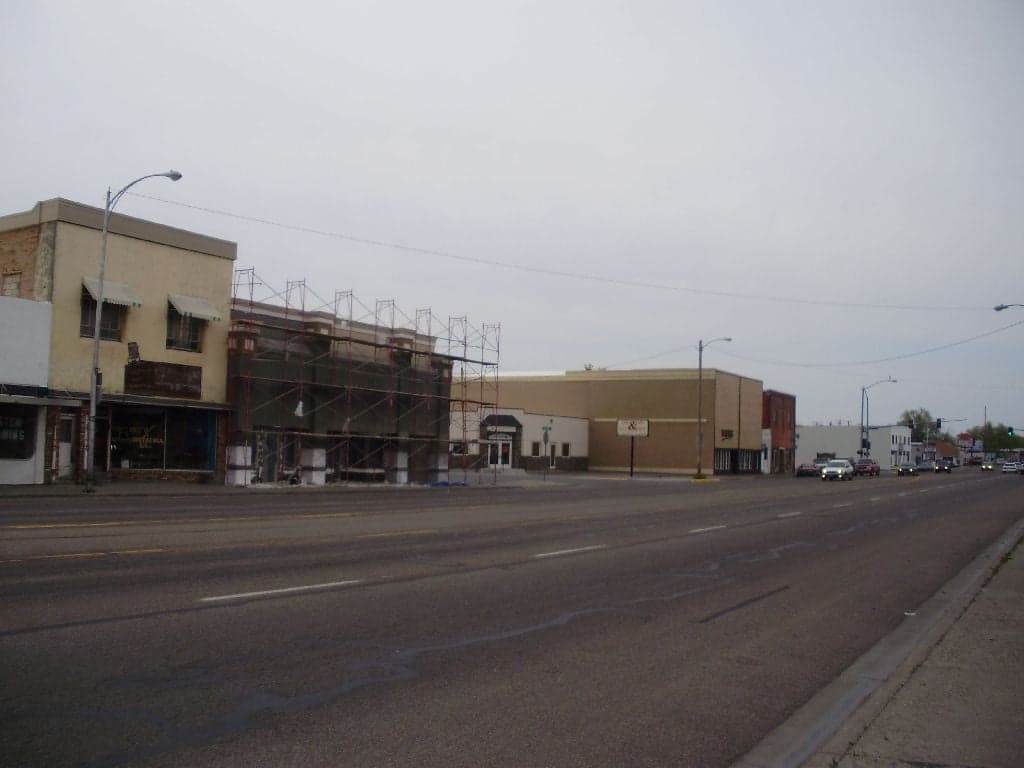
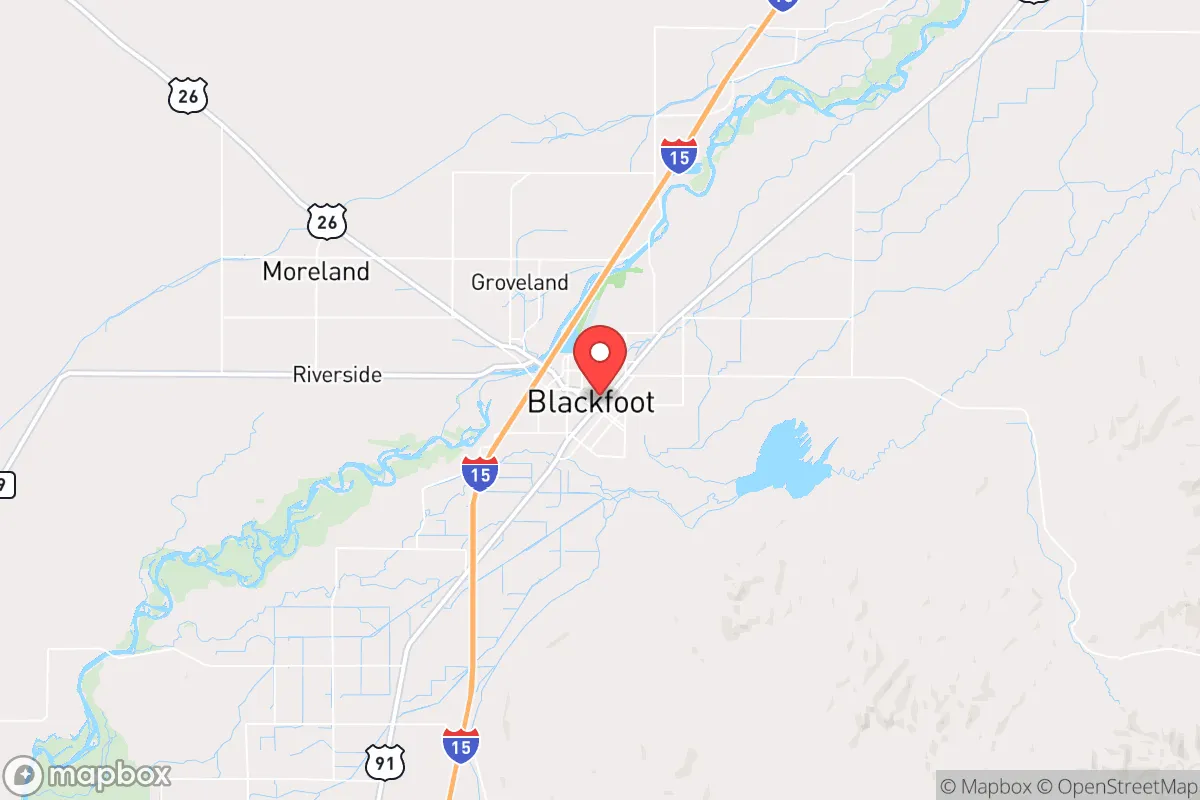
Photo: Wikipedia
Quality of Life in Blackfoot, ID
A high quality of life with strong walkability, manageable living costs, healthy neighborhood signals, and solid amenity access.
What does Quality of Life tell us?
Quality of Life blends cost of living, nearby amenities, socioeconomic signals, and neighborhood character. City-level scores represent the whole municipality; individual neighborhoods can differ.
What does this tell us?
Quality of Life blends cost of living, nearby amenities, socioeconomic signals, and neighborhood character. City-level scores represent the whole municipality; individual neighborhoods can differ.
Cost of Living
27% below national average
The Real Cost of Living in Blackfoot, ID for 2026
| Tier | Individual | Family (4) |
|---|---|---|
| Survival | $13k | $24k |
| Comfortable | $44k | $65k |
| Luxury | $92k+ | $143k+ |
| Elite (Top 5%) | $109k+ | $168k+ |
107%
The Area Signal
A metric tracking the socioeconomic signals of the area.


Hobbies
Explore the areaGroceries
2 within 10 miles
Gas
0 within 10 miles
Hospital
3 within 20 miles
Airport
SLC — Salt Lake City International
Post Office
USPS — Blackfoot, ID
Critical Amenities
Quality-of-Life Analysis
Blackfoot, Idaho, offers a notably affordable quality of life that attracts families, agricultural workers, and outdoor enthusiasts seeking a slower pace. With a cost of living index of 73—27% below the U.S. average—the city provides a financial cushion rarely found in larger Western hubs. The median home value of $225,900 and median rent of $798 make homeownership and stable housing accessible, drawing residents who prioritize economic security over urban amenities.
Cost of living, housing, and affordability compared to nearby cities
Blackfoot’s housing market is a standout advantage for newcomers. The median home value of $225,900 is roughly half the national median, and the median rent of $798 is well below the $1,200+ typical in Boise or Idaho Falls. This affordability extends to utilities, groceries, and transportation, keeping the overall cost of living index at 73. For context, neighboring Idaho Falls (index 88) and Pocatello (index 82) are pricier, while Blackfoot remains one of the most budget-friendly options in eastern Idaho. The average commute of just over 20 minutes—shorter than the national average of 26 minutes—means less money spent on gas and vehicle wear, further stretching household budgets. However, wage growth has not kept pace with rising home prices in the region; since 2020, home values in Bingham County have increased by roughly 35%, though they remain far below national benchmarks.
Local amenities, schools, and what daily life feels like
Daily life in Blackfoot revolves around community staples rather than big-city attractions. The Bingham County School District serves the area, with Blackfoot High School and several elementary schools offering average-to-above-average ratings on GreatSchools. For shopping and dining, residents rely on local grocery stores, fast-food chains, and a handful of independent restaurants; for broader retail or entertainment, a 25-minute drive to Idaho Falls provides malls, movie theaters, and a regional hospital. Outdoor life is a major draw: the nearby Blackfoot River and Snake River offer fishing, kayaking, and birdwatching, while the Caribou-Targhee National Forest is a 45-minute drive for hiking and camping. The city’s annual Eastern Idaho State Fair in September is a cultural anchor, drawing over 200,000 visitors. The rhythm is slow and predictable—most businesses close by 8 p.m., and weekend evenings are quiet. For families, the low crime rate (Bingham County’s violent crime rate is roughly half the national average) and short commutes create a safe, low-stress environment.
Blackfoot is best suited for those who value affordability, outdoor access, and a tight-knit community over urban nightlife or career diversity. Retirees on fixed incomes, remote workers seeking a low-cost base, and agricultural or manufacturing employees (the city’s largest employers include Lamb Weston and the Bingham Memorial Hospital) will find the most to appreciate. Professionals in tech or high-end services may feel limited by the local job market and sparse cultural offerings. For anyone prioritizing financial breathing room and a simple, nature-oriented lifestyle, Blackfoot delivers a rare combination of low costs and genuine small-town character.

Crime in Blackfoot, ID
Generally safer than 62% of comparable U.S. locations.
Violent CrimeViolent Crime Analysis
Property CrimeProperty Crime Analysis
Crime Analysis
Blackfoot, Idaho, reports a violent crime rate of 297.7 incidents per 100,000 residents and a property crime rate of 707.1 per 100,000, placing it in a moderate safety tier relative to other small Idaho cities. These figures suggest that while Blackfoot is not among the state's most dangerous communities, residents face a measurable risk of both violent and property offenses that warrants attention, particularly when compared to safer rural areas in Bingham County.
Crime in context
Blackfoot's violent crime rate of 297.7 per 100,000 is roughly 20% lower than the national average of approximately 380 per 100,000 but sits above the Idaho state average of about 240 per 100,000. Property crime in Blackfoot, at 707.1 per 100,000, is notably below the national average of roughly 1,950 per 100,000 but aligns closely with the Idaho state average of around 700 per 100,000. This means that while Blackfoot is safer than many U.S. cities overall, its violent crime rate is elevated compared to the typical Idaho community. The property crime rate, however, is essentially on par with the rest of the state, indicating that theft and burglary are not disproportionately high here.
What residents experience
Residents of Blackfoot most commonly encounter property crimes such as theft from vehicles and burglary, which are the primary drivers of the 707.1 rate. Violent offenses, including aggravated assault and robbery, occur less frequently but are concentrated in specific areas and times. It is important to note that Bingham County, where Blackfoot is located, operates under a judicial system that has not adopted the progressive, offender-focused policies seen in some large metro areas. Idaho's conservative legal environment generally emphasizes public safety and victim rights, meaning that offenders in Blackfoot are more likely to face meaningful consequences than in jurisdictions with liberal district attorneys. This judicial approach directly reduces the number of repeat offenders on the street, contributing to a lower risk of recidivism-driven crime compared to cities with progressive prosecution policies.
Neighborhood-level variation
Crime in Blackfoot is not evenly distributed. The downtown core and areas near the interstate tend to see higher rates of property crime, particularly vehicle break-ins and shoplifting. Residential neighborhoods on the city's north and east sides generally report fewer incidents, while the area around the Bingham County Courthouse and the Shoshone-Bannock Casino Hotel can experience elevated foot traffic and associated petty crime. For those considering a move, consulting the Blackfoot Police Department's annual report or speaking with local real estate agents about specific subdivisions can provide a clearer picture of block-by-block safety. Overall, Blackfoot offers a moderate safety profile that is enhanced by Idaho's non-progressive judicial philosophy, making it a reasonable choice for families and retirees who prioritize community security.
* Values derived from national, state, county, city and local statistics and may differ in a specific area. Last updated: 2026-04-19T09:33:10.000Z
Narrative content on this page is AI-generated and may contain mistakes. Verify any details that matter before acting on them.
ReloMaps may earn a commission from affiliate links at no extra cost to you.

