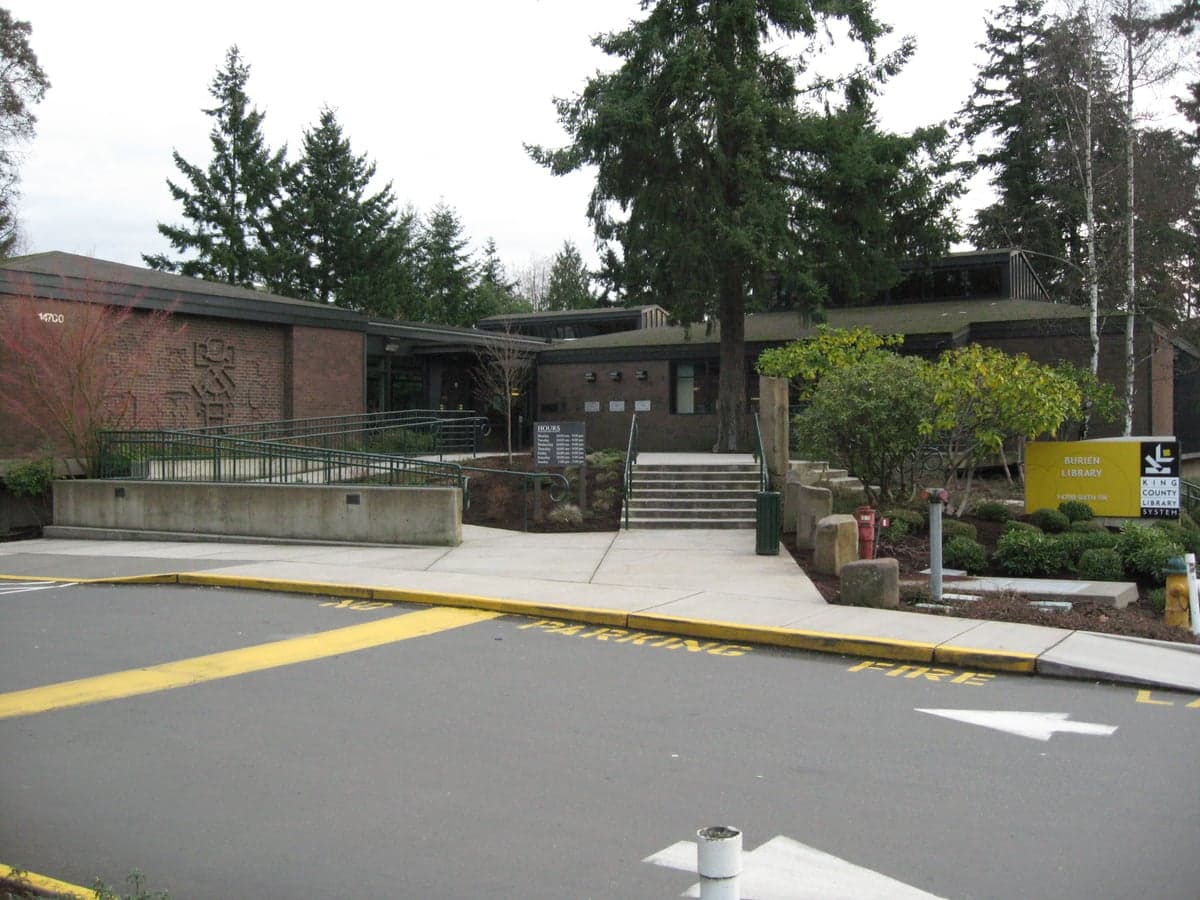
Photo: Wikipedia
Political ClimatePolitical Climate in Burien, WA
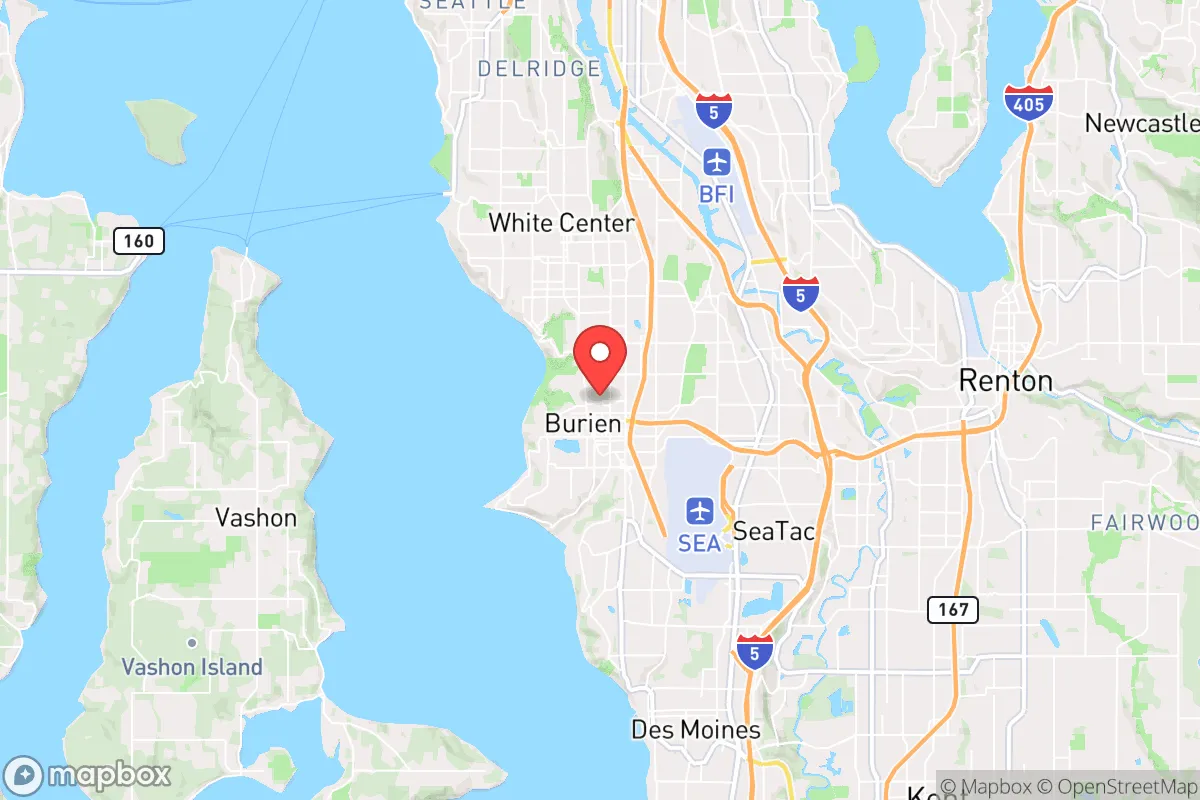
District shown is the primary district for this city’s centroid. Cities may span multiple districts.
Local Political AnalysisPolitical Analysis of Burien, WA
Burien, Washington, has shifted hard to the left over the past decade, and if you’ve lived here as long as I have, you’ve felt it in everything from local zoning fights to how the city council talks about public safety. The Cook PVI sits at D+39, which puts it among the most reliably Democratic suburbs in the entire country—well past even Seattle’s overall lean. That wasn’t always the case. Twenty years ago, Burien was a blue-collar, mixed-political town where you could have a reasonable conversation about taxes or property rights without getting labeled. Today, the local government has embraced a progressive agenda that, frankly, feels more like a mandate than a reflection of the quieter, more moderate voices still living here.
How it compares
Drive ten minutes south to Des Moines or fifteen minutes north to White Center, and you’ll find similar political dynamics—both are deep blue, with Cook PVIs in the D+20 to D+30 range. But head east toward Renton or especially toward the more rural parts of King County like Enumclaw, and the contrast is stark. Those areas still have a noticeable conservative presence, with voters who push back on things like density mandates and police defunding. Burien, by contrast, has become a kind of progressive pressure cooker. The city council has passed ordinances that restrict short-term rentals, imposed strict rent control measures, and adopted “sanctuary city” policies that limit local cooperation with federal immigration enforcement. For someone who values local control and personal freedom, it feels like the government is making more and more decisions for you—whether you asked for them or not.
What this means for residents
If you’re a homeowner or small business owner in Burien, the political climate translates directly into your wallet and your daily life. Property taxes have climbed steadily, partly because the city keeps adding new programs and staff to enforce progressive policies. The city council has also pushed for higher minimum wages and stricter labor rules, which sounds good on paper but has pushed some mom-and-pop shops to the brink. On the personal freedom side, you’ll notice more regulations on everything from how you can use your own backyard (new ADU rules) to what kind of signage your business can display. The local school board has also leaned heavily into equity initiatives and curriculum changes that some parents feel sideline traditional academics. For a long-time resident, it’s frustrating to watch a community that used to be about common-sense independence turn into a place where the government seems to have an opinion on everything.
Culturally, Burien still has its old bones—the dive bars, the auto shops, the working-class grit—but the policy direction is pulling it somewhere else entirely. The city has embraced “Vision Zero” street redesigns that slow traffic but also make it harder to get around, and it’s poured money into social services that, while well-intentioned, have come with higher taxes and more bureaucracy. The long-term trajectory, if nothing changes, is more of the same: tighter regulations, higher costs, and a shrinking space for anyone who doesn’t align with the progressive orthodoxy. If you’re considering moving here, just know that the political climate isn’t neutral—it’s actively shaping the kind of place Burien is becoming, and not everyone is happy about it.

State Political ClimatePolitical Climate in Washington
State Political AnalysisPolitical Environment in the State
Washington State has undergone a dramatic political transformation over the past 20 years, shifting from a competitive purple state to a solidly Democratic stronghold where Republicans rarely win statewide office. The last time Washington voted for a Republican presidential candidate was 1984, and the state legislature has been under Democratic control since 2018. However, this blue dominance is almost entirely driven by the Seattle metropolitan area—King County alone casts about a third of the state’s votes and leans heavily Democratic. Outside the I-5 corridor, much of the state remains conservative, creating one of the sharpest urban-rural divides in the country.
Urban vs. rural divide
The political map of Washington is essentially a story of two states. The western third, anchored by Seattle, Bellevue, and Redmond, votes overwhelmingly Democratic. King County delivered 73% of its vote to Joe Biden in 2020. Neighboring Snohomish and Pierce counties are more competitive but still lean blue, with Tacoma and Everett trending leftward. Meanwhile, eastern Washington is deeply conservative. Spokane, the state’s second-largest city, votes Republican in most elections, and rural counties like Yakima, Grant, and Whitman routinely go 60-70% for GOP candidates. The Tri-Cities (Kennewick, Pasco, Richland) are reliably red, driven by agricultural and energy-sector voters. Even within the Seattle metro, there are pockets of conservatism—Issaquah and Sammamish have more moderate leanings, while Bothell and Woodinville show some purple tendencies. But the overall trend is clear: the state’s political center of gravity has moved west and leftward as tech-driven migration swells King County’s population.
Policy environment
Washington’s policy environment is among the most progressive in the nation, with a few notable exceptions. The state has no personal income tax, which is a major draw for conservatives, but it compensates with high sales taxes (the state rate is 6.5%, but local add-ons push it to 10% or more in many cities) and a business gross receipts tax (B&O) that hits small businesses hard. Property taxes are moderate but rising. The state has a strong regulatory posture, particularly on environmental issues—Washington was the first state to adopt a cap-and-trade program (the Climate Commitment Act) and has some of the strictest land-use laws in the West. Education policy is dominated by the teachers’ union, and the state has a robust public school system, though parental rights have become a flashpoint. In 2023, the legislature passed a law requiring schools to adopt “inclusive” curricula that critics say marginalize parental input. Healthcare is heavily regulated, with a state-run insurance exchange and expanded Medicaid. Election laws are among the most liberal: Washington has all-mail voting, same-day registration, and no voter ID requirement, which conservatives argue undermines election integrity. The state also has a “sanctuary” law (the Keep Washington Working Act) that limits cooperation between local law enforcement and federal immigration authorities.
Trajectory & freedom
Over the past decade, Washington has moved decisively toward greater government control over personal freedoms. The most visible example is gun rights: in 2023, the legislature passed a ban on “assault weapons” (defined broadly to include many common semi-automatic rifles) and a 10-day waiting period for all firearm purchases. A magazine capacity limit of 10 rounds was also enacted. These laws are being challenged in court, but they represent a sharp departure from the state’s historically moderate gun culture. On medical autonomy, Washington was an early adopter of assisted suicide (the Death with Dignity Act, 2008) and has some of the most permissive abortion laws in the country, with no gestational limits and state funding for out-of-state patients. Parental rights took a hit with the 2023 “shield law” that allows minors to access gender-affirming care without parental consent. Property rights are constrained by the Growth Management Act, which forces cities to adopt urban growth boundaries and limits rural development. On the tax front, a 2024 ballot initiative (I-2109) to repeal the capital gains tax was narrowly defeated, signaling that voters are willing to accept new taxes on investment income. The overall trajectory is one of expanding state authority, particularly on social and environmental issues.
Civil unrest & political movements
Washington has a long history of political activism, but the past five years have seen heightened tensions. The 2020 protests in Seattle, including the Capitol Hill Autonomous Zone (CHAZ), were a national flashpoint, with local officials initially tolerating the occupation before eventually clearing it. The state has seen organized left-wing activism around climate change (the youth-led Sunrise Movement is active in Seattle) and racial justice (the King County Equity Now coalition). On the right, the Washington State Republican Party has struggled to gain traction, but grassroots groups like the Washington Gun Rights Coalition and the Family Policy Institute of Washington are active. Immigration politics are heated: the sanctuary law has led to clashes between state and federal authorities, particularly in Yakima and Kennewick, where local sheriffs have resisted compliance. Election integrity remains a concern for conservatives, with allegations of ballot harvesting and lax signature verification, though no major fraud has been proven. Secession talk is mostly confined to rural counties—a 2020 proposal to create a “Liberty State” in eastern Washington gained some traction but never reached a vote. The most visible flashpoint for a new resident would be the constant presence of political signage and the occasional protest in downtown Seattle or Spokane.
Projection
Looking ahead 5-10 years, Washington is likely to become even more Democratic and progressive. In-migration from California and other blue states is accelerating, particularly to the Seattle suburbs and the Bellingham area. These new arrivals tend to be younger, more educated, and more liberal. The state’s tech economy, centered on Amazon and Microsoft, continues to attract a workforce that leans left. Rural counties are losing population, reducing their political clout. The state legislature is likely to pass further gun restrictions, a state-level wealth tax, and additional environmental mandates. The only wild card is a potential economic downturn—if the tech sector contracts, the state’s fiscal health could suffer, potentially slowing the pace of new regulations. But for a conservative moving in now, the expectation should be that the state will continue to move left on social issues, taxes, and regulation. The best-case scenario is that the state’s lack of an income tax remains intact, but everything else—from school choice to property rights—will face increasing pressure.
For a conservative individual or family considering a move to Washington, the bottom line is this: the state offers stunning natural beauty, a strong economy, and no income tax, but you will be living in a political environment that is increasingly hostile to traditional values and personal freedoms. If you choose to relocate, you’ll want to settle in a conservative-leaning area like Spokane, the Tri-Cities, or Yakima, where you can find like-minded neighbors and local officials who push back against state overreach. Be prepared to pay high sales taxes, navigate strict gun laws, and deal with a school system that may not align with your values. Washington is a beautiful state, but it’s no longer a friendly one for conservatives—and it’s only going to get less so.
* Values derived from national, state, county, city and local statistics and may differ in a specific area. Last updated: 2026-04-21T11:01:26.000Z
Narrative content on this page is AI-generated and may contain mistakes. Verify any details that matter before acting on them.
ReloMaps may earn a commission from affiliate links at no extra cost to you.

