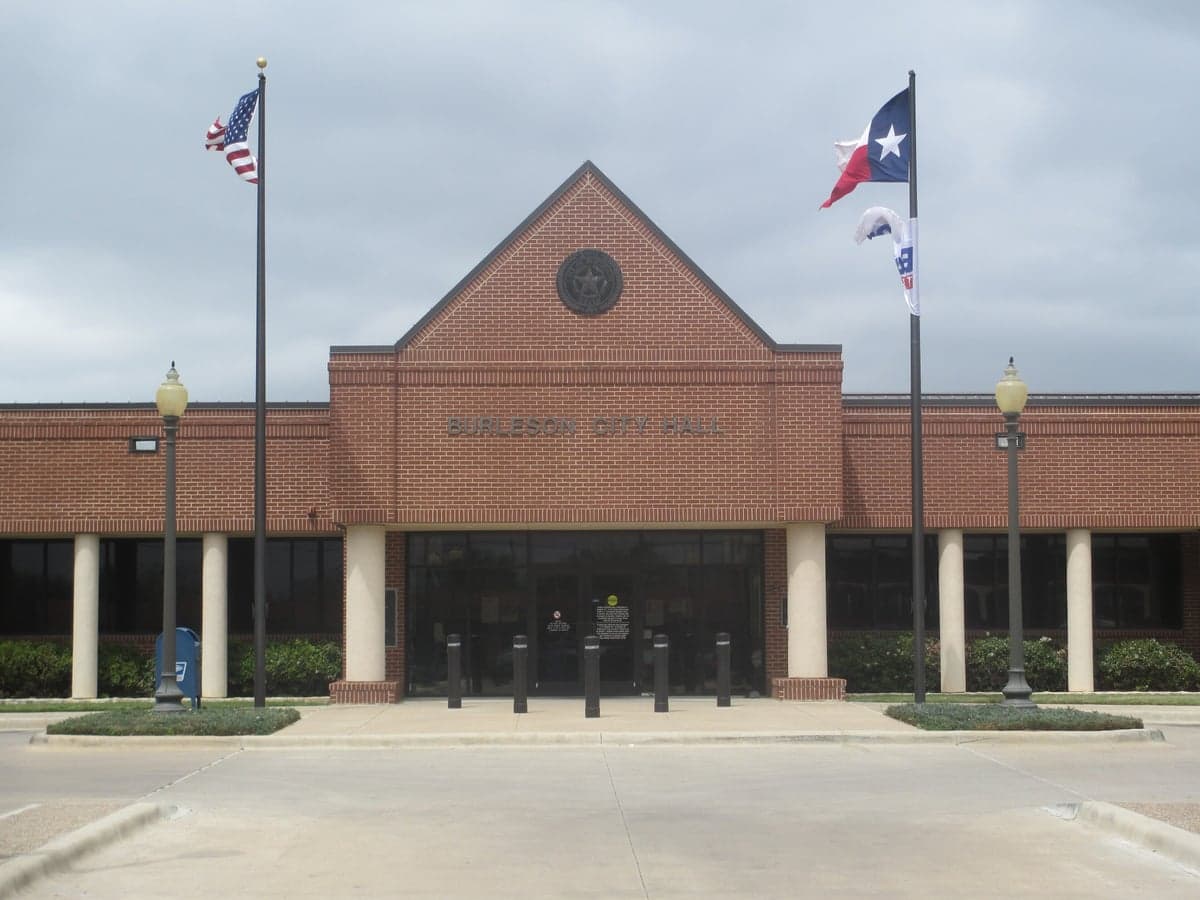
Photo: Wikipedia
Political ClimatePolitical Climate in Burleson, TX
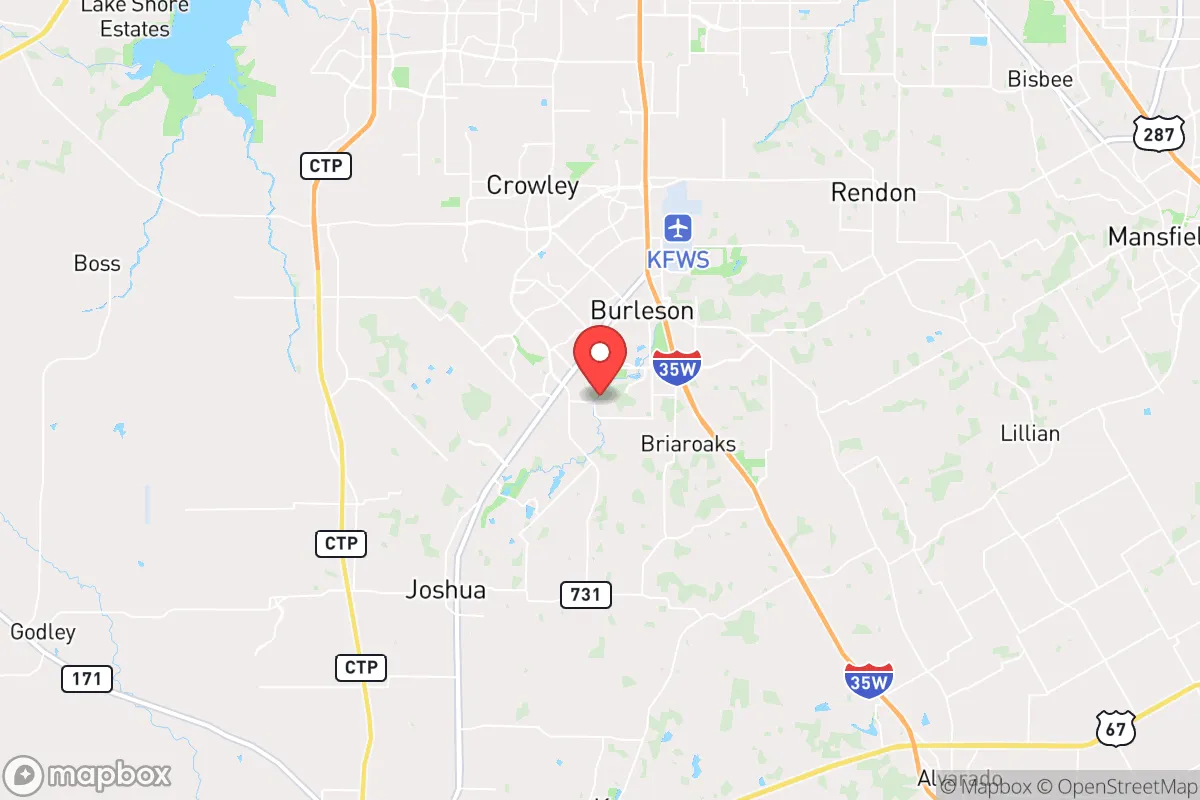
District shown is the primary district for this city’s centroid. Cities may span multiple districts.
Local Political AnalysisPolitical Analysis of Burleson, TX
Burleson, Texas, sits squarely in the conservative heartland of Johnson County, and it’s been that way for as long as I can remember. The Cook PVI of R+18 tells you the math, but it doesn’t capture the feel—this is a place where folks still wave the flag, pray before city council meetings, and expect government to stay out of their business. We’ve seen a slow, steady shift over the last decade, though, as more folks move up from the Metroplex looking for cheaper land and quieter streets. The core is still rock-ribbed Republican, but you can sense a little more tension at the edges, especially as younger families and remote workers bring different ideas about what “community” means.
How it compares
Drive ten miles north into Fort Worth’s Tarrant County, and you’re in a different world—that county’s been trending purple for years, with some precincts voting blue in recent cycles. Burleson is a deliberate counterweight to that. Compared to nearby Cleburne, which is also conservative but a bit more rural and slower to change, Burleson feels more suburban and engaged. Head east toward Mansfield, and you’ll find a similar R+ vibe, but Mansfield’s seen more commercial development and a younger demographic that’s nudged it slightly toward the center. Burleson, by contrast, has held its line. The city council and school board elections here still turn on property rights, tax restraint, and keeping the Second Amendment strong. There’s no serious progressive organizing in town—yet—but I’ve noticed a few more lawn signs for moderate candidates in the last couple of cycles, which gives me pause.
What this means for residents
For the average family, this political climate means you can expect low taxes, minimal zoning fuss, and a school district that hasn’t gone full tilt into critical theory or gender ideology. The city government generally takes a hands-off approach to business and personal life—you can put up a fence, park a truck, or run a home-based business without a mountain of permits. That’s the upside. The downside is that as the area grows, there’s pressure from developers and regional planners to adopt more “regional” policies—think transit-oriented development, affordable housing mandates, and climate action plans—that sound like government overreach to a lot of us. If you value local control and don’t want Austin or D.C. telling you how to live, Burleson is still a safe bet. But keep an eye on the next few city council races; if the progressive-leaning transplants start winning seats, you’ll see the first cracks in that R+18 foundation.
Culturally, Burleson is still a place where the high school football game is the main event on Friday night, and the local coffee shop knows your name. There’s a strong church presence—mostly Southern Baptist and nondenominational—that anchors social life and reinforces traditional values. The biggest policy distinction I’d point to is the city’s consistent support for law enforcement and its refusal to adopt “sanctuary” policies or defund the police. That’s a line in the sand that most residents here are proud of. Looking ahead, I’m cautiously optimistic: if we can keep the growth smart and resist the urge to copy whatever Dallas or Fort Worth is doing, Burleson will stay the kind of place where you can raise a family without feeling like you’re fighting the government every step of the way.

State Political ClimatePolitical Climate in Texas
State Political AnalysisPolitical Environment in the State
Texas has been a reliably Republican state for decades, with the GOP holding every statewide office and both legislative chambers, but the margin of victory has been shrinking as fast-growing urban and suburban areas shift left. In 2024, Donald Trump won Texas by roughly 9 points, down from 11 points in 2020 and 16 points in 2016, signaling a slow but steady erosion of the GOP’s dominance. The state’s political identity is still defined by limited government, low taxes, and individual liberty, but the coalition is fracturing along geographic and demographic lines that anyone moving here needs to understand.
Urban vs. rural divide
The political map of Texas is a tale of three landscapes. The vast rural and exurban counties—places like Lubbock, Amarillo, and the sprawling ranchlands of West Texas—vote Republican by 40 to 60 points. These areas are the backbone of the state’s conservative majority, driven by agriculture, oil and gas, and a deep cultural attachment to gun rights and local control. Meanwhile, the major metros are pulling in opposite directions. Houston and Dallas-Fort Worth are competitive but still lean Republican in the suburbs, while Austin and El Paso are solidly Democratic, with Austin’s Travis County delivering a 40-point margin for Biden in 2020. The real story is in the suburbs: Collin County (north of Dallas) voted for Trump by only 8 points in 2024, down from 15 in 2020, and Fort Bend County (southwest of Houston) flipped to Biden in 2020 and stayed blue. These are the battlegrounds where the state’s future is being decided.
Policy environment
Texas remains a low-tax, low-regulation state by design. There is no state income tax, and property taxes are high but capped by the 2023 property tax reform that added a $100,000 homestead exemption for most homeowners. The regulatory posture is business-friendly, with no state-level occupational licensing for many trades and a right-to-work law that keeps unions weak. On education, the state passed a school voucher-like program in 2023 through the Texas Education Savings Account, allowing parents to use public funds for private or homeschool expenses—a major win for school choice advocates. Healthcare policy is mixed: Texas did not expand Medicaid under the ACA, keeping the uninsured rate high, but it also banned vaccine mandates for private employers and protected medical conscience rights. Election laws tightened after 2021’s Senate Bill 1, which banned drive-through voting, added ID requirements for mail ballots, and restricted early voting hours. For a conservative, the policy environment is largely aligned with limited government, though the property tax burden is a persistent complaint.
Trajectory & freedom
On balance, Texas has been expanding personal freedom in several key areas, but the trend is not uniform. The 2021 permitless carry law (HB 1927) allows any law-abiding adult to carry a handgun without a license, a significant expansion of Second Amendment rights. The 2023 ban on COVID-19 vaccine mandates for private employers (SB 7) reinforced medical autonomy. Parental rights were strengthened by the 2023 law requiring school districts to notify parents of any changes to a child’s mental or physical health, effectively blocking gender transition procedures without parental consent. However, the state has also moved to restrict local control: the 2017 “sanctuary cities” law (SB 4) forces local law enforcement to cooperate with federal immigration authorities, and the 2023 law banning diversity, equity, and inclusion programs at public universities (SB 17) limits institutional speech. The net direction is toward more individual liberty on guns, medical choice, and education, but with a heavier hand on immigration enforcement and local governance.
Civil unrest & political movements
Texas has seen its share of political flashpoints. The 2020 protests in Austin over George Floyd’s death were among the largest in the country, leading to a $21 million police budget cut that was later partially restored. The border crisis has fueled ongoing tensions: the state’s Operation Lone Star, launched in 2021, deployed thousands of National Guard troops to the border and bused migrants to Democratic-led cities, creating a visible political statement. On the right, the Texas Nationalist Movement continues to push for secession, though it remains fringe. Election integrity remains a hot-button issue: the 2020 election saw lawsuits over drive-through voting in Harris County, and the 2022 primary saw a purge of over 1 million inactive voter registrations. A new resident will notice the political activism most in the suburbs—yard signs, local school board races, and heated city council meetings over library books and transgender policies.
Projection
Over the next 5-10 years, Texas will likely remain Republican at the state level, but the margin will continue to narrow. The key demographic driver is the influx of domestic migrants from California and the Northeast—roughly 1,000 people move to Texas per day—who tend to be more moderate or libertarian than native Texans. The suburbs of Dallas, Houston, and San Antonio are becoming more diverse and less reliably red, while rural areas are shrinking. The state’s Hispanic population, which leans Democratic but is not monolithic, is growing fast. If current trends hold, Texas could become a swing state by 2032, similar to Georgia or Arizona today. For a conservative moving in now, the expectation should be that the political environment will become more contested, with more competitive elections and a louder progressive voice in the cities. The state’s low-tax, low-regulation framework is likely to persist, but fights over school choice, property taxes, and immigration enforcement will intensify.
Bottom line for a new resident: Texas is still a place where you can keep more of your money, carry a gun without a permit, and send your kids to a school that respects parental rights. But the political landscape is shifting under your feet. If you’re moving to a suburb like Frisco or Katy, expect a politically mixed neighborhood where local elections matter more than ever. The freedom you’re moving for is still here, but it’s not guaranteed—it will require staying engaged in the fight to keep it.
* Values derived from national, state, county, city and local statistics and may differ in a specific area. Last updated: 2026-04-28T18:30:44.000Z
Narrative content on this page is AI-generated and may contain mistakes. Verify any details that matter before acting on them.
ReloMaps may earn a commission from affiliate links at no extra cost to you.

