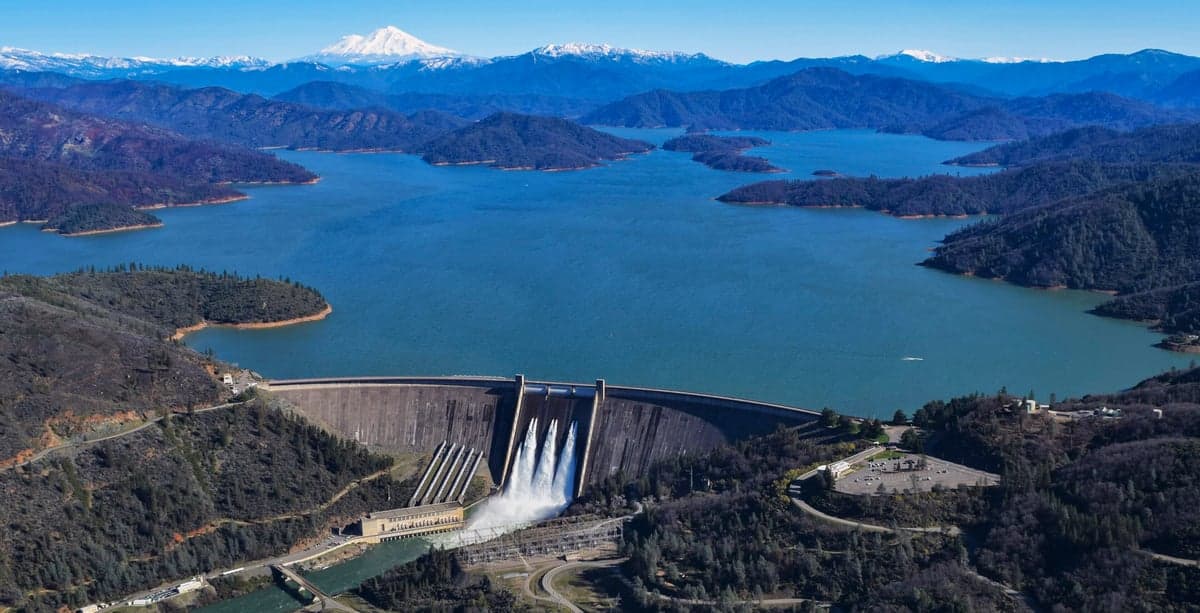
Photo: Wikipedia
Political ClimatePolitical Climate in Shasta County
Showing district-level results — no local-only data available.
Local Political AnalysisPolitical Analysis of Shasta County
Shasta County, anchored by the city of Redding, is one of California's most reliably conservative regions, a deep red island in a deep blue state. While California as a whole carries a Cook Partisan Voting Index of D+24, Shasta County has voted for the Republican presidential candidate by margins exceeding 30 points in recent elections, with Donald Trump winning the county by 37 points in 2020. The county's political trajectory has actually shifted further right over the past decade, even as the state has moved left, creating a widening gap between local sentiment and state policy that defines daily life here.
How it compares
The contrast between Shasta County and California's statewide lean isn't just a matter of degree—it's a fundamental divide in political culture. In the 2022 gubernatorial election, Republican Brian Dahle won Shasta County with 63% of the vote while losing statewide by nearly 30 points. This pattern holds down the ballot: Shasta's Board of Supervisors is entirely Republican, and the county made national headlines in 2023 for its contentious debates over election integrity and public health mandates. Within the county itself, political geography is stark. Redding's west side and the rural communities of Anderson, Cottonwood, and Shasta Lake City are deeply conservative, often voting 70-80% Republican. The city of Redding's more suburban east side and the college-adjacent neighborhoods near Simpson University show slightly more moderation, occasionally breaking 60-40 Republican instead of 80-20. The only real blue dots are tiny pockets around the downtown Redding core and a handful of precincts in the unincorporated area of Mountain Gate, where Democratic votes occasionally reach 40%. There are no swing precincts in the traditional sense—the county hasn't voted for a Democratic presidential candidate since Lyndon Johnson in 1964.
What this means for residents
For conservative residents, Shasta County offers a rare experience in California: local government that actively resists state mandates on housing, environmental regulation, and public health. The county has sued the state over its housing element requirements and has declared itself a "Second Amendment sanctuary." Conservative newcomers from the Bay Area and Los Angeles have been moving here in noticeable numbers since 2020, drawn by lower housing costs and the sense of political alignment. For liberal residents, the reality is more isolating. Progressive viewpoints are a distinct minority in most social and civic settings, and Democratic candidates often struggle to find volunteers or donors. The local Democratic Party headquarters in Redding has been vandalized multiple times. That said, liberal residents do find community in specific circles—the faculty at Shasta College, certain downtown Redding arts organizations, and the growing number of remote workers who brought Bay Area sensibilities with them. These newcomers are slowly shifting the demographics of Redding's core, but the effect is negligible at the county level.
Culturally, Shasta County's political identity manifests in tangible ways that set it apart from the rest of California. Gun ownership is near-ubiquitous, church attendance is high, and "Keep Shasta County Free" signs are a common sight on rural properties. The county's economy relies heavily on timber, agriculture, and government employment (including the federal Bureau of Reclamation at Shasta Dam), creating a workforce that is skeptical of environmental regulations that limit logging or water usage. The policy friction with Sacramento is constant: local officials routinely push back on California's high-speed rail project, its electric vehicle mandates, and its sanctuary state laws. For anyone moving here, the key takeaway is straightforward: Shasta County is not a purple region trending blue. It is a deeply conservative community that has only grown more so as the state around it has moved left, and that dynamic shapes everything from housing policy to social life to the local job market.

State Political ClimatePolitical Climate in California
State Political AnalysisPolitical Environment in the State
California is a deeply blue state where Democrats hold every statewide office and supermajorities in both legislative chambers, but that monolithic label hides a far more complicated reality. The state hasn't voted Republican in a presidential race since George W. Bush in 2004, and the Democratic share of the vote has crept from 55% in 2008 to over 63% in 2024. Yet this 20-year arc masks a growing internal fracture: the coastal metros are moving left faster than the interior is moving right, and the state's overall lean is increasingly driven by a handful of megacities while vast stretches of the Central Valley and inland deserts feel politically abandoned.
Urban vs. rural divide
The political map of California is a study in extremes. The San Francisco Bay Area and Los Angeles County alone account for roughly half the state's Democratic votes, with San Francisco proper delivering 85% of its vote to Kamala Harris in 2024. Los Angeles County, despite losing population, still generates a Democratic margin larger than the entire state of Texas. Meanwhile, the Central Valley tells a different story: Bakersfield (Kern County) voted +27 points Republican in 2024, and Fresno County, once a swing area, now leans solidly red outside the city limits. The Inland Empire—Riverside and San Bernardino counties—is the state's true battleground, flipping from blue to red in 2024 as working-class Latino and white voters abandoned the Democratic Party over cost-of-living and crime. Orange County, once the GOP's California stronghold, has flipped blue in presidential races since 2016, though its northern suburbs like Yorba Linda and Huntington Beach remain conservative holdouts. The rural north—places like Redding and Yreka—vote 70%+ Republican but have so few people they barely register in statewide totals.
Policy environment
California's policy environment is defined by high taxes, heavy regulation, and a progressive social agenda that creates a distinct lived experience for residents. The state has a progressive income tax topping out at 13.3% (the highest in the nation), a 7.25% state sales tax that local add-ons push to over 10% in many cities, and some of the highest gas taxes in the country—currently about 68 cents per gallon. Property taxes are capped at 1% of assessed value under Prop 13, but reassessment upon sale means new buyers face much higher bills than long-term owners. California is a "shall-issue" state for concealed carry after the Bruen decision, but the legislature has passed a raft of restrictions—sensitive places bans, background checks on ammunition, and a 10-day waiting period—that make gun ownership more burdensome than in most states. Education policy is dominated by the California Teachers Association, with per-pupil spending around $15,000 but middling outcomes; school choice is limited to charter schools, which face increasing hostility from the legislature. Healthcare is heavily regulated, with the state running its own insurance exchange (Covered California) and moving toward a single-payer system that has stalled repeatedly. Election laws are among the most expansive in the country: every registered voter receives a mail-in ballot automatically, same-day registration is available, and ballot drop boxes are ubiquitous. This convenience comes with trade-offs—voter roll maintenance is lax, and concerns about non-citizen voting have surfaced in local elections, though no widespread fraud has been proven.
Recent policy direction
The last five years have seen California accelerate its progressive agenda in ways that directly affect relocators' daily lives. On guns, the 2023 law SB (the "Gun Violence Restraining Order" expansion) allows family members or law enforcement to petition for temporary firearm removal without a criminal conviction—a tool supporters call life-saving and opponents call due process-free confiscation. On parental rights, AB 1955 (2024) prohibits school districts from requiring teachers to notify parents if a child changes their gender identity, making California a "parental opt-out" state that has sparked fierce backlash and school board recall elections in conservative suburbs like Temecula and Rocklin. On property rights, SB 9 (2021) effectively ended single-family zoning by allowing duplexes on most residential lots, and a 2024 law caps rent increases at 5% plus inflation for most multifamily units. On speech, the state's 2023 law AB 587 requires social media platforms to post their content moderation policies, but critics note it doesn't address the state's own pressure on platforms to remove "misinformation." On medical autonomy, California codified abortion rights into the state constitution via Prop 1 in 2022, and in 2024 passed a law protecting doctors who mail abortion pills to other states. On taxes, the 2023 budget included a new "wealth tax" proposal that failed but signaled direction; meanwhile, the state's gas tax is set to rise automatically with inflation every year. The net effect is a state that is becoming more interventionist across nearly every domain of life, with the legislature passing over 1,000 new laws per year.
Civil unrest & political movements
California has been a flashpoint for political activism on both sides, often simultaneously. The 2020 George Floyd protests in Los Angeles and Oakland were among the largest and most destructive in the nation, with looting and arson causing over $1 billion in damage. Since then, organized progressive activism has focused on defunding police—Los Angeles cut $150 million from LAPD in 2020, though most was restored by 2023—and on homeless encampment policies, with the state's 2024 law allowing forced sweeps of camps after years of "housing first" orthodoxy. On the right, the "California Exodu" movement has real teeth: over 300,000 people net left the state between 2020 and 2024, with many citing politics and cost of living. The "State of Jefferson" secession movement in the far north counties (Siskiyou, Modoc, Lassen) remains active but symbolic, with no realistic path to independence. Immigration politics are a constant flashpoint: California is a "sanctuary state" under SB 54 (2017), which limits local law enforcement cooperation with ICE, and the 2024 legislature passed a law banning local governments from contracting with private immigration detention facilities. Election integrity remains a live issue: the 2024 election saw Republican-led counties like Shasta and Sutter demand hand-count audits of all ballots, citing distrust of the state's vote-by-mail system. The most visible flashpoint for a new resident is the homeless crisis—in San Francisco, Los Angeles, and Sacramento, tent encampments are a daily reality that shapes how people feel about public safety and governance.
Projection
Over the next 5-10 years, California's political trajectory points toward continued one-party dominance at the state level, but with growing internal tension that could reshape local governance. Demographic trends are the key driver: the state is losing domestic migrants (mostly middle-class families and retirees) while gaining international immigrants (who tend to lean Democratic but are less politically engaged). The result is a state that gets bluer at the top but more fractured at the local level. By 2030, expect the Central Valley and Inland Empire to be solidly Republican, while the coast becomes even more Democratic, creating a "two Californias" dynamic where state policy increasingly reflects only coastal priorities. The cost of living crisis will force some moderation on housing and taxes—the 2024 law allowing ADUs and duplexes is a start, but don't expect a property tax overhaul. The biggest wild card is climate: as wildfires and water shortages intensify, the state's regulatory apparatus will grow, pushing more people out and concentrating political power in the urban core. For a conservative relocator, the realistic outlook is that California will not become more friendly to your politics at the state level, but you can find like-minded communities in places like Temecula, Bakersfield, or Huntington Beach where local government is more aligned with your values.
For a new resident, the bottom line is that California offers a trade-off: you get world-class natural beauty, a dynamic economy, and cultural diversity, but you pay for it with high taxes, heavy regulation, and a political environment that is increasingly hostile to conservative values at the state level. If you're moving here, pick your county carefully—the difference between living in Los Angeles County and living in Kern County is the difference between two different countries. You'll need to accept that your vote for president or governor will almost certainly not count in the statewide tally, but your vote for city council, school board, and sheriff can still matter enormously. California is not a place to move if you want to change the state's politics—it's a place to move if you can find a community within it that works for you, and then live your life while the state government does what it does.
* Values derived from national, state, county, city and local statistics and may differ in a specific area. Last updated: 2026-10-17T13:24:08.000Z
Narrative content on this page is AI-generated and may contain mistakes. Verify any details that matter before acting on them.
ReloMaps may earn a commission from affiliate links at no extra cost to you.

