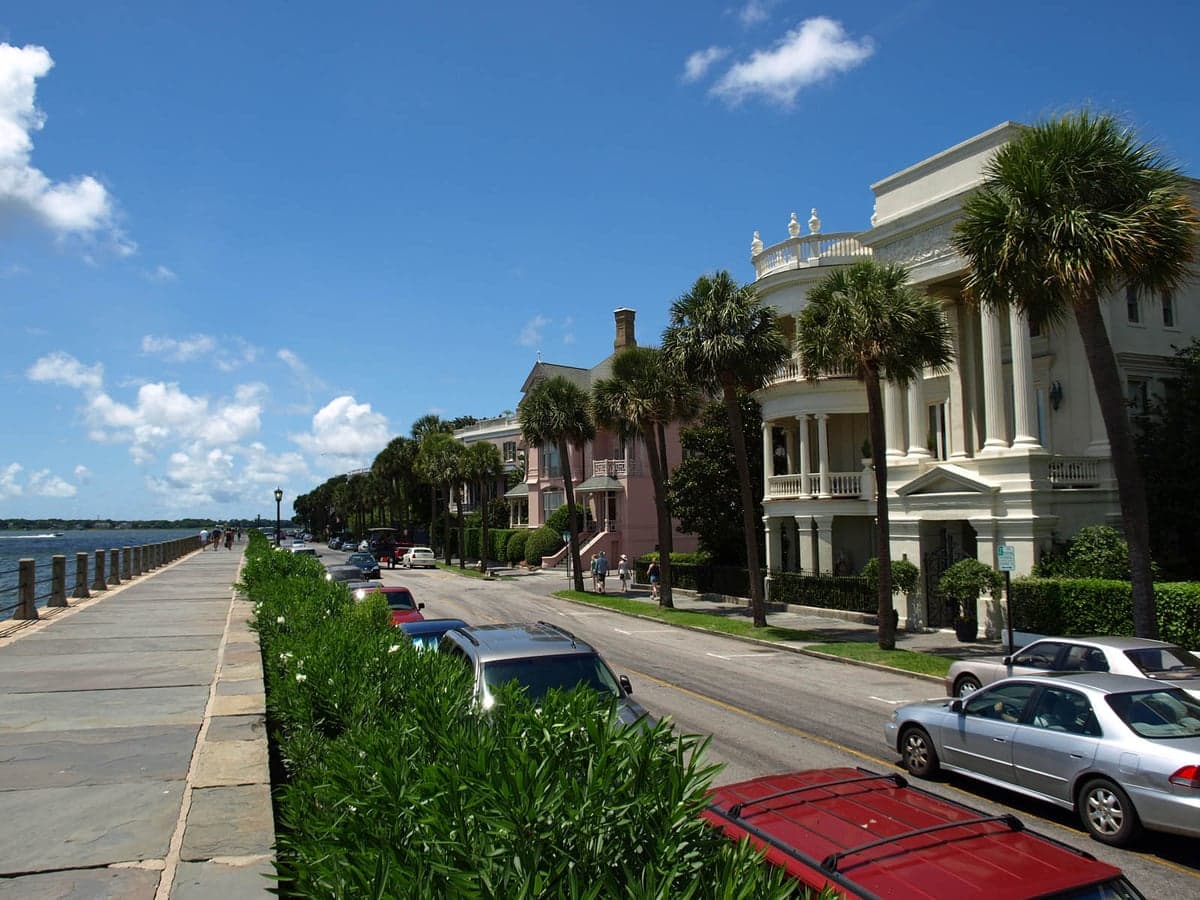
Photo: Wikipedia
Political ClimatePolitical Climate in Charleston, SC
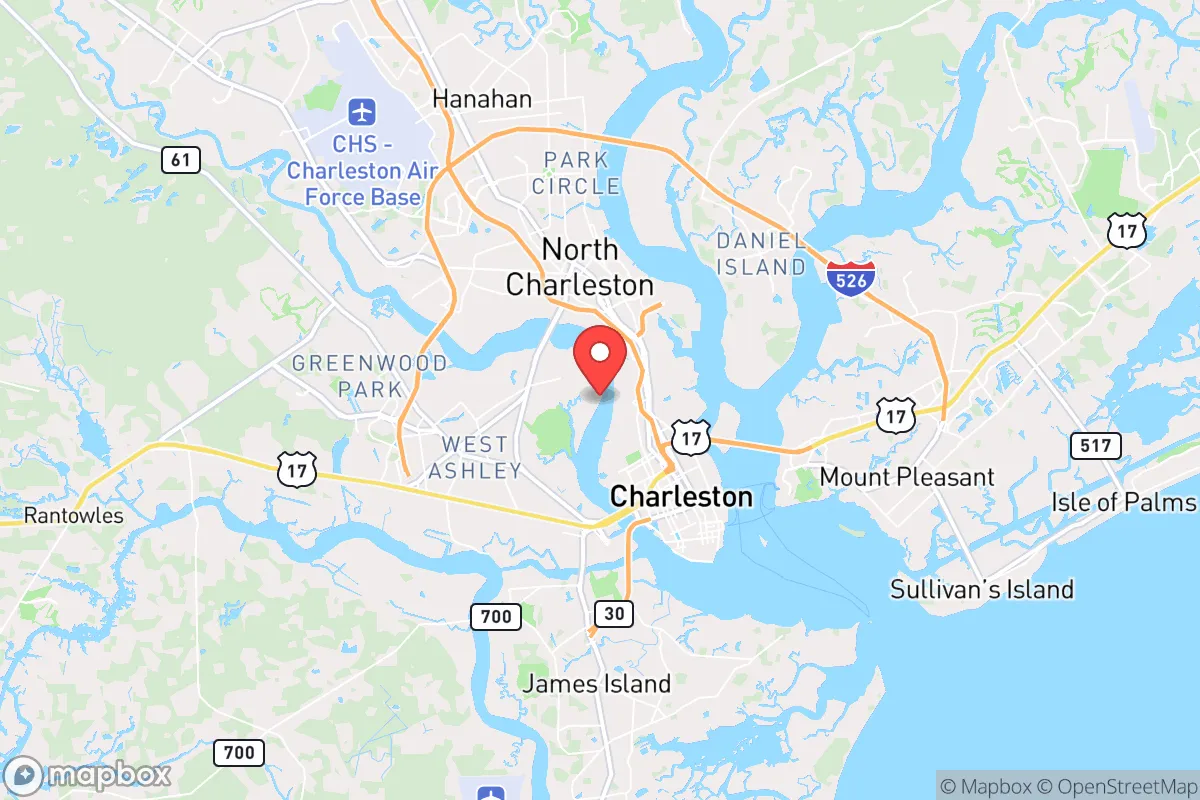
District shown is the primary district for this city’s centroid. Cities may span multiple districts.
Local Political AnalysisPolitical Analysis of Charleston, SC
Charleston, South Carolina, has shifted dramatically in recent years, and not in a way that sits well with folks who value traditional freedoms and limited government. The city now carries a Cook PVI of D+13, meaning it votes about 13 points more Democratic than the national average—a far cry from the conservative stronghold it once was. This isn't just about party labels; it's about a growing appetite for progressive policies that many of us see as creeping government overreach into our daily lives, from property rights to how we run our businesses.
How it compares
If you drive just 20 minutes outside the city limits, you'll find a completely different world. Towns like Mount Pleasant and Summerville still lean reliably conservative, and go further out to Moncks Corner or Walterboro, and you're in deep red territory where folks still believe in local control and personal responsibility. The contrast is stark: inside the Charleston peninsula, you'll see bike lanes replacing car lanes, strict historic district regulations that tell you what color you can paint your front door, and a city council that seems eager to adopt every progressive trend from the West Coast. Meanwhile, the surrounding counties vote for sheriffs who actually enforce the law and school boards that focus on teaching kids, not indoctrinating them. It's like two different Americas living 30 minutes apart.
What this means for residents
For those of us who remember when Charleston was a place where you could pretty much do what you wanted on your own property, the changes are real and concerning. The city has pushed through stricter short-term rental regulations that make it harder for homeowners to rent out their own houses, and there's constant talk about "affordable housing mandates" that would tell developers what they have to build. You're seeing more red-light cameras, more noise ordinances, and a general attitude that the government knows better than you do. The school board has also tilted progressive, with debates over critical race theory and gender ideology creeping into classrooms—things that would have been unthinkable a decade ago. If you value being left alone to live your life without a bureaucrat's permission slip, the city itself is becoming a tougher place to call home.
On the cultural side, Charleston still has its charm—the food, the history, the beaches are world-class. But the political undercurrent is unmistakable. The city's leadership seems more focused on chasing national progressive trends than on preserving the local character that made Charleston famous. You'll see "Black Lives Matter" street murals and pride flags flying from city buildings, while traditional values get pushed to the margins. The long-term trajectory is clear: unless there's a serious course correction, Charleston will continue to drift away from the common-sense, freedom-loving principles that built the Lowcountry. For now, the best advice is to enjoy the city for what it still offers, but keep a close eye on the ballot box—and maybe keep your options open for a move to Summerville or Mount Pleasant if things keep going the way they are.

State Political ClimatePolitical Climate in South Carolina
State Political AnalysisPolitical Environment in the State
South Carolina has long been a reliably red state, with Republicans holding every statewide office and commanding supermajorities in both legislative chambers. The state’s partisan lean is driven by a coalition of conservative-leaning suburbanites, rural voters, and a growing number of transplants from the Northeast and Midwest seeking lower taxes and a slower pace of life. Over the past 20 years, the GOP’s grip has tightened: in 2000, George W. Bush won the state by 16 points; in 2024, Donald Trump carried it by 18 points, with the most dramatic shifts occurring in the rapidly growing coastal counties like Horry (Myrtle Beach) and Beaufort (Hilton Head). However, the state’s political landscape is not monolithic — the urban centers of Charleston, Columbia, and Greenville are increasingly competitive, while the rural black belt counties along the I-95 corridor remain Democratic strongholds.
Urban vs. rural divide
The political map of South Carolina is a study in contrasts. The state’s three major metros — Charleston, Columbia, and Greenville — each have distinct political characters. Charleston County, anchored by the historic port city, has trended blue over the last decade, with Democratic presidential candidates winning the county by 10-15 points in recent cycles. This shift is driven by an influx of out-of-state professionals, a growing tech sector, and a well-educated population. Columbia, the state capital, is a purple island in a red sea: Richland County (Columbia proper) votes heavily Democratic, while the surrounding Lexington County is one of the most reliably Republican suburban areas in the state. Greenville County, once a GOP stronghold, has seen its margins shrink as the city of Greenville itself has become more liberal, though the county still votes Republican by about 10 points. The real engine of Republican dominance is the rural and exurban areas: the Pee Dee region (Florence, Darlington), the Upstate (Spartanburg, Anderson, Oconee), and the Lowcountry’s inland counties (Colleton, Hampton) all vote Republican by 30-40 points. The I-95 corridor, stretching from Florence to Jasper County, remains the state’s Democratic heartland, where African American voters make up 60-70% of the electorate and consistently deliver 80%+ margins for Democrats.
Policy environment
South Carolina’s policy environment is among the most conservative in the nation. The state has a flat income tax rate of 6.2% (phasing down to 6% by 2026), no estate tax, and a relatively low property tax burden thanks to a 2006 law that caps annual assessment increases. The regulatory posture is business-friendly: South Carolina is a right-to-work state, and the state’s tort reform laws have made it a popular destination for manufacturers, particularly in the automotive sector (BMW, Volvo, Mercedes-Benz). On education, the state has expanded school choice through the Education Scholarship Trust Fund program, which provides up to $6,000 per year for private school tuition or homeschooling expenses. Healthcare policy is mixed: the state did not expand Medicaid under the Affordable Care Act, and the regulatory environment for telemedicine and direct primary care is relatively permissive. Election laws are strict: voters must present a photo ID, and the state has a 30-day residency requirement for registration. In 2023, the legislature passed a 6-week abortion ban (the “Fetal Heartbeat Act”), which was upheld by the state Supreme Court. The state also has a permitless carry law for firearms, passed in 2024, allowing any law-abiding adult to carry a concealed weapon without a permit.
Trajectory & freedom
Over the past five years, South Carolina has moved decisively in the direction of expanding personal liberty, particularly on gun rights, parental rights, and tax freedom. The 2024 permitless carry law was a major win for Second Amendment advocates, eliminating the previous requirement for a concealed weapons permit and the associated fees and background checks. In 2023, the legislature passed the “Parents’ Bill of Rights,” which requires schools to notify parents of any changes to a student’s health or well-being, including gender identity or sexual orientation, and prohibits classroom instruction on sexual orientation or gender identity in grades K-3. On the economic freedom front, the state eliminated the corporate license tax in 2023 and is phasing out the state income tax entirely, with a goal of reaching a flat 3% rate by 2030. However, there are areas of concern for liberty-minded residents: the state’s medical marijuana program remains stalled in the legislature, and the state’s strict alcohol laws (no Sunday sales before 10 AM, limited retail licenses) are a holdover from an earlier era. The state also has a relatively high sales tax rate (6% state, plus local options up to 9%), which falls disproportionately on lower-income residents.
Civil unrest & political movements
South Carolina has seen its share of political flashpoints, though large-scale civil unrest has been rare compared to other states. The most significant recent event was the 2015 Charleston church shooting, which led to the removal of the Confederate flag from the Statehouse grounds — a decision that was broadly supported across the political spectrum. More recently, the state has been a battleground over critical race theory and LGBTQ+ issues in schools. In 2022, protests erupted in Lexington County over a school board decision to include LGBTQ+ books in school libraries, leading to a recall effort against two board members. The state has also seen organized opposition to the 6-week abortion ban, with activists from Planned Parenthood and local groups staging regular protests at the Statehouse. Immigration politics are relatively quiet compared to border states, but the state has passed laws requiring local law enforcement to cooperate with federal immigration authorities (287(g) agreements). There is no significant secession or nullification movement in the state, though the “State Sovereignty” resolution passed in 2023, asserting the state’s right to nullify federal laws it deems unconstitutional, was a symbolic gesture popular among grassroots conservatives. Election integrity remains a live issue: the state’s voter ID law has been challenged in court, and in 2024, the legislature passed a law banning ballot drop boxes and limiting absentee voting to those with a valid excuse.
Projection
Over the next 5-10 years, South Carolina’s political trajectory is likely to remain conservative, but with increasing tension between the growing urban centers and the rural/exurban base. The state is projected to gain a congressional seat after the 2030 census, driven by growth in the coastal counties (Horry, Beaufort, Charleston) and the Upstate (Greenville, Spartanburg). This growth is bringing in a mix of retirees from the Northeast (who tend to be fiscally conservative but socially moderate) and younger professionals (who lean more liberal). The net effect is that the state’s urban counties will continue to trend blue, while the rural counties will become even more red as they lose population. The state’s Republican supermajority is likely to hold, but the margin may narrow in the state House and Senate. The biggest wild card is the state’s education policy: if the school choice program proves popular and improves educational outcomes, it could cement the GOP’s advantage with suburban families. Conversely, if the state’s abortion ban or book restrictions drive away young families and professionals, the political calculus could shift. For now, the state remains a safe bet for conservatives, but the days of 20-point margins may be numbered.
For a new resident considering South Carolina, the bottom line is this: you’ll find a state that largely respects your personal freedoms — from gun rights to school choice to low taxes — but you should be aware that the political culture varies dramatically depending on where you land. If you’re looking for a deep-red, rural community with strong gun rights and traditional values, the Upstate or Pee Dee regions are your best bet. If you want a more moderate, suburban environment with good schools and job opportunities, the Greenville or Lexington suburbs are solid choices. Avoid Charleston or Columbia proper if you’re sensitive to progressive politics, as those cities are increasingly liberal. The state is trending in the right direction on most liberty issues, but the culture war battles over education and abortion are likely to intensify, so be prepared for an active political environment. Overall, South Carolina offers a high degree of personal freedom and a low tax burden, making it an attractive option for conservatives looking to escape the high-cost, high-regulation states of the Northeast and West Coast.
* Values derived from national, state, county, city and local statistics and may differ in a specific area. Last updated: 2026-04-29T21:46:07.000Z
Narrative content on this page is AI-generated and may contain mistakes. Verify any details that matter before acting on them.
ReloMaps may earn a commission from affiliate links at no extra cost to you.

