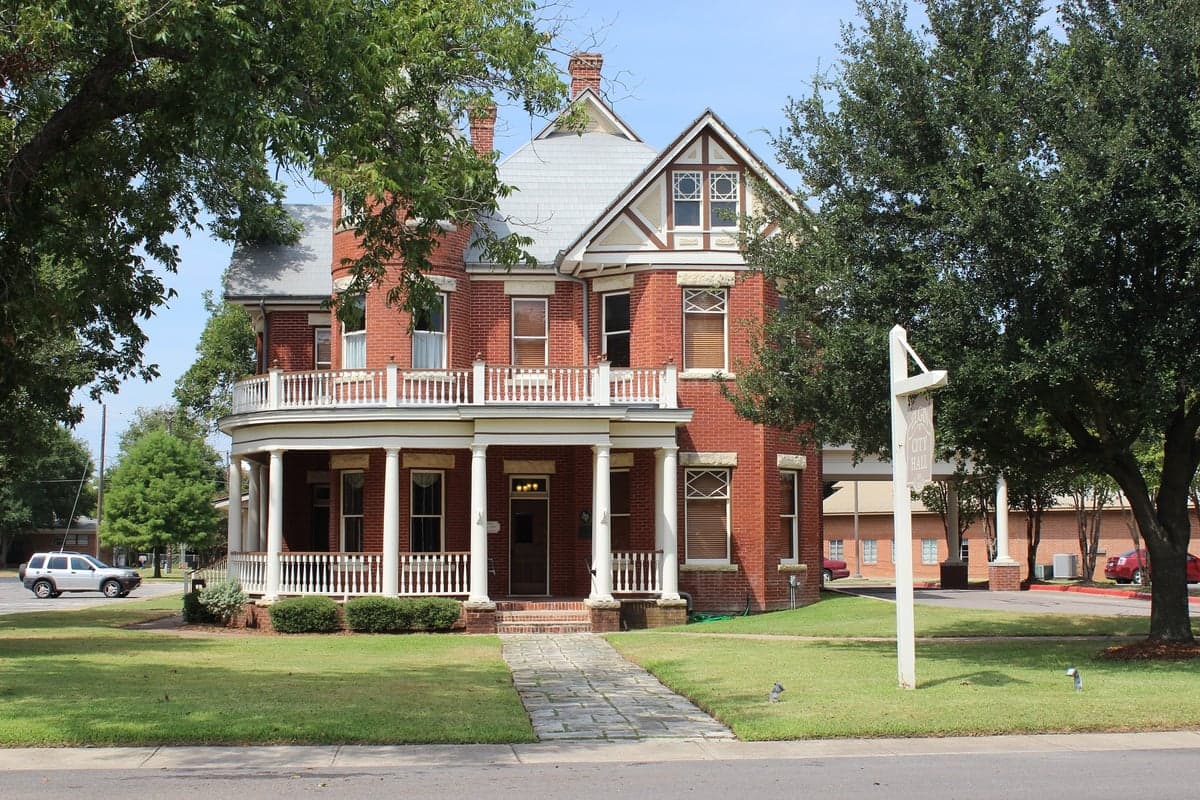

Photo: Wikipedia
Political ClimatePolitical Climate in Elgin, TX
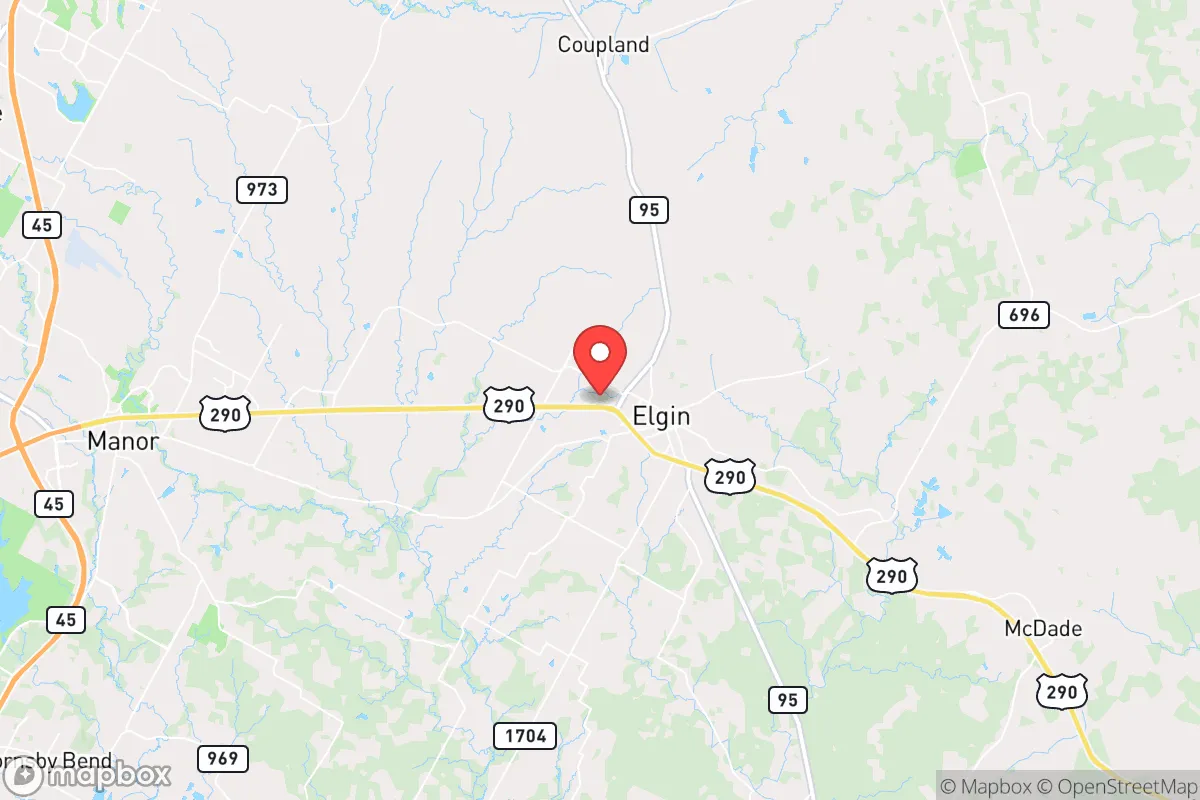
District shown is the primary district for this city’s centroid. Cities may span multiple districts.
Local Political AnalysisPolitical Analysis of Elgin, TX
Elgin, Texas, has long been a solidly conservative community, and that hasn't changed much despite the rapid growth pushing out from Austin. The area sits in a Cook PVI of R+12, which means Republicans hold a comfortable 12-point advantage over the national average in local elections. If you've been around here for a while, you remember when everyone knew everyone at the feed store, and the biggest political debate was whether to pave another county road. That core conservative DNA is still strong, but the influx of folks from Travis County and the coasts is starting to shift the conversation in subtle ways — and not always for the better.
How it compares
Elgin sits in a kind of political buffer zone between deep-red Bastrop County and the increasingly blue Austin metro. Drive 15 miles west toward Manor or Pflugerville, and you'll hit precincts that vote reliably Democratic — places where property taxes are climbing fast and local officials are more likely to embrace progressive zoning and spending. Head east toward Lexington or Rockdale, and you're back in solidly red territory where folks still wave at you on the highway. Elgin itself has held steady, but the pressure is real. The city council and school board races here are starting to see more candidates who talk about "equity" and "inclusion" in ways that sound a lot like the language coming out of Austin. That's a red flag for anyone who values limited government and local control.
What this means for residents
For the average Elgin resident, the political climate means you still have a strong voice in local decisions — for now. The city has kept its independent spirit, rejecting some of the more aggressive affordable housing mandates and density pushes that have turned nearby towns into traffic nightmares. But you have to stay engaged. The school board, in particular, is a battleground. Curriculum choices, library books, and mask mandates have all been flashpoints in recent years, and the progressive side is well-funded by outside groups. If you value parental rights and local control over your kids' education, you need to show up at those meetings. The good news is that the county sheriff and most constables remain solidly conservative, so law enforcement priorities haven't drifted toward the soft-on-crime policies you see in Austin.
What daily life is like for families
Daily life here still feels like small-town Texas, but the politics are creeping into everyday conversations. You'll hear neighbors grumbling about rising property taxes — a direct result of state-level spending and local bond packages that get pushed through with slick marketing. The city has managed to avoid the worst of the homeless encampments and drug decriminalization experiments that have plagued Austin, but there's constant pressure from county-level officials to adopt "regional solutions" that sound a lot like surrendering local authority. For families, the biggest concern is keeping Elgin's character intact: low regulations, Second Amendment rights, and a school system that teaches kids how to think, not what to think. If you're looking for a place where your vote still counts and your voice still matters, Elgin is a good bet — but don't take it for granted. The same forces that turned Austin into a progressive experiment are knocking on our door, and it's up to us to keep them from moving in.

State Political ClimatePolitical Climate in Texas
State Political AnalysisPolitical Environment in the State
Texas has been a reliably Republican state for decades, but the coalition that keeps it red is shifting. The state hasn't voted for a Democratic presidential candidate since Jimmy Carter in 1976, and every statewide office is held by a Republican. However, the margin of victory has narrowed from 16 points in 2012 to about 9 points in 2020 and roughly 5.5 points in 2024. The dominant coalition remains a mix of rural conservatives, suburban moderates, and a growing number of Hispanic voters who are trending right, but the explosive growth of the Austin, Dallas-Fort Worth, and Houston metros is injecting a steady stream of out-of-state transplants, many of whom lean left. The 10-20 year trajectory shows a state that is still solidly red at the state level, but with urban centers becoming bluer and the suburbs becoming the primary battleground.
Urban vs. rural divide
The political map of Texas is a study in stark contrasts. The major urban cores—Austin, Dallas, Houston, San Antonio, and El Paso—are deep blue, with Austin and El Paso being the most reliably Democratic. In 2024, Travis County (Austin) gave Biden a 50-point margin, while El Paso County delivered a 30-point margin. These cities are the engine of the state's Democratic growth, driven by young professionals, university populations, and minority voters. Meanwhile, the vast rural expanse—places like the Panhandle around Lubbock, East Texas, and the Hill Country—votes overwhelmingly Republican, often by 60-70 point margins. The real story is in the suburbs. Counties like Collin (north of Dallas), Denton, and Fort Bend (southwest of Houston) were once reliably red but have become competitive. Collin County, for example, went from a 30-point Republican margin in 2012 to a 12-point margin in 2024. These suburbs are where the political future of Texas will be decided, as they absorb the bulk of new arrivals.
Policy environment
Texas remains a low-tax, low-regulation state by design. There is no state income tax, which is a major draw for relocating families and businesses. Property taxes are high—averaging about 1.7% of assessed value—but the state legislature has passed multiple rounds of compression to offset rising home values, including a $12 billion property tax cut in 2023. The regulatory posture is business-friendly, with minimal red tape for new construction and a right-to-work law that keeps unions weak. On education, the state has leaned into school choice, expanding charter schools and passing a universal Education Savings Account program in 2025 that allows parents to use state funds for private or homeschool expenses. Healthcare policy is mixed: Texas did not expand Medicaid under the ACA, and the state has some of the strictest abortion laws in the country (SB 8, the Heartbeat Act, and a near-total ban after 2021). Election laws have tightened: SB 1 (2021) added voter ID requirements, limited drive-through and 24-hour voting, and restricted mail-in ballot access. For a conservative-leaning audience, the policy environment is broadly aligned with limited government and parental rights, though the property tax burden is a persistent complaint.
Trajectory & freedom
On the freedom front, Texas has been a mixed bag in recent years. On the positive side for conservatives, the state expanded gun rights significantly: permitless carry (HB 1927) passed in 2021, allowing adults to carry handguns without a license. Parental rights were strengthened with the passage of the "Parental Bill of Rights" (HB 900) in 2023, which requires school libraries to get parental consent for certain materials and restricts instruction on sexual orientation in elementary grades. Medical freedom saw a win with the ban on COVID-19 vaccine mandates for private employers (SB 7) in 2023. However, there are concerning trends. The state has aggressively used its power to prosecute doctors under the abortion ban, creating a chilling effect on maternal care in rural areas. Property rights have been tested by the state's use of eminent domain for the border wall and private toll roads. And while the state has resisted federal overreach on immigration (Operation Lone Star), it has also centralized power in Austin, overriding local ordinances on everything from mask mandates to fracking bans. The trajectory is toward more state-level control over local governments, which cuts both ways for freedom-minded residents.
Civil unrest & political movements
Texas has seen its share of political flashpoints. The 2020 protests in Austin and Dallas over George Floyd's death were large and occasionally violent, leading to property damage and a lasting rift between city leaders and state lawmakers. The state responded with the "Back the Blue" bill (HB 9) in 2021, increasing penalties for rioting and protecting police funding. Immigration politics are a constant source of tension. Governor Abbott's Operation Lone Star has deployed state troopers and National Guard to the border, bused migrants to sanctuary cities like New York and Chicago, and installed razor wire along the Rio Grande. This has created a visible, ongoing confrontation with the Biden administration and with local officials in El Paso and San Antonio who have declared themselves sanctuary cities. Election integrity remains a hot-button issue. After the 2020 election, Texas conducted a forensic audit of four counties (including Harris and Dallas) and found no evidence of widespread fraud, but the controversy fueled the passage of SB 1. Secession rhetoric, while not mainstream, has a vocal fringe—the Texas Nationalist Movement has some support in rural areas, but it's not a serious political force. For a new resident, the most visible sign of political tension will be the constant presence of border security checkpoints south of San Antonio and the polarized signage in suburban yards.
Projection
Over the next 5-10 years, Texas is likely to remain a Republican-controlled state, but the margin will continue to narrow. The key demographic driver is in-migration: roughly 1,000 people move to Texas every day, and they are disproportionately coming from blue states like California and New York. While many are drawn by the low taxes and business climate, they also bring more moderate or liberal voting habits. The suburbs of Dallas, Houston, and Austin will be the primary battlegrounds. If Democrats can flip Collin, Denton, and Fort Bend counties decisively, they could win statewide elections by 2032. However, the Republican party is adapting by consolidating its rural base and making inroads with Hispanic voters, particularly in the Rio Grande Valley. Counties like Starr and Zapata, which were once reliably Democratic, have shifted 20-30 points to the right since 2016. The wild card is the state's growing Asian and Pacific Islander population, which is currently split but could swing either way. For a conservative moving in now, expect the state to remain a red fortress for at least another decade, but with increasingly competitive elections and a more diverse political landscape.
For a new resident, the bottom line is this: Texas offers a policy environment that is broadly aligned with conservative values—low taxes, gun rights, school choice, and parental control—but it is not a libertarian paradise. The state is actively expanding its power in areas like immigration enforcement, abortion prosecution, and preemption of local laws. The political climate is polarized but stable, with no serious threat of the state flipping blue in the near term. If you value limited government and personal freedom, Texas is still one of the best bets in the country, but you should be prepared for a growing urban-liberal influence in the major cities and a state government that is increasingly willing to use its authority to enforce conservative priorities. The suburbs are where you'll find the most balanced lifestyle—good schools, lower crime, and a political environment that is still leaning right but becoming more contested every election cycle.
* Values derived from national, state, county, city and local statistics and may differ in a specific area. Last updated: 2026-04-24T06:20:01.000Z
Narrative content on this page is AI-generated and may contain mistakes. Verify any details that matter before acting on them.
ReloMaps may earn a commission from affiliate links at no extra cost to you.

